Tasmanian School of Medicine, College of Health and Medicine, University of Tasmania, Hobart, TAS, Australia.
Menzies Institute for Medical Research, College of Health and Medicine, University of Tasmania, Hobart, TAS, Australia.
J Physiol. 2022 Apr;600(7):1611-1630. doi: 10.1113/JP282454. Epub 2022 Mar 2.
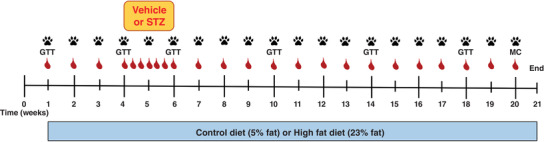
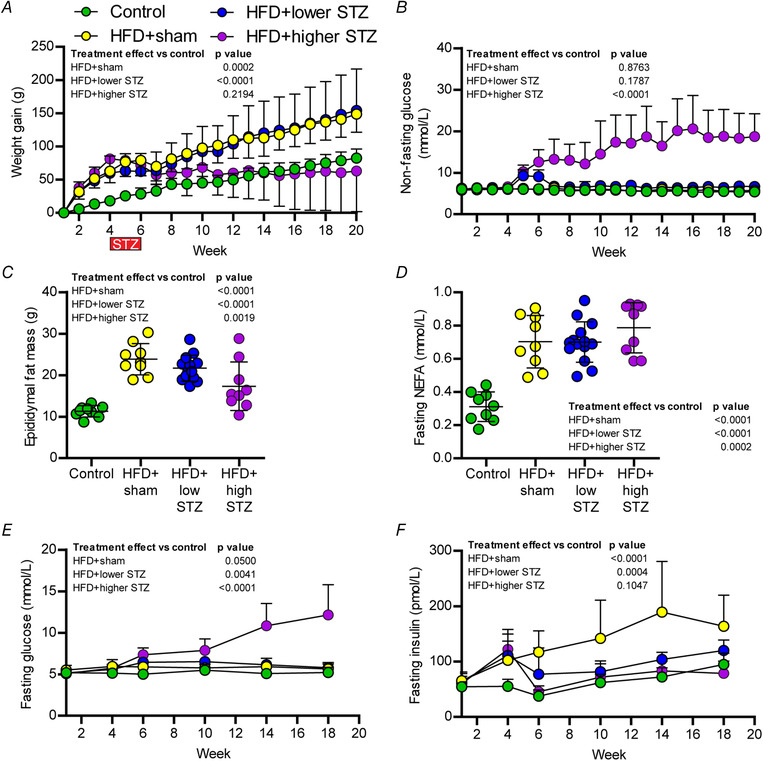
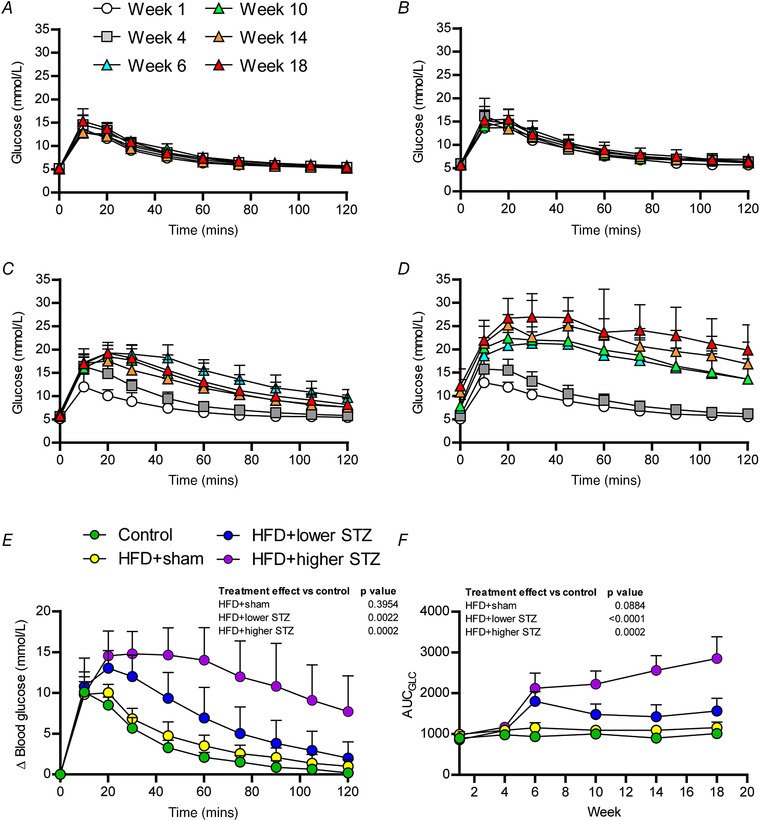
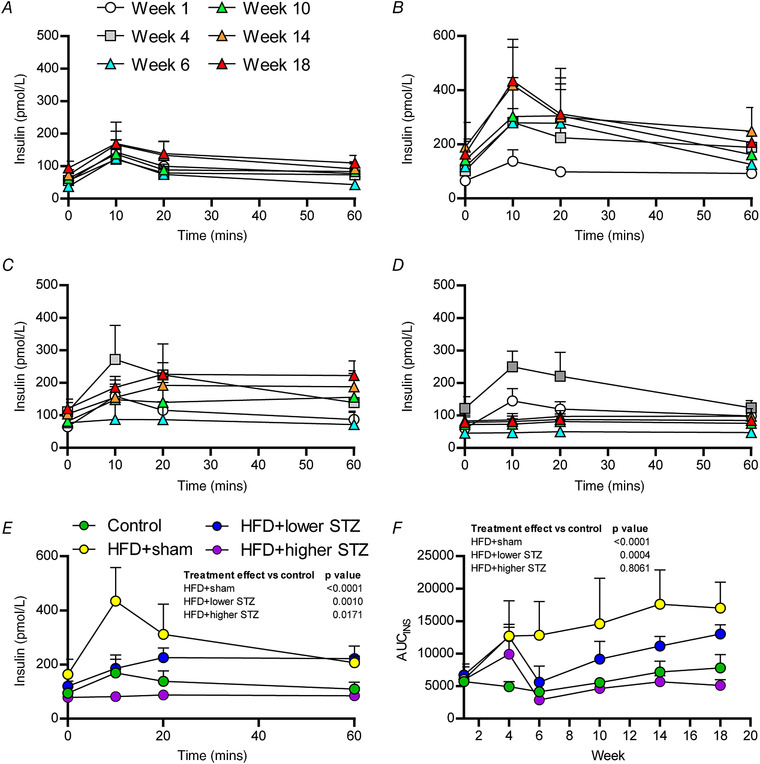
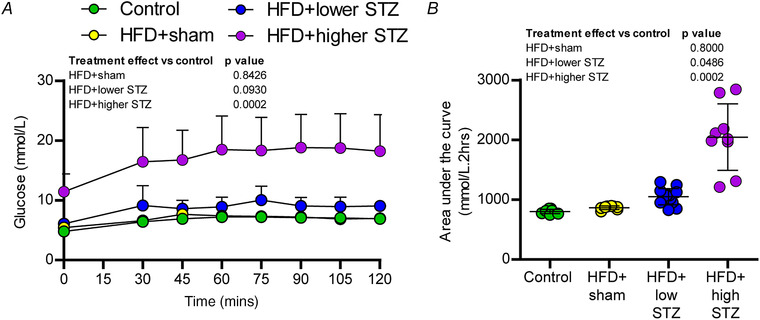
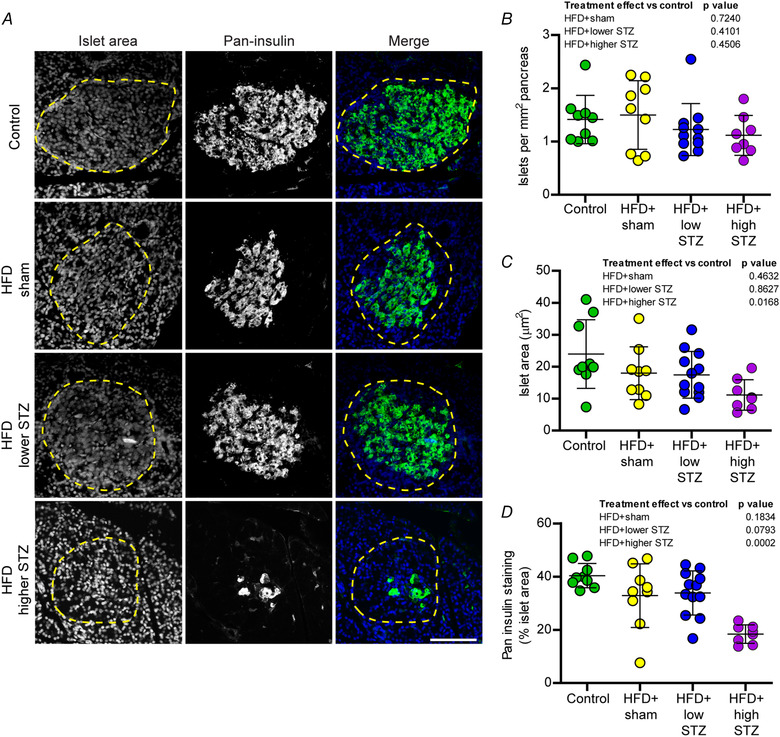
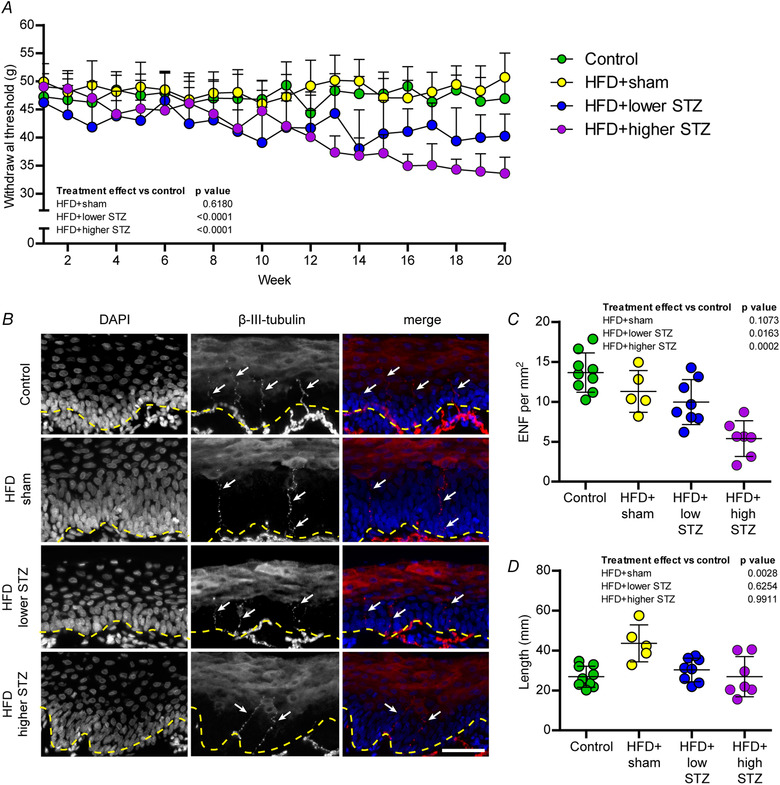
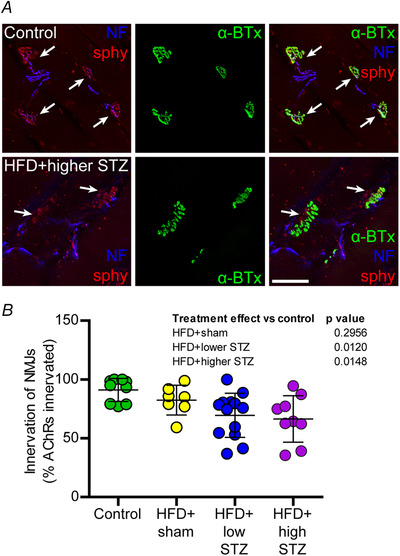
Accurate modelling type 2 diabetes and diabetic complications in rodents has proven a challenge, largely as a result of the long-time course of disease development in humans. In the present study, we aimed to develop and comprehensively characterise a new rodent model of type 2 diabetes. To do this, we fed Sprague-Dawley rats a high fat/high sugar diet (HFD) to induce obesity and dyslipidaemia. After 3 weeks, we s.c. implanted osmotic mini pumps to enable a 14 day, slow infusion of streptozotocin (STZ; lower dose = 100 mg kg ; higher dose = 120 mg kg ) to dose-dependently reduce pancreatic beta cell mass. After removing the mini pumps, we monitored animals for 4 months using a battery of tests to assess both metabolic and neurodegenerative changes across time. Our data demonstrate the combination of the HFD and lower dose STZ leads to induction of early-stage type 2 diabetes defined by moderate hyperglycaemia, hyperinsulinaemia and impaired glucose tolerance, at the same time as the retention of an obese phenotype. By contrast, combining the HFD and higher dose STZ leads to induction of later-stage type 2 diabetes defined by frank hyperglycaemia, hypoinsulinaemia (but not insulin depletion) and severely impaired glucose tolerance, at the same time as retaining an obese phenotype. Regardless of dose of STZ (and level of hyperglycaemia), all diabetic rats exhibited signs of peripheral neurodegeneration in the skin and muscle. Thus, this model recapitulates many of the complex metabolic disturbances seen in type 2 diabetes and provides an excellent platform for investigating the pathophysiological mechanisms that lead to diabetic complications such as peripheral neuropathy. KEY POINTS: Type 2 diabetes is a major health concern and markedly increases risk cardiovascular and neurodegenerative diseases. Accurate modelling of type 2 diabetes is a major challenge and has impeded our ability to understand the mechanisms that contribute to complications of type 2 diabetes. We have developed a method of inducing different stages of type 2 diabetes using a high fat/high sugar diet and 14 day infusion of streptozotocin to dose-dependently destroy pancreatic beta cell mass. Over 4 months, we comprehensively characterised these animals and confirmed that they develop sustained metabolic dysfunction and progressive peripheral neurodegeneration as seen in type 2 diabetes. This new model will improve our ability to investigate the pathophysiological mechanisms that link type 2 diabetes with complications such as neurodegeneration.
准确地模拟 2 型糖尿病和糖尿病并发症一直是一个挑战,这主要是因为人类疾病的发展过程漫长。在本研究中,我们旨在开发和全面描述一种新的 2 型糖尿病啮齿动物模型。为此,我们用高脂肪/高糖饮食喂养 Sprague-Dawley 大鼠以诱导肥胖和血脂异常。3 周后,我们通过皮下植入渗透微型泵,实现为期 14 天的缓慢链脲佐菌素(STZ;低剂量=100mg/kg;高剂量=120mg/kg)输注,以剂量依赖性方式减少胰岛β细胞质量。移除微型泵后,我们通过一系列测试监测动物 4 个月,以评估随着时间的推移代谢和神经退行性变化。我们的数据表明,高脂肪饮食和低剂量 STZ 的组合导致早期 2 型糖尿病的诱导,其特征为中度高血糖、高胰岛素血症和葡萄糖耐量受损,同时保留肥胖表型。相比之下,高脂肪饮食和高剂量 STZ 的组合导致晚期 2 型糖尿病的诱导,其特征为明显的高血糖、低胰岛素血症(但无胰岛素耗竭)和严重的葡萄糖耐量受损,同时保留肥胖表型。无论 STZ 剂量(和高血糖水平)如何,所有糖尿病大鼠均表现出皮肤和肌肉周围神经退行性病变的迹象。因此,该模型再现了 2 型糖尿病中许多复杂的代谢紊乱,并为研究导致糖尿病并发症(如周围神经病变)的病理生理机制提供了一个极好的平台。关键点:2 型糖尿病是一个主要的健康问题,明显增加了心血管和神经退行性疾病的风险。准确地模拟 2 型糖尿病是一个主要挑战,阻碍了我们理解导致 2 型糖尿病并发症的机制的能力。我们已经开发了一种使用高脂肪/高糖饮食和 14 天链脲佐菌素输注的方法,以剂量依赖性方式破坏胰岛β细胞质量,从而诱导不同阶段的 2 型糖尿病。在 4 个月的时间里,我们全面描述了这些动物,并证实它们会出现持续的代谢功能障碍和进行性周围神经退行性变,就像 2 型糖尿病一样。这种新模型将提高我们研究将 2 型糖尿病与神经退行性变等并发症联系起来的病理生理机制的能力。