Department of Molecular Medicine and Al-Jawhara Centre for Molecular Medicine, Genetics, and Inherited Disorders, College of Medicine and Medical Sciences, Arabian Gulf University, Manama, Kingdom of Bahrain.
Ministry of Health, Kuwait City, State of Kuwait.
PLoS One. 2022 Feb 7;17(2):e0263606. doi: 10.1371/journal.pone.0263606. eCollection 2022.
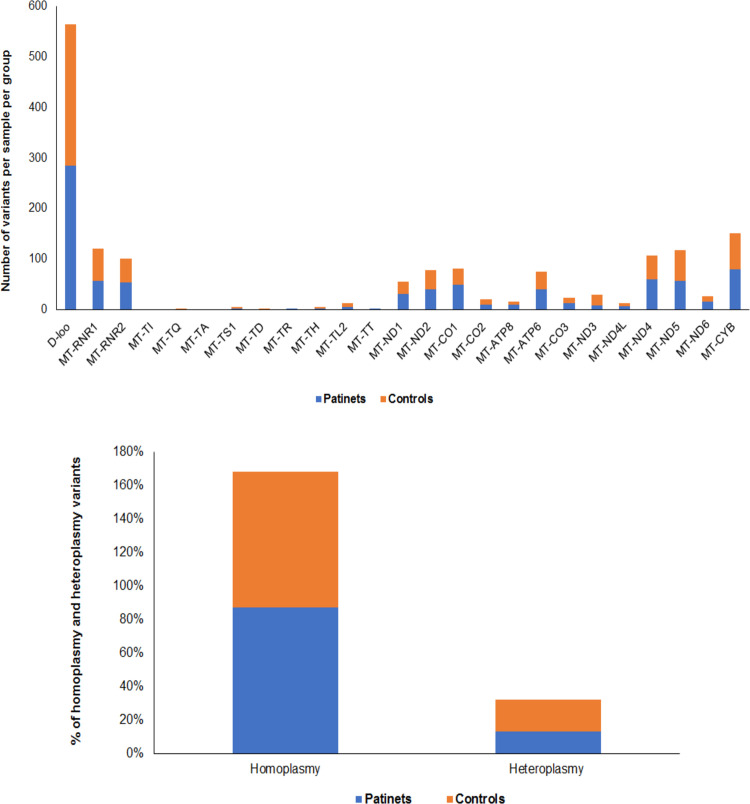
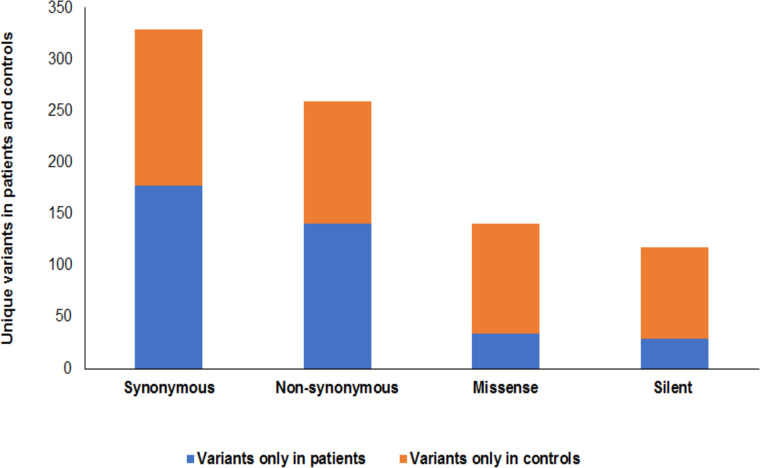
Multiple sclerosis (MS) is an immune-mediated disease of the central nervous system with genetics and environmental determinants. Studies focused on the neurogenetics of MS showed that mitochondrial DNA (mtDNA) mutations that can ultimately lead to mitochondrial dysfunction, alter brain energy metabolism and cause neurodegeneration. We analyzed the whole mitochondrial genome using next-generation sequencing (NGS) from 47 Saudi individuals, 23 patients with relapsing-remitting MS and 24 healthy controls to identify mtDNA disease-related mutations/variants. A large number of variants were detected in the D-loop and coding genes of mtDNA. While distinct unique variants were only present in patients or only occur in controls, a number of common variants were shared among the two groups. The prevalence of some common variants differed significantly between patients and controls, thus could be implicated in susceptibility to MS. Of the unique variants only present in the patients, 34 were missense mutations, located in different mtDNA-encoded genes. Seven of these mutations were not previously reported in MS, and predicted to be deleterious with considerable impacts on the functions and structures of encoded-proteins and may play a role in the pathogenesis of MS. These include two heteroplasmic mutations namely 10237T>C in MT-ND3 gene and 15884G>C in MT-CYB gene; and three homoplasmic mutations namely 9288A>G in MT-CO3 gene, 14484T>C in MT-ND6 gene, 15431G>A in MT-CYB gene, 8490T>C in MT-ATP8 gene and 5437C>T in MT-ND2 gene. Notably some patients harboured multiple mutations while other patients carried the same mutations. This study is the first to sequence the entire mitochondrial genome in MS patients in an Arab population. Our results expanded the mutational spectrum of mtDNA variants in MS and highlighted the efficiency of NGS in population-specific mtDNA variant discovery. Further investigations in a larger cohort are warranted to confirm the role of mtDNA MS.
多发性硬化症(MS)是一种中枢神经系统的免疫介导疾病,具有遗传和环境决定因素。专注于 MS 神经遗传学的研究表明,线粒体 DNA(mtDNA)突变最终可导致线粒体功能障碍、改变大脑能量代谢并引发神经退行性变。我们使用下一代测序(NGS)对来自 47 名沙特个体的全线粒体基因组进行了分析,其中 23 名患者为复发缓解型 MS,24 名健康对照,以鉴定 mtDNA 疾病相关突变/变体。在 mtDNA 的 D 环和编码基因中检测到大量变体。虽然独特的变体仅存在于患者中或仅存在于对照中,但许多常见变体存在于两组之间。两组之间的一些常见变体的患病率存在显著差异,因此可能与 MS 的易感性有关。仅存在于患者中的独特变体中有 34 个是错义突变,位于不同的 mtDNA 编码基因中。这些突变中有 7 个在 MS 中以前没有报道过,预测为有害的,对编码蛋白的功能和结构有很大影响,并可能在 MS 的发病机制中发挥作用。其中包括两种异质体突变,即 MT-ND3 基因中的 10237T>C 和 MT-CYB 基因中的 15884G>C;以及三种同质体突变,即 MT-CO3 基因中的 9288A>G、MT-ND6 基因中的 14484T>C、MT-CYB 基因中的 15431G>A、MT-ATP8 基因中的 8490T>C 和 MT-ND2 基因中的 5437C>T。值得注意的是,一些患者携带多种突变,而其他患者携带相同的突变。这项研究首次在阿拉伯人群中对 MS 患者进行了全线粒体基因组测序。我们的结果扩展了 MS 中线粒体 DNA 变体的突变谱,并强调了 NGS 在人群特异性线粒体变体发现中的效率。需要在更大的队列中进行进一步研究,以确认 mtDNA MS 的作用。