USDA-ARS, Animal Disease Research Unit, Washington State University, Pullman, WA, USA.
Department of Veterinary Microbiology and Pathology, Washington State University, Pullman, WA, USA.
Parasit Vectors. 2022 Feb 8;15(1):49. doi: 10.1186/s13071-022-05166-1.
There have been ongoing efforts to identify anti-tick vaccine targets to protect cattle from infestation with cattle fever ticks Rhipicephalus (Boophilus) microplus. Two commercial vaccines based on the tick gut protein Bm86 have had variable effectiveness, which has led to poor acceptance, and numerous studies have attempted to identify vaccine antigens that will provide more consistently effective protection. Transcriptomic analysis of R. microplus led to identification of three aquaporin genes annotated to code for transmembrane proteins involved in the transport of water across cell membranes. Previous work showed that vaccination with full-length recombinant aquaporin 1 (RmAQP1) reduced tick burdens on cattle. Targeted silencing of aquaporin 2 (RmAQP2) expression suggested it might also be a good anti-tick vaccination target.
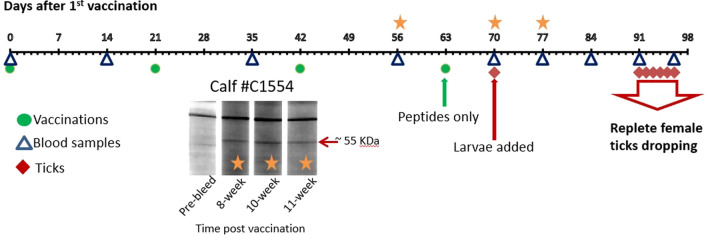
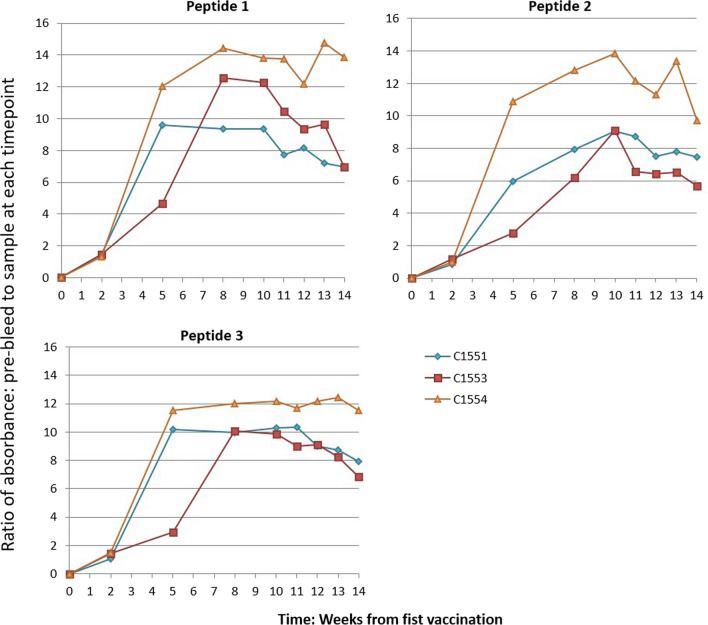
Three synthetic peptides from the predicted extracellular domains of RmAQP2 were used to vaccinate cattle. Peptides were conjugated to keyhole limpet hemocyanin (KLH) as an antigenic carrier molecule. We monitored the antibody response with ELISA and challenged vaccinated cattle with R. microplus larvae.
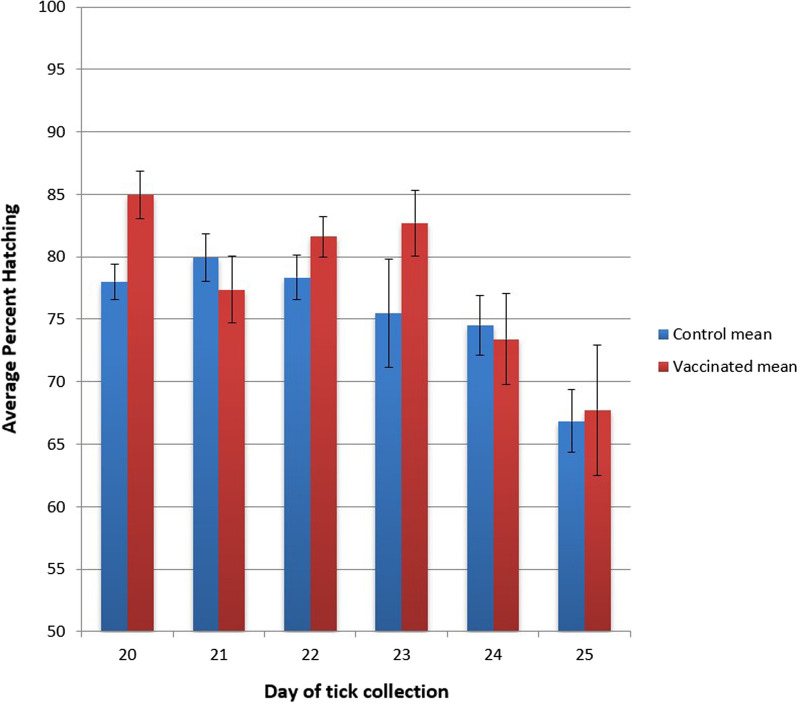
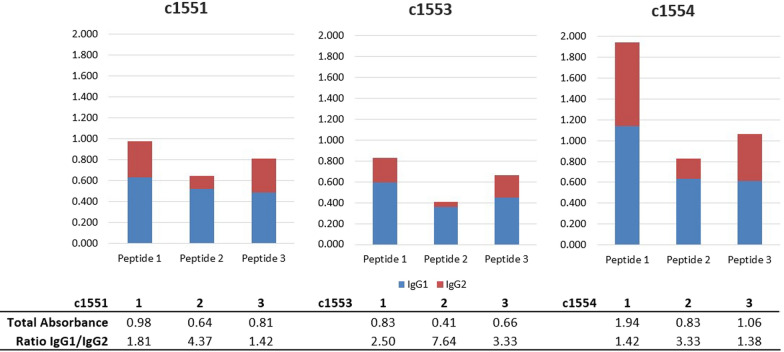
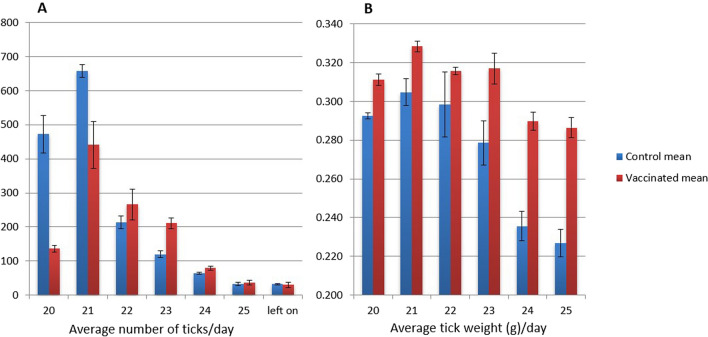
There was a 25% reduction overall in the numbers of ticks feeding to repletion on the vaccinated cattle. Immune sera from vaccinated cattle recognized native tick proteins on a western blot and reacted to the three individual synthetic peptides in an ELISA. The vaccinated calf with the highest total IgG titer was not the most effective at controlling ticks; ratios of IgG isotypes 1 and 2 differed greatly among the three vaccinated cattle; the calf with the highest IgG1/IgG2 ratio had the fewest ticks. Ticks on vaccinated cattle had significantly greater replete weights compared to ticks on controls, mirroring results seen with RNA silencing of RmAQP2. However, protein data could not confirm that vaccination had any impact on the ability of the tick to concentrate its blood meal by removing water.
A reduced number of ticks feed successfully on cattle vaccinated to produce antibodies against the extracellular domains of RmAQP2. However, our predicted mechanism, that antibody binding blocks the ability of RmAQP2 to move water out of the blood meal, could not be confirmed. Further study will be required to define the mechanism of action and to determine whether these vaccine targets will be useful components of an anti-tick vaccine cocktail.
为了保护牛免受牛热蜱(Rhipicephalus (Boophilus) microplus)的侵害,人们一直在努力寻找抗蜱疫苗的靶点。两种基于蜱肠道蛋白 Bm86 的商业疫苗的有效性各不相同,因此接受度较差,许多研究试图确定能提供更一致有效保护的疫苗抗原。对 R. microplus 的转录组分析导致了三个水通道蛋白基因的鉴定,这些基因编码跨细胞膜运输水的跨膜蛋白。以前的工作表明,用全长重组水通道蛋白 1(RmAQP1)疫苗接种可减少牛身上的蜱虫数量。靶向沉默水通道蛋白 2(RmAQP2)的表达表明它也可能是一个很好的抗蜱疫苗靶点。
用来自 RmAQP2 预测的细胞外结构域的三个合成肽对牛进行疫苗接种。肽与血蓝蛋白(KLH)结合作为抗原载体分子。我们用 ELISA 监测抗体反应,并对接种牛进行 R. microplus 幼虫挑战。
总的来说,接种牛身上的蜱虫数量减少了 25%。免疫血清从接种牛中识别出了在western blot 上的天然蜱虫蛋白,并在 ELISA 中对三个单独的合成肽反应。总 IgG 滴度最高的接种小牛在控制蜱虫方面效果并不最佳;在三个接种牛中,IgG 同种型 1 和 2 的比值差异很大;IgG1/IgG2 比值最高的小牛身上的蜱虫数量最少。与 RmAQP2 RNA 沉默的结果一样,接种牛身上的蜱虫的饱食体重明显大于对照牛身上的蜱虫,表明接种牛身上的蜱虫的饱食体重明显大于对照牛身上的蜱虫。然而,蛋白数据无法证实疫苗接种对蜱虫通过去除水分浓缩其血餐的能力有任何影响。
针对 RmAQP2 细胞外结构域产生抗体的牛接种疫苗后,成功进食的蜱虫数量减少。然而,我们预测的机制,即抗体结合阻止 RmAQP2 将水从血餐中移出的能力,无法得到证实。需要进一步的研究来确定作用机制,并确定这些疫苗靶点是否会成为抗蜱疫苗鸡尾酒的有用成分。