Department of Pulmonary and Critical Care Medicine, University of Kansas Medical Center, Kansas City, KS, USA
Department of Biomedical Imaging and Image-Guided Therapy, Medical University of Vienna, Vienna, Austria.
Eur Respir Rev. 2022 Feb 9;31(163). doi: 10.1183/16000617.0169-2021. Print 2022 Mar 31.
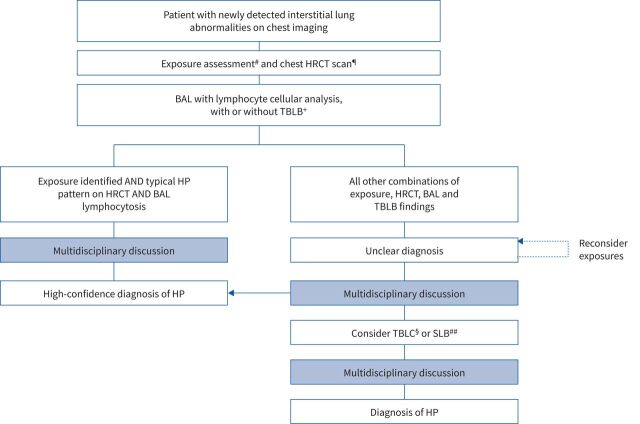
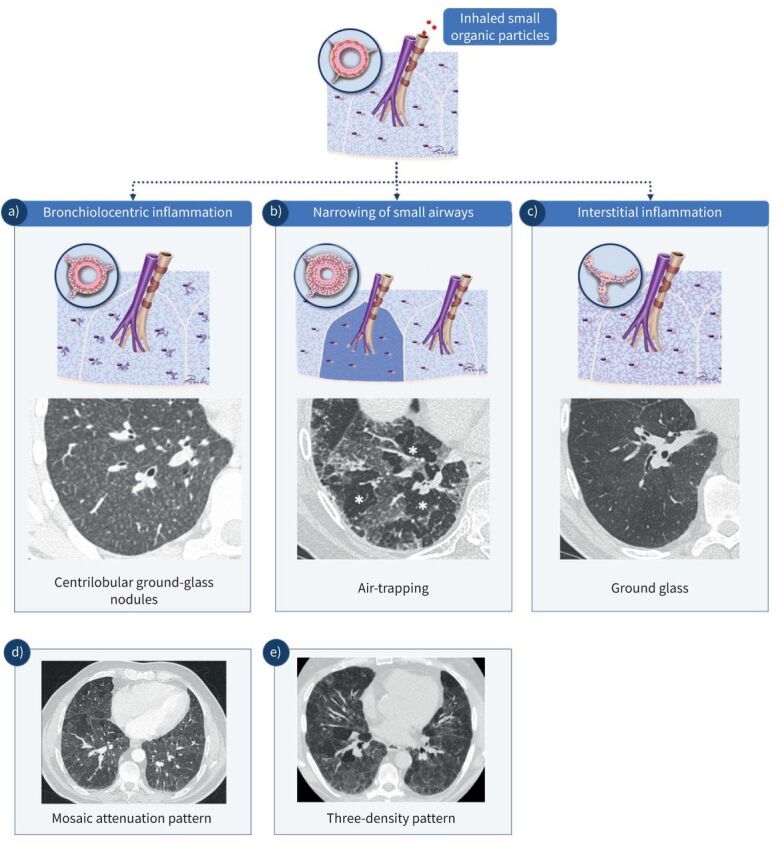
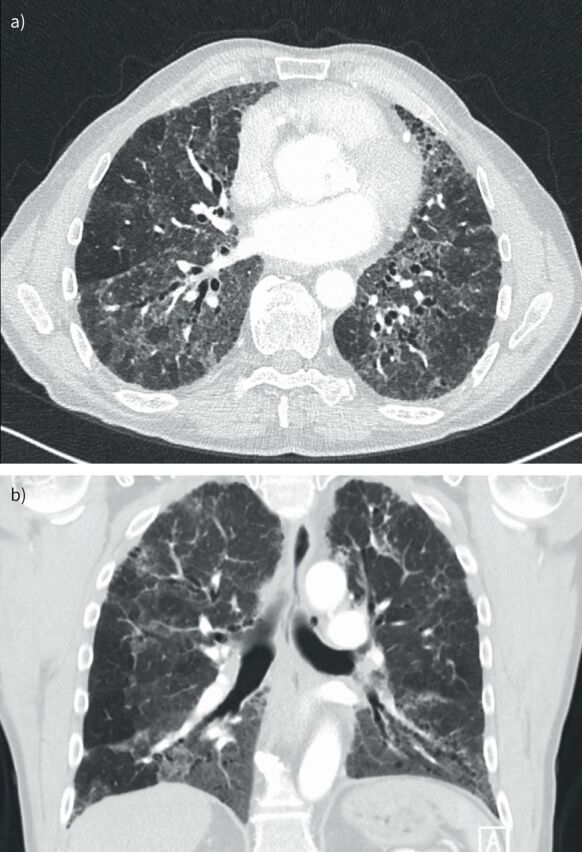
Hypersensitivity pneumonitis (HP) is a complex and heterogeneous interstitial lung disease (ILD) that occurs when susceptible individuals develop an exaggerated immune response to an inhaled antigen. In this review, we discuss the latest guidelines for the diagnostic evaluation of patients with suspected HP, the importance of identifying patients with fibrotic and progressive disease, and the evidence supporting the drugs commonly used in the treatment of HP. Differential diagnosis of HP can be challenging and requires a thorough exposure history, multidisciplinary discussion of clinical and radiologic data, and, in some cases, assessment of bronchoalveolar lavage lymphocytosis and histopathologic findings. Patients with HP may be categorised as having non-fibrotic or fibrotic HP. The presence of fibrosis is associated with worse outcomes. A proportion of patients with fibrotic HP develop a progressive phenotype, characterised by worsening fibrosis, decline in lung function and early mortality. There are no established guidelines for the treatment of HP. Antigen avoidance should be implemented wherever possible. Immunosuppressants are commonly used in patients with HP but have not been shown to slow the worsening of fibrotic disease. Nintedanib, a tyrosine kinase inhibitor, has been approved by the US Food and Drug Administration for slowing the progression of chronic fibrosing ILDs with a progressive phenotype, including progressive fibrotic HP. Non-pharmacological interventions, such as oxygen therapy, pulmonary rehabilitation and supportive care, may be important components of the overall care of patients with progressive HP.
过敏性肺炎(HP)是一种复杂且异质性的间质性肺疾病(ILD),当易感个体对吸入性抗原产生过度免疫反应时发生。在这篇综述中,我们讨论了疑似 HP 患者诊断评估的最新指南,确定纤维化和进行性疾病患者的重要性,以及支持 HP 治疗中常用药物的证据。HP 的鉴别诊断具有挑战性,需要详细的暴露史、临床和影像学数据的多学科讨论,以及在某些情况下评估支气管肺泡灌洗液淋巴细胞增多和组织病理学发现。HP 患者可分为非纤维化或纤维化 HP。纤维化的存在与预后较差相关。一部分纤维化 HP 患者出现进行性表型,其特征为纤维化恶化、肺功能下降和早期死亡率增加。目前尚无 HP 治疗的既定指南。应尽可能避免抗原暴露。免疫抑制剂常用于 HP 患者,但尚未证明它们能减缓纤维化疾病的恶化。尼达尼布是一种酪氨酸激酶抑制剂,已被美国食品和药物管理局批准用于减缓具有进行性表型的慢性纤维性间质性肺病(包括进行性纤维化 HP)的进展。氧疗、肺康复和支持性护理等非药物干预可能是进行性 HP 患者整体治疗的重要组成部分。