Neuro-Metabolism Unit, Reference Center for Lysosomal Diseases, Neurology Department, Pitié-Salpêtrière University Hospital, APHP, Paris, France.
Reference Center for Neuromuscular Diseases, Neuro-myology Department, Pitié-Salpêtrière University Hospital, APHP, Paris, France.
J Neurol Neurosurg Psychiatry. 2022 Apr;93(4):413-421. doi: 10.1136/jnnp-2021-328045. Epub 2022 Feb 9.
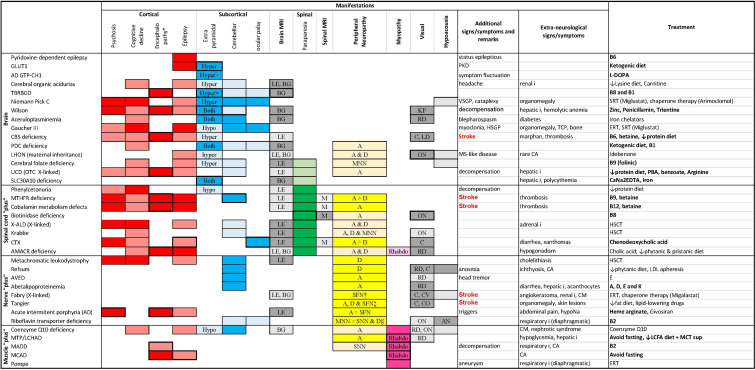
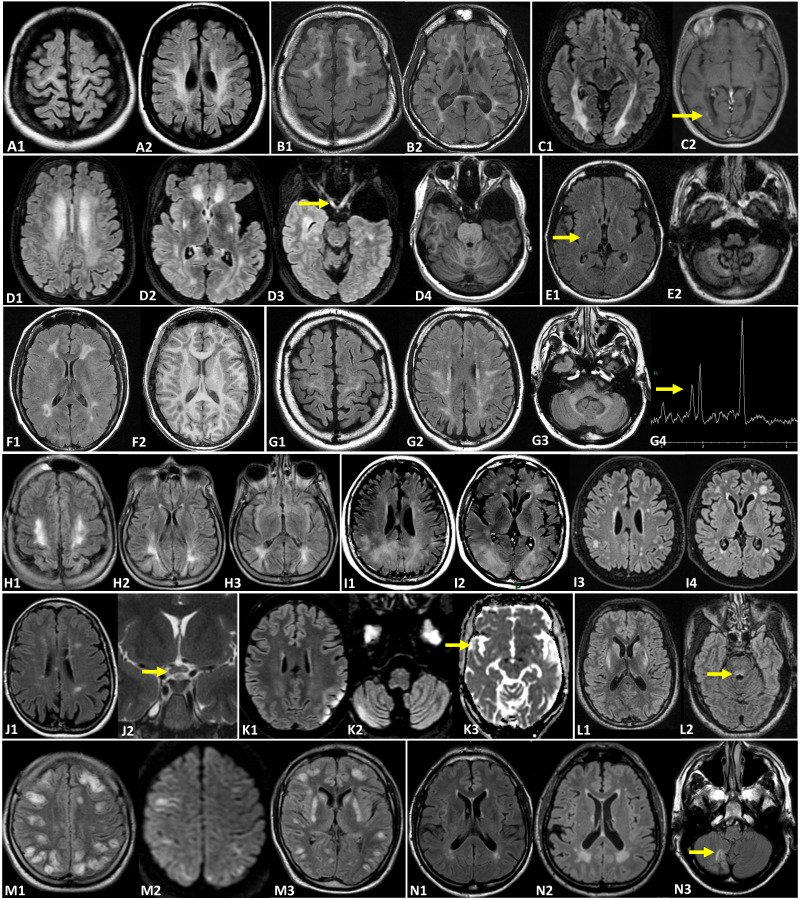
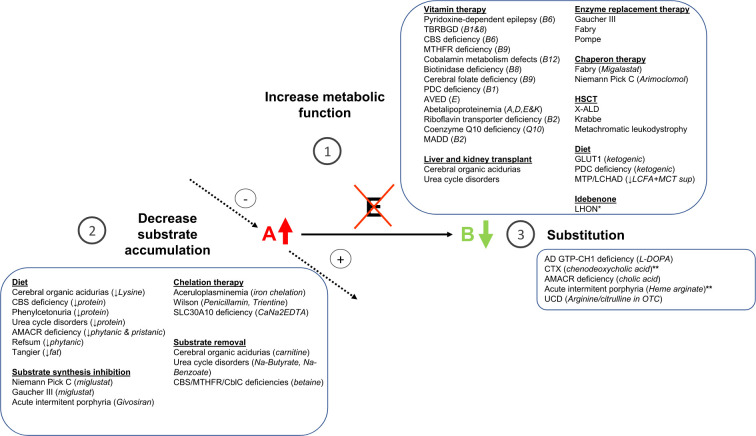
Neurometabolic diseases are a group of individually rare but numerous and heterogeneous genetic diseases best known to paediatricians. The more recently reported adult forms may present with phenotypes strikingly different from paediatric ones and may mimic other more common neurological disorders in adults. Furthermore, unlike most neurogenetic diseases, many neurometabolic diseases are treatable, with both conservative and more recent innovative therapeutics. However, the phenotypical complexity of this group of diseases and the growing number of specialised biochemical tools account for a significant diagnostic delay and underdiagnosis. We reviewed all series and case reports of patients with a confirmed neurometabolic disease and a neurological onset after the age of 10 years, with a focus on the 36 treatable ones, and classified these diseases according to their most relevant clinical manifestations. The biochemical diagnostic approach of neurometabolic diseases lays on the use of numerous tests studying a set of metabolites, an enzymatic activity or the function of a given pathway; and therapeutic options aim to restore the enzyme activity or metabolic function, limit the accumulation of toxic substrates or substitute the deficient products. A quick diagnosis of a treatable neurometabolic disease can have a major impact on patients, leading to the stabilisation of the disease and cease of repeated diagnostic investigations, and allowing for familial screening. For the aforementioned, in addition to an exhaustive and clinically meaningful review of these diseases, we propose a simplified diagnostic approach for the neurologist with the aim to help determine when to suspect a neurometabolic disease and how to proceed in a rational manner. We also discuss the place of next-generation sequencing technologies in the diagnostic process, for which deep phenotyping of patients (both clinical and biochemical) is necessary for improving their diagnostic yield.
神经代谢性疾病是一组个体罕见但数量众多且具有异质性的遗传性疾病,儿科医生最为熟悉。最近报道的成人形式可能表现出与儿科形式截然不同的表型,并且可能在成人中模拟其他更为常见的神经障碍。此外,与大多数神经遗传性疾病不同,许多神经代谢性疾病是可治疗的,既有保守治疗,也有最近的创新治疗方法。然而,该组疾病的表型复杂性以及越来越多的专门生化工具导致诊断明显延迟和漏诊。我们回顾了所有确诊为神经代谢性疾病且发病年龄在 10 岁以后的患者的系列病例报告和病例报告,重点关注 36 种可治疗的疾病,并根据其最相关的临床表现对这些疾病进行分类。神经代谢性疾病的生化诊断方法基于使用大量测试来研究一组代谢物、酶活性或特定途径的功能;治疗选择旨在恢复酶活性或代谢功能,限制毒性底物的积累或替代缺乏的产物。快速诊断可治疗的神经代谢性疾病对患者有重大影响,可以稳定疾病,停止反复的诊断性检查,并允许进行家族筛查。基于上述原因,除了对这些疾病进行详尽且具有临床意义的综述外,我们还为神经科医生提出了一种简化的诊断方法,旨在帮助确定何时怀疑神经代谢性疾病以及如何合理进行诊断。我们还讨论了下一代测序技术在诊断过程中的地位,对于该技术,患者的深度表型(临床和生化)是提高其诊断产量的必要条件。