• 文献检索
  • 文档翻译
  • 深度研究
  • 学术资讯
  • Suppr Zotero 插件Zotero 插件
  • 邀请有礼
  • 套餐&价格
  • 历史记录
应用&插件
Suppr Zotero 插件Zotero 插件浏览器插件Mac 客户端Windows 客户端微信小程序
定价
高级版会员购买积分包购买API积分包
服务
文献检索文档翻译深度研究API 文档MCP 服务
关于我们
关于 Suppr公司介绍联系我们用户协议隐私条款
关注我们

Suppr 超能文献

核心技术专利:CN118964589B侵权必究
粤ICP备2023148730 号-1Suppr @ 2026

文献检索

告别复杂PubMed语法,用中文像聊天一样搜索,搜遍4000万医学文献。AI智能推荐,让科研检索更轻松。

立即免费搜索

文件翻译

保留排版,准确专业,支持PDF/Word/PPT等文件格式,支持 12+语言互译。

免费翻译文档

深度研究

AI帮你快速写综述,25分钟生成高质量综述,智能提取关键信息,辅助科研写作。

立即免费体验

一种统一的机制,用于控制社交互动过程中大脑间神经关系。

A unifying mechanism governing inter-brain neural relationship during social interactions.

机构信息

Helen Wills Neuroscience Institute and Department of Bioengineering, University of California, Berkeley, Berkeley, United States.

出版信息

Elife. 2022 Feb 10;11:e70493. doi: 10.7554/eLife.70493.

DOI:10.7554/eLife.70493
PMID:35142287
原文链接:https://pmc.ncbi.nlm.nih.gov/articles/PMC8947764/
Abstract

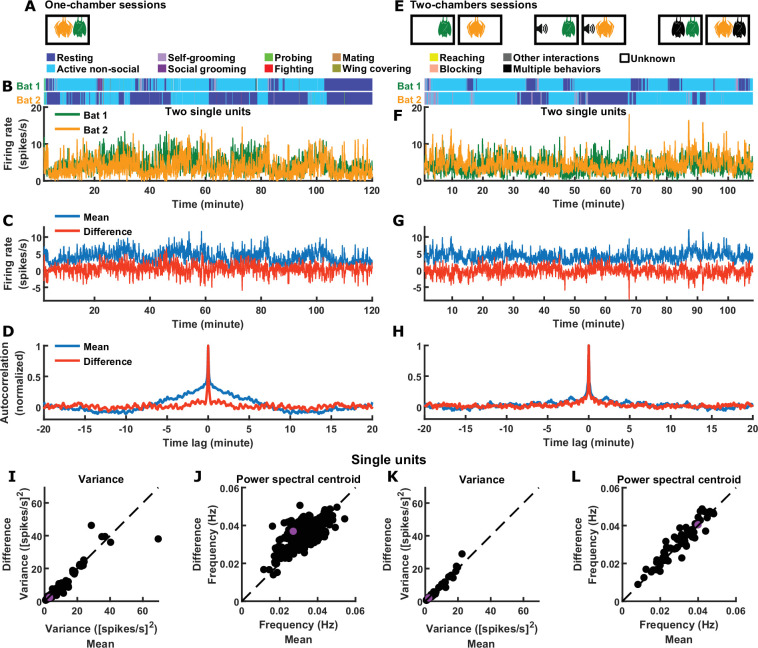
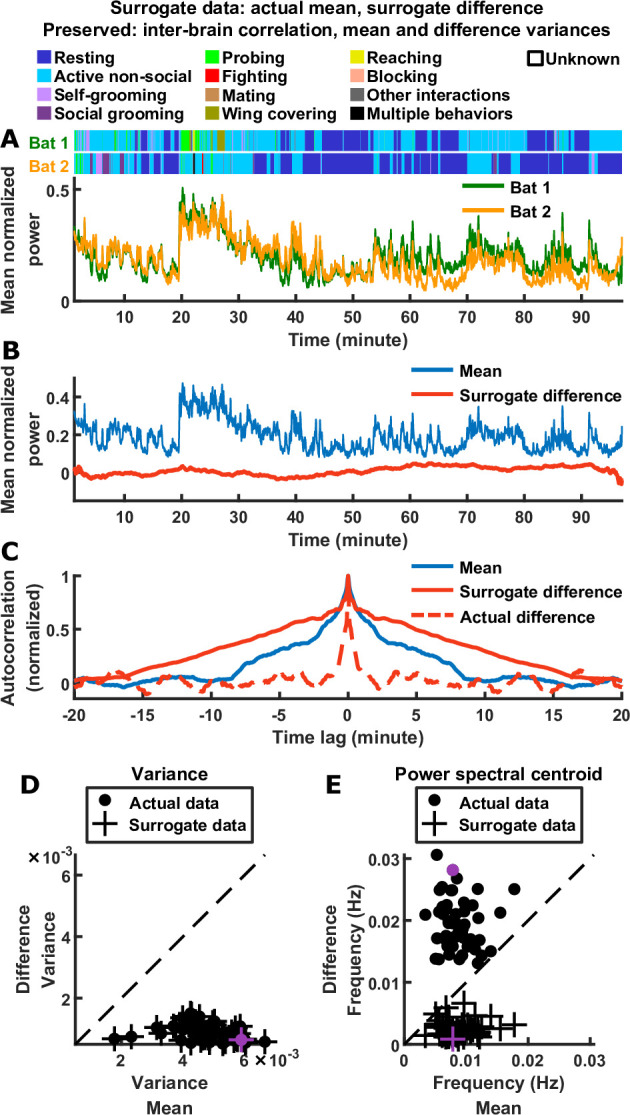
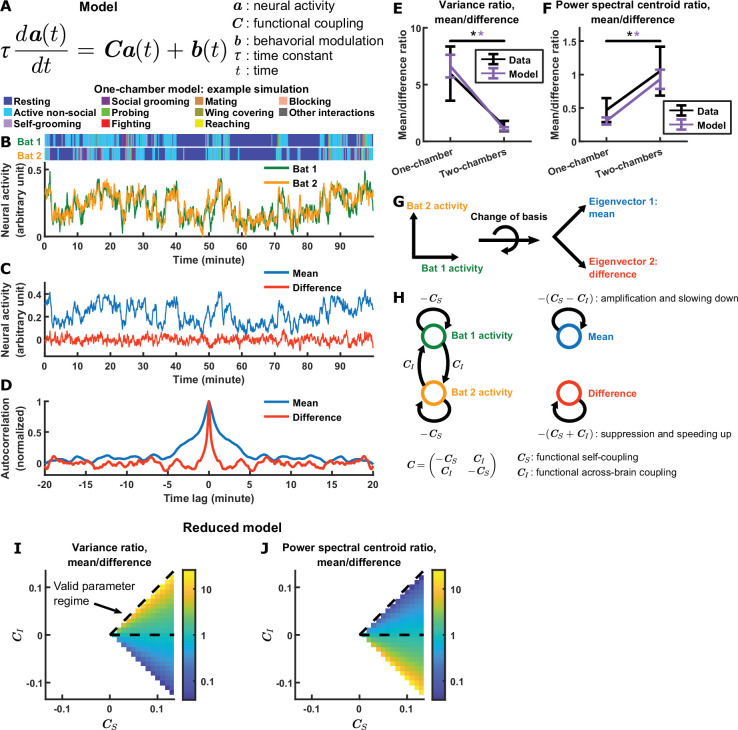
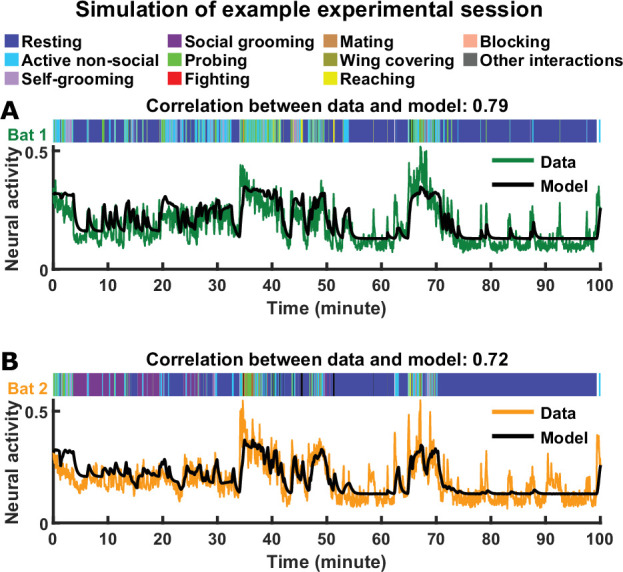
A key goal of social neuroscience is to understand the inter-brain neural relationship-the relationship between the neural activity of socially interacting individuals. Decades of research investigating this relationship have focused on the similarity in neural activity across brains. Here, we instead asked how neural activity differs between brains, and how that difference evolves alongside activity patterns shared between brains. Applying this framework to bats engaged in spontaneous social interactions revealed two complementary phenomena characterizing the inter-brain neural relationship: fast fluctuations of activity difference across brains unfolding in parallel with slow activity covariation across brains. A model reproduced these observations and generated multiple predictions that we confirmed using experimental data involving pairs of bats and a larger social group of bats. The model suggests that a simple computational mechanism involving positive and negative feedback could explain diverse experimental observations regarding the inter-brain neural relationship.

摘要

社会神经科学的一个主要目标是理解脑间神经关系——即社交互动个体之间的神经活动关系。几十年来,研究这一关系的重点一直放在大脑之间神经活动的相似性上。在这里,我们转而探讨大脑之间的神经活动有何不同,以及这种差异如何与大脑之间共享的活动模式一起演变。将这一框架应用于自发社交互动的蝙蝠身上,揭示了两个描述脑间神经关系的互补现象:大脑之间的活动差异快速波动,与大脑之间的缓慢活动协变并行不悖。一个模型再现了这些观察结果,并产生了多个预测,我们使用涉及成对蝙蝠和更大蝙蝠社会群体的实验数据证实了这些预测。该模型表明,一种涉及正反馈和负反馈的简单计算机制可以解释关于脑间神经关系的各种实验观察结果。
https://cdn.ncbi.nlm.nih.gov/pmc/blobs/1288/8947764/0bccd7452e98/elife-70493-sa2-fig1.jpg
https://cdn.ncbi.nlm.nih.gov/pmc/blobs/1288/8947764/0638109ebc50/elife-70493-fig1.jpg
https://cdn.ncbi.nlm.nih.gov/pmc/blobs/1288/8947764/42e8f13904d3/elife-70493-fig1-figsupp1.jpg
https://cdn.ncbi.nlm.nih.gov/pmc/blobs/1288/8947764/df125a8b0893/elife-70493-fig1-figsupp2.jpg
https://cdn.ncbi.nlm.nih.gov/pmc/blobs/1288/8947764/9a0a74ddba63/elife-70493-fig1-figsupp3.jpg
https://cdn.ncbi.nlm.nih.gov/pmc/blobs/1288/8947764/157762dc3387/elife-70493-fig1-figsupp4.jpg
https://cdn.ncbi.nlm.nih.gov/pmc/blobs/1288/8947764/f8505ad5220a/elife-70493-fig2.jpg
https://cdn.ncbi.nlm.nih.gov/pmc/blobs/1288/8947764/c8ed18df81fd/elife-70493-fig3.jpg
https://cdn.ncbi.nlm.nih.gov/pmc/blobs/1288/8947764/0b2839a3e7ee/elife-70493-fig3-figsupp1.jpg
https://cdn.ncbi.nlm.nih.gov/pmc/blobs/1288/8947764/9110e0657ee5/elife-70493-fig3-figsupp2.jpg
https://cdn.ncbi.nlm.nih.gov/pmc/blobs/1288/8947764/370a2360a0d3/elife-70493-fig4.jpg
https://cdn.ncbi.nlm.nih.gov/pmc/blobs/1288/8947764/3bbbca2b0146/elife-70493-fig4-figsupp1.jpg
https://cdn.ncbi.nlm.nih.gov/pmc/blobs/1288/8947764/ab3e1c46f1a2/elife-70493-fig5.jpg
https://cdn.ncbi.nlm.nih.gov/pmc/blobs/1288/8947764/62c290178db2/elife-70493-fig5-figsupp1.jpg
https://cdn.ncbi.nlm.nih.gov/pmc/blobs/1288/8947764/5ea8cd88ff77/elife-70493-fig6.jpg
https://cdn.ncbi.nlm.nih.gov/pmc/blobs/1288/8947764/19b905b6044b/elife-70493-fig7.jpg
https://cdn.ncbi.nlm.nih.gov/pmc/blobs/1288/8947764/0bccd7452e98/elife-70493-sa2-fig1.jpg
https://cdn.ncbi.nlm.nih.gov/pmc/blobs/1288/8947764/0638109ebc50/elife-70493-fig1.jpg
https://cdn.ncbi.nlm.nih.gov/pmc/blobs/1288/8947764/42e8f13904d3/elife-70493-fig1-figsupp1.jpg
https://cdn.ncbi.nlm.nih.gov/pmc/blobs/1288/8947764/df125a8b0893/elife-70493-fig1-figsupp2.jpg
https://cdn.ncbi.nlm.nih.gov/pmc/blobs/1288/8947764/9a0a74ddba63/elife-70493-fig1-figsupp3.jpg
https://cdn.ncbi.nlm.nih.gov/pmc/blobs/1288/8947764/157762dc3387/elife-70493-fig1-figsupp4.jpg
https://cdn.ncbi.nlm.nih.gov/pmc/blobs/1288/8947764/f8505ad5220a/elife-70493-fig2.jpg
https://cdn.ncbi.nlm.nih.gov/pmc/blobs/1288/8947764/c8ed18df81fd/elife-70493-fig3.jpg
https://cdn.ncbi.nlm.nih.gov/pmc/blobs/1288/8947764/0b2839a3e7ee/elife-70493-fig3-figsupp1.jpg
https://cdn.ncbi.nlm.nih.gov/pmc/blobs/1288/8947764/9110e0657ee5/elife-70493-fig3-figsupp2.jpg
https://cdn.ncbi.nlm.nih.gov/pmc/blobs/1288/8947764/370a2360a0d3/elife-70493-fig4.jpg
https://cdn.ncbi.nlm.nih.gov/pmc/blobs/1288/8947764/3bbbca2b0146/elife-70493-fig4-figsupp1.jpg
https://cdn.ncbi.nlm.nih.gov/pmc/blobs/1288/8947764/ab3e1c46f1a2/elife-70493-fig5.jpg
https://cdn.ncbi.nlm.nih.gov/pmc/blobs/1288/8947764/62c290178db2/elife-70493-fig5-figsupp1.jpg
https://cdn.ncbi.nlm.nih.gov/pmc/blobs/1288/8947764/5ea8cd88ff77/elife-70493-fig6.jpg
https://cdn.ncbi.nlm.nih.gov/pmc/blobs/1288/8947764/19b905b6044b/elife-70493-fig7.jpg
https://cdn.ncbi.nlm.nih.gov/pmc/blobs/1288/8947764/0bccd7452e98/elife-70493-sa2-fig1.jpg

相似文献

1
A unifying mechanism governing inter-brain neural relationship during social interactions.一种统一的机制,用于控制社交互动过程中大脑间神经关系。
Elife. 2022 Feb 10;11:e70493. doi: 10.7554/eLife.70493.
2
Correlated Neural Activity across the Brains of Socially Interacting Bats.社交互动蝙蝠大脑中的相关神经活动。
Cell. 2019 Jul 11;178(2):413-428.e22. doi: 10.1016/j.cell.2019.05.023. Epub 2019 Jun 20.
3
Cluster imaging of multi-brain networks (CIMBN): a general framework for hyperscanning and modeling a group of interacting brains.多脑网络的聚类成像(CIMBN):用于超扫描和对一组相互作用的大脑进行建模的通用框架。
Front Neurosci. 2015 Jul 28;9:267. doi: 10.3389/fnins.2015.00267. eCollection 2015.
4
A Multi-Brain Framework for Social Interaction.多脑框架下的社会交互。
Trends Neurosci. 2020 Sep;43(9):651-666. doi: 10.1016/j.tins.2020.06.008. Epub 2020 Jul 22.
5
Auditory cortex of bats and primates: managing species-specific calls for social communication.蝙蝠和灵长类动物的听觉皮层:处理用于社交交流的特定物种叫声。
Front Biosci. 2007 May 1;12:4621-40. doi: 10.2741/2413.
6
Insectivorous bats integrate social information about species identity, conspecific activity and prey abundance to estimate cost-benefit ratio of interactions.食虫蝙蝠整合关于物种身份、同种活动和猎物丰度的社会信息,以估计互动的成本效益比。
J Anim Ecol. 2019 Oct;88(10):1462-1473. doi: 10.1111/1365-2656.12989. Epub 2019 Apr 22.
7
Sickness effects on social interactions depend on the type of behaviour and relationship.疾病对社交互动的影响取决于行为和关系的类型。
J Anim Ecol. 2020 Jun;89(6):1387-1394. doi: 10.1111/1365-2656.13193. Epub 2020 Mar 20.
8
Crowdsourcing neuroscience: Inter-brain coupling during face-to-face interactions outside the laboratory.众包神经科学:实验室外面对面互动中的大脑间耦合。
Neuroimage. 2021 Feb 15;227:117436. doi: 10.1016/j.neuroimage.2020.117436. Epub 2020 Oct 8.
9
Behaviour, biology and evolution of vocal learning in bats.蝙蝠的发声学习行为、生物学和进化。
Philos Trans R Soc Lond B Biol Sci. 2020 Jan 6;375(1789):20190061. doi: 10.1098/rstb.2019.0061. Epub 2019 Nov 18.
10
Light enough to travel: migratory bats have smaller brains, but not larger hippocampi, than sedentary species.轻装上阵:与定居物种相比,迁徙蝙蝠的大脑更小,但海马体却更大。
Biol Lett. 2011 Apr 23;7(2):233-6. doi: 10.1098/rsbl.2010.0744. Epub 2010 Sep 29.

引用本文的文献

1
A perspective on neuroethology: what the past teaches us about the future of neuroethology.神经行为学视角:过去对神经行为学未来的启示。
J Comp Physiol A Neuroethol Sens Neural Behav Physiol. 2024 Mar;210(2):325-346. doi: 10.1007/s00359-024-01695-5. Epub 2024 Feb 27.
2
Do we all synch alike? Brain-body-environment interactions in ASD.我们是否都同步得一样?自闭症中的大脑-身体-环境相互作用。
Front Neural Circuits. 2023 Dec 20;17:1275896. doi: 10.3389/fncir.2023.1275896. eCollection 2023.
3
Blueprints for measuring natural behavior.

本文引用的文献

1
Cortical representation of group social communication in bats.蝙蝠群体社交通讯的皮层表征。
Science. 2021 Oct 22;374(6566):eaba9584. doi: 10.1126/science.aba9584.
2
From the field to the lab and back: neuroethology of primate social behavior.从田野到实验室再回归:灵长类动物社会行为的神经行为学
Curr Opin Neurobiol. 2021 Jun;68:76-83. doi: 10.1016/j.conb.2021.01.005. Epub 2021 Feb 7.
3
Neuronal correlates of strategic cooperation in monkeys.猴子策略合作的神经元相关性。
测量自然行为的蓝图。
iScience. 2022 Jun 18;25(7):104635. doi: 10.1016/j.isci.2022.104635. eCollection 2022 Jul 15.
Nat Neurosci. 2021 Jan;24(1):116-128. doi: 10.1038/s41593-020-00746-9. Epub 2020 Nov 23.
4
Social interaction networks in the primate brain.灵长类动物大脑中的社会互动网络。
Curr Opin Neurobiol. 2020 Dec;65:49-58. doi: 10.1016/j.conb.2020.08.012. Epub 2020 Oct 13.
5
A Multi-Brain Framework for Social Interaction.多脑框架下的社会交互。
Trends Neurosci. 2020 Sep;43(9):651-666. doi: 10.1016/j.tins.2020.06.008. Epub 2020 Jul 22.
6
Within-group synchronization in the prefrontal cortex associates with intergroup conflict.前额叶皮质内的组内同步与组间冲突相关。
Nat Neurosci. 2020 Jun;23(6):754-760. doi: 10.1038/s41593-020-0630-x. Epub 2020 Apr 27.
7
Interpersonal Neural Entrainment during Early Social Interaction.人际神经同步在早期社会互动中的作用。
Trends Cogn Sci. 2020 Apr;24(4):329-342. doi: 10.1016/j.tics.2020.01.006. Epub 2020 Feb 22.
8
Infant and Adult Brains Are Coupled to the Dynamics of Natural Communication.婴儿和成人的大脑与自然交流的动态相关联。
Psychol Sci. 2020 Jan;31(1):6-17. doi: 10.1177/0956797619878698. Epub 2019 Dec 17.
9
Correlated Neural Activity and Encoding of Behavior across Brains of Socially Interacting Animals.社会性互动动物大脑中相关的神经活动和行为编码。
Cell. 2019 Jul 11;178(2):429-446.e16. doi: 10.1016/j.cell.2019.05.022. Epub 2019 Jun 20.
10
Correlated Neural Activity across the Brains of Socially Interacting Bats.社交互动蝙蝠大脑中的相关神经活动。
Cell. 2019 Jul 11;178(2):413-428.e22. doi: 10.1016/j.cell.2019.05.023. Epub 2019 Jun 20.