Department of Internal Medicine (Hematology-Oncology), University of Texas Southwestern Medical Center, Dallas, Texas.
Senior Program Manager, Oncology Screening Services, Moncrief Cancer Institute, University of Texas Southwestern Medical Center, Dallas, Texas.
J Am Coll Radiol. 2022 Mar;19(3):480-487. doi: 10.1016/j.jacr.2021.12.003. Epub 2022 Feb 7.
Given the higher rates of tobacco use along with increased mortality specific to lung cancer in rural settings, low-dose CT (LDCT)-based lung cancer screening could be particularly beneficial to such populations. However, limited radiology facilities and increased geographical distance, combined with lower income and education along with reduced patient engagement, present heightened barriers to screening initiation and adherence.
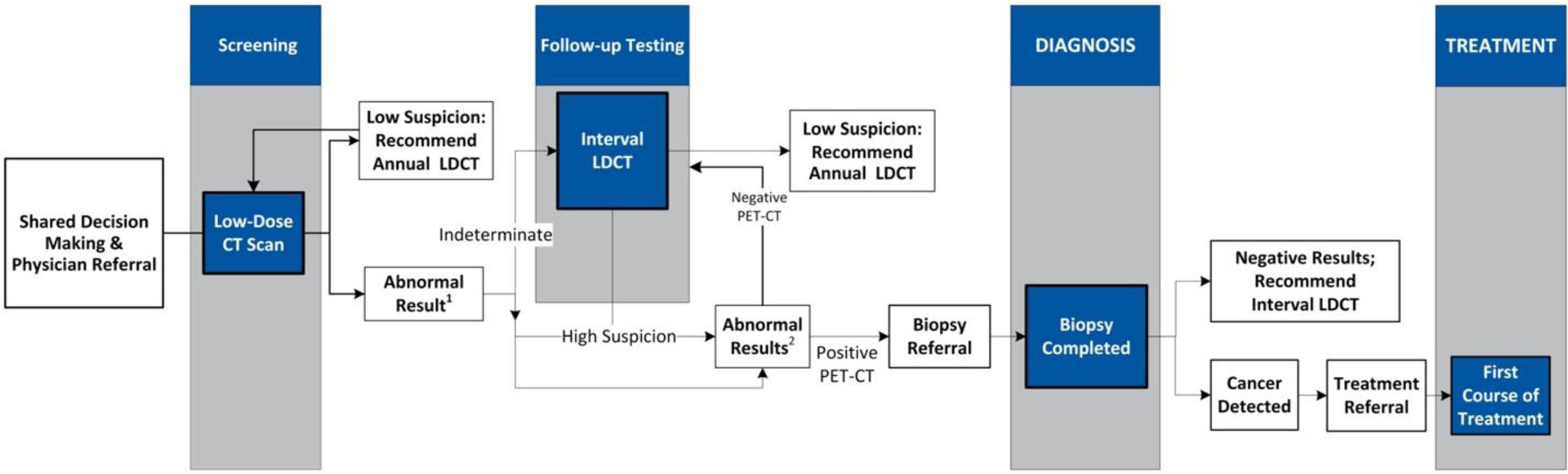
In collaboration with community leaders and stakeholders, we developed and implemented a community-based lung cancer screening program, including telephone-based navigation and tobacco cessation counseling support, serving 18 North Texas counties. Funding was available to support clinical services costs where needed. We collected data on LDCT referrals, orders, and completion.
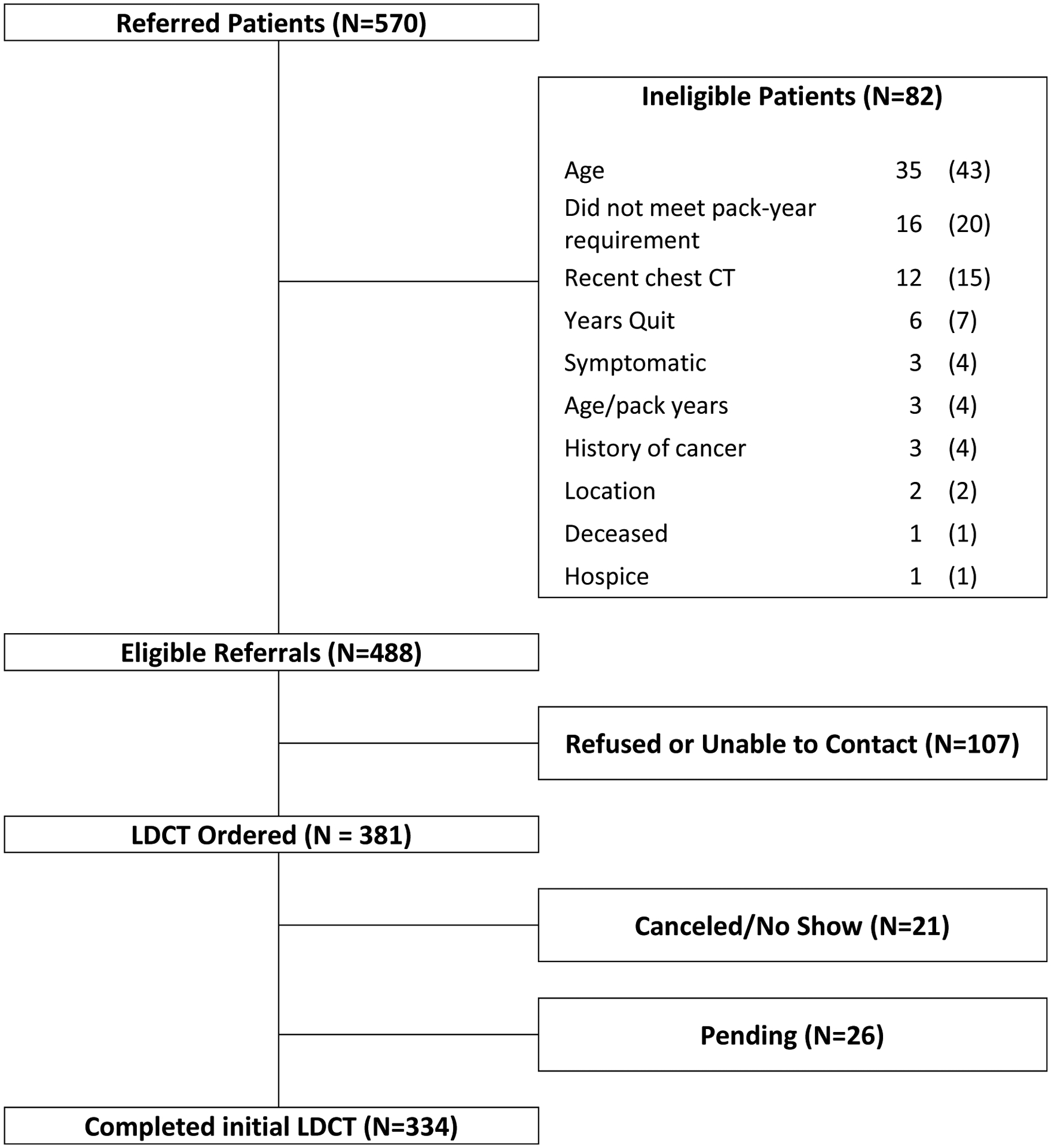
To raise awareness for lung cancer screening, we leveraged our established collaborative network of more than 700 community partners. In the first year of operation, 107 medical providers referred 570 patients for lung cancer screening, of whom 488 (86%) were eligible for LDCT. The most common reasons for ineligibility were age (43%) and insufficient tobacco history (20%). Of 381 ordered LDCTs, 334 (88%) were completed. Among screened patients, 61% were current smokers and 36% had insurance coverage for the procedure. The program cost per patient was $430.
Implementation, uptake, and completion of LDCT-based lung cancer screening is feasible in rural settings. Community outreach, health promotion, and algorithm-based navigation may support such efforts. Given low lung cancer screening rates nationally and heightened lung cancer risk in rural populations, similar programs in other regions may be particularly impactful.
鉴于农村地区烟草使用率较高,且肺癌死亡率较高,低剂量 CT(LDCT)肺癌筛查可能对这些人群特别有益。然而,有限的放射学设施和增加的地理距离,加上较低的收入和教育水平以及降低的患者参与度,增加了筛查启动和坚持的障碍。
我们与社区领导人和利益相关者合作,开发并实施了一项基于社区的肺癌筛查计划,包括基于电话的导航和戒烟咨询支持,服务于北德克萨斯州的 18 个县。有资金支持需要的临床服务费用。我们收集了 LDCT 转诊、订单和完成情况的数据。
为了提高肺癌筛查的意识,我们利用了我们现有的 700 多个社区合作伙伴的合作网络。在运营的第一年,107 名医疗服务提供者为 570 名患者转诊进行肺癌筛查,其中 488 名(86%)符合 LDCT 筛查条件。不符合条件的最常见原因是年龄(43%)和吸烟史不足(20%)。在 381 次已订购的 LDCT 中,有 334 次(88%)完成。在接受筛查的患者中,61%是当前吸烟者,36%有该程序的保险覆盖。每位患者的程序成本为 430 美元。
在农村地区实施、接受和完成基于 LDCT 的肺癌筛查是可行的。社区外展、健康促进和基于算法的导航可能支持这些努力。鉴于全国肺癌筛查率较低,以及农村人口肺癌风险较高,在其他地区开展类似的项目可能特别有影响力。