Department of Cardiology, Bispebjerg Hospital, University of Copenhagen, Copenhagen, Denmark.
Department of Endocrinology, Bispebjerg Hospital, University of Copenhagen, Copenhagen, Denmark.
PLoS One. 2022 Feb 11;17(2):e0263481. doi: 10.1371/journal.pone.0263481. eCollection 2022.
Results from large scale cardiovascular outcome trials in patients with type 2 diabetes mellitus (DM2) have found that sodium-glucose cotransporter 2 inhibitors (SGLT2i) reduce cardiovascular death and hospitalization for heart failure, but the mechanisms behind the beneficial cardiovascular effects are not fully understood. We tested the hypothesis that the SGLT2i, empagliflozin, improves non-endothelial dependent coronary microvascular function, thereby leading to better cardiac function.
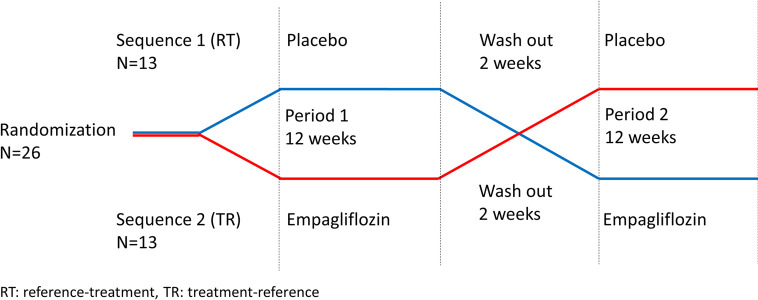
Patients with DM2 followed at the endocrinology outpatient clinic at Bispebjerg University Hospital were included in a double blinded, placebo-controlled cross-over study. Participants were allocated equally to each treatment sequence using simple randomization and treated with empagliflozin 25 mg and placebo for 12 weeks, interrupted by 2 weeks wash-out period. The primary outcome was coronary microvascular function, assessed as coronary flow velocity reserve (CFVR) and measured with transthoracic doppler echocardiography. Echocardiographic parameters of cardiac function were measured, and blood samples were analyzed for a broad panel of cardiovascular biomarkers.
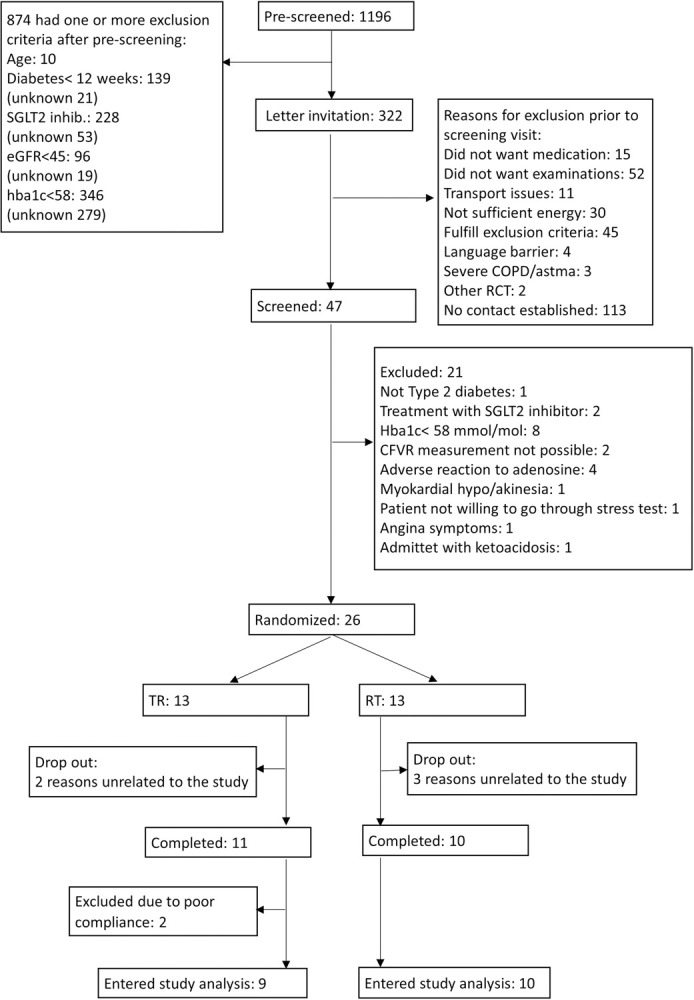
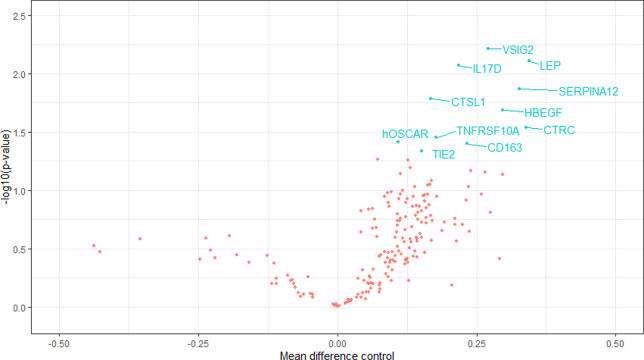
Thirteen patients were randomized to each sequence and 10 and 9 completed the study according to protocol, respectively, and were included in the analysis of outcome parameters. We found no improvement in CFVR (change in the empagliflozin period was -0.16 (SD 0.58)). There were no effects on cardiac systolic function or indicators of cardiac filling pressure. Well-known effects of empagliflozin were obtained, such as weight loss and reduction in Hba1c level. Creatinine level increased but remained within normal range. We observed a clear trend of reduction in cardiovascular biomarkers after empagliflozin treatment and increased levels after the placebo period. No serious adverse reactions were reported.
Despite effect on weight-loss, Hba1c and biomarkers, treatment with empagliflozin for 12 weeks did not improve CFVR in patients with DM2.
在 2 型糖尿病(DM2)患者中进行的大规模心血管结局试验结果表明,钠-葡萄糖共转运蛋白 2 抑制剂(SGLT2i)可降低心血管死亡和心力衰竭住院风险,但对其有益心血管作用的机制尚不完全清楚。我们检验了假设,即 SGLT2i,恩格列净,可以改善非内皮依赖性冠状动脉微血管功能,从而改善心脏功能。
在比斯加夫特大学医院内分泌科门诊就诊的 DM2 患者被纳入一项双盲、安慰剂对照交叉研究。参与者通过简单随机化分为两组,每组 6 人,分别接受恩格列净 25mg 和安慰剂治疗 12 周,然后间隔 2 周洗脱期。主要结局是冠状动脉微血管功能,通过经胸多普勒超声心动图评估冠状动脉血流速度储备(CFVR)。测量心脏功能的超声心动图参数,并分析广泛的心血管生物标志物血样。
每组随机分配 13 名患者,10 名和 9 名患者分别按照方案完成研究,纳入结局参数分析。我们发现 CFVR 没有改善(恩格列净期变化为-0.16(SD 0.58))。心脏收缩功能或充盈压指标无变化。我们观察到恩格列净的已知作用,如体重减轻和 Hba1c 水平降低。肌酐水平升高,但仍在正常范围内。在恩格列净治疗后,我们观察到心血管生物标志物明显减少,而在安慰剂期后,生物标志物水平增加。未报告严重不良反应。
尽管恩格列净对体重减轻、Hba1c 和生物标志物有作用,但在 DM2 患者中治疗 12 周并未改善 CFVR。