Kumamoto University Hospital, 1-1-1 Honjo, Chuo-ku, Kumamoto, 860-8556, Japan.
Biei Municipal Hospital, 3-8-35, Naka-machi, Biei Town, Kamikawa-gun, Hokkaido, 071-0207, Japan.
Adv Ther. 2022 Apr;39(4):1659-1677. doi: 10.1007/s12325-021-02023-y. Epub 2022 Feb 12.
Glaucoma is a leading cause of irreversible blindness and ripasudil was the first Rho kinase inhibitor approved as antiglaucoma medication. Here we present the final analysis of the ROCK-J study, a large-scale post-marketing surveillance study to evaluate the long-term safety and effectiveness of ripasudil in Japanese patients with glaucoma or ocular hypertension in a real-word clinical setting.
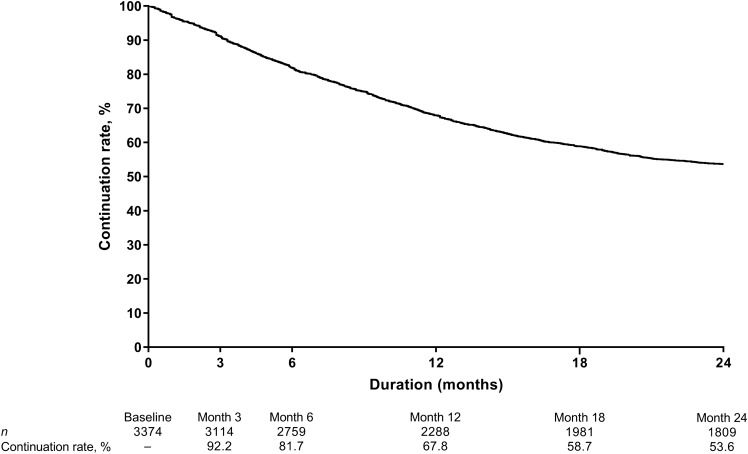
ROCK-J was a 24-month, prospective, open-label, observational study that included ripasudil-naïve patients with glaucoma or ocular hypertension who were initiating treatment with ripasudil according to the Japanese approved indication between June 1, 2015 and April 30, 2017. The primary safety endpoint was the incidence of adverse drug reactions (ADRs) (including blepharitis, plus assessment of its background factors); the primary efficacy endpoint was change in intraocular pressure (IOP) from baseline to 24 months.
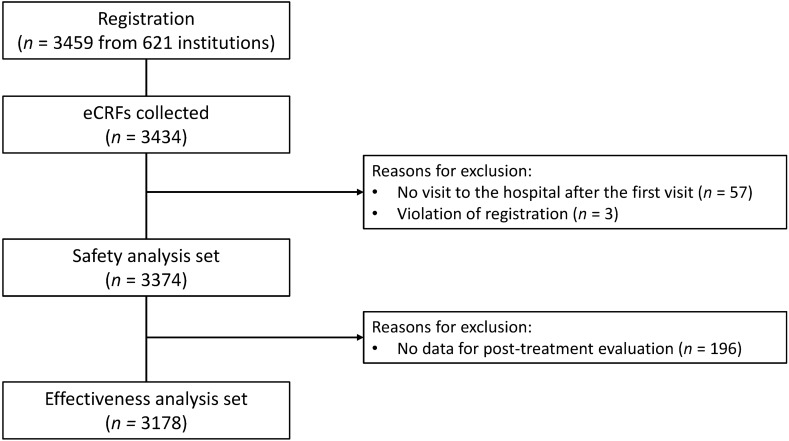
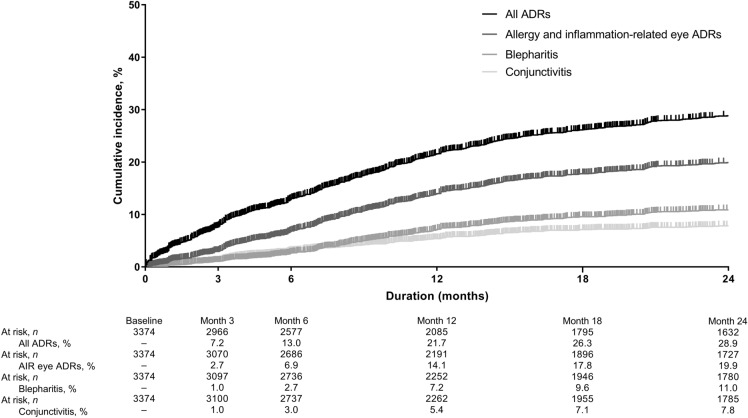
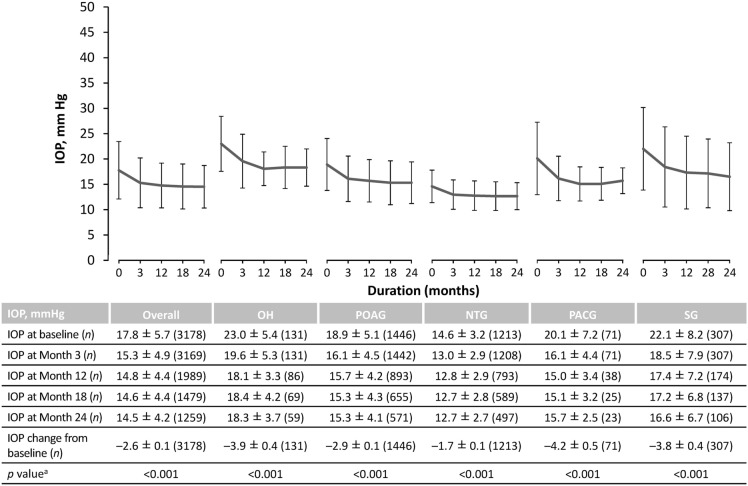
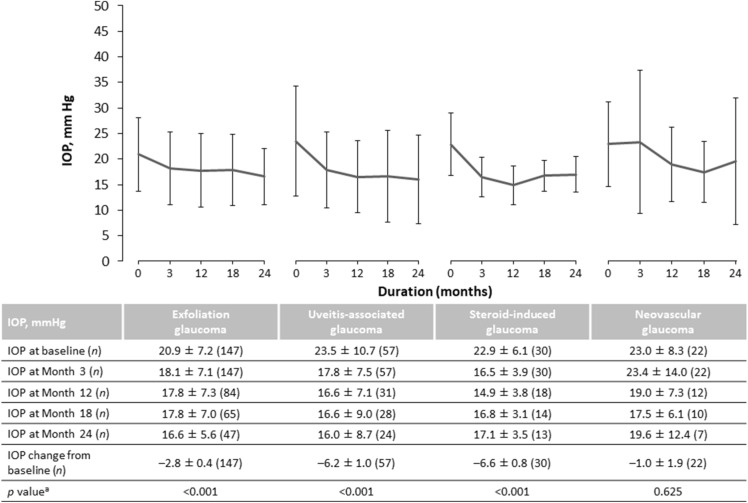
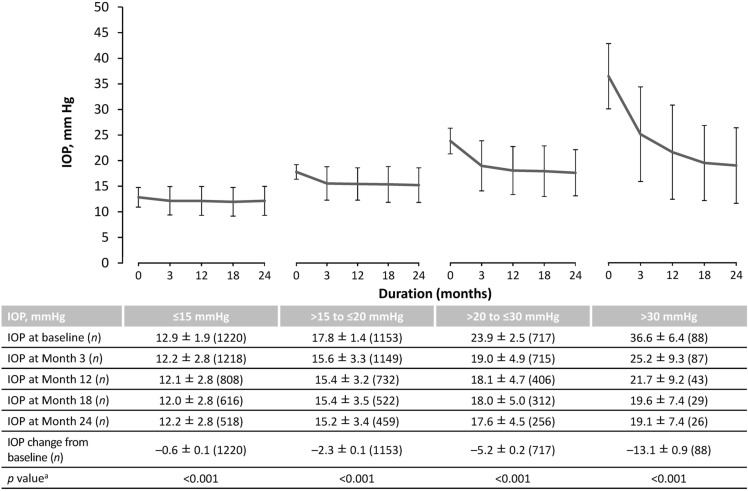
A total of 3374 Japanese patients with glaucoma or ocular hypertension were evaluated for safety and 3178 for effectiveness of ripasudil over a mean 524.5-day observational period. Overall, 853 (25.3%) patients experienced adverse drug reactions; the most common were blepharitis (8.6%), conjunctival hyperemia (8.5%), and conjunctivitis (6.3%). Multivariate analyses demonstrated that patients were more likely to experience the ADR blepharitis with ripasudil treatment if they were female (hazard ratio [HR] 1.307; p = 0.040), had comorbid or a previous history of blepharitis (HR 2.178; p = 0.001), or had a history of allergy to pollen (HR 1.645; p = 0.003) or medication (HR 2.276; p < 0.001). IOP decreased significantly from baseline with ripasudil; the least-squares mean ± standard error change in IOP from baseline to 24 months was - 2.6 ± 0.1 mmHg (p < 0.001). Significant IOP changes were seen in four types of glaucoma, namely primary open-angle glaucoma, normal-tension glaucoma, primary angle-closure glaucoma, and secondary glaucoma, and ocular hypertension.
Ripasudil was safe and effective as an antiglaucoma medication with no new safety signals identified and significant reductions in IOP maintained over 24 months of treatment.
青光眼是导致不可逆性失明的主要原因,而利帕舒利是第一种被批准用于抗青光眼药物的 Rho 激酶抑制剂。本研究为 ROCK-J 研究的最终分析结果,这是一项在真实临床环境下评估利帕舒利治疗日本青光眼或高眼压症患者的长期安全性和有效性的大规模上市后监测研究。
ROCK-J 是一项为期 24 个月的前瞻性、开放性、观察性研究,纳入了 2015 年 6 月 1 日至 2017 年 4 月 30 日期间根据日本批准的适应证开始使用利帕舒利治疗的利帕舒利初治青光眼或高眼压症患者。主要安全性终点为药物不良反应(ADR)的发生率(包括睑缘炎,以及评估其背景因素);主要疗效终点为治疗 24 个月时的眼压(IOP)变化。
共有 3374 例青光眼或高眼压症日本患者接受了利帕舒利的安全性评估,3178 例患者接受了有效性评估,平均观察期为 524.5 天。总体而言,853 例(25.3%)患者发生了药物不良反应;最常见的是睑缘炎(8.6%)、结膜充血(8.5%)和结膜炎(6.3%)。多变量分析表明,如果患者为女性(风险比 [HR] 1.307;p=0.040)、患有合并症或既往有睑缘炎病史(HR 2.178;p=0.001)或对花粉(HR 1.645;p=0.003)或药物(HR 2.276;p<0.001)过敏,则更有可能发生 ADR 睑缘炎。与基线相比,IOP 显著降低;与基线相比,IOP 的最小二乘均数±标准误变化从 24 个月时的-2.6±0.1mmHg(p<0.001)。原发性开角型青光眼、正常眼压型青光眼、原发性闭角型青光眼和继发性青光眼及高眼压症等四种类型的青光眼的 IOP 均有显著变化。
利帕舒利作为一种抗青光眼药物是安全有效的,未发现新的安全性信号,且治疗 24 个月后 IOP 显著降低且维持稳定。