Park Jimin, Kim Seung Ki, Hallis Steffanus Pranoto, Choi Bo-Hyun, Kwak Mi-Kyoung
Department of Pharmacy and BK21FOUR Advanced Program for SmartPharma Leaders, Graduate School of The Catholic University of Korea, Gyeonggi-do, South Korea.
Department of Pharmacology, School of Medicine, Daegu Catholic University, Daegu, South Korea.
Front Oncol. 2022 Jan 26;11:808300. doi: 10.3389/fonc.2021.808300. eCollection 2021.
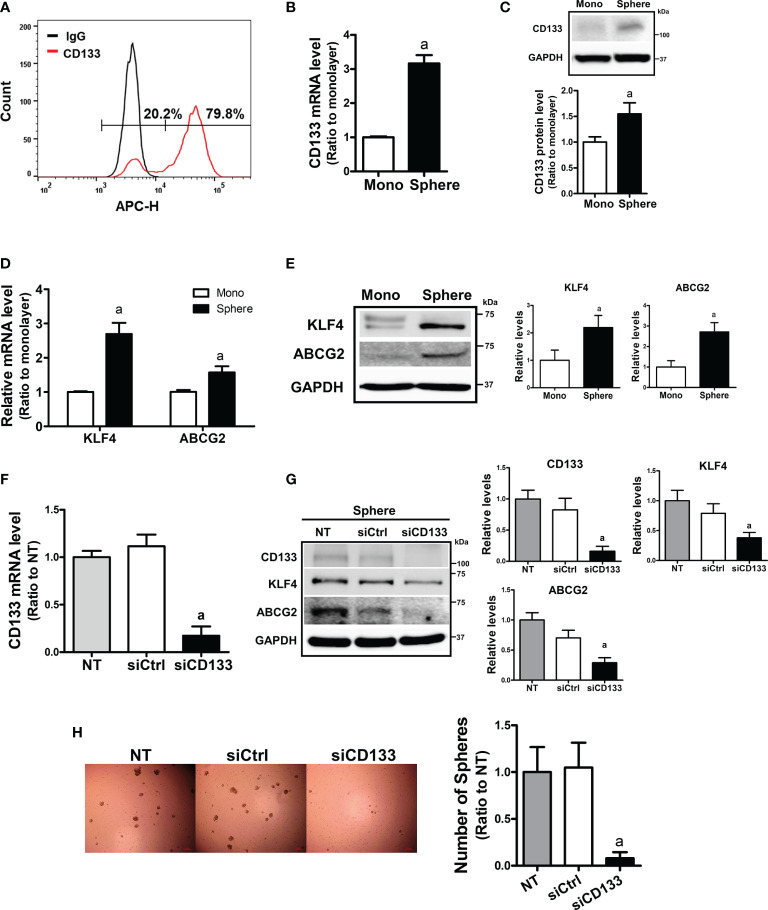
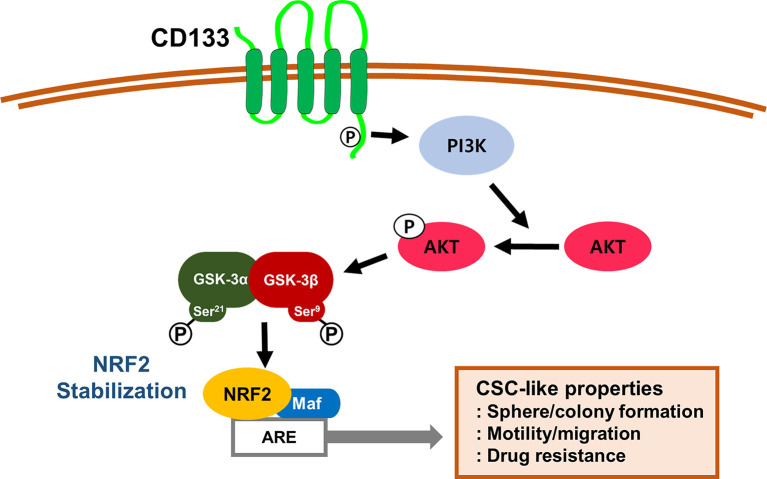
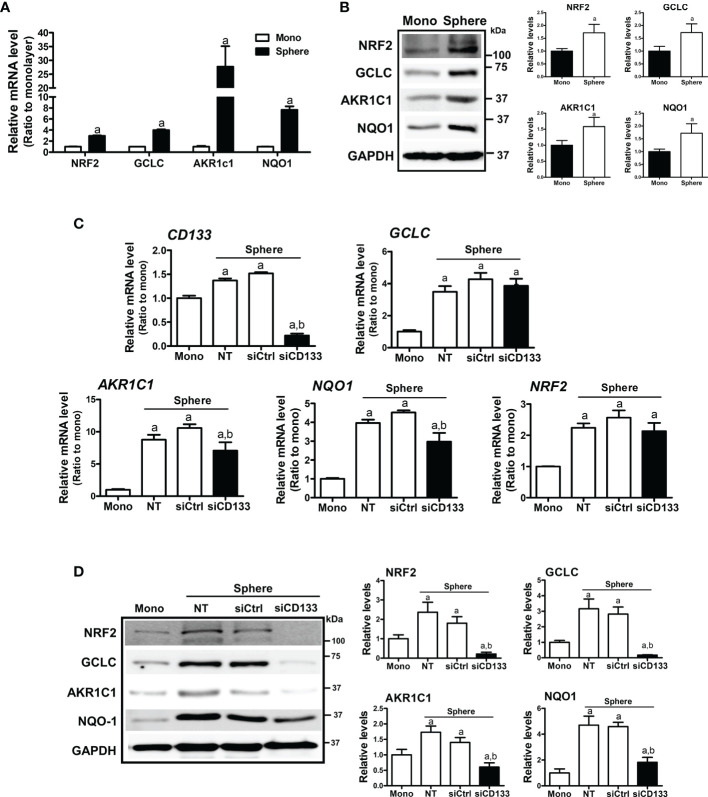
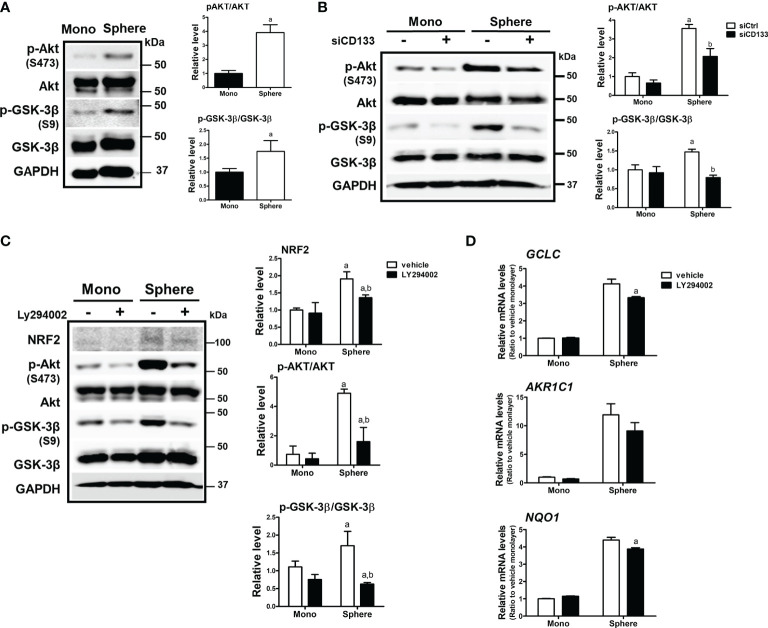
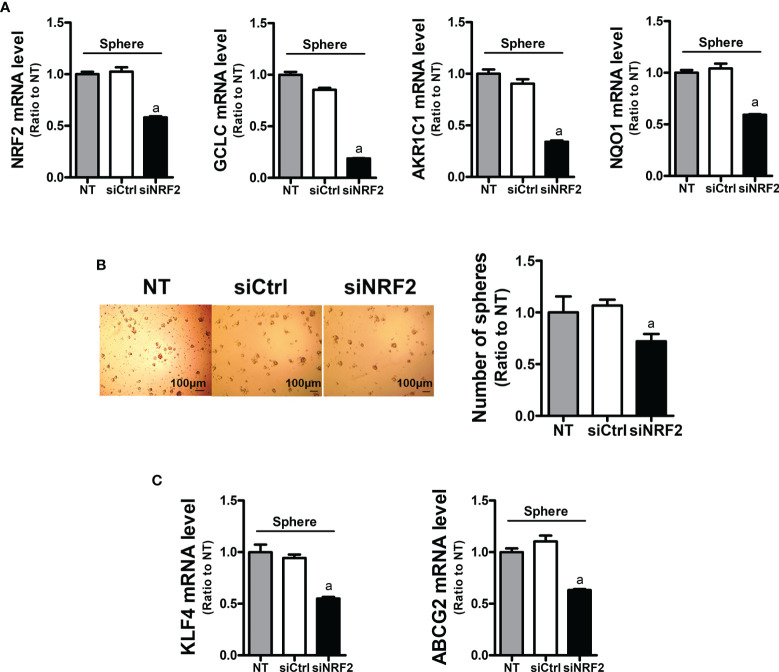
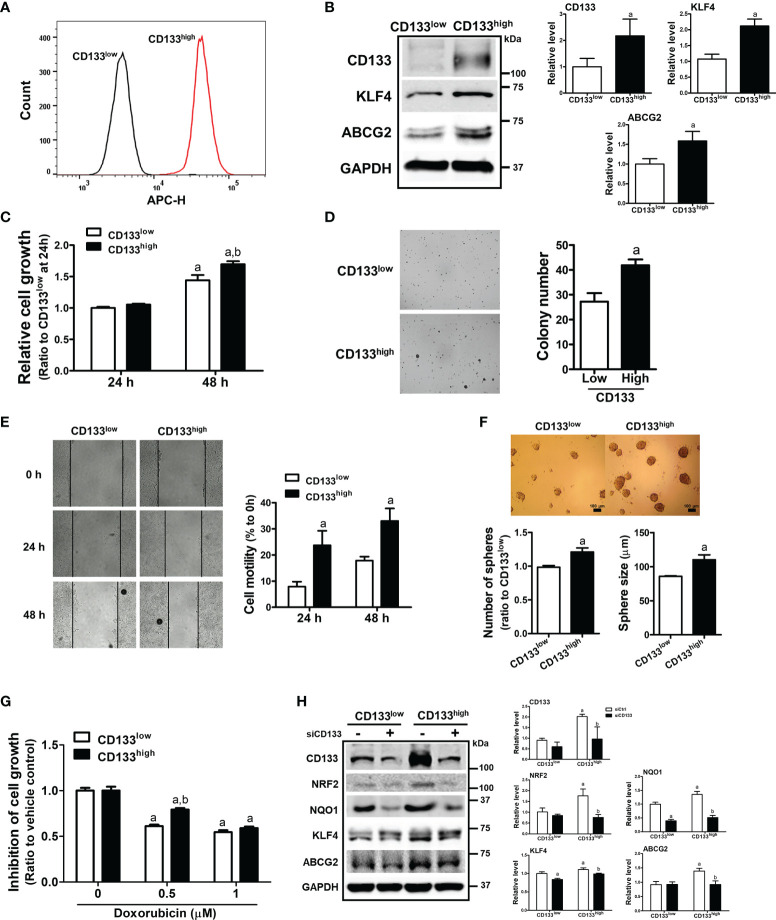
Cancer stem cells (CSCs) exhibit intrinsic therapy/stress resistance, which often cause cancer recurrence after therapy. In this study, we investigated the potential relationship between the cluster of differentiation (CD)-133, a CSC marker of colon cancer, and nuclear factor erythroid 2-like 2 (NFE2L2; NRF2), a master transcription factor for the regulation of multiple antioxidant genes. In the first model of CSC, a sphere culture of the colorectal cell line HCT116, showed increased levels of CD133 and NRF2. Silencing of reduced the levels of CSC markers, such as Kruppel-like factor 4 (KLF4) and ATP-binding cassette subfamily G member 2 (ABCG2), and further suppressed the expression levels of NRF2 and its target genes. As a potential molecular link, CD133-mediated activation of phosphoinositide 3-kinase/serine-threonine kinase (PI3K/AKT) signaling appears to increase the NRF2 protein levels phosphorylation and the consequent inhibition of glycogen synthase kinase (GSK)-3β. Additionally, -silenced HCT116 cells showed attenuated sphere formation capacity and reduced CSC markers expression, indicating the critical role of the NRF2 pathway in the development of CSC-like properties. As a second model of CSC, the CD133 cell population was isolated from HCT116 cells. CSC-like properties, including sphere formation, motility, migration, colony formation, and anticancer resistance, were enhanced in the CD133 population compared to CD133 HCT116 cells. Levels of NRF2, which were elevated in CD133 HCT116, were suppressed by -silencing. In line with these, the analysis of The Cancer Genome Atlas (TCGA) database showed that high levels of CD133 expression are correlated with increased NRF2 signaling, and alterations in gene or expression are associated with unfavorable clinical outcome in colorectal carcinoma patients. These results indicate that the CD133/NRF2 axis contributes to the development of CSC-like properties in colon cancer cells, and that PI3K/AKT signaling activation is involved in CD133-mediated NRF2 activation.
癌症干细胞(CSCs)具有内在的治疗/应激抗性,这常常导致治疗后癌症复发。在本研究中,我们调查了结肠癌的癌症干细胞标志物分化簇(CD)-133与核因子红细胞2样2(NFE2L2;NRF2,一种调控多种抗氧化基因的主要转录因子)之间的潜在关系。在第一个癌症干细胞模型中,结肠癌细胞系HCT116的球体培养显示CD133和NRF2水平升高。[此处原文似乎缺失了某个基因名称]的沉默降低了癌症干细胞标志物的水平,如Kruppel样因子4(KLF4)和ATP结合盒亚家族G成员2(ABCG2),并进一步抑制了NRF2及其靶基因的表达水平。作为一种潜在的分子联系,CD133介导的磷酸肌醇3激酶/丝氨酸-苏氨酸激酶(PI3K/AKT)信号激活似乎通过磷酸化增加了NRF2蛋白水平,并因此抑制了糖原合酶激酶(GSK)-3β。此外,[此处原文似乎缺失了某个基因名称]沉默的HCT116细胞显示球体形成能力减弱且癌症干细胞标志物表达降低,表明NRF2途径在癌症干细胞样特性的发展中起关键作用。作为第二个癌症干细胞模型,从HCT116细胞中分离出CD133细胞群体。与CD133阴性的HCT116细胞相比,CD133细胞群体的癌症干细胞样特性,包括球体形成、运动性、迁移、集落形成和抗癌抗性均增强。在CD133阳性的HCT116中升高的NRF2水平通过[此处原文似乎缺失了某个基因名称]沉默而受到抑制。与此一致,癌症基因组图谱(TCGA)数据库分析显示,CD133高表达与NRF2信号增加相关,并且[此处原文似乎缺失了某个基因名称]基因或表达的改变与结肠癌患者的不良临床结局相关。这些结果表明,CD133/NRF2轴有助于结肠癌细胞中癌症干细胞样特性的发展,并且PI3K/AKT信号激活参与了CD133介导的NRF2激活。