Hill Ian, Olivere Lindsey, Helmkamp Joshua, Le Elliot, Hill Westin, Wahlstedt John, Khoury Phillip, Gloria Jared, Richard Marc J, Rosenberger Laura H, Codd Patrick J
Pratt School of Engineering, Duke University, Durham, North Carolina, USA.
School of Medicine, Duke University, Durham, North Carolina, USA.
JAMIA Open. 2022 Jan 19;5(1):ooac003. doi: 10.1093/jamiaopen/ooac003. eCollection 2022 Apr.
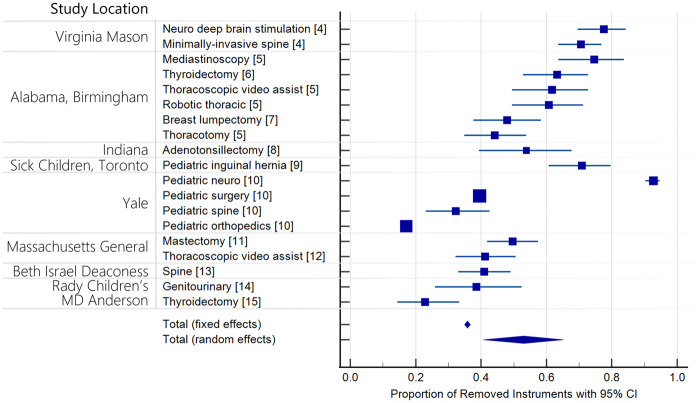
Surgical instrument oversupply drives cost, confusion, and workload in the operating room. With an estimated 78%-87% of instruments being unused, many health systems have recognized the need for supply refinement. By manually recording instrument use and tasking surgeons to review instrument trays, previous quality improvement initiatives have achieved an average 52% reduction in supply. While demonstrating the degree of instrument oversupply, previous methods for identifying required instruments are qualitative, expensive, lack scalability and sustainability, and are prone to human error. In this work, we aim to develop and evaluate an automated system for measuring surgical instrument use.
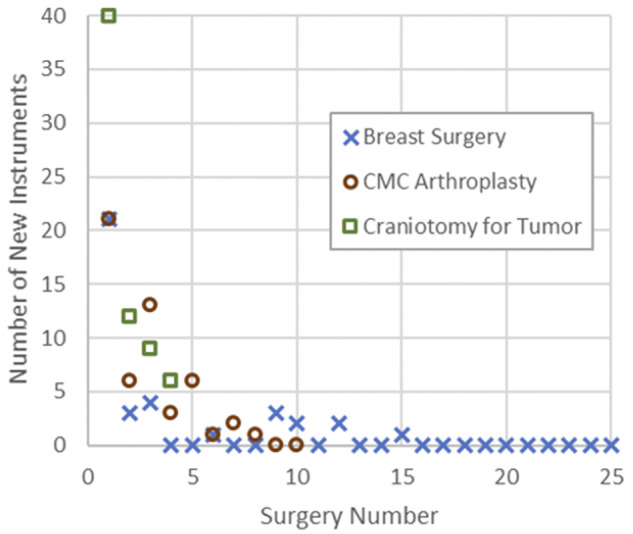
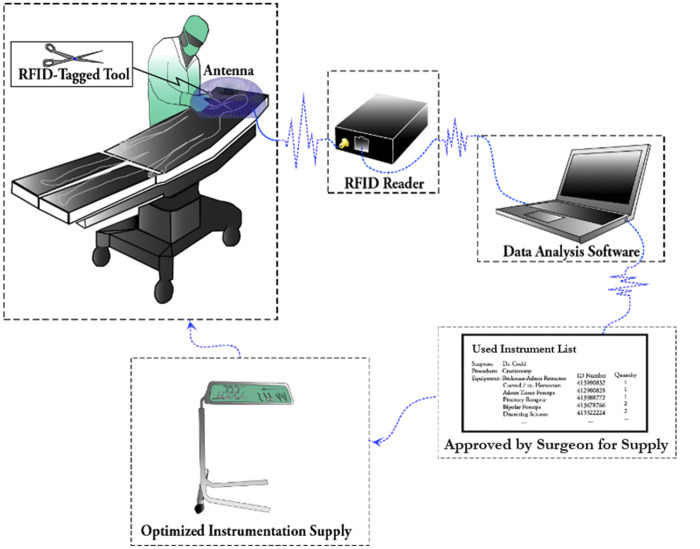
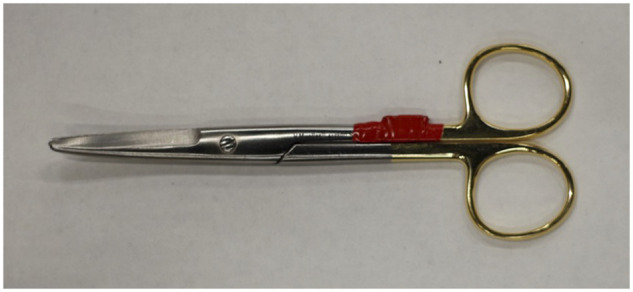
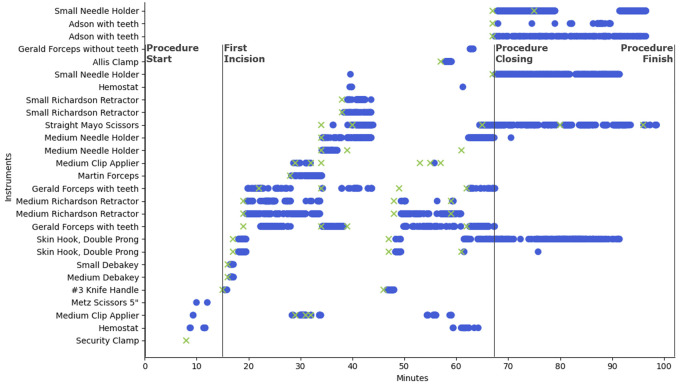
We present the first system to our knowledge that automates the collection of real-time instrument use data with radio-frequency identification (RFID). Over 15 breast surgeries, 10 carpometacarpal (CMC) arthroplasties, and 4 craniotomies, instrument use was tracked by both a trained observer manually recording instrument use and the RFID system.
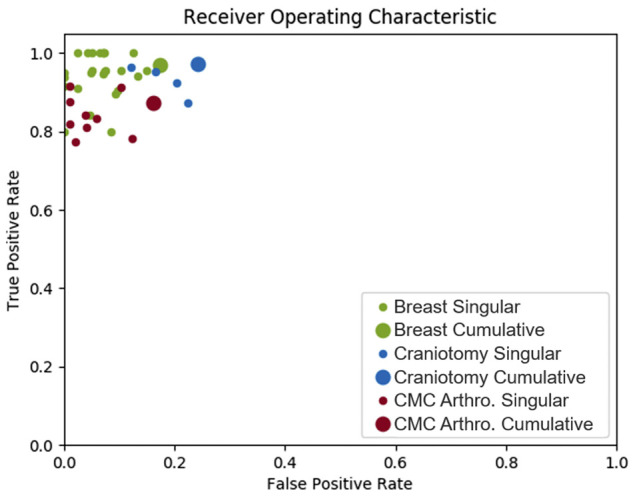
The average Cohen's Kappa agreement between the system and the observer was 0.81 (near perfect agreement), and the system enabled a supply reduction of 50.8% in breast and orthopedic surgery. Over 10 monitored breast surgeries and 1 CMC arthroplasty with reduced trays, no eliminated instruments were requested, and both trays continue to be used as the supplied standard. Setup time in breast surgery decreased from 23 min to 17 min with the reduced supply.
The RFID system presented herein achieves a novel data stream that enables accurate instrument supply optimization.
手术器械供应过剩导致手术室成本增加、管理混乱和工作量加大。据估计,78%-87%的器械未被使用,许多医疗系统已认识到优化供应的必要性。通过人工记录器械使用情况并要求外科医生检查器械托盘,以往的质量改进措施已使供应量平均减少了52%。虽然此前的方法揭示了器械供应过剩的程度,但用于识别所需器械的方法是定性的、成本高昂、缺乏可扩展性和可持续性,且容易出现人为错误。在本研究中,我们旨在开发并评估一种用于测量手术器械使用情况的自动化系统。
据我们所知,我们提出了首个利用射频识别(RFID)自动收集实时器械使用数据的系统。在15台乳腺手术、10台腕掌关节(CMC)置换术和4台开颅手术中,由一名经过培训的观察员人工记录器械使用情况,同时利用RFID系统跟踪器械使用情况。
该系统与观察员之间的平均科恩卡帕一致性系数为0.81(接近完美一致),该系统使乳腺和骨科手术的供应量减少了50.8%。在10台监测的乳腺手术和1台使用减少托盘的CMC置换术中,没有要求补充任何已淘汰的器械,两个托盘仍作为标准供应继续使用。随着供应量减少,乳腺手术的准备时间从23分钟降至17分钟。
本文介绍的RFID系统实现了一种新颖的数据流,能够准确优化器械供应。