González-Cano Rafael, González-Martínez Ana, Muñoz-Mejías María Eva, Valera Pablo, Rodero Evangelina
CERSYRA-IRIAF, Avenida del Vino 10, 048619 Valdepeñas Ciudad Real, Spain.
Department of Animal Production, Faculty of Veterinary Sciences, University of Cordoba, 14071 Córdoba, Spain.
Animals (Basel). 2022 Jan 20;12(3):249. doi: 10.3390/ani12030249.
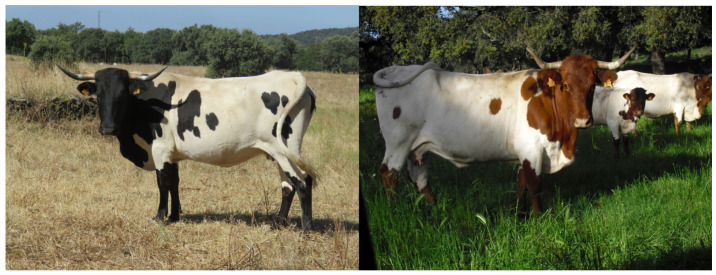
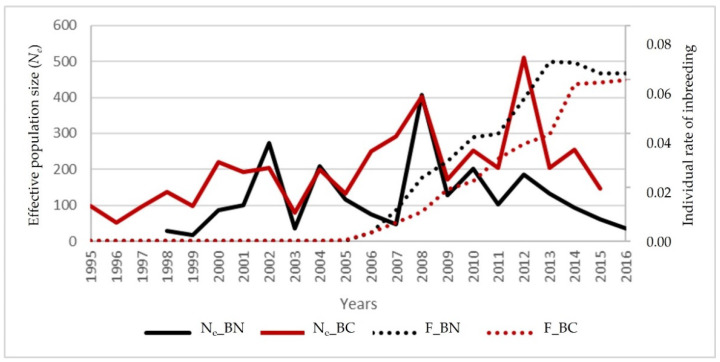
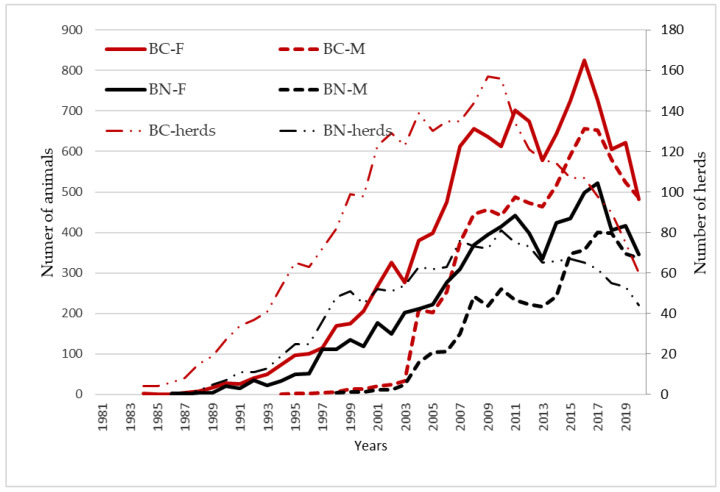
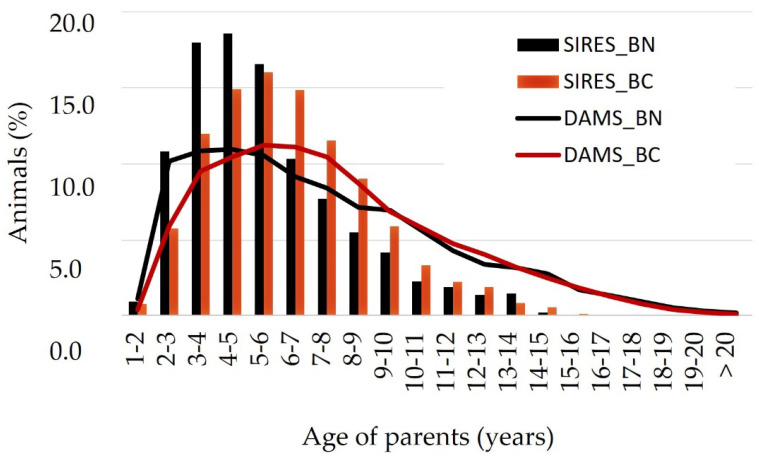
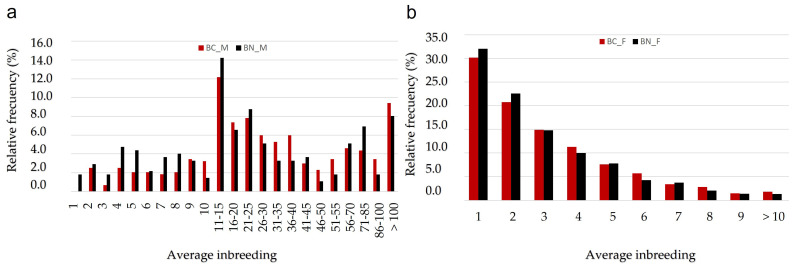
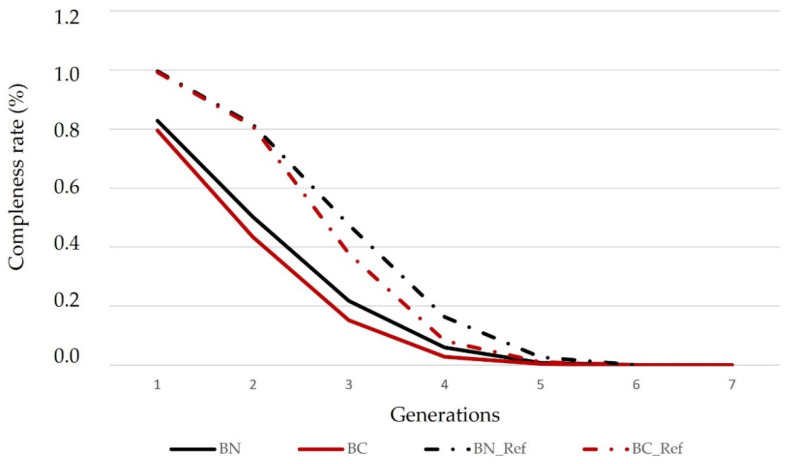
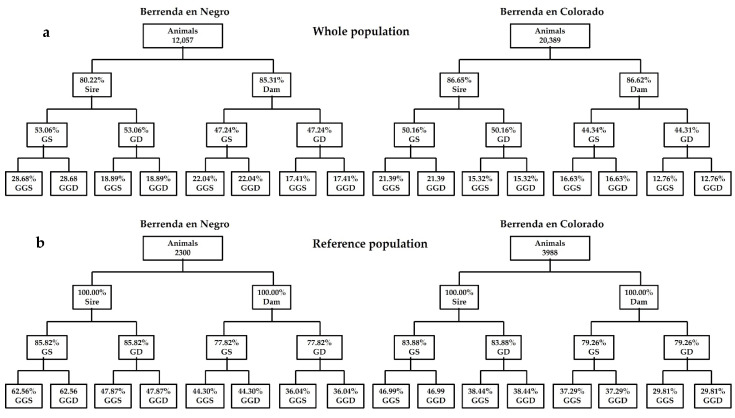
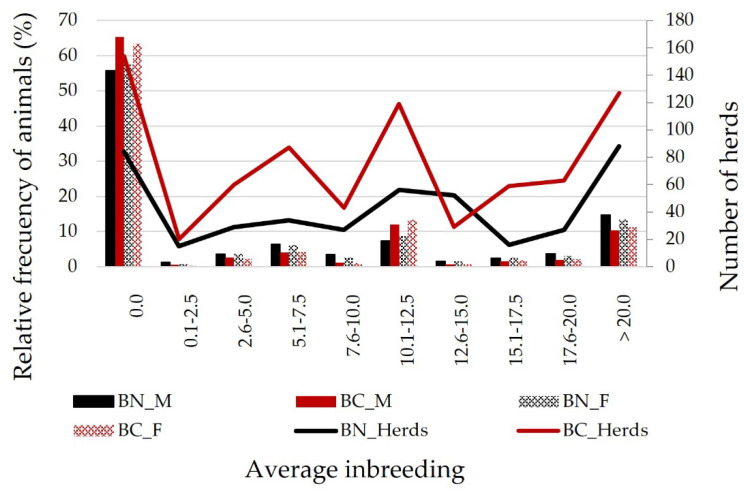
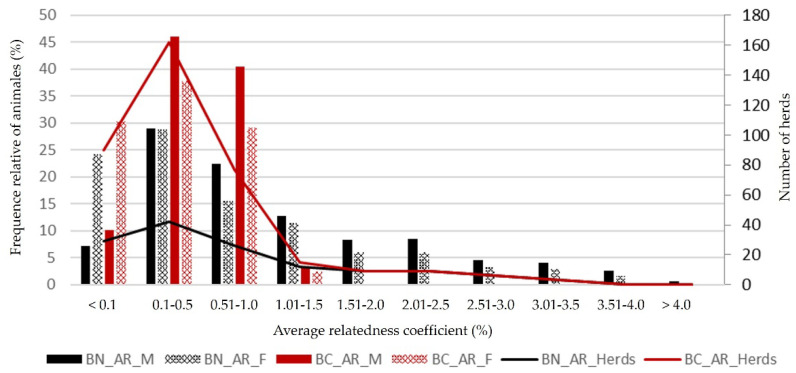
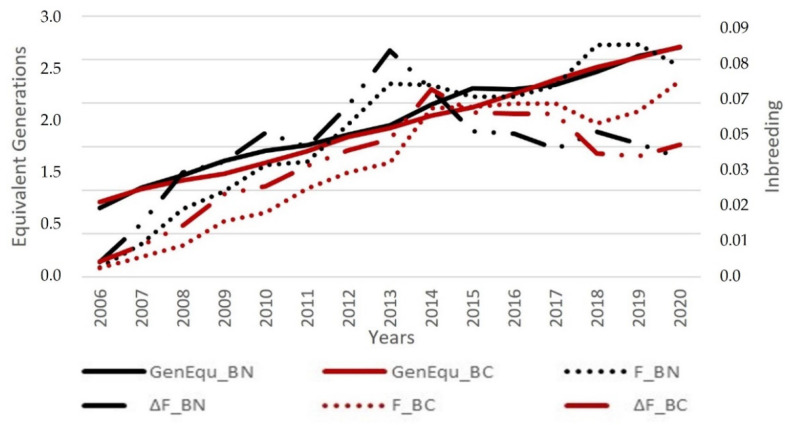
Pedigree analyses of two endangered cattle breeds were performed in order to study the structure and the genetic variability in their populations. Pedigree data were analyzed from 12,057 individuals belonging to the "Berrenda en Negro" cattle breed (BN) and 20,389 individuals belonging to the "Berrenda en Colorado" cattle breed (BC) that were born between 1983 and 2020. BN and BC reference populations (RP) were set up by 2300 and 3988 animals, respectively. The generation interval in BN and BC reference populations was equal to 6.50 and 6.92 years, respectively. The pedigree completeness level was 82.76% in BN and 79.57% in BC. The inbreeding rates were 4.5% in BN and 3.4% in BC, respectively. The relationship among animals when they were born in different herds was 1.8% in BN and 5% in BC; these values increased to 8.5% and 7.7%, respectively when comparing animals that were born in the same herd. The effective number of founding herds was 23.9 in BN and 60.9 in BC. Number of ancestors needed to explain 50% of genes pool in the whole population was 50 and 101, in BN and in BC, respectively. The effective population size based on co-ancestries was 92.28 in BN and 169.92 in BC. The genetic variability has been maintained in both populations over time and the results of this study suggest that measures to promote the conservation of the genetic variability in these two breeds would go through for the exchange of breeding animals among farms and for monitoring the genetic contributions before implementing any selective action.
为了研究两个濒危牛品种群体的结构和遗传变异性,对其进行了系谱分析。分析了1983年至2020年间出生的属于“黑贝伦达”牛品种(BN)的12,057头个体和属于“红贝伦达”牛品种(BC)的20,389头个体的系谱数据。BN和BC参考群体(RP)分别由2300头和3988头动物组成。BN和BC参考群体的世代间隔分别为6.50年和6.92年。BN的系谱完整度为82.76%,BC为79.57%。BN和BC的近亲繁殖率分别为4.5%和3.4%。不同牛群出生的动物之间的亲缘关系在BN中为1.8%,在BC中为5%;当比较同一牛群出生的动物时,这些值分别增加到8.5%和7.7%。BN的有效奠基牛群数量为23.9,BC为60.9。在BN和BC中,分别需要50个和101个祖先来解释整个群体中50%的基因库。基于共同祖先的有效群体大小在BN中为92.28,在BC中为169.92。随着时间的推移,这两个群体的遗传变异性都得到了维持,本研究结果表明,促进这两个品种遗传变异性保护的措施将通过农场间种畜交换以及在实施任何选择性行动之前监测遗传贡献来实现。