Liu Bin, Cao Yufei, Li Yanyan, Ma Haifeng, Yang Mingfei, Zhang Qiang, Li Guofeng, Zhang Kai, Wu Yue, Zhou Youxin, Yang Wei, Sun Ting
Department of Neurosurgery, Laboratory of Brain and Nerve Research, The First Affiliated Hospital of Soochow University, Suzhou, Jiangsu 215006, China.
Department of Neurosurgery, Qinghai Provincial People's Hospital, Xining, Qinghai 810007, China.
Cancers (Basel). 2022 Feb 3;14(3):783. doi: 10.3390/cancers14030783.
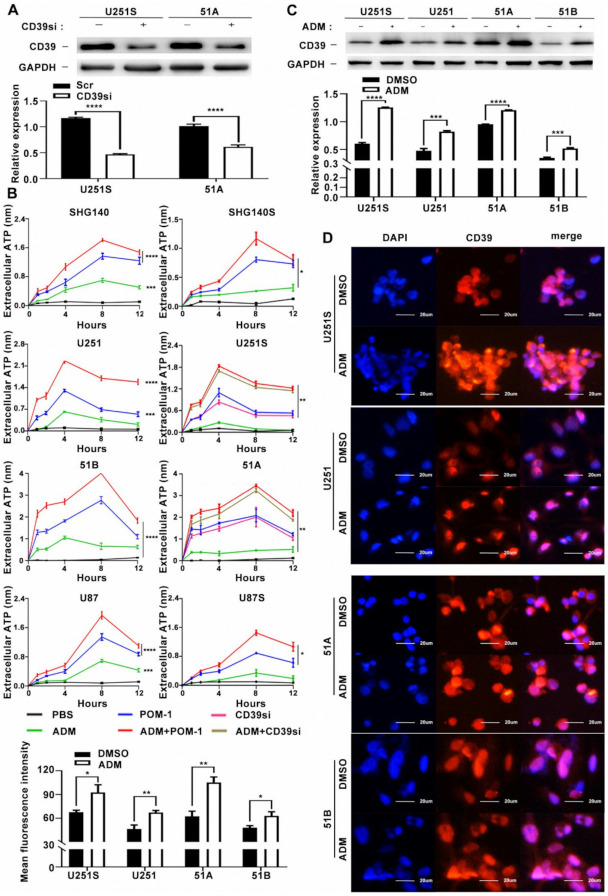
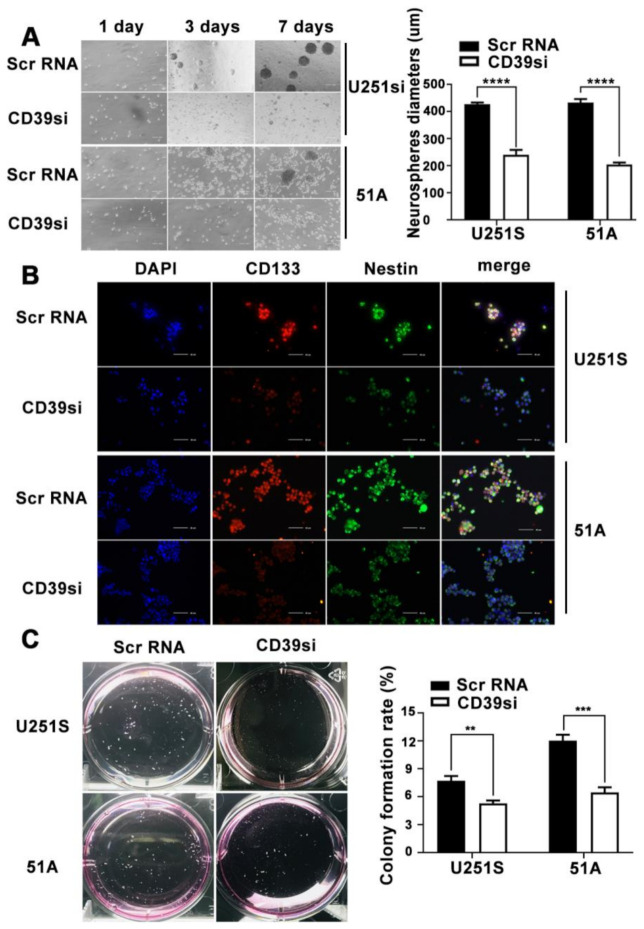
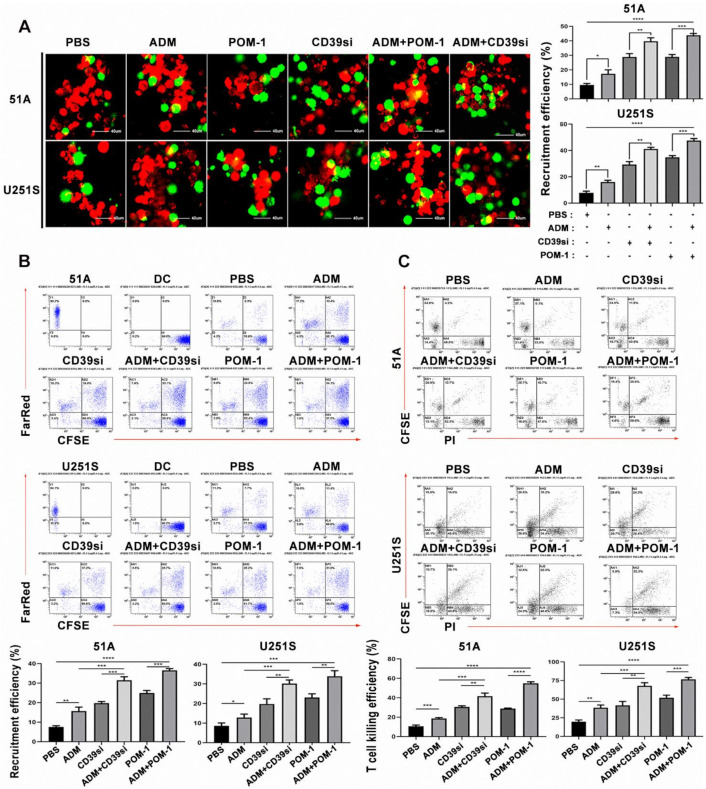
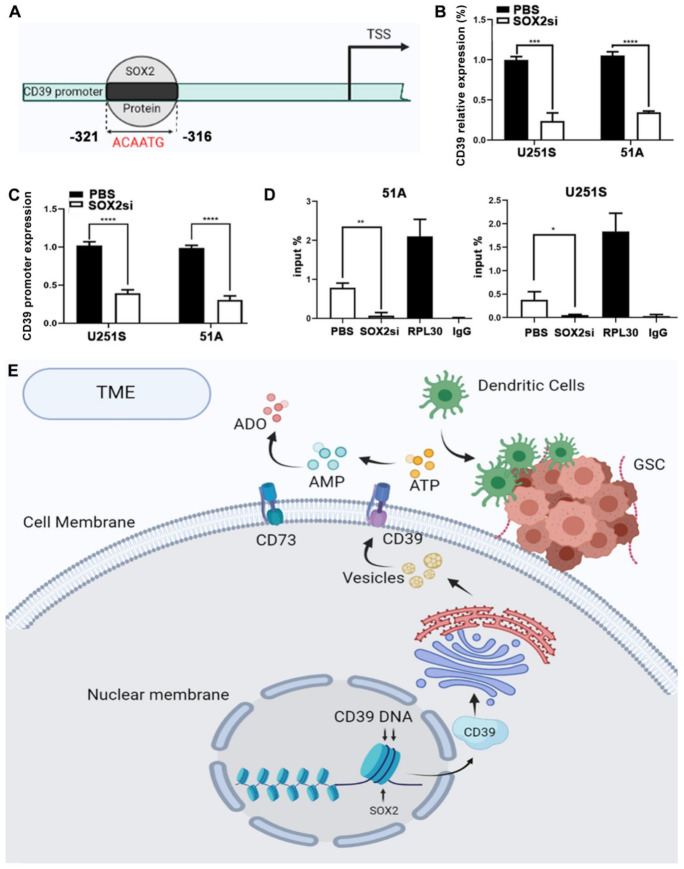
Ectonucleotidase CD39 hydrolyzing extracellular ATP (eATP) functions as a key modulator of immune response in the tumor microenvironment, yet the role of CD39 in contributing tumor stem cells in a more immunosuppressive microenvironment remains elusive. Here we report that the upregulation of CD39 is crucial for the decrease of extracellular ATP concentration around glioma stem cells (GSCs) to maintain an immunosuppressive microenvironment. Adriamycin (ADM) is able to promote the release of ATP, which recruits dendritic cells (DCs) to phagocytose GSCs. CD39 inhibition further increased extracellular ATP concentrations following ADM treatment and DCs phagocytosis. In addition, GSCs upregulated CD39 expression by SOX2-binding CD39 promotor. In mouse tumor models, the combination of ADM and CD39 blockade increased immune cell infiltration and reduced tumor size. These findings suggest that GSCs upregulate CD39 expression by their biological characteristics to maintain an immunosuppressive microenvironment, and CD39 inhibition supplies a favorable tumor microenvironment (TME) for immunotherapeutic intervention and enhances the immune response induced by chemotherapy.
胞外核苷酸酶CD39可水解细胞外ATP(eATP),在肿瘤微环境中作为免疫反应的关键调节因子发挥作用,然而CD39在更具免疫抑制性的微环境中对肿瘤干细胞形成的作用仍不清楚。在此我们报告,CD39的上调对于降低胶质瘤干细胞(GSCs)周围的细胞外ATP浓度以维持免疫抑制性微环境至关重要。阿霉素(ADM)能够促进ATP的释放,从而招募树突状细胞(DCs)来吞噬GSCs。CD39抑制作用在ADM处理和DCs吞噬后进一步增加了细胞外ATP浓度。此外,GSCs通过SOX2结合CD39启动子上调CD39表达。在小鼠肿瘤模型中,ADM与CD39阻断剂联合使用增加了免疫细胞浸润并减小了肿瘤大小。这些发现表明,GSCs通过其生物学特性上调CD39表达以维持免疫抑制性微环境,而CD39抑制为免疫治疗干预提供了有利的肿瘤微环境(TME),并增强了化疗诱导的免疫反应。