• 文献检索
  • 文档翻译
  • 深度研究
  • 学术资讯
  • Suppr Zotero 插件Zotero 插件
  • 邀请有礼
  • 套餐&价格
  • 历史记录
应用&插件
Suppr Zotero 插件Zotero 插件浏览器插件Mac 客户端Windows 客户端微信小程序
定价
高级版会员购买积分包购买API积分包
服务
文献检索文档翻译深度研究API 文档MCP 服务
关于我们
关于 Suppr公司介绍联系我们用户协议隐私条款
关注我们

Suppr 超能文献

核心技术专利:CN118964589B侵权必究
粤ICP备2023148730 号-1Suppr @ 2026

文献检索

告别复杂PubMed语法,用中文像聊天一样搜索,搜遍4000万医学文献。AI智能推荐,让科研检索更轻松。

立即免费搜索

文件翻译

保留排版,准确专业,支持PDF/Word/PPT等文件格式,支持 12+语言互译。

免费翻译文档

深度研究

AI帮你快速写综述,25分钟生成高质量综述,智能提取关键信息,辅助科研写作。

立即免费体验

AKR1B1作为高级别浆液性卵巢癌的预后生物标志物

AKR1B1 as a Prognostic Biomarker of High-Grade Serous Ovarian Cancer.

作者信息

Hojnik Marko, Šuster Nataša Kenda, Smrkolj Špela, Sisinger Damjan, Grazio Snježana Frković, Verdenik Ivan, Rižner Tea Lanišnik

机构信息

Institute of Biochemistry, Faculty of Medicine, University of Ljubljana, 1000 Ljubljana, Slovenia.

Department of Pathology, University Medical Centre Maribor, 2000 Maribor, Slovenia.

出版信息

Cancers (Basel). 2022 Feb 5;14(3):809. doi: 10.3390/cancers14030809.

DOI:10.3390/cancers14030809
PMID:35159076
原文链接:https://pmc.ncbi.nlm.nih.gov/articles/PMC8834204/
Abstract

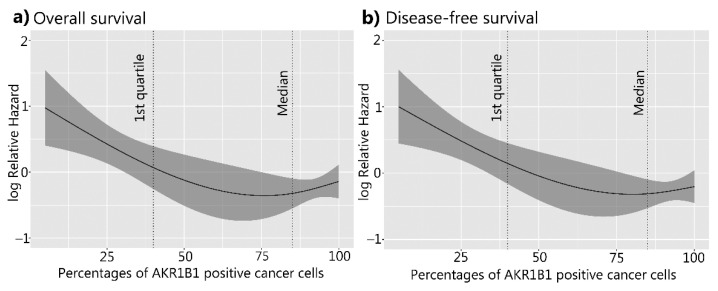
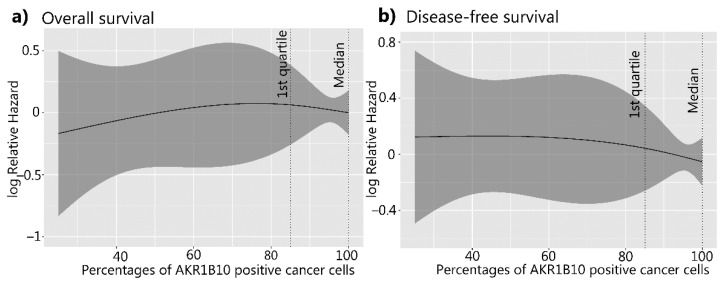
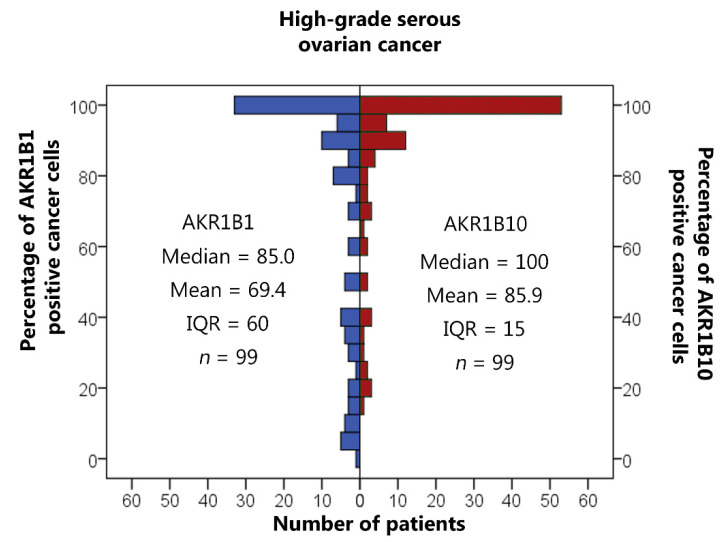
Although aldo-keto reductases (AKRs) have been widely studied in cancer, no study to date has examined the roles of AKR family 1 members B1 (AKR1B1) and B10 (AKR1B10) in a large group of ovarian cancer patients. AKR1B1 and AKR1B10 play a significant role in inflammation and the metabolism of different chemotherapeutics as well as cell differentiation, proliferation, and apoptosis. Due to these functions, we examined the potential of AKR1B1 and AKR1B10 as tissue biomarkers. We assessed the immunohistochemical levels of AKR1B1 and AKR1B10 in tissue paraffin sections from 99 patients with high-grade serous ovarian cancer (HGSC) and compared these levels with clinicopathological characteristics, survival, and response to chemotherapy. A higher immunohistochemical AKR1B1 expression correlated with a better overall and disease-free survival of HGSC patients whereas AKR1B10 expression did not show any significant differences. A multivariant Cox analysis demonstrated that a high AKR1B1 expression was an important prognostic factor for both overall and disease-free survival. However, AKR1B1 and AKR1B10 were not associated with different responses to chemotherapy. Our data suggest that AKR1B1 is involved in the pathogenesis of HGSC and is a potential prognostic biomarker for this cancer.

摘要

尽管醛酮还原酶(AKRs)已在癌症领域得到广泛研究,但迄今为止,尚无研究在一大群卵巢癌患者中考察AKR1家族成员B1(AKR1B1)和B10(AKR1B10)的作用。AKR1B1和AKR1B10在炎症、不同化疗药物的代谢以及细胞分化、增殖和凋亡过程中发挥着重要作用。基于这些功能,我们研究了AKR1B1和AKR1B10作为组织生物标志物的潜力。我们评估了99例高级别浆液性卵巢癌(HGSC)患者组织石蜡切片中AKR1B1和AKR1B10的免疫组化水平,并将这些水平与临床病理特征、生存率及化疗反应进行比较。较高的AKR1B1免疫组化表达与HGSC患者更好的总生存期和无病生存期相关,而AKR1B10的表达未显示出任何显著差异。多变量Cox分析表明,高AKR1B1表达是总生存期和无病生存期的重要预后因素。然而,AKR1B1和AKR1B10与不同的化疗反应无关。我们的数据表明,AKR1B1参与了HGSC的发病机制,是这种癌症的潜在预后生物标志物。
https://cdn.ncbi.nlm.nih.gov/pmc/blobs/bd66/8834204/4e8e5befcd5f/cancers-14-00809-g008.jpg
https://cdn.ncbi.nlm.nih.gov/pmc/blobs/bd66/8834204/bf339e9b8370/cancers-14-00809-g001.jpg
https://cdn.ncbi.nlm.nih.gov/pmc/blobs/bd66/8834204/e9265718d577/cancers-14-00809-g002.jpg
https://cdn.ncbi.nlm.nih.gov/pmc/blobs/bd66/8834204/8fd2a825a736/cancers-14-00809-g003.jpg
https://cdn.ncbi.nlm.nih.gov/pmc/blobs/bd66/8834204/9b1fd6de9b13/cancers-14-00809-g004.jpg
https://cdn.ncbi.nlm.nih.gov/pmc/blobs/bd66/8834204/625e19181fb8/cancers-14-00809-g005.jpg
https://cdn.ncbi.nlm.nih.gov/pmc/blobs/bd66/8834204/1405e99d170e/cancers-14-00809-g006.jpg
https://cdn.ncbi.nlm.nih.gov/pmc/blobs/bd66/8834204/c5fad60cb300/cancers-14-00809-g007.jpg
https://cdn.ncbi.nlm.nih.gov/pmc/blobs/bd66/8834204/4e8e5befcd5f/cancers-14-00809-g008.jpg
https://cdn.ncbi.nlm.nih.gov/pmc/blobs/bd66/8834204/bf339e9b8370/cancers-14-00809-g001.jpg
https://cdn.ncbi.nlm.nih.gov/pmc/blobs/bd66/8834204/e9265718d577/cancers-14-00809-g002.jpg
https://cdn.ncbi.nlm.nih.gov/pmc/blobs/bd66/8834204/8fd2a825a736/cancers-14-00809-g003.jpg
https://cdn.ncbi.nlm.nih.gov/pmc/blobs/bd66/8834204/9b1fd6de9b13/cancers-14-00809-g004.jpg
https://cdn.ncbi.nlm.nih.gov/pmc/blobs/bd66/8834204/625e19181fb8/cancers-14-00809-g005.jpg
https://cdn.ncbi.nlm.nih.gov/pmc/blobs/bd66/8834204/1405e99d170e/cancers-14-00809-g006.jpg
https://cdn.ncbi.nlm.nih.gov/pmc/blobs/bd66/8834204/c5fad60cb300/cancers-14-00809-g007.jpg
https://cdn.ncbi.nlm.nih.gov/pmc/blobs/bd66/8834204/4e8e5befcd5f/cancers-14-00809-g008.jpg

相似文献

1
AKR1B1 as a Prognostic Biomarker of High-Grade Serous Ovarian Cancer.AKR1B1作为高级别浆液性卵巢癌的预后生物标志物
Cancers (Basel). 2022 Feb 5;14(3):809. doi: 10.3390/cancers14030809.
2
AKR1B1 and AKR1B10 as Prognostic Biomarkers of Endometrioid Endometrial Carcinomas.AKR1B1和AKR1B10作为子宫内膜样子宫内膜癌的预后生物标志物
Cancers (Basel). 2021 Jul 7;13(14):3398. doi: 10.3390/cancers13143398.
3
Opposing roles of the aldo-keto reductases AKR1B1 and AKR1B10 in colorectal cancer.醛酮还原酶 1B1(AKR1B1)和 AKR1B10 在结直肠癌中的作用相反。
Cell Oncol (Dordr). 2017 Dec;40(6):563-578. doi: 10.1007/s13402-017-0351-7. Epub 2017 Sep 19.
4
Proteasome inhibitors MG-132 and bortezomib induce AKR1C1, AKR1C3, AKR1B1, and AKR1B10 in human colon cancer cell lines SW-480 and HT-29.蛋白酶体抑制剂 MG-132 和硼替佐米诱导人结肠癌细胞系 SW-480 和 HT-29 中 AKR1C1、AKR1C3、AKR1B1 和 AKR1B10 的表达。
Chem Biol Interact. 2011 May 30;191(1-3):239-49. doi: 10.1016/j.cbi.2010.12.026. Epub 2011 Jan 6.
5
Aldo-keto reductases in the eye.眼睛中的醛酮还原酶
J Ophthalmol. 2010;2010:521204. doi: 10.1155/2010/521204. Epub 2010 Jun 13.
6
Aldo-Keto Reductases as Early Biomarkers of Hepatocellular Carcinoma: A Comparison Between Animal Models and Human HCC.醛酮还原酶作为肝细胞癌的早期生物标志物:动物模型与人类 HCC 的比较。
Dig Dis Sci. 2018 Apr;63(4):934-944. doi: 10.1007/s10620-018-4943-5. Epub 2018 Jan 30.
7
Aldo-keto reductase family 1 member B1 inhibitors: old drugs with new perspectives.醛酮还原酶家族 1 成员 B1 抑制剂:具有新视角的老药。
Recent Pat Anticancer Drug Discov. 2009 Nov;4(3):246-53. doi: 10.2174/157489209789206931.
8
Inhibitor selectivity between aldo-keto reductase superfamily members AKR1B10 and AKR1B1: role of Trp112 (Trp111).醛酮还原酶超家族成员 AKR1B10 和 AKR1B1 之间的抑制剂选择性:色氨酸 112(色氨酸 111)的作用。
FEBS Lett. 2013 Nov 15;587(22):3681-6. doi: 10.1016/j.febslet.2013.09.031. Epub 2013 Oct 4.
9
Expression of AKRs superfamily and prognostic in human gastric cancer.AKRs 超家族在人胃癌中的表达与预后。
Medicine (Baltimore). 2023 Feb 22;102(8):e33041. doi: 10.1097/MD.0000000000033041.
10
Expression of the Aldo-Ketoreductases AKR1B1 and AKR1B10 in Human Cancers.醛酮还原酶AKR1B1和AKR1B10在人类癌症中的表达
Front Pharmacol. 2012 Jun 6;3:104. doi: 10.3389/fphar.2012.00104. eCollection 2012.

引用本文的文献

1
Investigation of the mechanism of Dan Zhi Qing'e Formula for treating menopausal hot flashes using UHPLC-Q-TOF MS and network pharmacology.基于超高效液相色谱-四极杆飞行时间质谱联用技术及网络药理学探讨丹栀清娥方治疗绝经潮热的作用机制
Naunyn Schmiedebergs Arch Pharmacol. 2025 May 28. doi: 10.1007/s00210-025-04277-7.
2
Analysis of ATP7A Expression and Ceruloplasmin Levels as Biomarkers in Patients Undergoing Neoadjuvant Chemotherapy for Advanced High-Grade Serous Ovarian Carcinoma.分析 ATP7A 表达和铜蓝蛋白水平作为接受新辅助化疗的晚期高级别浆液性卵巢癌患者的生物标志物。
Int J Mol Sci. 2024 Sep 23;25(18):10195. doi: 10.3390/ijms251810195.
3

本文引用的文献

1
Dynamically Accumulating Homologous Recombination Deficiency Score Served as an Important Prognosis Factor in High-Grade Serous Ovarian Cancer.动态累积同源重组缺陷评分作为高级别浆液性卵巢癌的重要预后因素。
Front Mol Biosci. 2021 Nov 19;8:762741. doi: 10.3389/fmolb.2021.762741. eCollection 2021.
2
Aldo-Keto Reductases and Cancer Drug Resistance.醛酮还原酶与癌症药物耐药性。
Pharmacol Rev. 2021 Jul;73(3):1150-1171. doi: 10.1124/pharmrev.120.000122.
3
AKR1B1 and AKR1B10 as Prognostic Biomarkers of Endometrioid Endometrial Carcinomas.
AKR1B10 inhibits the proliferation and metastasis of hepatocellular carcinoma cells by regulating the PI3K/AKT pathway.
醛糖还原酶1B10通过调节PI3K/AKT信号通路抑制肝癌细胞的增殖和转移。
Oncol Lett. 2023 Nov 15;27(1):18. doi: 10.3892/ol.2023.14151. eCollection 2024 Jan.
4
Aberrant expression of AKR1B1 indicates poor prognosis and promotes gastric cancer progression by regulating the AKT-mTOR pathway.AKR1B1的异常表达预示着预后不良,并通过调节AKT-mTOR信号通路促进胃癌进展。
Aging (Albany NY). 2023 Sep 24;15(18):9661-9675. doi: 10.18632/aging.205041.
5
AKR1B1 Represses Glioma Cell Proliferation through p38 MAPK-Mediated Bcl-2/BAX/Caspase-3 Apoptotic Signaling Pathways.醛糖还原酶1B1通过p38丝裂原活化蛋白激酶介导的Bcl-2/BAX/半胱天冬酶-3凋亡信号通路抑制胶质瘤细胞增殖。
Curr Issues Mol Biol. 2023 Apr 13;45(4):3391-3405. doi: 10.3390/cimb45040222.
6
Discovery and ranking of the most robust prognostic biomarkers in serous ovarian cancer.发现和评估浆液性卵巢癌中最稳健的预后生物标志物。
Geroscience. 2023 Jun;45(3):1889-1898. doi: 10.1007/s11357-023-00742-4. Epub 2023 Mar 1.
7
Expression of AKRs superfamily and prognostic in human gastric cancer.AKRs 超家族在人胃癌中的表达与预后。
Medicine (Baltimore). 2023 Feb 22;102(8):e33041. doi: 10.1097/MD.0000000000033041.
AKR1B1和AKR1B10作为子宫内膜样子宫内膜癌的预后生物标志物
Cancers (Basel). 2021 Jul 7;13(14):3398. doi: 10.3390/cancers13143398.
4
Using biochemistry and biophysics to extinguish androgen receptor signaling in prostate cancer.运用生物化学和生物物理学手段来消除前列腺癌中的雄激素受体信号。
J Biol Chem. 2021 Jan-Jun;296:100240. doi: 10.1074/jbc.REV120.012411. Epub 2021 Jan 9.
5
AKR1C3 Is Associated with Better Survival of Patients with Endometrial Carcinomas.醛酮还原酶1C3与子宫内膜癌患者更好的生存率相关。
J Clin Med. 2020 Dec 19;9(12):4105. doi: 10.3390/jcm9124105.
6
PARP Inhibitors in the Management of Ovarian Cancer: ASCO Guideline.聚腺苷二磷酸核糖聚合酶抑制剂在卵巢癌治疗中的应用:美国临床肿瘤学会指南。
J Clin Oncol. 2020 Oct 20;38(30):3468-3493. doi: 10.1200/JCO.20.01924. Epub 2020 Aug 13.
7
Role of aldo-keto reductase family 1 member B1 (AKR1B1) in the cancer process and its therapeutic potential.醛酮还原酶家族 1 成员 B1(AKR1B1)在癌症进程中的作用及其治疗潜力。
J Cell Mol Med. 2020 Aug;24(16):8890-8902. doi: 10.1111/jcmm.15581. Epub 2020 Jul 6.
8
Evaluation of an aldo-keto reductase gene signature with prognostic significance in colon cancer via activation of epithelial to mesenchymal transition and the p70S6K pathway.通过激活上皮-间充质转化和 p70S6K 通路,评估结肠癌中具有预后意义的醛酮还原酶基因特征。
Carcinogenesis. 2020 Sep 24;41(9):1219-1228. doi: 10.1093/carcin/bgaa072.
9
Loss of AKR1B10 promotes colorectal cancer cells proliferation and migration via regulating FGF1-dependent pathway.AKR1B10 的缺失通过调节 FGF1 依赖性通路促进结直肠癌细胞的增殖和迁移。
Aging (Albany NY). 2020 Jul 2;12(13):13059-13075. doi: 10.18632/aging.103393.
10
PARP inhibition in the ovarian cancer patient: Current approvals and future directions.卵巢癌患者的 PARP 抑制剂:现有批准和未来方向。
Pharmacol Ther. 2020 Sep;213:107588. doi: 10.1016/j.pharmthera.2020.107588. Epub 2020 May 23.