Li Wei, Zhou Yunlan, Deng Yanlin, Khoo Bee Luan
Department of Biomedical Engineering, City University of Hong Kong, Hong Kong 999077, China.
Hong Kong Center for Cerebro-Cardiovascular Health Engineering (COCHE), Hong Kong 999077, China.
Cancers (Basel). 2022 Feb 6;14(3):818. doi: 10.3390/cancers14030818.
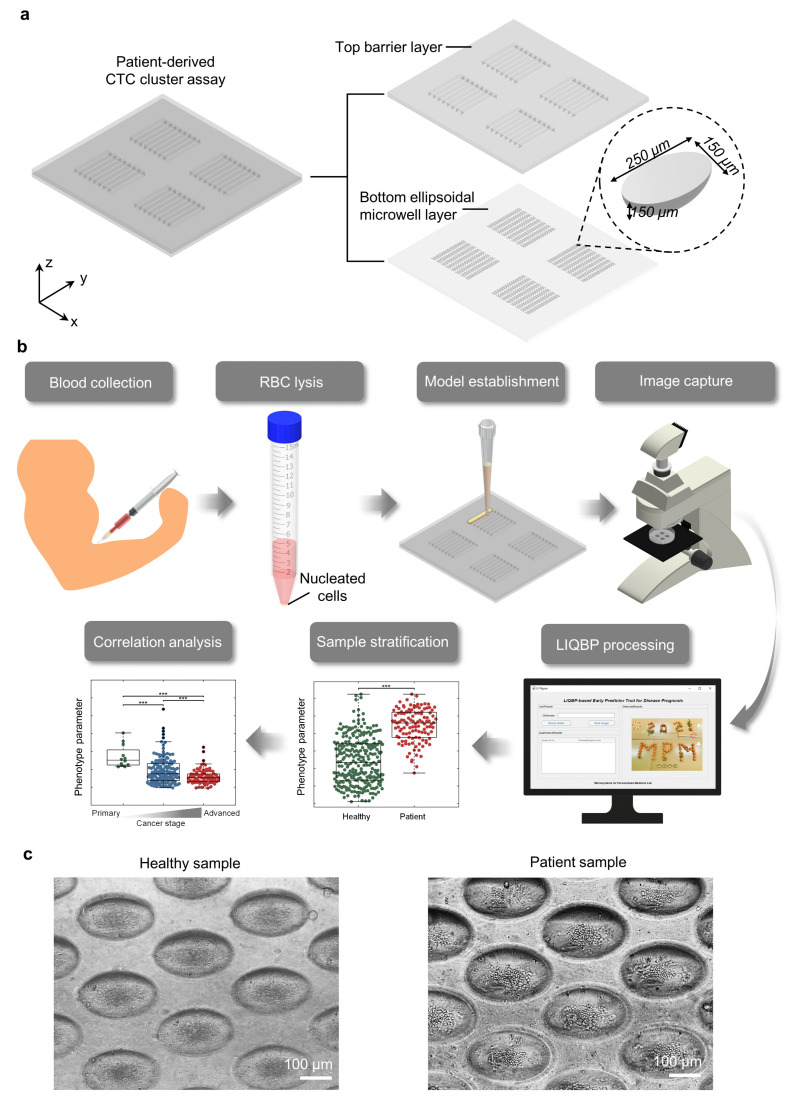
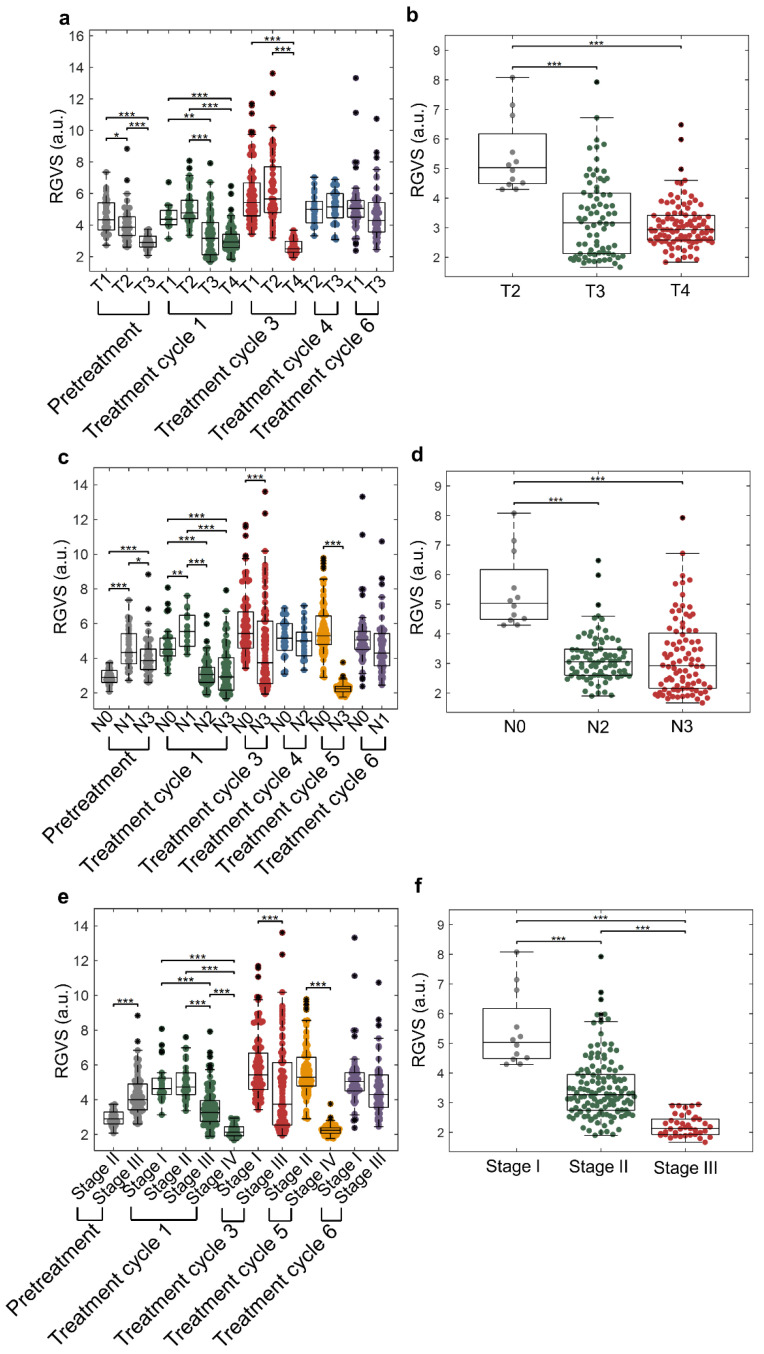
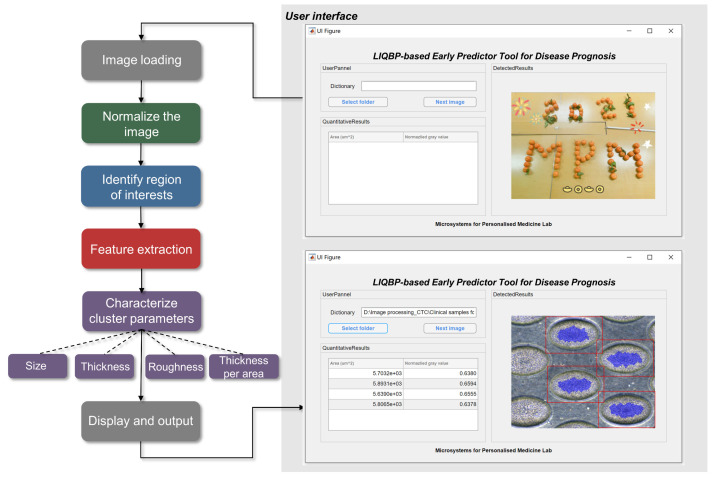
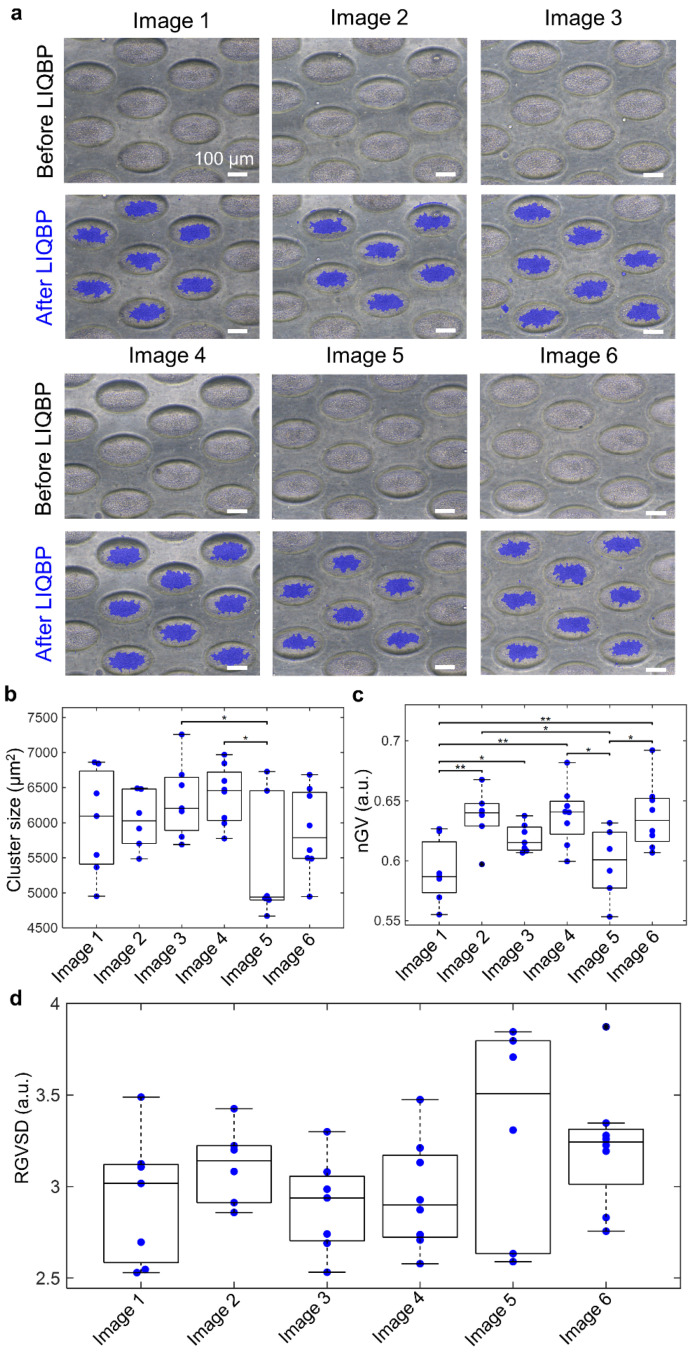
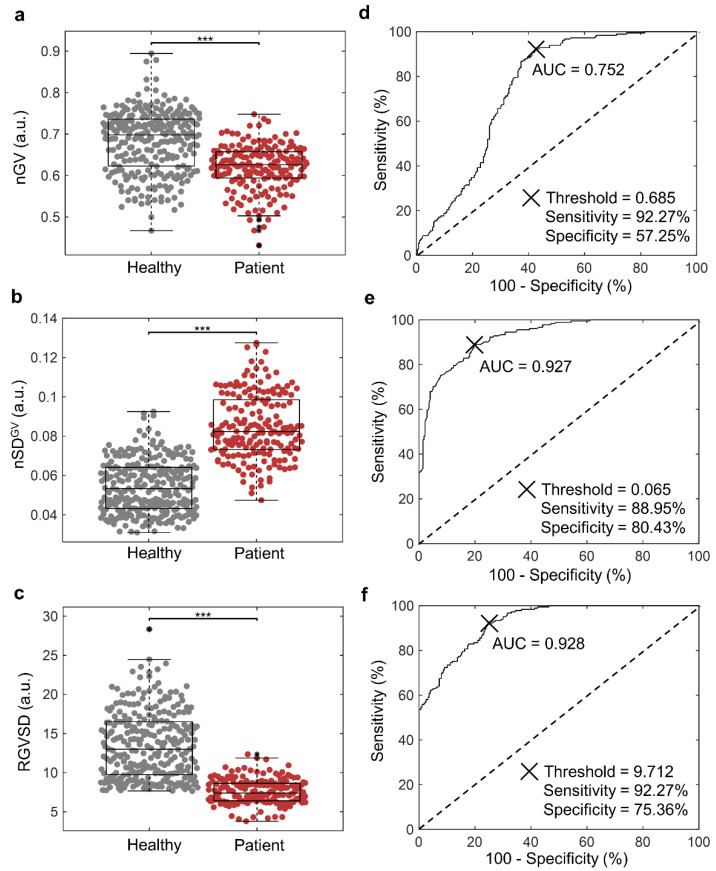
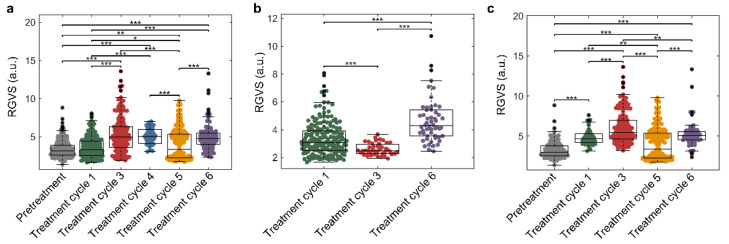
Cancer cells undergo phenotypic changes or mutations during treatment, making detecting protein-based or gene-based biomarkers challenging. Here, we used algorithmic analysis combined with patient-derived tumor models to derive an early prediction tool using patient-derived cell clusters from liquid biopsy (LIQBP) for cancer prognosis in a label-free manner. The LIQBP platform incorporated a customized microfluidic biochip that mimicked the tumor microenvironment to establish patient clusters, and extracted physical parameters from images of each sample, including size, thickness, roughness, and thickness per area ( = 31). Samples from healthy volunteers ( = 5) and cancer patients (pretreatment; = 4) could be easily distinguished with high sensitivity (91.16 ± 1.56%) and specificity (71.01 ± 9.95%). Furthermore, we demonstrated that the multiple unique quantitative parameters reflected patient responses. Among these, the ratio of normalized gray value to cluster size (RGVS) was the most significant parameter correlated with cancer stage and treatment duration. Overall, our work presented a novel and less invasive approach for the label-free prediction of disease prognosis to identify patients who require adjustments to their treatment regime. We envisioned that such efforts would promote the management of personalized patient care conveniently and cost effectively.
癌细胞在治疗过程中会发生表型变化或突变,这使得检测基于蛋白质或基因的生物标志物具有挑战性。在此,我们将算法分析与患者来源的肿瘤模型相结合,以无标记方式从液体活检(LIQBP)中的患者来源细胞簇中推导一种用于癌症预后的早期预测工具。LIQBP平台采用了定制的微流控生物芯片,该芯片模拟肿瘤微环境以建立患者簇,并从每个样本的图像中提取物理参数,包括大小、厚度、粗糙度和每面积厚度(= 31)。来自健康志愿者(= 5)和癌症患者(治疗前;= 4)的样本能够以高灵敏度(91.16 ± 1.56%)和特异性(71.01 ± 9.95%)轻松区分。此外,我们证明了多个独特的定量参数反映了患者的反应。其中,归一化灰度值与簇大小的比值(RGVS)是与癌症分期和治疗持续时间最相关的参数。总体而言,我们的工作提出了一种用于疾病预后无标记预测的新颖且侵入性较小的方法,以识别需要调整治疗方案的患者。我们设想,此类努力将方便且经济高效地促进个性化患者护理的管理。