Anatomy Unit, Department of Medicine and Surgery, University of Parma, Via Gramsci 14, 43126 Parma, Italy.
University Hospital of Parma, AOU-PR, Via Gramsci 14, 43126 Parma, Italy.
Cells. 2022 Jan 19;11(3):325. doi: 10.3390/cells11030325.
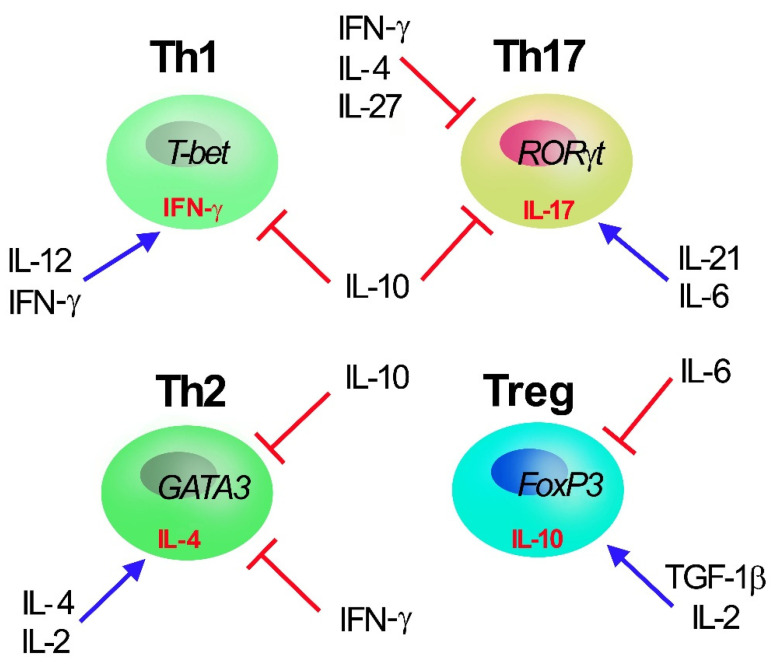
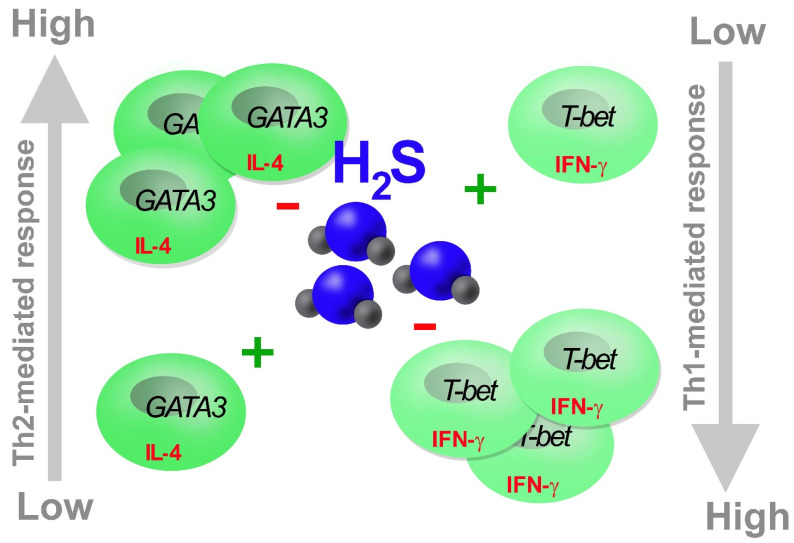
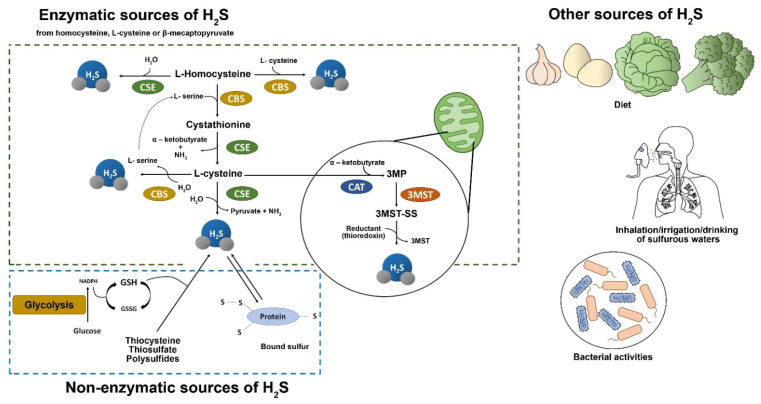
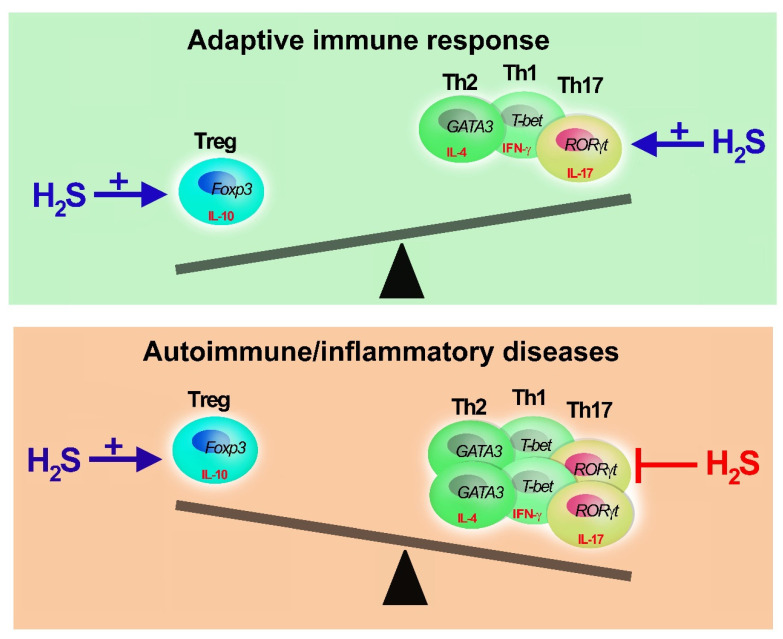
T cell-mediated adaptive immunity is designed to respond to non-self antigens and pathogens through the activation and proliferation of various T cell populations. T helper 1 (Th1), Th2, Th17 and Treg cells finely orchestrate cellular responses through a plethora of paracrine and autocrine stimuli that include cytokines, autacoids, and hormones. Hydrogen sulfide (HS) is one of these mediators able to induce/inhibit immunological responses, playing a role in inflammatory and autoimmune diseases, neurological disorders, asthma, acute pancreatitis, and sepsis. Both endogenous and exogenous HS modulate numerous important cell signaling pathways. In monocytes, polymorphonuclear, and T cells HS impacts on activation, survival, proliferation, polarization, adhesion pathways, and modulates cytokine production and sensitivity to chemokines. Here, we offer a comprehensive review on the role of HS as a natural buffer able to maintain over time a functional balance between Th1, Th2, Th17 and Treg immunological responses.
T 细胞介导的适应性免疫旨在通过各种 T 细胞群体的激活和增殖来响应非自身抗原和病原体。辅助性 T 细胞 1(Th1)、Th2、Th17 和 Treg 细胞通过大量旁分泌和自分泌刺激精细地协调细胞反应,这些刺激包括细胞因子、自分泌物质和激素。硫化氢(HS)是这些能够诱导/抑制免疫反应的介质之一,在炎症和自身免疫性疾病、神经紊乱、哮喘、急性胰腺炎和败血症中发挥作用。内源性和外源性 HS 调节多种重要的细胞信号通路。在单核细胞、多形核细胞和 T 细胞中,HS 影响激活、存活、增殖、极化、黏附途径,并调节细胞因子的产生和对趋化因子的敏感性。在这里,我们全面回顾了 HS 作为一种天然缓冲剂的作用,它能够随着时间的推移维持 Th1、Th2、Th17 和 Treg 免疫反应之间的功能平衡。