State Key Laboratory of Medicinal Chemical Biology, Department of Cell Biology and Genetics, College of Life Sciences, Nankai University, Tianjin 300071, China.
State Key Laboratory of Primate Biomedical Research, Institute of Primate Translational Medicine, Kunming University of Science and Technology, Kunming, Yunnan 650500, China; Yunnan Key Laboratory of Primate Biomedical Research, Kunming, Yunnan 650500, China.
Cells. 2022 Jan 28;11(3):456. doi: 10.3390/cells11030456.
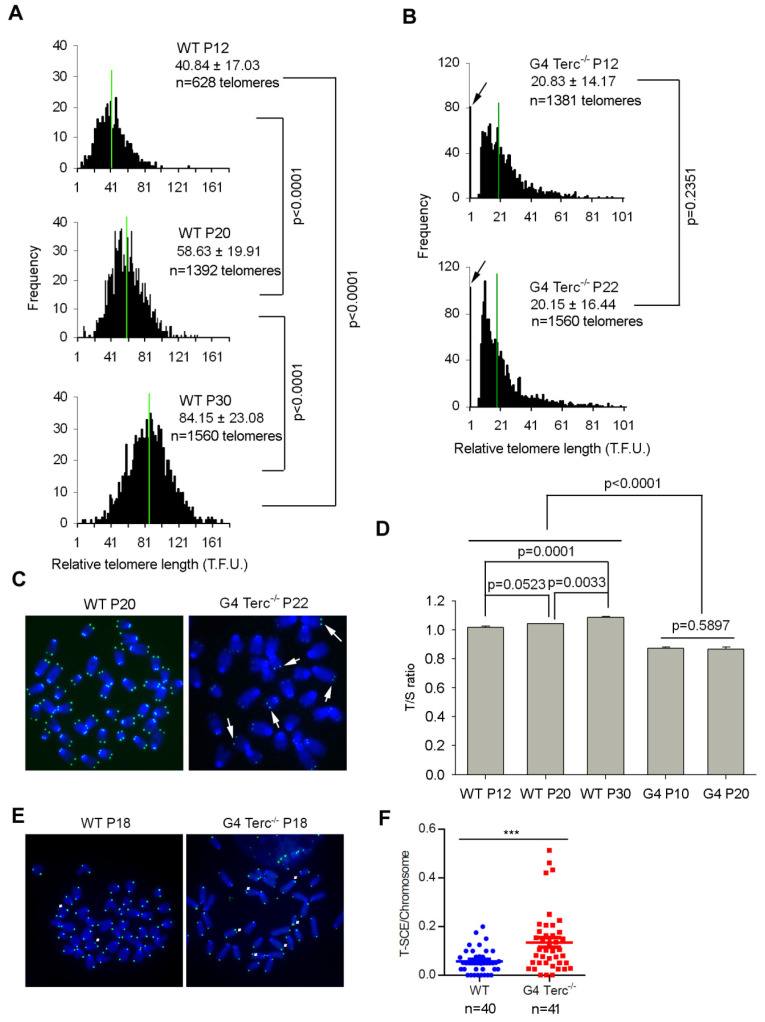
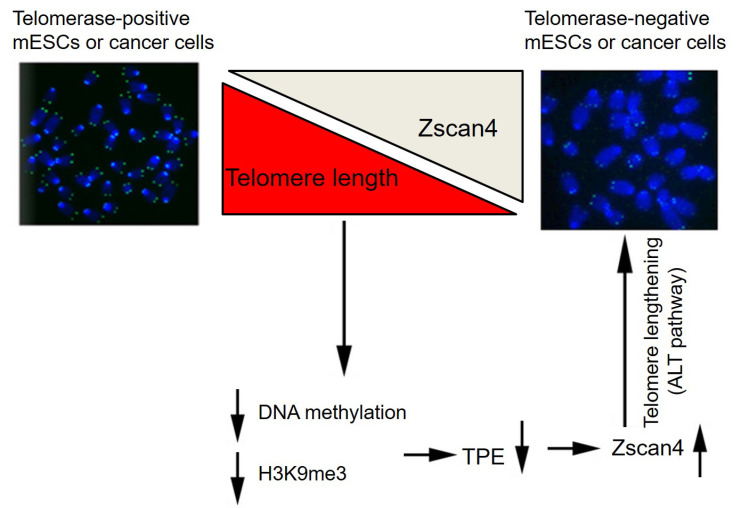
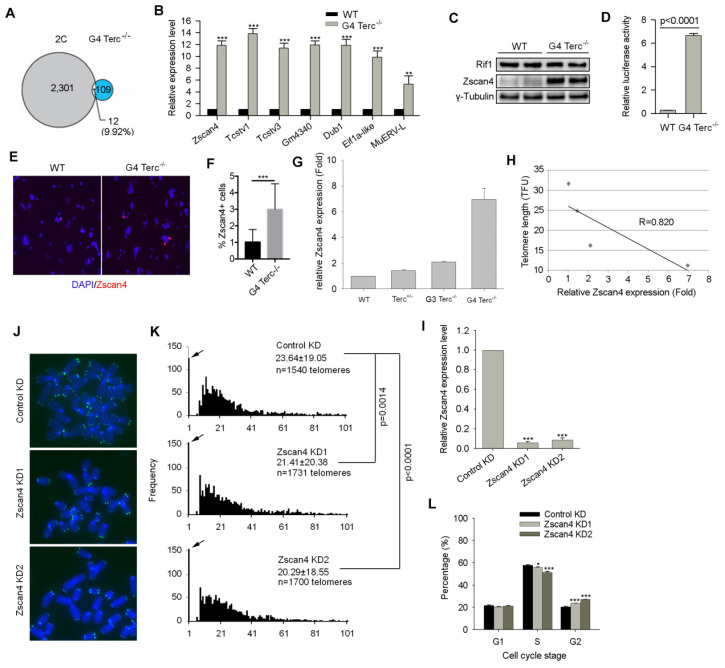
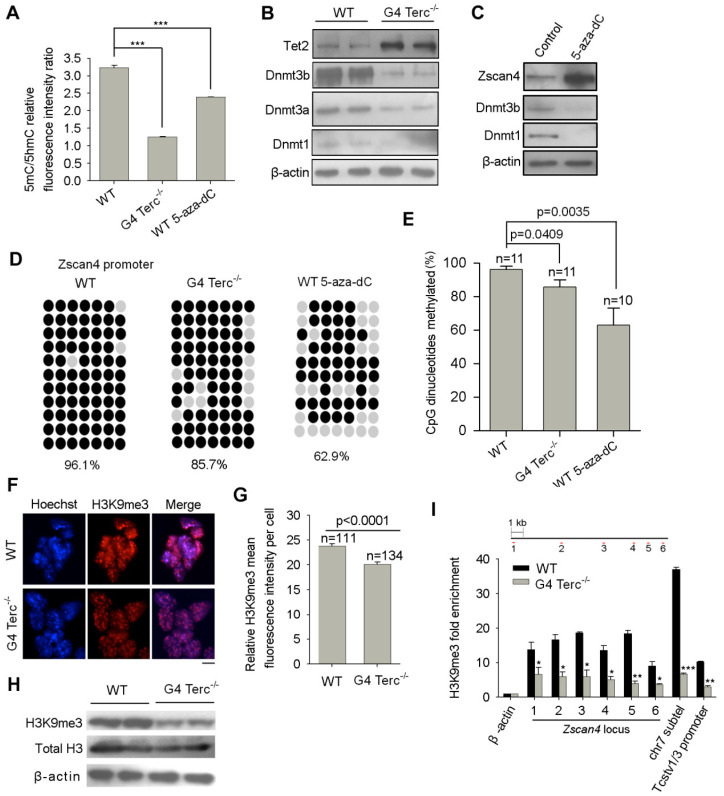
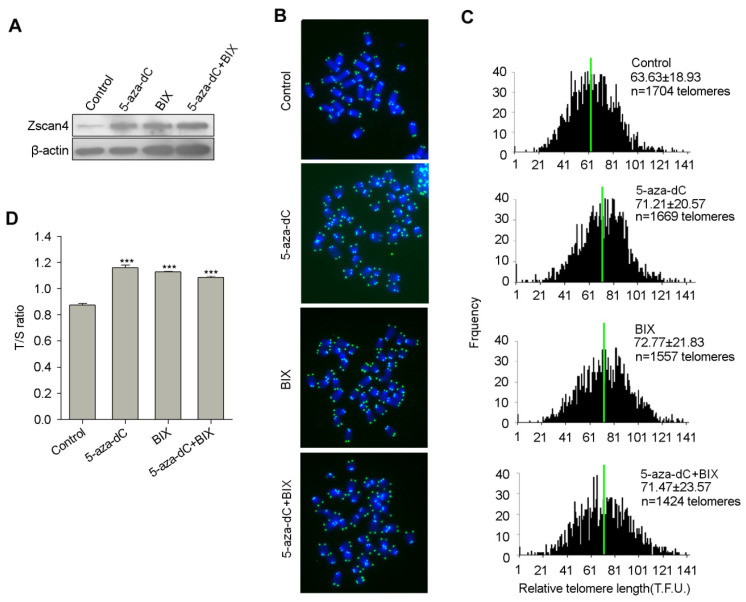
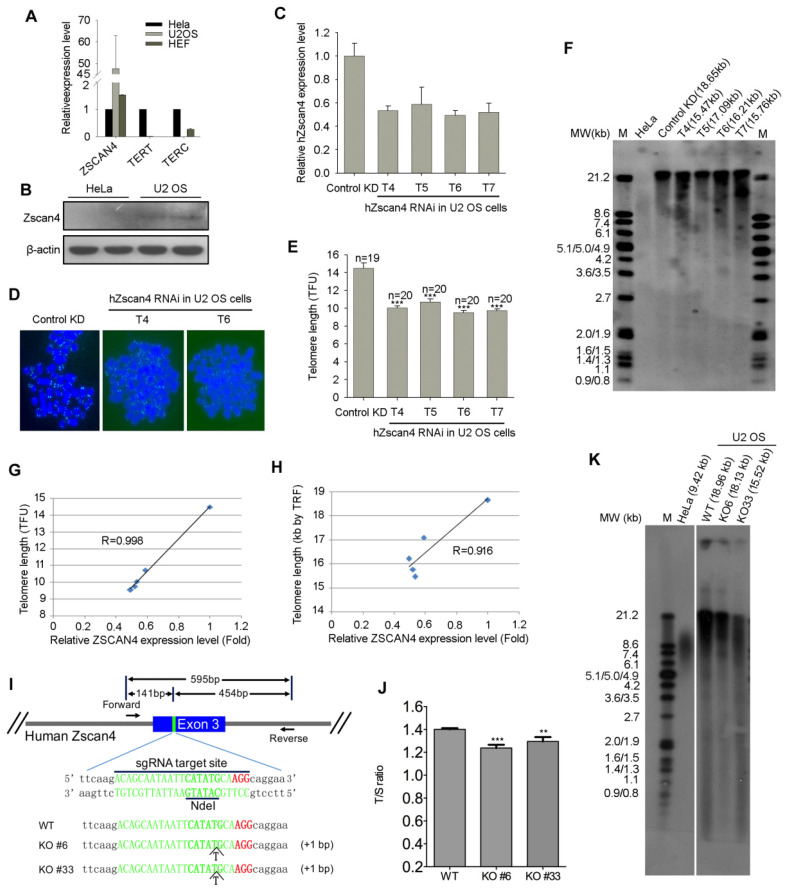
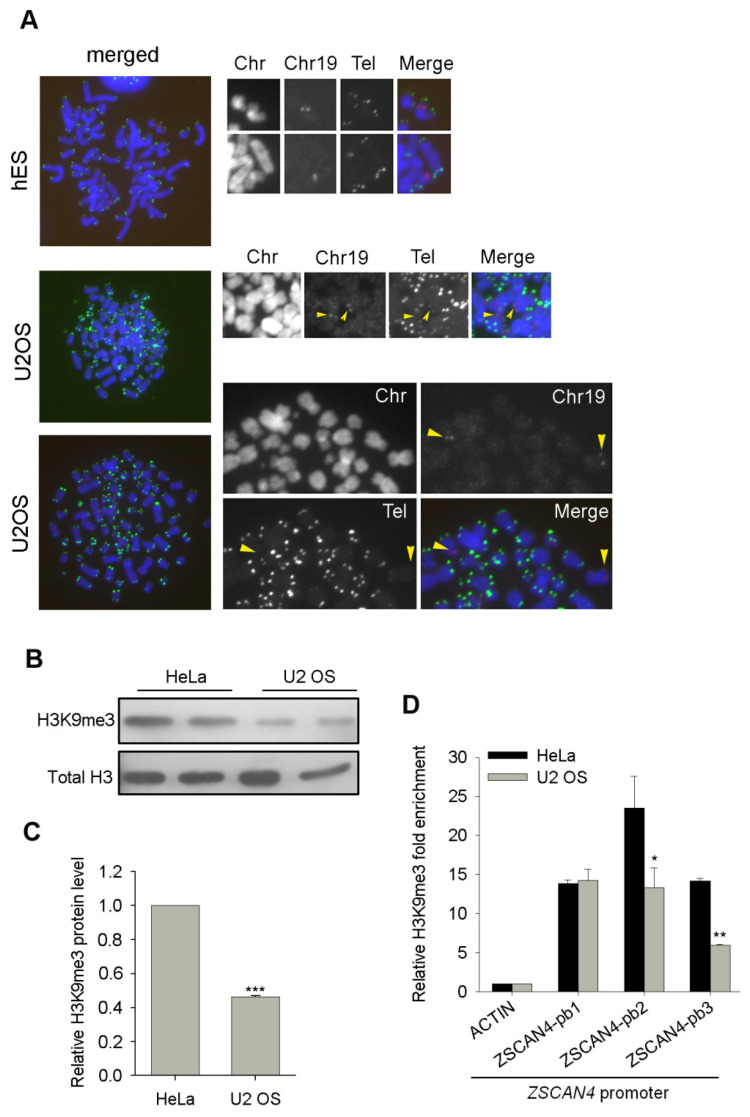
Proper telomere length is essential for indefinite self-renewal of embryonic stem (ES) cells and cancer cells. Telomerase-deficient late generation mouse ES cells and human ALT cancer cells are able to propagate for numerous passages, suggesting telomerase-independent mechanisms responding for telomere maintenance. However, the underlying mechanisms ensuring the telomere length maintenance are unclear. Here, using late generation telomerase KO (G4 Terc) ESCs as a model, we show that , highly upregulated in G4 Terc ESCs, is responsible for the prolonged culture of these cells with stably short telomeres. Mechanistically, G4 Terc ESCs showed reduced levels of DNA methylation and H3K9me3 at Zscan4 promoter and subtelomeres, which relieved the expression of Zscan4. Similarly, human ZSCAN4 was also derepressed by reduced H3K9me3 at its promoter in ALT U2 OS cells, and depletion of ZSCAN4 significantly shortened telomeres. Our results define a similar conserved pathway contributing to the telomere maintenance in telomerase-deficient late generation mESCs and human ALT U2OS cancer cells.
适当的端粒长度对于胚胎干细胞(ES 细胞)和癌细胞的无限自我更新至关重要。缺乏端粒酶的晚期世代小鼠 ES 细胞和人类 ALT 癌细胞能够进行多次传代,表明存在不依赖端粒酶的机制来响应端粒维持。然而,确保端粒长度维持的潜在机制尚不清楚。在这里,我们使用晚期世代端粒酶 KO(G4 Terc)ES 细胞作为模型,表明高度上调的在 G4 Terc ES 细胞中,负责这些细胞具有稳定短端粒的长时间培养。从机制上讲,G4 Terc ES 细胞显示出 Zscan4 启动子和着丝粒附近的 DNA 甲基化和 H3K9me3 水平降低,这缓解了 Zscan4 的表达。同样,在 ALT U2 OS 细胞中,其启动子处的 H3K9me3 减少也使人类 ZSCAN4 表达失活,并且 ZSCAN4 的耗竭显着缩短了端粒。我们的结果定义了一个类似的保守途径,有助于缺乏端粒酶的晚期世代 mES 细胞和人类 ALT U2OS 癌细胞中端粒的维持。