Porto Michele, Angelico Ruggero, Caputo Paolino, Abe Abraham A, Teltayev Bagdat, Rossi Cesare Oliviero
Department of Chemistry and Chemical Technologies, University of Calabria, Via P. Bucci, Cubo 14/D, 87036 Arcavacata di Rende, CS, Italy.
Department of Agricultural, Environmental and Food Sciences (DIAAA), University of Molise, Via de Sanctis, 86100 Campobasso, CB, Italy.
Materials (Basel). 2022 Jan 25;15(3):905. doi: 10.3390/ma15030905.
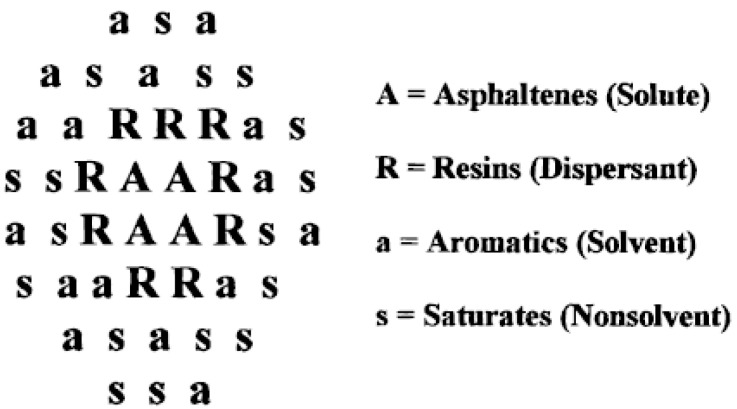
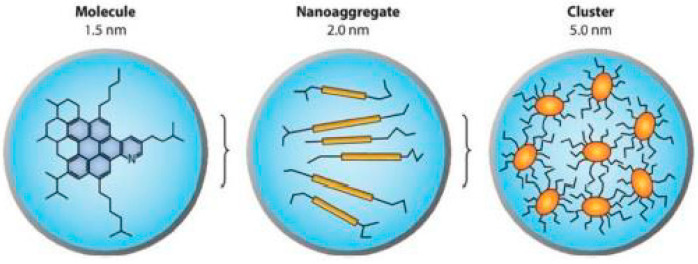
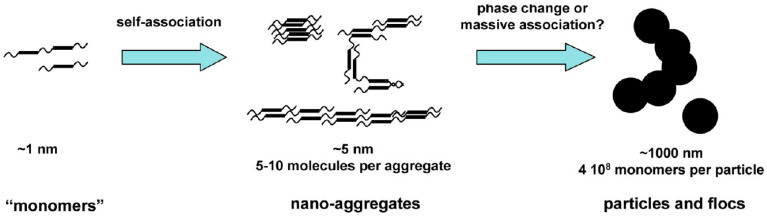
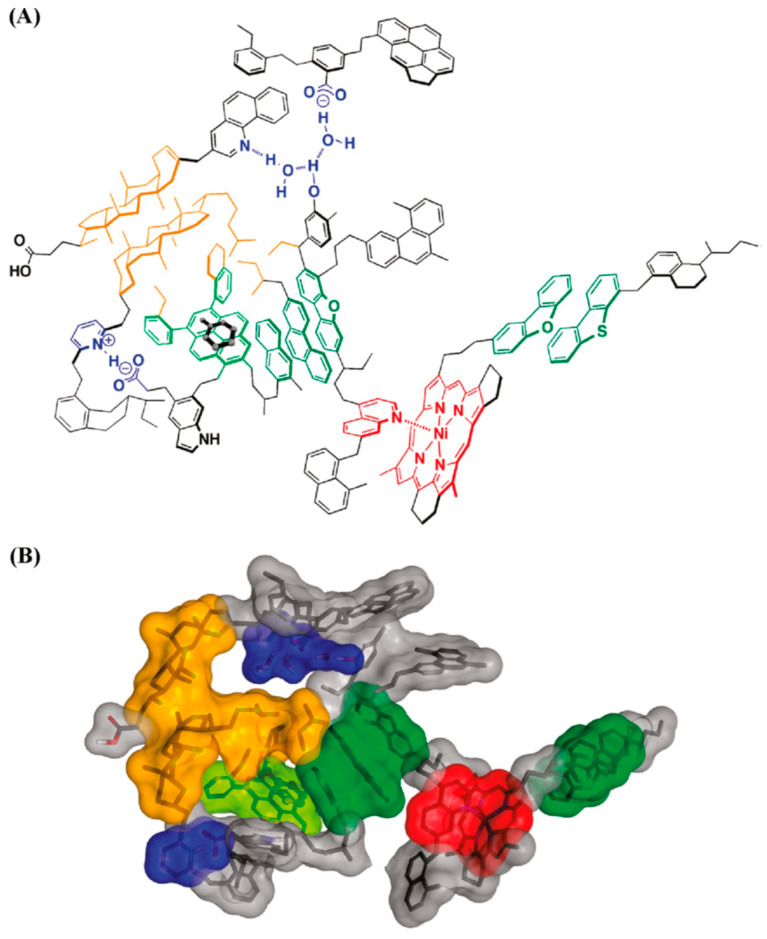
Bitumen, one of the by-products of petroleum industry processes, is the most common binder used in road pavements and in the construction industry in general. It is a complex organic mixture of a broad range of hydrocarbons classified into four chemical families, collectively known with the acronym SARA fractions, which include saturates, aromatics, resins and asphaltenes. Since the 1940s, researchers working on bitumen and the science behind its existence, nature and application have investigated the spatial organization and arrangement of several molecular species present in the binder. Therefore, several models have been proposed in the literature, and they are more or less corroborated by experimental studies, although most of them are model-dependent; for example, the structural investigations based on scattering techniques. One of the most popular models that has met with a wide consensus (both experimentally and of the modeling/computational type) is the one aiming at the colloidal description of bitumen's microstructure. Other types of models have appeared in the literature that propose alternative views to the colloidal scheme, equally valid and capable of providing results that comply with experimental and theoretical evidence. Spurred by the constant advancement of research in the field of bitumen science, this literature review is aimed at providing a thorough, continuous and adept state of knowledge on the modeling efforts herein elaborated, in order to more precisely describe the intricacy of the bituminous microstructure. In this body of work, experimental evidence, along with details of bitumen's microstructure (depicting the colloidal state of bitumen), is particularly emphasized. We will also try to shed light on the evolution of the experimental and theoretical results that have focused on the aspect of the association and aggregation properties of asphaltenes in various models and real systems.
沥青是石油工业加工的副产品之一,是道路路面及整个建筑行业中最常用的粘结剂。它是一种复杂的有机混合物,由多种碳氢化合物组成,可分为四个化学类别,统称为SARA组分,包括饱和烃、芳烃、树脂和沥青质。自20世纪40年代以来,研究沥青及其存在、性质和应用背后科学的研究人员一直在研究粘结剂中几种分子种类的空间组织和排列。因此,文献中提出了几种模型,并且或多或少得到了实验研究的证实,尽管其中大多数依赖于模型;例如,基于散射技术的结构研究。最受欢迎且已获得广泛共识(包括实验和建模/计算类型)的模型之一是旨在对沥青微观结构进行胶体描述的模型。文献中还出现了其他类型的模型,它们对胶体方案提出了不同观点,同样有效且能够提供符合实验和理论证据的结果。受沥青科学领域研究不断进步的推动,本综述旨在全面、连贯且熟练地阐述此处所详述的建模工作的知识状态,以便更精确地描述沥青微观结构的复杂性。在这项工作中,特别强调了实验证据以及沥青微观结构的细节(描绘沥青的胶体状态)。我们还将试图阐明专注于各种模型和实际系统中沥青质缔合和聚集性质方面的实验和理论结果的演变。