Wang Yang, He Jinna, Ye Haotian, Ding Mingquan, Xu Feiwang, Wu Rong, Zhao Fucheng, Zhao Guangwu
The Key Laboratory of Quality Improvement of Agricultural Products of Zhejiang Province, College of Advanced Agricultural Science, Zhejiang Agriculture and Forestry University, Hangzhou 311300, China.
Institute of Maize and Featured Upland Crops, Zhejiang Academy of Agricultural Sciences, Dongyang 322100, China.
Plants (Basel). 2022 Jan 28;11(3):359. doi: 10.3390/plants11030359.
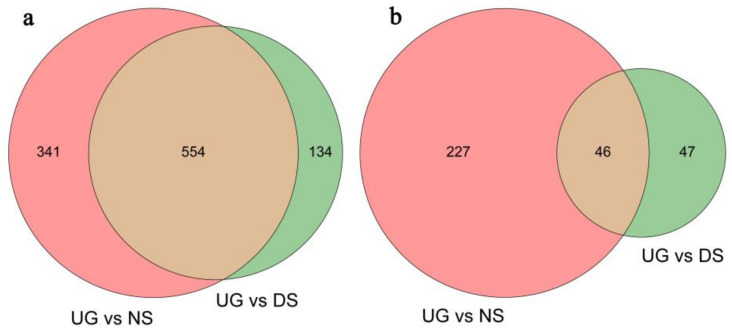
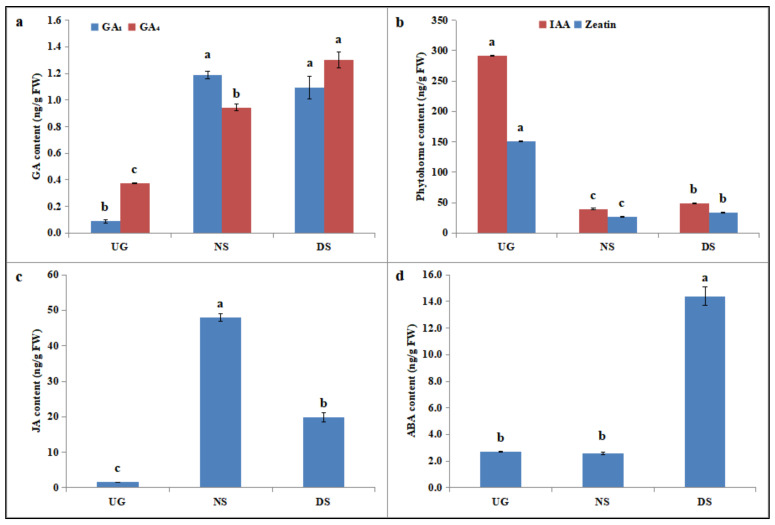
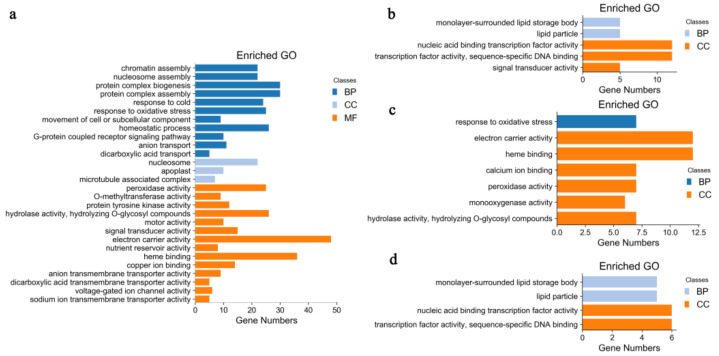
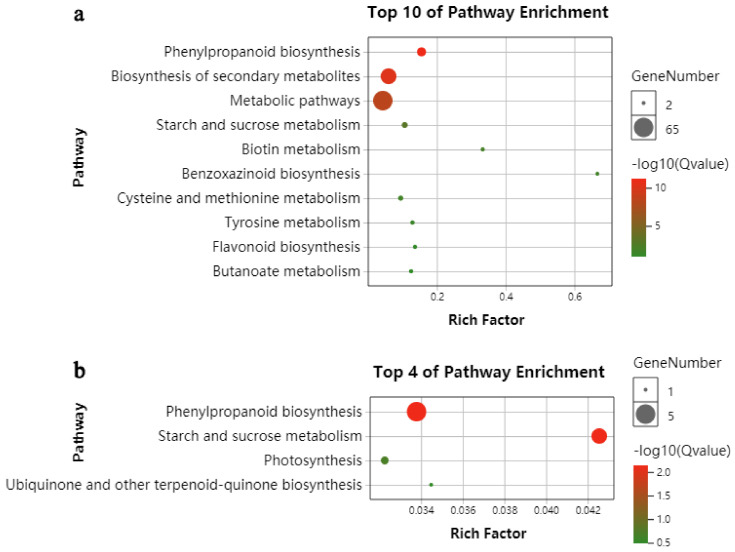
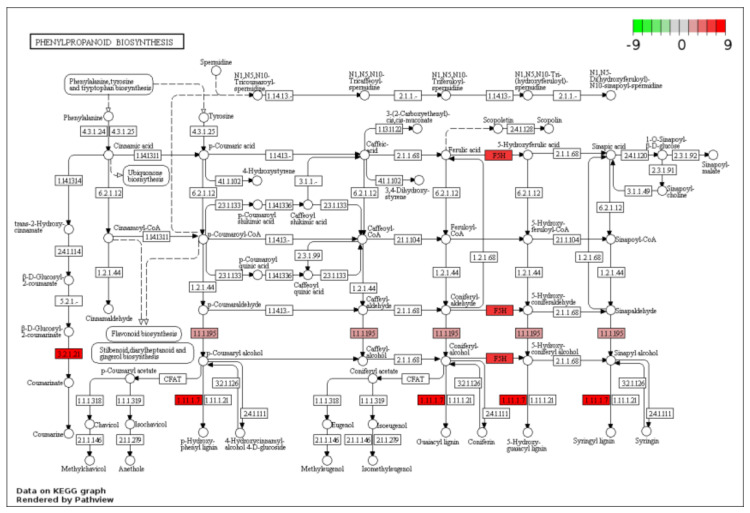
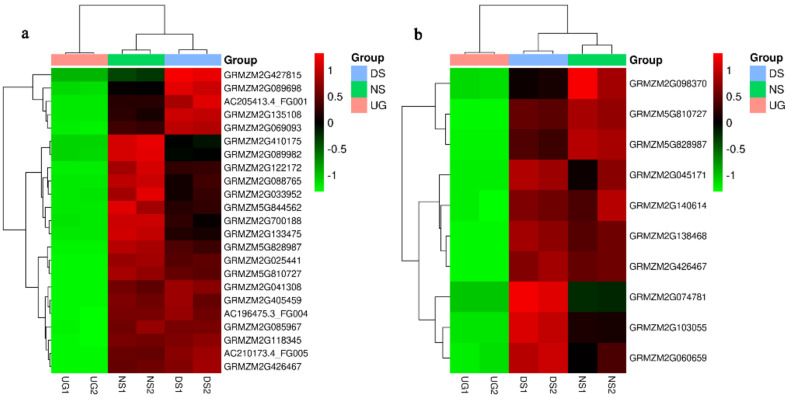
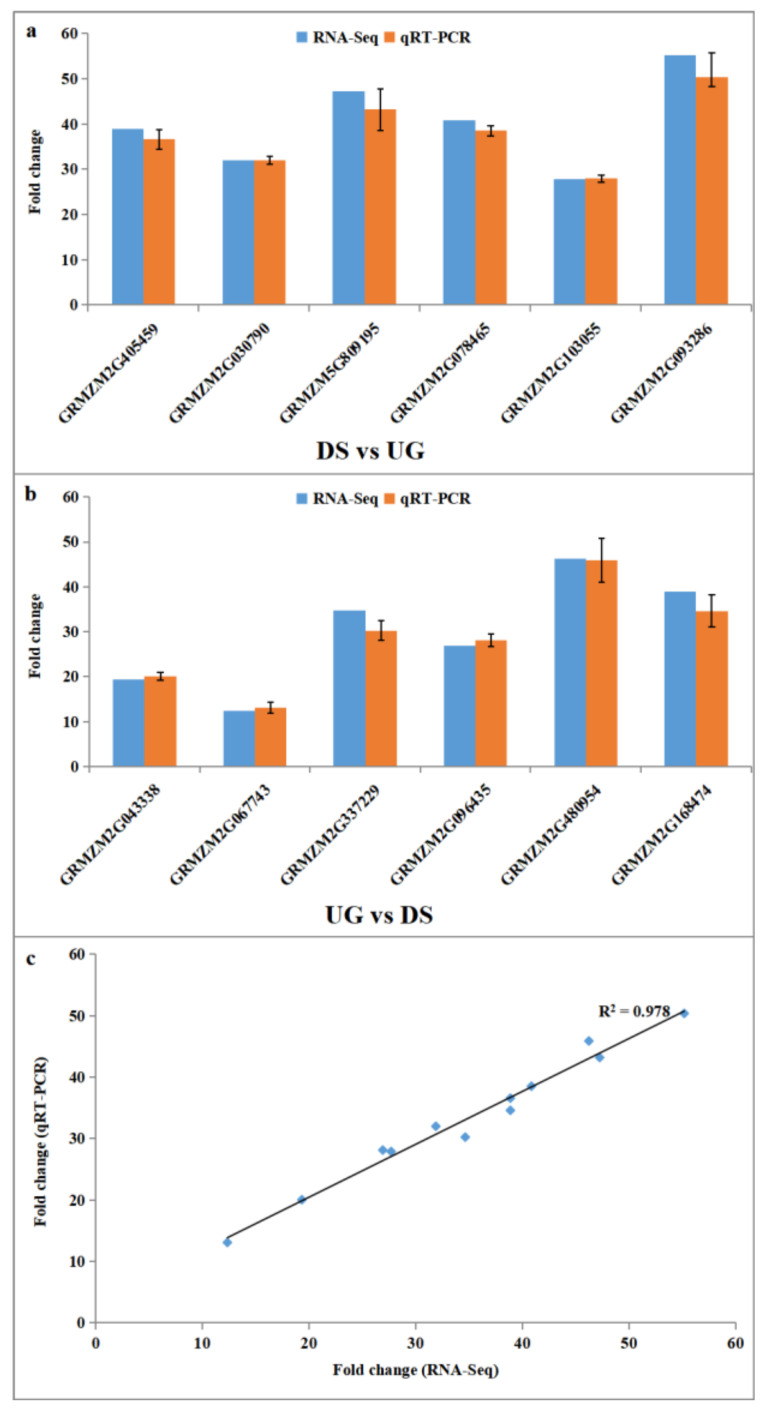
To improve our understanding of the mechanism of maize seed germination under deep sowing, transcriptome sequencing and physiological metabolism analyses were performed using B73 embryos separated from ungerminated seeds (UG) or seeds germinated for 2 d at a depth of 2 cm (normal sowing, NS) or 20 cm (deep sowing, DS). Gene ontology (GO) analysis indicated that "response to oxidative stress" and "monolayer-surrounded lipid storage body" were the most significant GO terms in up- and down-regulated differentially expressed genes (DEGs) of DS. Kyoto Encyclopedia of Genes and Genomes (KEGG) analysis suggested that "phenylpropanoid biosynthesis" and "starch and sucrose metabolism" were critical processes in maize seed germination under deep-sowing conditions. Consistent with DEGs, the activities of superoxide dismutase, catalase, peroxidases and α-amylase, as well as the contents of gibberellin 4, indole acetic acid, zeatin and abscisic acid were significantly increased, while the jasmonic-acid level was dramatically reduced under deep-sowing stress. The expressions of six candidate genes were more significantly upregulated in B73 (deep-sowing-tolerant) than in Mo17 (deep-sowing-sensitive) at 20 cm sowing depth. These findings enrich our knowledge of the key biochemical pathways and genes regulating maize seed germination under deep-sowing conditions, which may help in the breeding of varieties tolerant to deep sowing.
为了增进我们对玉米深播条件下种子萌发机制的理解,利用从未萌发种子(UG)或在2厘米深度(正常播种,NS)或20厘米深度(深播,DS)萌发2天的种子中分离出的B73胚进行了转录组测序和生理代谢分析。基因本体论(GO)分析表明,“对氧化应激的反应”和“单层包围的脂质储存体”是深播上调和下调差异表达基因(DEG)中最显著的GO术语。京都基因与基因组百科全书(KEGG)分析表明,“苯丙烷生物合成”和“淀粉和蔗糖代谢”是深播条件下玉米种子萌发的关键过程。与差异表达基因一致,在深播胁迫下,超氧化物歧化酶、过氧化氢酶、过氧化物酶和α-淀粉酶的活性以及赤霉素4、吲哚乙酸、玉米素和脱落酸的含量显著增加,而茉莉酸水平则显著降低。在20厘米播种深度下,六个候选基因在B73(耐深播)中的表达上调比在Mo17(对深播敏感)中更显著。这些发现丰富了我们对深播条件下调控玉米种子萌发的关键生化途径和基因的认识,这可能有助于耐深播品种的培育。