
经两条动脉行血管栓塞术治疗冠状死动脉术后假性动脉瘤:1例报告
Post-surgical pseudoaneurysm of the corona mortis artery treated by arterial embolization from two arteries: A case report.
作者信息
Suzuki Mitsuhiro, Kato Mayuko, Nakamura Ryutaro, Uehara Katsuki, Sugiki Daisuke, Matsushima Hisao
机构信息
Department of Emergency and Critical Care Medicine, Emergency and Critical Care Center, Dokkyo Medical University Saitama Medical Center, 2-1-50, Minamikoshigaya, Koshigaya City, Japan.
出版信息
Radiol Case Rep. 2022 Feb 3;17(4):1132-1135. doi: 10.1016/j.radcr.2022.01.032. eCollection 2022 Apr.
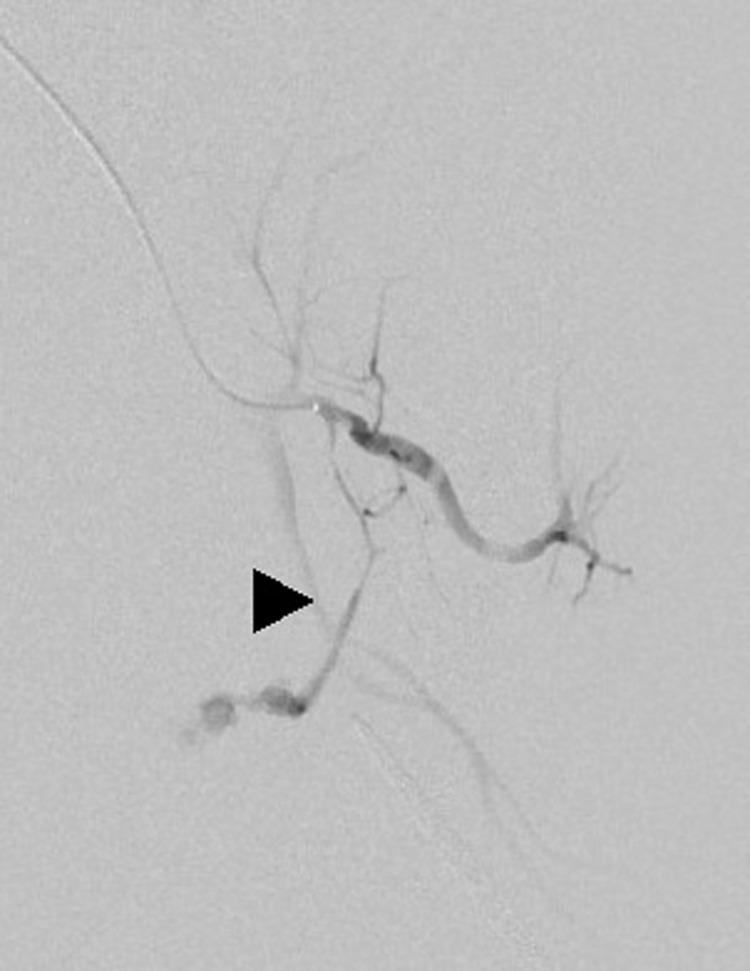
Post-surgical pseudoaneurysm in the pelvis is rare. However, when it does occur, it may cause life-threatening hemorrhage. Hemostatic treatment for pelvic pseudoaneurysms may be complicated because the blood vessels in the pelvis may present with various anastomoses. Herein, we describe a case of a pseudoaneurysm that necessitated embolization of two arteries. A 47-year-old woman had undergone a total hysterectomy, a bilateral adnexectomy, and a pelvic lymphadenectomy for endometrial cancer; 13 days after surgery, she complained of sudden abdominal pain. Contrast-enhanced computed tomography revealed a retroperitoneal hematoma and a pseudoaneurysm with contrast leakage. The pseudoaneurysm had two feeding arteries (from the external and internal iliac systems). The first feeding artery was the obturator artery, which arose from the anterior trunk of the internal iliac artery. The second feeding artery was the aberrant obturator artery, which arose from the medial femoral circumflex artery. Both feeders were embolized and hemostasis was achieved. Pseudoaneurysms in the pelvis may have double origins from the external and internal iliac systems, and the aberrant obturator artery may arise from the medial femoral circumflex artery. Therefore, radiologists should be aware of these variations to effectively address post-surgical pseudoaneurysms of the corona mortis artery.
盆腔术后假性动脉瘤较为罕见。然而,一旦发生,可能导致危及生命的出血。盆腔假性动脉瘤的止血治疗可能较为复杂,因为盆腔血管存在多种吻合情况。在此,我们描述一例需要栓塞两条动脉的假性动脉瘤病例。一名47岁女性因子宫内膜癌接受了全子宫切除术、双侧附件切除术和盆腔淋巴结清扫术;术后13天,她主诉突发腹痛。增强计算机断层扫描显示腹膜后血肿和一个有造影剂外漏的假性动脉瘤。该假性动脉瘤有两条供血动脉(分别来自髂外和髂内系统)。第一条供血动脉是闭孔动脉,起自髂内动脉前干。第二条供血动脉是异常闭孔动脉,起自股内侧旋动脉。两条供血动脉均被栓塞,实现了止血。盆腔假性动脉瘤可能有来自髂外和髂内系统的双重起源,且异常闭孔动脉可能起自股内侧旋动脉。因此,放射科医生应了解这些变异情况,以便有效处理冠状静脉窦动脉的术后假性动脉瘤。



 Zotero 插件