Infectious and Tropical Diseases Research Center, Health Research Institute, Ahvaz Jundishapur University of Medical Sciences, Ahvaz, Iran.
Department of Microbiology, Faculty of Medicine, Ahvaz Jundishapur University of Medical Sciences, Ahvaz, Iran.
Mol Biol Rep. 2022 May;49(5):3811-3822. doi: 10.1007/s11033-022-07225-3. Epub 2022 Feb 15.
This study was aimed to evaluate the antibiotic resistance, biofilm formation, and genetic diversity of carbapenem-resistant Pseudomonas aeruginosa (CRPA) strains isolated from four types of nosocomial infections (NIs) including urinary tract infection (UTI), ventilator-associated pneumonia (VAP), surgical site infection (SSI), and bloodstream infection (BSI).
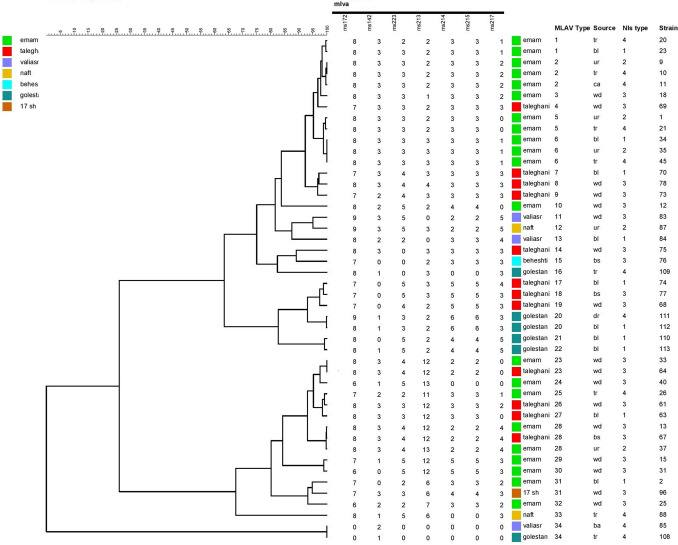
In total, 115 isolates of NIs-causing P. aeruginosa were collected from NIs. Antibiotic susceptibility testing (AST) was performed using disk diffusion method and minimum inhibitory concentrations. Biofilm formation was tested on 96-well polystyrene microtiter plates (MTP). CRPA isolates were genotyped using multiple-locus variable number of tandem repeat analysis (MLVA). The most resistance and susceptibility rates were observed to amikacin (70.6%) and colistin (96.1%), respectively. Colistin and meropenem were the most active antimicrobial agents in VAP, SSI, and BSI. While, colistin and cefepime were the most active in UTIs. In total, 52.2% (n = 60/115) of P. aeruginosa isolates were carbapenem resistant, of which 95.0%, 55.0%, and 5.0% were multidrug-resistant, extensively drug-resistant, and pandrug-resistant, respectively. There was a significant association between resistance to carbapenem and resistance to other antibiotics except for piperacillin/tazobactam. The biofilm production of CRPA isolates was 95.0%, of which 23.3% were strong biofilm producers. Based on MLVA, there were 34 different types of CRPA isolates classified into three main clusters and 5 sub clusters.
The association of CRPA with other antibiotic resistance, the high rates of biofilm production, and the high genetic diversity of the isolates may be a warning of the need for a careful surveillance program.
本研究旨在评估从四种医院获得性感染(包括尿路感染、呼吸机相关性肺炎、手术部位感染和血流感染)中分离的耐碳青霉烯类铜绿假单胞菌(CRPA)菌株的抗生素耐药性、生物膜形成和遗传多样性。
共从医院获得性感染中收集了 115 株引起感染的铜绿假单胞菌。采用纸片扩散法和最小抑菌浓度法进行抗生素敏感性试验(AST)。在 96 孔聚苯乙烯微量滴定板(MTP)上测试生物膜形成。采用多位点可变数串联重复分析(MLVA)对 CRPA 分离株进行基因分型。对阿米卡星(70.6%)和多粘菌素(96.1%)的耐药率和敏感性最高。多粘菌素和美罗培南在呼吸机相关性肺炎、手术部位感染和血流感染中是最有效的抗菌药物。而在尿路感染中,多粘菌素和头孢吡肟是最有效的药物。115 株铜绿假单胞菌分离株中,52.2%(60/115)为碳青霉烯类耐药,其中 95.0%、55.0%和 5.0%为多药耐药、广泛耐药和全耐药。除了哌拉西林/他唑巴坦外,碳青霉烯类耐药与其他抗生素耐药之间存在显著相关性。CRPA 分离株的生物膜生成率为 95.0%,其中 23.3%为强生物膜生成株。基于 MLVA,有 34 种不同类型的 CRPA 分离株分为三个主要聚类和 5 个亚聚类。
CRPA 与其他抗生素耐药性的关联、高生物膜生成率和分离株的高遗传多样性可能是需要进行仔细监测计划的警告。