Department of Neurology, Sydney Children's Hospital Network, Sydney, New South Wales, Australia.
School of Clinical Medicine, UNSW Medicine & Health, Randwick Clinical Campus, Discipline of Paediatrics, University of New South Wales, Sydney, New South Wales, Australia.
Ann Clin Transl Neurol. 2022 Mar;9(3):339-350. doi: 10.1002/acn3.51519. Epub 2022 Feb 16.
To provide a greater understanding of the tolerability, safety and clinical outcomes of onasemnogene abeparvovec in real-world practice, in a broad population of infants with spinal muscular atrophy (SMA).
A prospective cohort study of children with SMA treated with onasemnogene abeparvovec at Sydney Children's Hospital Network, Australia was conducted from August 2019 to November 2021. Safety outcomes included clinical and laboratory evaluations. Efficacy assessments included World Health Organisation (WHO) motor milestones, oral and swallowing abilities, and requirements for respiratory support. The implementation of a model of care for onasemnogene abeparvovec administration in health practice is described.
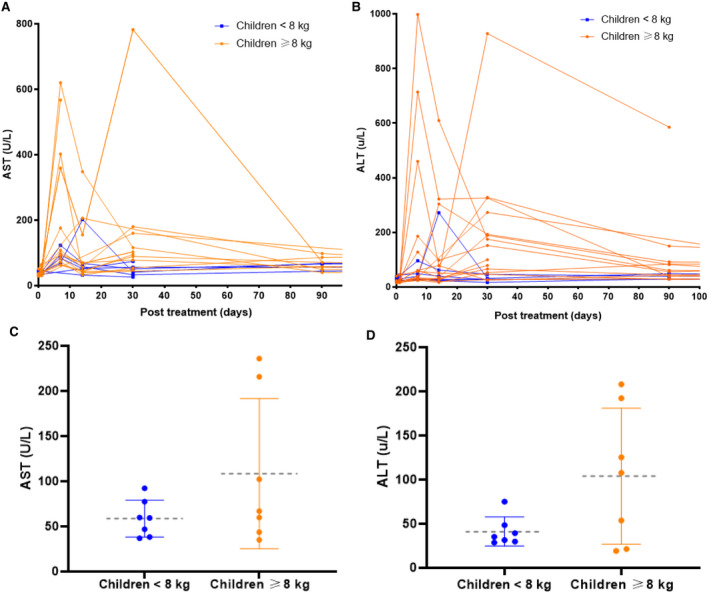
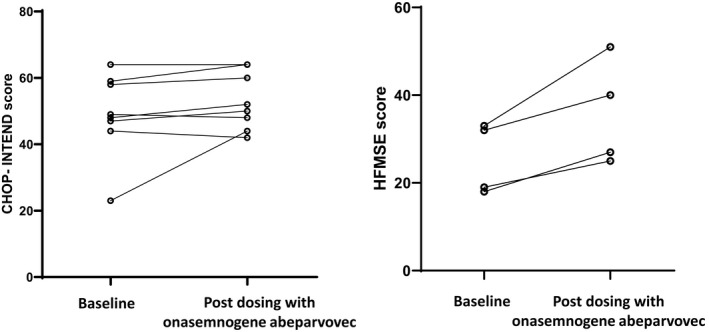
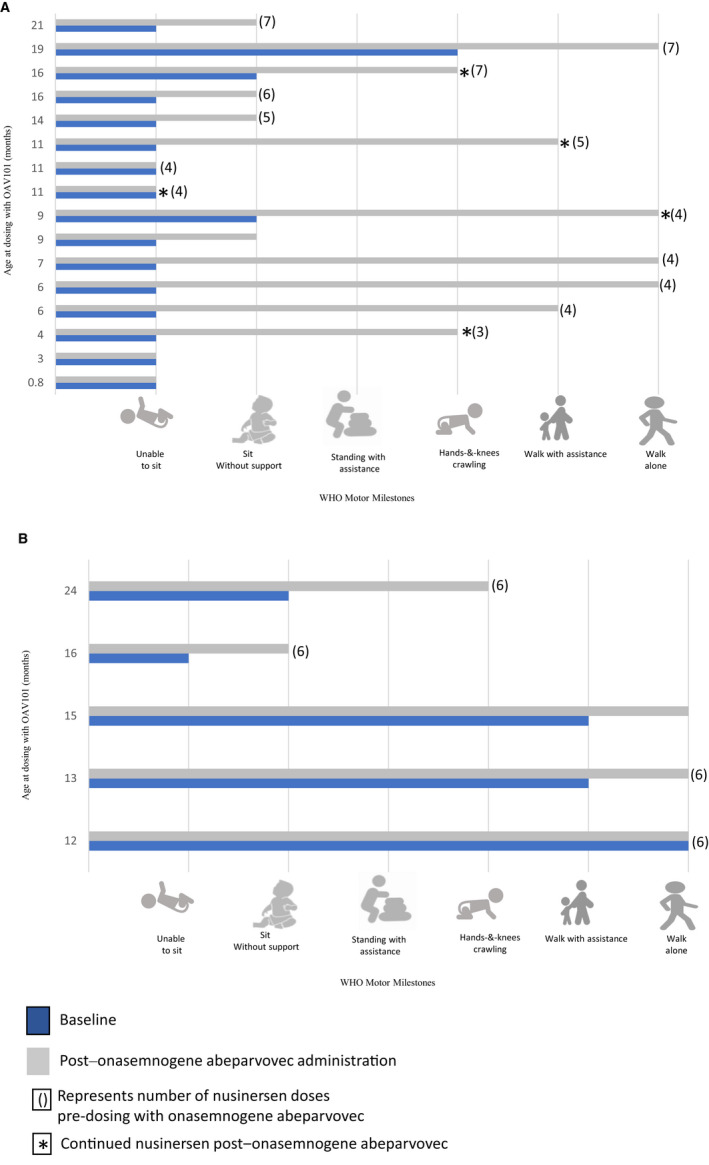
21 children were treated (age range, 0.65-24 months; body weight range, 2.5-12.5 kg) and 19/21 (90.4%) had previous nusinersen. Transient treatment-related side effects occurred in all children; vomiting (100%), transaminitis (57%) and thrombocytopaenia (33%). Incidence of moderate/severe transaminitis was significantly greater in infants weighing ≥8 kg compared with <8 kg (p < 0.05). Duration of prednisolone following treatment was prolonged (mean 87.5 days, range 57-274 days). 16/21 (76%) children gained at least one WHO motor milestone. Stabilisation or improvement in bulbar or respiratory function was observed in 20/21 (95.2%) patients. Implementation challenges were mitigated by developing standard operating procedures and facilitating exchange of knowledge.
This study provides real-world evidence to inform treatment decisions and guide therapeutic expectations for onasemnogene abeparvovec and combination therapy for SMA in health practice, especially for children weighing ≥8 kg receiving higher vector loads. Proactive clinical and laboratory surveillance is essential to facilitate individualised management of risks.
在广泛的脊髓性肌萎缩症(SMA)婴儿人群中,提供对onasemnogene abeparvovec 在真实实践中的耐受性、安全性和临床结果的更深入了解。
对 2019 年 8 月至 2021 年 11 月期间在澳大利亚悉尼儿童医院网络接受 onasemnogene abeparvovec 治疗的 SMA 患儿进行前瞻性队列研究。安全性结果包括临床和实验室评估。疗效评估包括世界卫生组织(WHO)运动里程碑、口腔和吞咽能力以及对呼吸支持的需求。描述了在健康实践中实施 onasemnogene abeparvovec 给药护理模式的情况。
共治疗了 21 名儿童(年龄范围:0.65-24 个月;体重范围:2.5-12.5kg),其中 19/21(90.4%)之前接受过 nusinersen。所有儿童均出现短暂的治疗相关副作用;呕吐(100%)、转氨基酶升高(57%)和血小板减少症(33%)。与体重<8kg 的婴儿相比,体重≥8kg 的婴儿中度/重度转氨基酶升高的发生率显著更高(p<0.05)。治疗后泼尼松龙的使用时间延长(平均 87.5 天,范围 57-274 天)。21 名儿童中有 16 名(76%)至少获得了一个 WHO 运动里程碑。21 名患者中有 20 名(95.2%)观察到延髓或呼吸功能稳定或改善。通过制定标准操作程序和促进知识交流,缓解了实施挑战。
本研究提供了真实世界的证据,为治疗决策提供信息,并为健康实践中的 onasemnogene abeparvovec 治疗和 SMA 联合治疗提供治疗预期指导,特别是对于接受更高载体负荷的体重≥8kg 的儿童。积极的临床和实验室监测对于促进风险的个体化管理至关重要。