Department of Biochemistry and Molecular Biophysics, Columbia University, New York, NY 10032, USA; Zuckerman Mind Brain Behavior Institute, Columbia University, New York, NY 10027, USA.
Zuckerman Mind Brain Behavior Institute, Columbia University, New York, NY 10027, USA; Aaron Diamond AIDS Research Center, Columbia University Vagelos College of Physicians and Surgeons, New York, NY 10032, USA.
Cell Rep. 2022 Mar 1;38(9):110428. doi: 10.1016/j.celrep.2022.110428. Epub 2022 Feb 7.
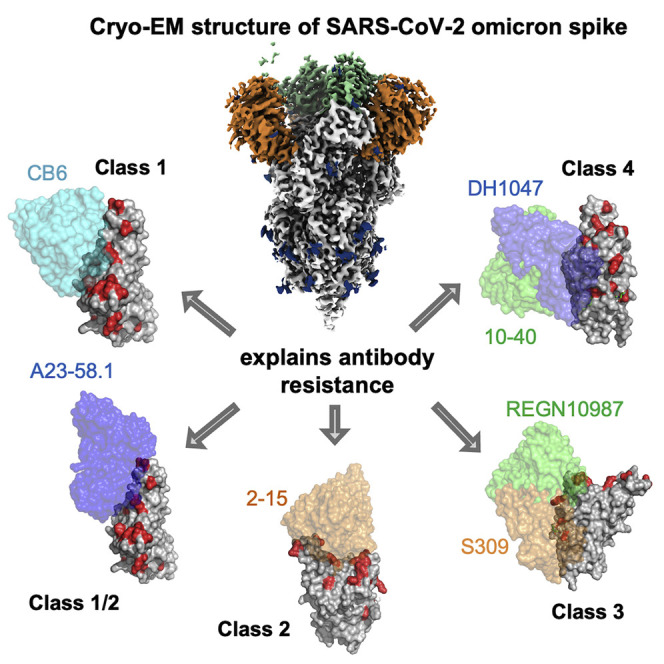
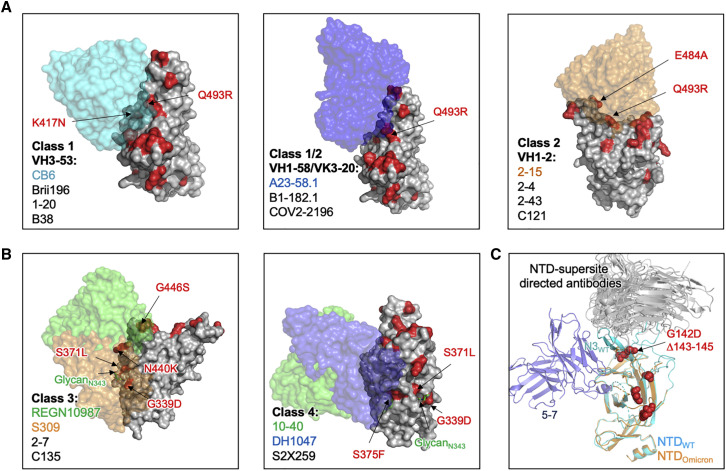
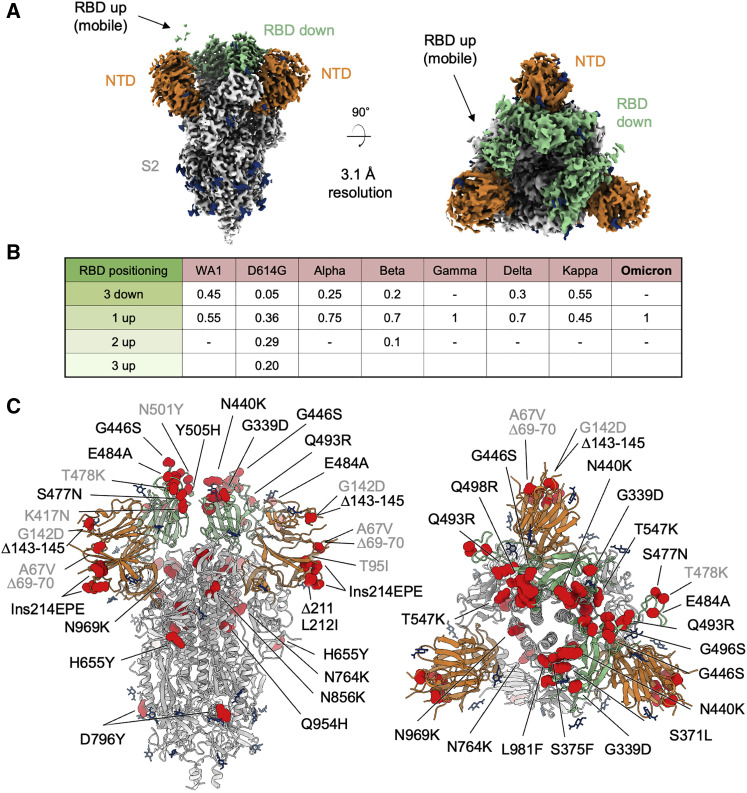
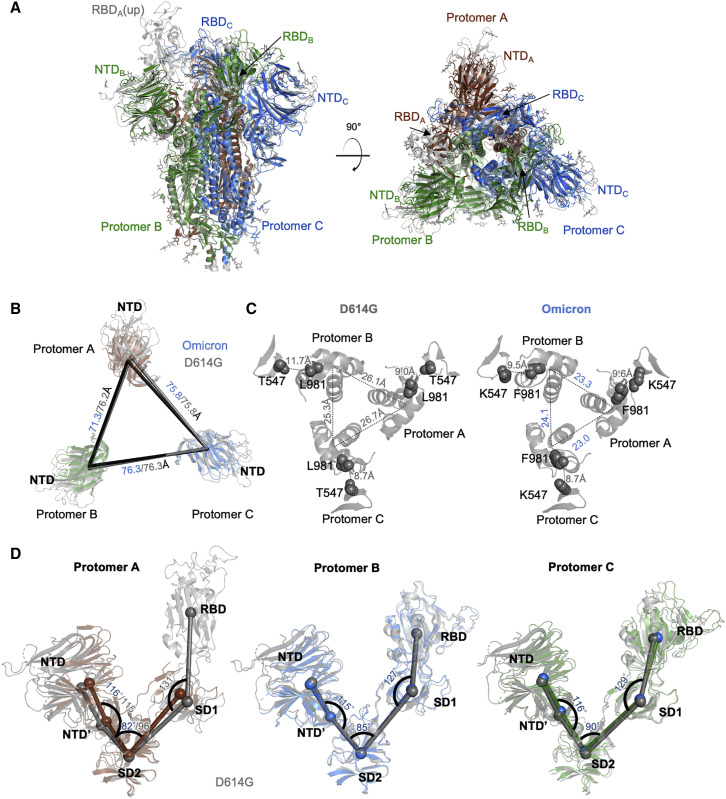
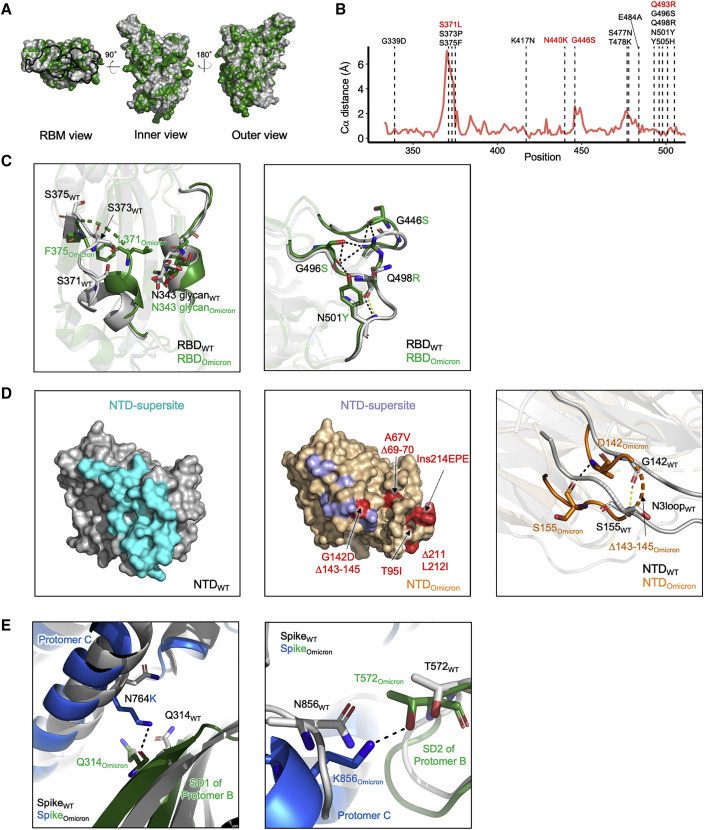
The recently reported B.1.1.529 Omicron variant of severe acute respiratory syndrome coronavirus-2 (SARS-CoV-2) includes 34 mutations in the spike protein relative to the Wuhan strain, including 15 mutations in the receptor-binding domain (RBD). Functional studies have shown Omicron to substantially escape the activity of many SARS-CoV-2-neutralizing antibodies. Here, we report a 3.1 Å-resolution cryoelectron microscopy (cryo-EM) structure of the Omicron spike protein ectodomain. The structure depicts a spike that is exclusively in the 1-RBD-up conformation with high mobility of RBD. Many mutations cause steric clashes and/or altered interactions at antibody-binding surfaces, whereas others mediate changes of the spike structure in local regions to interfere with antibody recognition. Overall, the structure of the Omicron spike reveals how mutations alter its conformation and explains its extraordinary ability to evade neutralizing antibodies.
最近报道的严重急性呼吸综合征冠状病毒 2(SARS-CoV-2)的 B.1.1.529 奥密克戎变体相对于武汉株在刺突蛋白中包含 34 个突变,包括受体结合域(RBD)中的 15 个突变。功能研究表明,奥密克戎极大地逃避了许多 SARS-CoV-2 中和抗体的活性。在这里,我们报告了奥密克戎刺突蛋白外域的 3.1Å 分辨率冷冻电镜(cryo-EM)结构。该结构描绘了一个刺突,其仅处于 1-RBD-up 构象,RBD 具有很高的迁移率。许多突变导致抗体结合表面的空间位阻和/或相互作用改变,而其他突变则介导刺突结构在局部区域的变化,以干扰抗体识别。总体而言,奥密克戎刺突的结构揭示了突变如何改变其构象,并解释了其逃避中和抗体的非凡能力。