Kretzer Christian, Jordan Paul M, Bilancia Rossella, Rossi Antonietta, Gür Maz Tuğçe, Banoglu Erden, Schubert Ulrich S, Werz Oliver
Department of Pharmaceutical/Medicinal Chemistry, Institute of Pharmacy, Friedrich Schiller University Jena, Jena, 07743, Germany.
Department of Pharmacy, School of Medicine and Surgery, University of Naples Federico II, Naples, I-80131, Italy.
J Inflamm Res. 2022 Feb 9;15:911-925. doi: 10.2147/JIR.S345510. eCollection 2022.
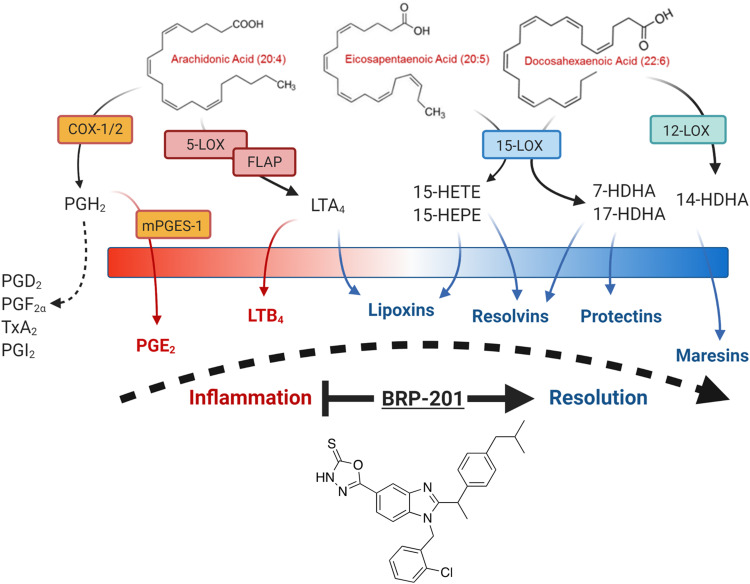
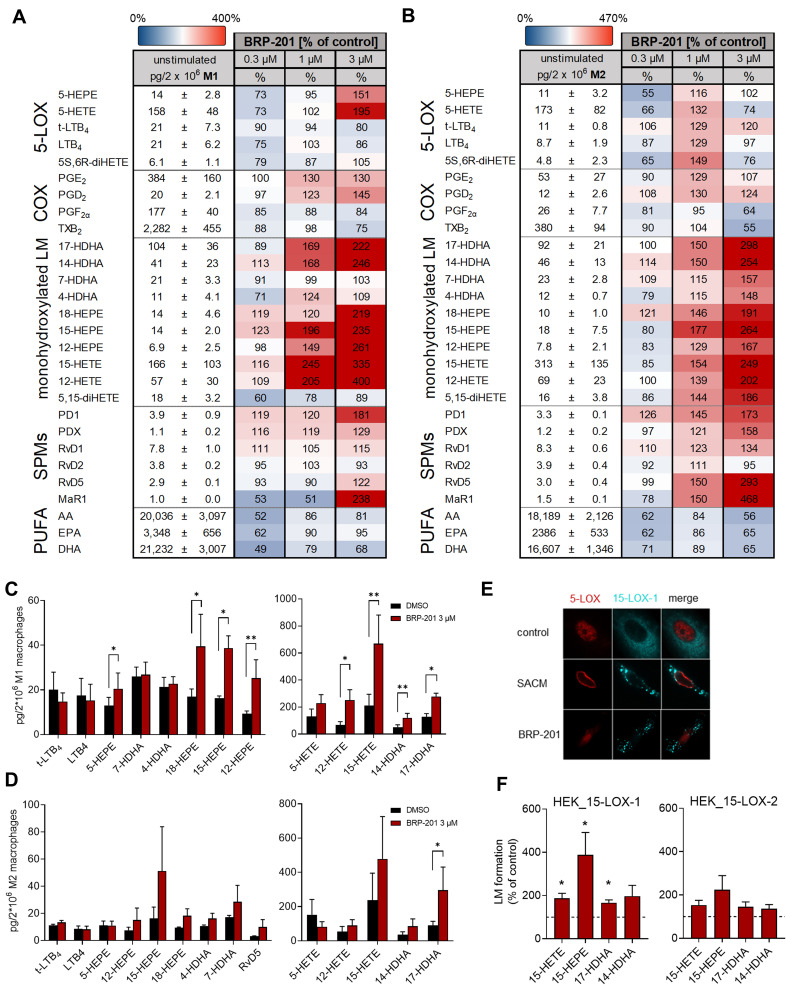
Lipid mediators (LM) play crucial roles in the complex inflammation process with respect to initiation, maintenance, and resolution. Proinflammatory leukotrienes (LTs), generated by 5-lipoxygenase (LOX) and the 5-LOX-activating protein (FLAP), initiate and maintain inflammation while specialized pro-resolving mediators (SPMs) formed by various LOXs as key enzymes promote inflammation resolution and the return to homeostasis. Since 5-LOX also contributes to SPM biosynthesis, smart pharmacological manipulation of the 5-LOX pathway and accompanied activation of 12-/15-LOXs may accomplish suppression of LT formation but maintain or even elevate SPM formation. Here, we demonstrated that the FLAP antagonist BRP-201 possesses such pharmacological profile and causes a switch from LT toward SPM formation.
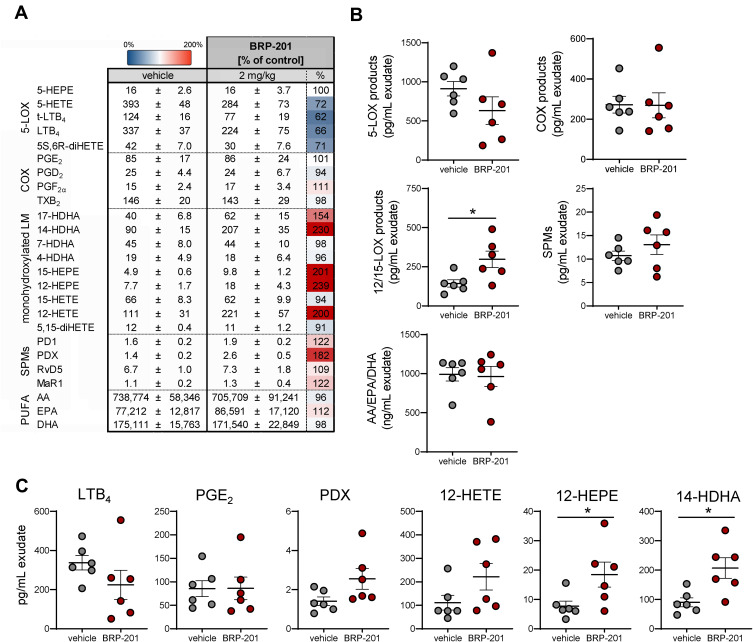
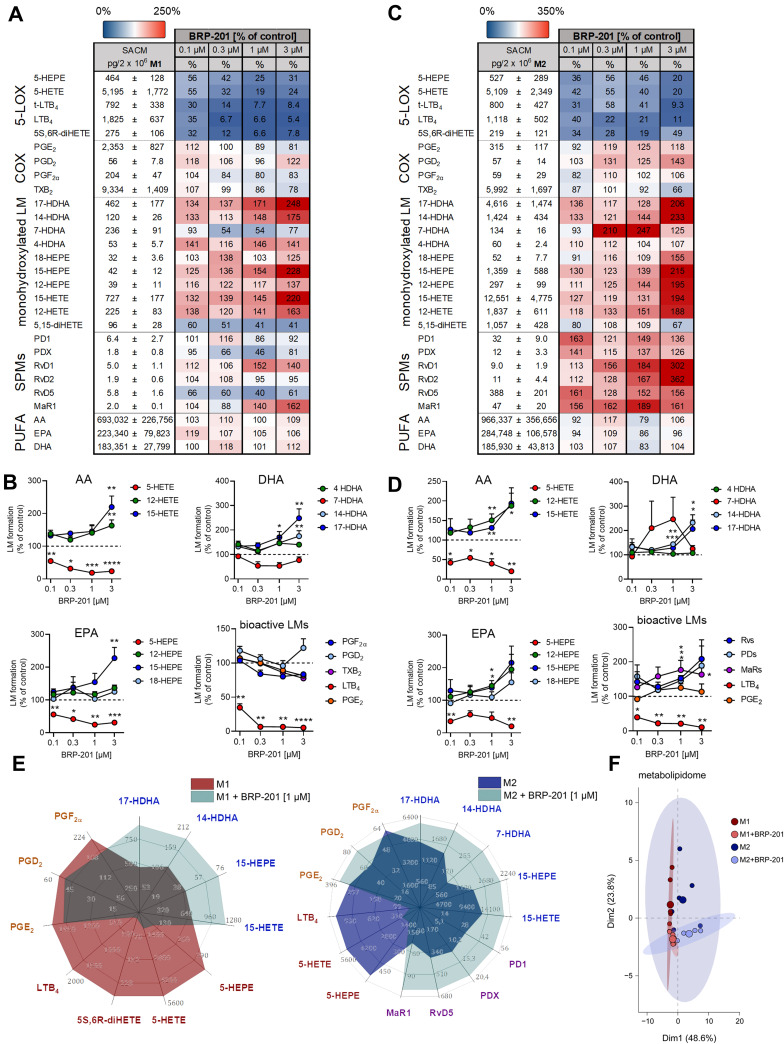
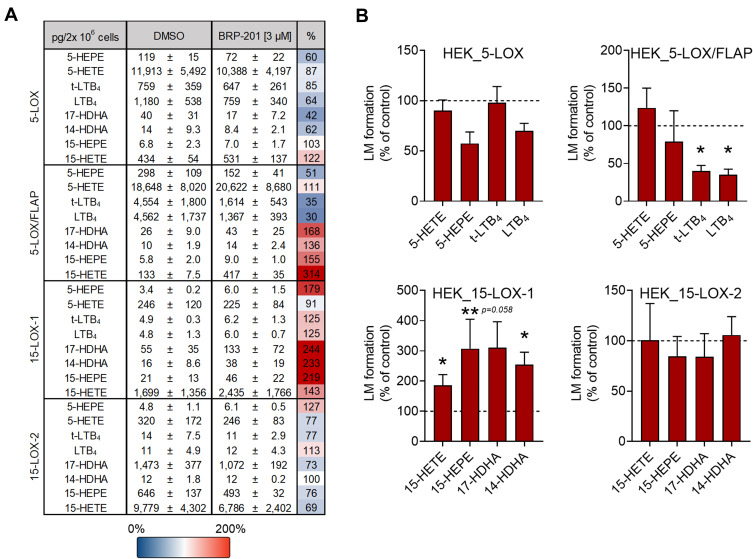
Comprehensive LM metabololipidomics with activated human monocyte-derived macrophages (MDM) of M1 or M2 phenotype showed that BRP-201 strongly inhibits LT formation induced by bacterial exotoxins. In parallel, SPM levels and 12/15-LOX-derived products were markedly elevated, in particular in M2-MDM. Intriguingly, in unstimulated MDM, BRP-201 induced formation of 12/15-LOX products including SPM and caused 15-LOX-1 subcellular redistribution without affecting 5-LOX. Experiments with HEK293 cells stably expressing either 5-LOX with or without FLAP, 15-LOX-1 or 15-LOX-2 confirmed suppression of 5-LOX product formation due to FLAP antagonism by BRP-201 but activated 15-LOX-1 in the absence of FLAP. Finally, in zymosan-induced murine peritonitis, BRP-201 (2 mg/kg, ip) lowered LT levels but elevated 12/15-LOX products including SPMs.
BRP-201 acts as FLAP antagonist but also as 12/15-LOX activator switching formation of pro-inflammatory LTs toward inflammation-resolving SPM, which reflects a beneficial pharmacological profile for intervention in inflammation.
脂质介质(LM)在复杂的炎症过程中,在起始、维持和消退方面发挥着关键作用。由5-脂氧合酶(LOX)和5-LOX激活蛋白(FLAP)产生的促炎白三烯(LTs)启动并维持炎症,而由各种LOX作为关键酶形成的特殊促消退介质(SPMs)则促进炎症消退并恢复至内稳态。由于5-LOX也参与SPM的生物合成,对5-LOX途径进行巧妙的药理学调控以及伴随激活12-/15-LOXs可能会抑制LT的形成,但维持甚至提高SPM的形成。在此,我们证明FLAP拮抗剂BRP-201具有这样的药理学特性,并能导致从LT形成向SPM形成的转变。
对M1或M2表型的活化人单核细胞衍生巨噬细胞(MDM)进行全面的LM代谢脂质组学分析表明,BRP-201强烈抑制细菌外毒素诱导的LT形成。与此同时,SPM水平以及12/15-LOX衍生产物显著升高,尤其是在M2-MDM中。有趣的是,在未受刺激的MDM中,BRP-201诱导包括SPM在内的12/15-LOX产物的形成,并导致15-LOX-1亚细胞重新分布,而不影响5-LOX。对稳定表达带有或不带有FLAP的5-LOX、15-LOX-1或15-LOX-2的HEK293细胞进行的实验证实,BRP-201对FLAP的拮抗作用抑制了5-LOX产物的形成,但在没有FLAP的情况下激活了15-LOX-1。最后,在酵母聚糖诱导的小鼠腹膜炎中,BRP-201(2mg/kg,腹腔注射)降低了LT水平,但提高了包括SPMs在内的12/15-LOX产物。
BRP-201作为FLAP拮抗剂,同时也是12/15-LOX激活剂,将促炎LT的形成转变为炎症消退的SPM,这反映了其在炎症干预方面有益的药理学特性。