Leibniz Centre for Agricultural Landscape Research (ZALF), Müncheberg, Germany.
Department of Biology, Chemistry, Pharmacy, Institute of Biology, Freie Universität, Berlin, Germany.
PLoS One. 2022 Feb 17;17(2):e0262850. doi: 10.1371/journal.pone.0262850. eCollection 2022.
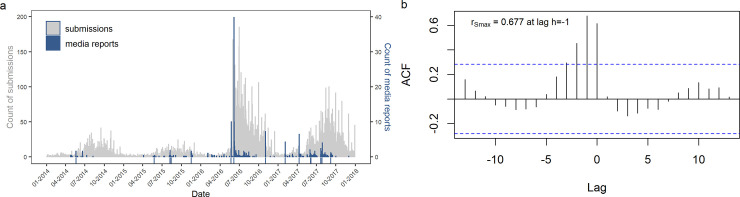
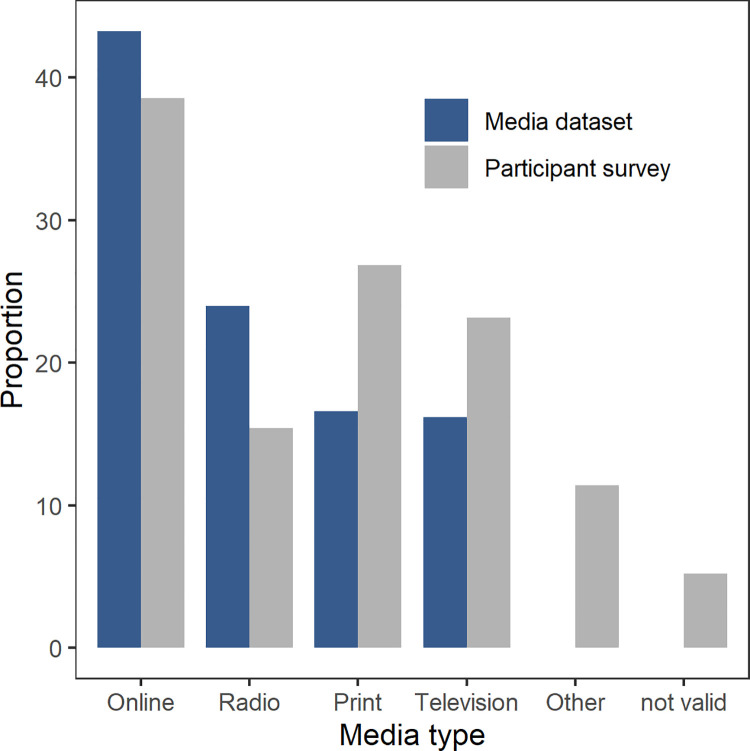
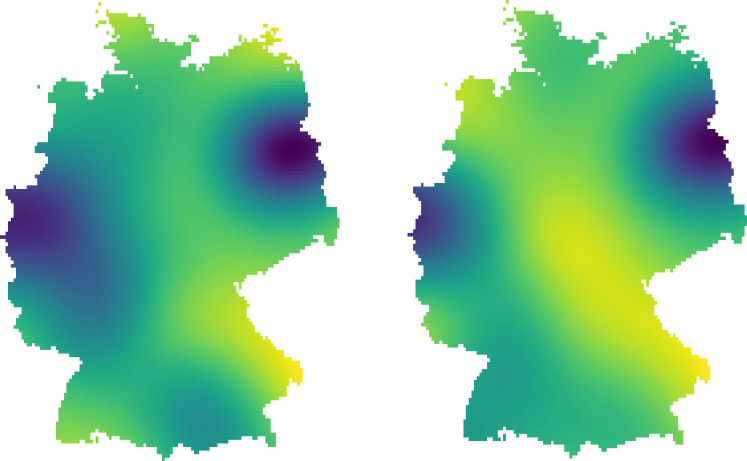
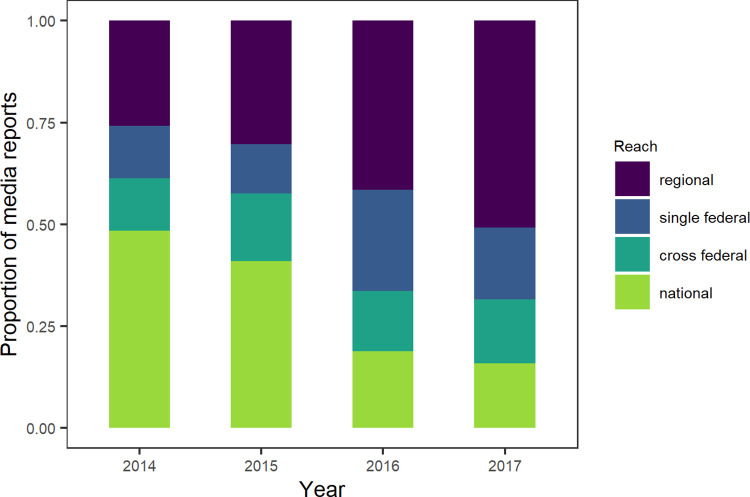
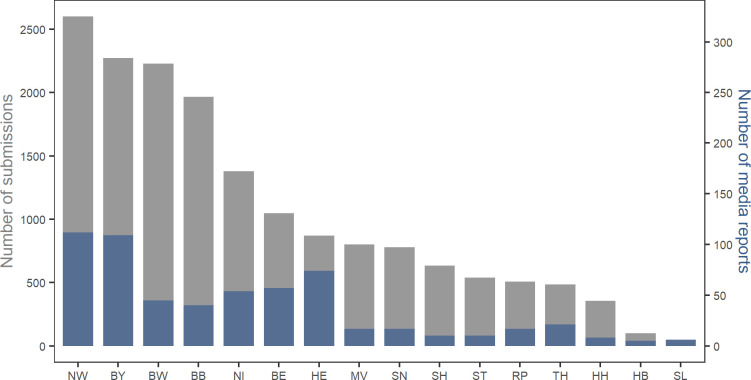
Since 2012, the citizen science project 'Mückenatlas' has been supplementing the German mosquito monitoring programme with over 28,000 submissions of physical insect samples. As the factors triggering people to catch mosquitoes for science are still unknown, we analysed the influence of mass media reports on mosquito submission numbers. Based on a theoretical framework of how mass media affect citizen responsiveness, we identified five possible influencing factors related to citizen science: (i) project awareness and knowledge, (ii) attention (economy), (iii) individual characteristics of citizen scientists and targeted communication, (iv) spatial differences and varying affectedness, and (v) media landscape. Hypotheses based on these influencing factors were quantitatively and qualitatively tested with two datasets: clipping data of mass media reports (online, television, radio and print) referring to or focussing on the 'Mückenatlas', and corresponding data of 'Mückenatlas' submissions between 2014 and 2017. In general, the number of media reports positively affected the number of mosquito submissions on a temporal and spatial scale, i.e. many media reports provoke many mosquito submissions. We found that an already heightened public and media awareness of mosquito-relevant topics combined with a direct call-to-action in a media report title led to a maximum participation. Differences on federal state level, however, suggest that factors additional to quantitative media coverage trigger participation in the 'Mückenatlas', in particular the mosquito affectedness of the resident population. Lastly, media types appear to differ in their effects on the number of submissions. Our results show under which circumstances the media presence of the 'Mückenatlas' is most effective in activating people to submit mosquito samples, and thus provide advice for designing communication strategies for citizen science projects.
自 2012 年以来,公民科学项目“蚊子地图集”通过超过 28000 份实体昆虫样本的提交,为德国蚊子监测计划提供了补充。由于触发人们为科学捕捉蚊子的因素仍不清楚,我们分析了大众媒体报道对蚊子提交数量的影响。基于大众媒体如何影响公民响应的理论框架,我们确定了与公民科学相关的五个可能的影响因素:(i)项目意识和知识,(ii)关注(经济),(iii)公民科学家的个体特征和针对性沟通,(iv)空间差异和不同的影响程度,以及(v)媒体景观。基于这些影响因素的假设,我们使用两个数据集进行了定量和定性测试:媒体报道的剪辑数据(在线、电视、广播和印刷)涉及或关注“蚊子地图集”,以及 2014 年至 2017 年期间“蚊子地图集”的相应提交数据。总的来说,媒体报道的数量在时间和空间上都对蚊子提交的数量产生了积极的影响,即许多媒体报道引发了许多蚊子提交。我们发现,公众和媒体对蚊子相关话题的意识已经提高,加上媒体报道标题中的直接行动呼吁,会导致最大程度的参与。然而,各州之间的差异表明,除了定量媒体报道之外,还有其他因素会促使人们参与“蚊子地图集”,特别是当地居民的蚊子受灾程度。最后,媒体类型似乎对提交数量的影响不同。我们的结果表明了“蚊子地图集”的媒体存在在激活人们提交蚊子样本方面最有效的情况,从而为公民科学项目的沟通策略设计提供了建议。