School of Chemistry and Molecular Biosciences, The University of Queensland, St. Lucia, QLD, 4072, Australia.
Australian Infectious Disease Research Centre, GVN Center of Excellence, The University of Queensland and QIMR Berghofer Medical Research Institute, St Lucia, QLD, 4067, Australia.
Parasit Vectors. 2022 Feb 18;15(1):59. doi: 10.1186/s13071-022-05176-z.
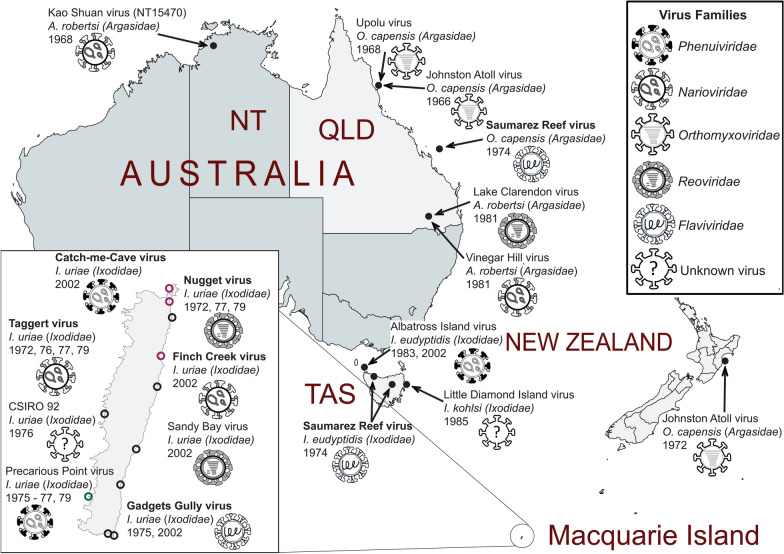
A subset of Australians who have been bitten by ticks experience a complex of chronic and debilitating symptoms which cannot be attributed to the known pathogenic species of bacteria present in Australia. As a result, there has been a renewed effort to identify and characterise viruses in Australian terrestrial ticks. Recent transcriptome sequencing of Ixodes and Amblyomma ticks has revealed the presence of multiple virus sequences. However, without virus isolates our ability to understand the host range and pathogenesis of newly identified viruses is limited. We have established a successful method for high-throughput virus discovery and isolation in mosquitoes using antibodies to double-stranded RNA. In this study we sought to characterise five archival tick-borne viruses to adapt our virus discovery protocol for Australian ticks.
We performed virus characterisation using a combination of bioinformatic sequence analysis and in vitro techniques including replication kinetics, antigenic profiling, virus purification and mass spectrometry.
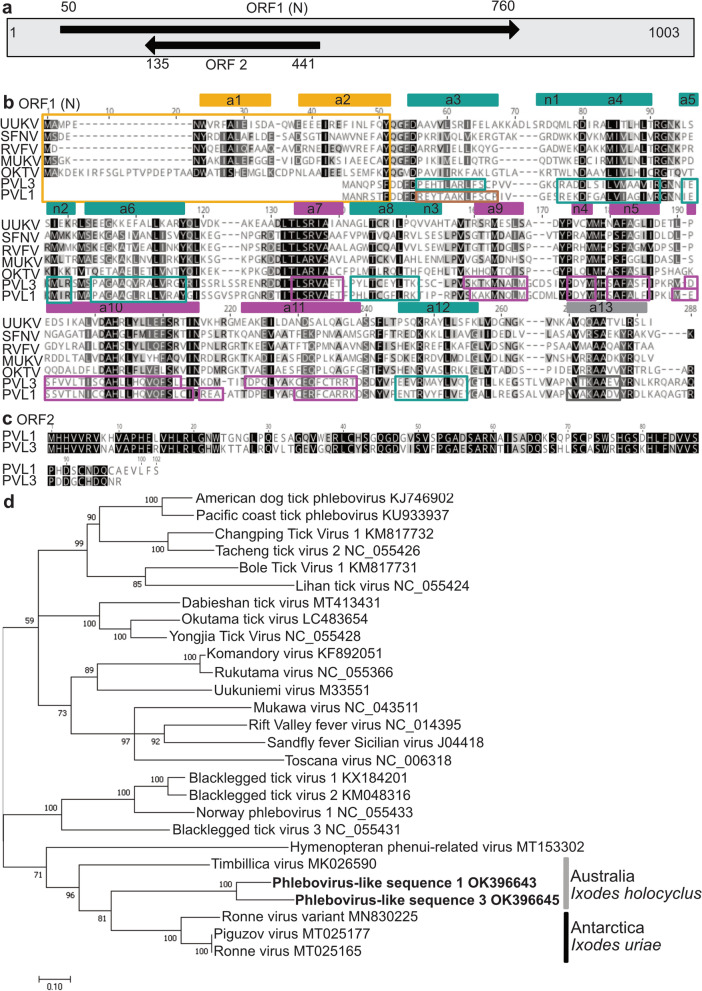
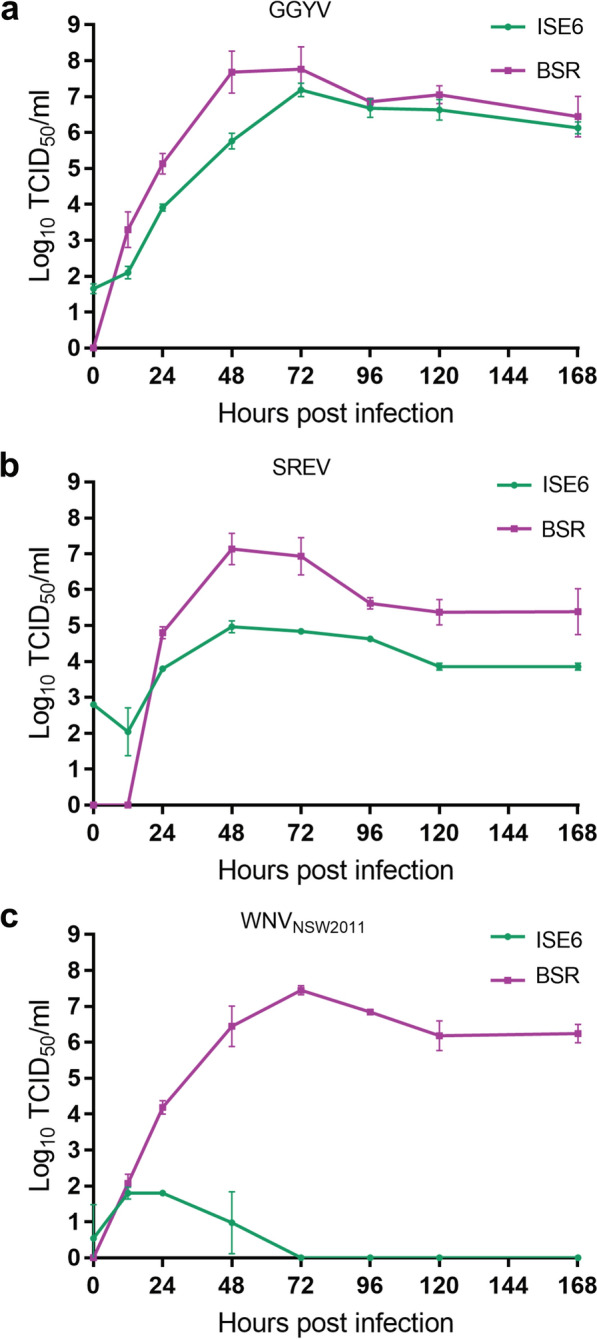
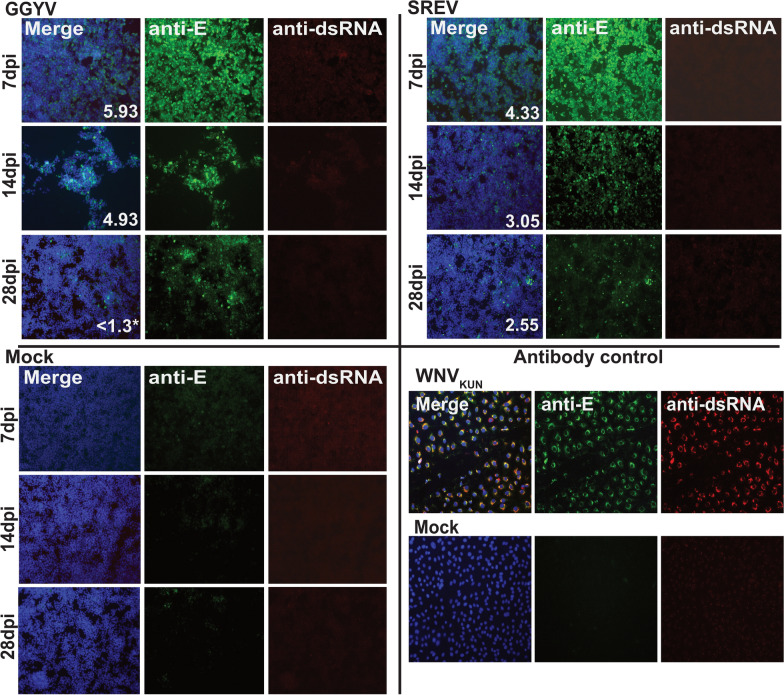
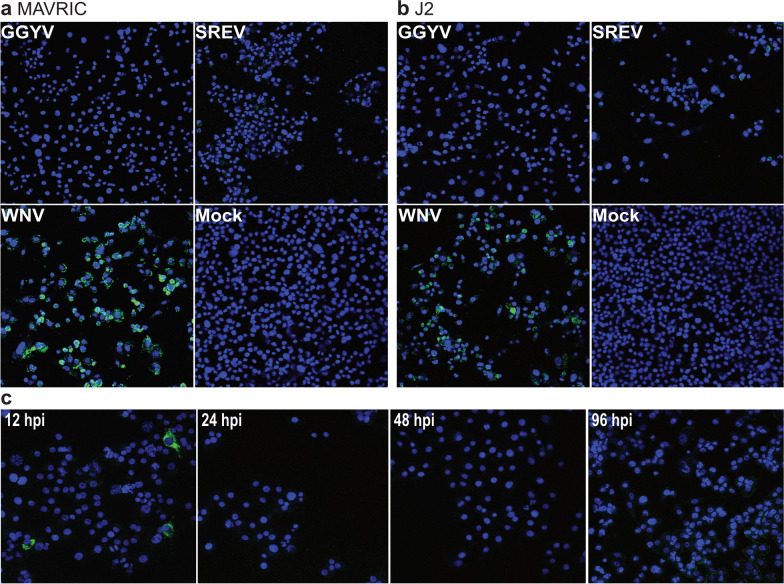
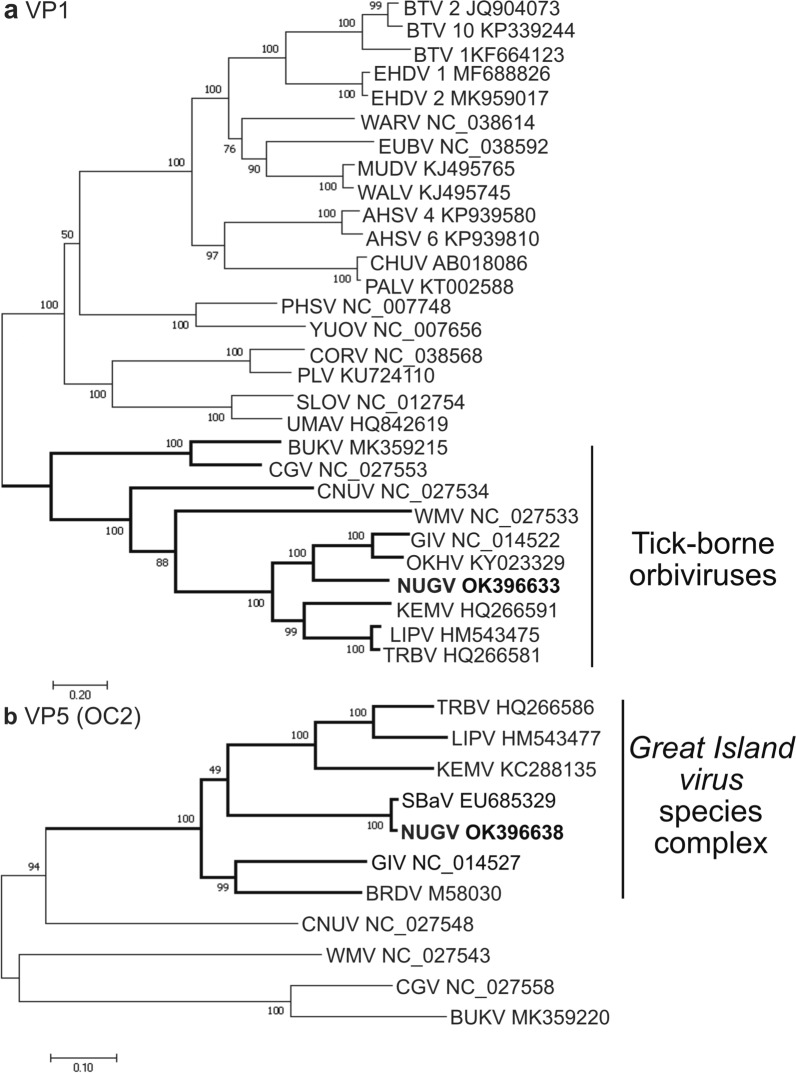
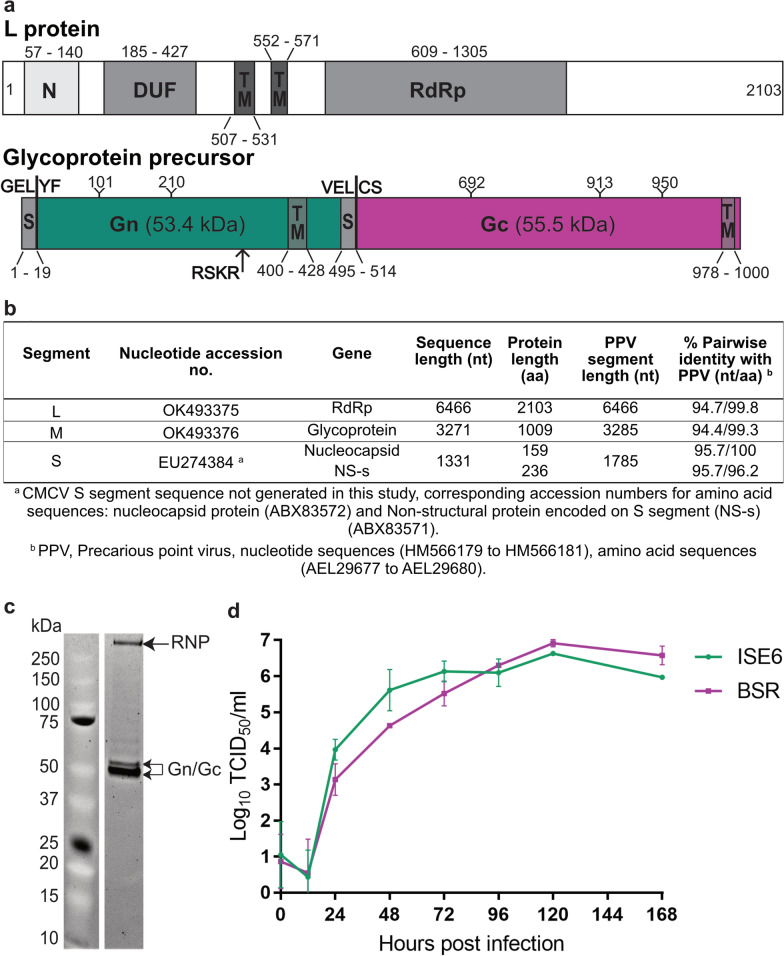
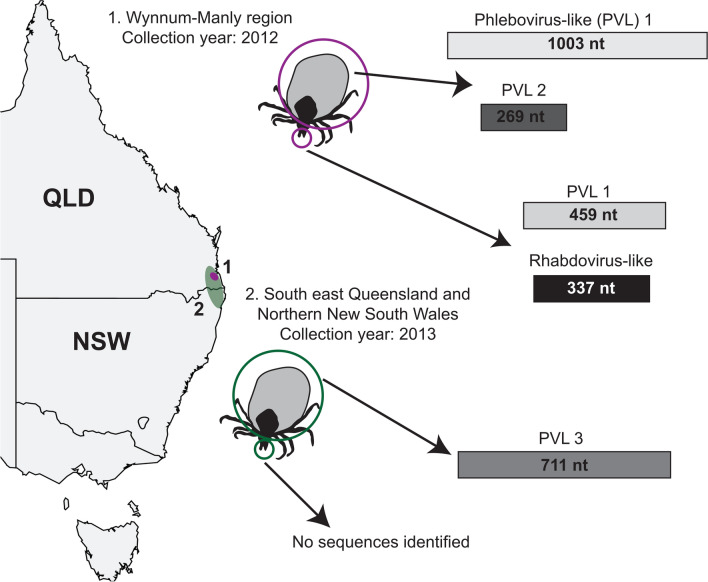
Our sequence analysis of Nugget virus, Catch-me-Cave virus and Finch Creek virus revealed marked genetic stability in isolates collected from the same location approximately 30 years apart. We demonstrate that the Ixodes scapularis-derived ISE6 cell line supports replication of Australian members of the Flaviviridae, Nairoviridae, Phenuiviridae and Reoviridae families, including Saumarez Reef virus (SREV), a flavivirus isolated from the soft tick Ornithodoros capensis. While antibodies against double-stranded RNA could be used to detect replication of a tick-borne reovirus and mosquito-borne flavivirus, the tick-borne flaviviruses Gadgets Gully virus and SREV could not be detected using this method. Finally, four novel virus-like sequences were identified in transcriptome sequencing of the Australian native tick Ixodes holocyclus.
Genetic and antigenic characterisations of archival viruses in this study confirm that three viruses described in 2002 represent contemporary isolates of virus species first identified 30 years prior. Our findings with antibodies to double-stranded RNA highlight an unusual characteristic shared by two Australian tick-borne flaviviruses. Finally, comparative growth kinetics analyses of Australian tick-borne members of the Flaviviridae, Nairoviridae, Phenuiviridae and Reoviridae families in ISE6 and BSR cells will provide a useful resource for isolation of Australian tick-borne viruses using existing cell lines.
一小部分被蜱虫叮咬的澳大利亚人会出现一系列慢性和虚弱的症状,这些症状不能归因于澳大利亚现有的已知致病性细菌种类。因此,人们重新努力鉴定和描述澳大利亚陆生蜱中的病毒。最近对硬蜱属和软蜱属蜱的转录组测序显示存在多种病毒序列。然而,如果没有病毒分离株,我们对新鉴定病毒的宿主范围和发病机制的理解就会受到限制。我们已经建立了一种使用双链 RNA 抗体从蚊子中进行高通量病毒发现和分离的成功方法。在这项研究中,我们试图描述五种存档的蜱传病毒,以适应我们用于澳大利亚蜱的病毒发现方案。
我们使用生物信息学序列分析和体外技术(包括复制动力学、抗原分析、病毒纯化和质谱分析)相结合的方法来对病毒进行特征描述。
我们对 Nugget 病毒、Catch-me-Cave 病毒和 Finch Creek 病毒的序列分析表明,大约 30 年前从同一地点采集的分离株具有明显的遗传稳定性。我们证明,Ixodes scapularis 衍生的 ISE6 细胞系支持澳大利亚黄病毒科、纳罗病毒科、 Phenuiviridae 和呼肠孤病毒科家族成员的复制,包括从软蜱 Ornithodoros capensis 中分离出来的 Saumarez Reef 病毒(SREV)。虽然针对双链 RNA 的抗体可用于检测蜱传呼肠孤病毒和蚊传黄病毒的复制,但无法使用这种方法检测蜱传黄病毒 Gadgets Gully 病毒和 SREV。最后,在澳大利亚本土蜱 Ixodes holocyclus 的转录组测序中鉴定出了四个新的病毒样序列。
本研究中对存档病毒的遗传和抗原特征的描述证实,2002 年描述的三种病毒代表了 30 年前首次鉴定的病毒种的当代分离株。我们使用双链 RNA 抗体的发现强调了两种澳大利亚蜱传黄病毒所共有的一个不寻常特征。最后,对澳大利亚黄病毒科、纳罗病毒科、 Phenuiviridae 和呼肠孤病毒科家族成员在 ISE6 和 BSR 细胞中的比较生长动力学分析将为使用现有细胞系分离澳大利亚蜱传病毒提供有用的资源。