Department of Cardiology and Angiology I, University Heart Center Freiburg, Medical Faculty, University of Freiburg, Hugstetter Straße 55, 79106, Freiburg, Germany.
Department of Cardiology, Medical University of Graz, Graz, Austria.
Sci Rep. 2022 Feb 18;12(1):2801. doi: 10.1038/s41598-022-06706-6.
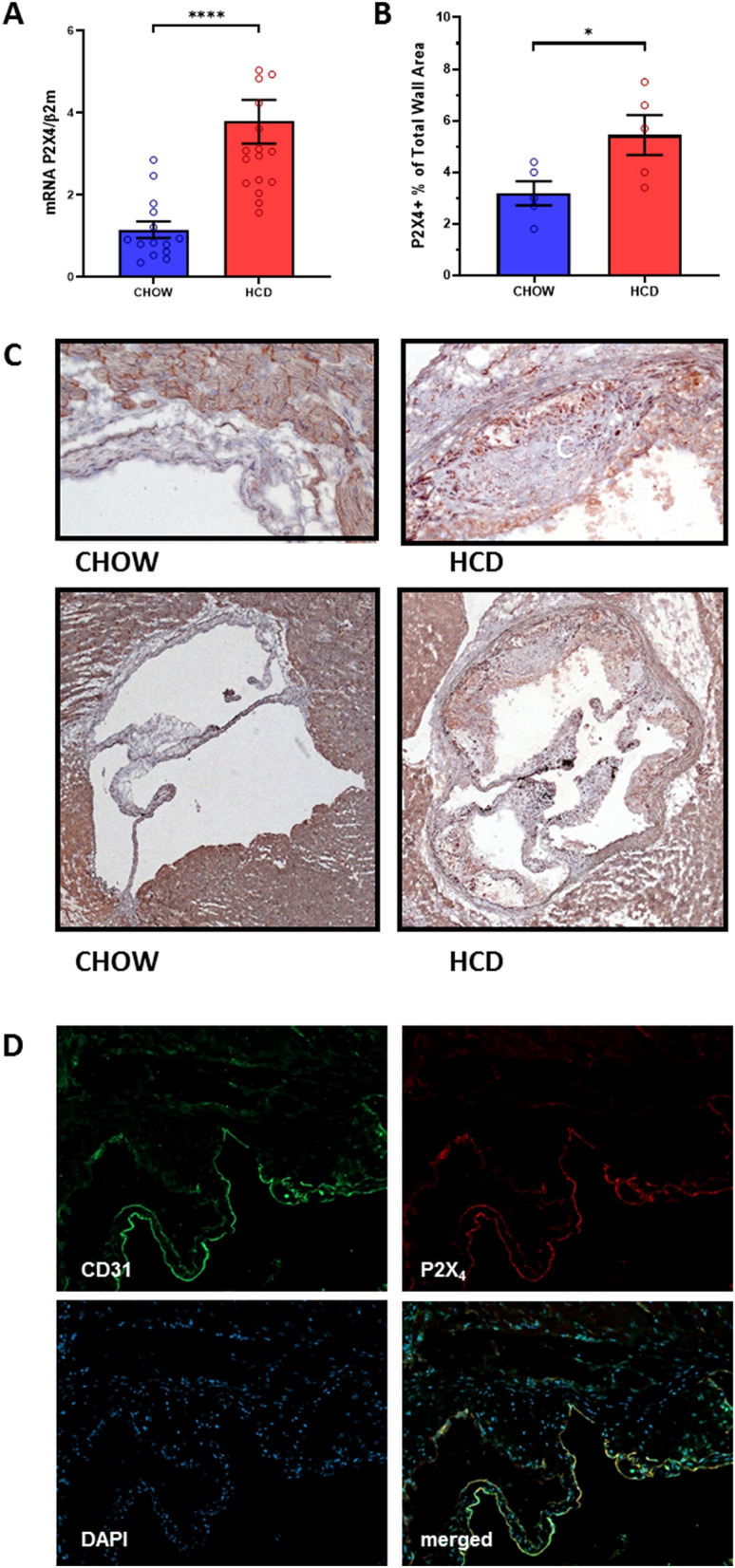
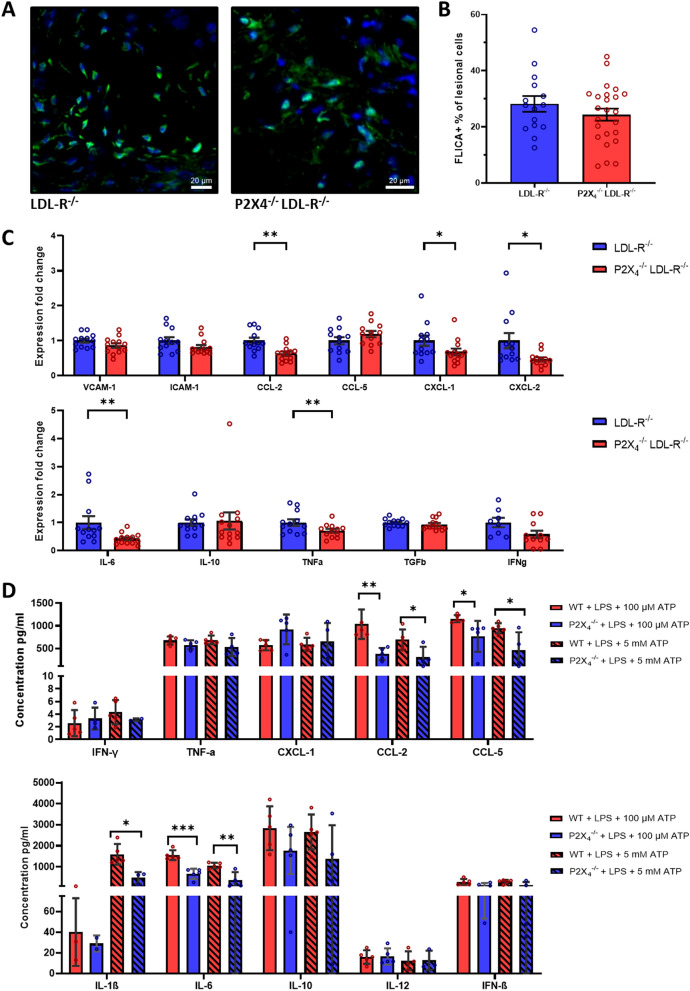
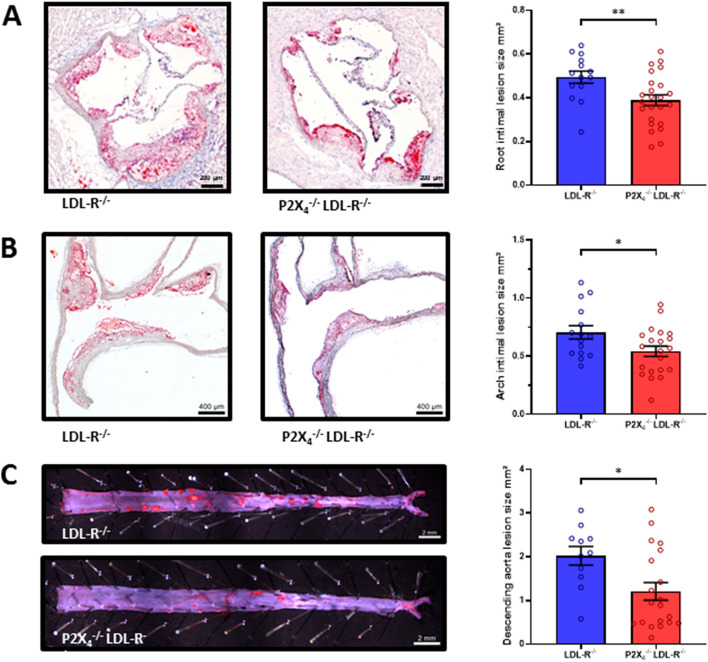
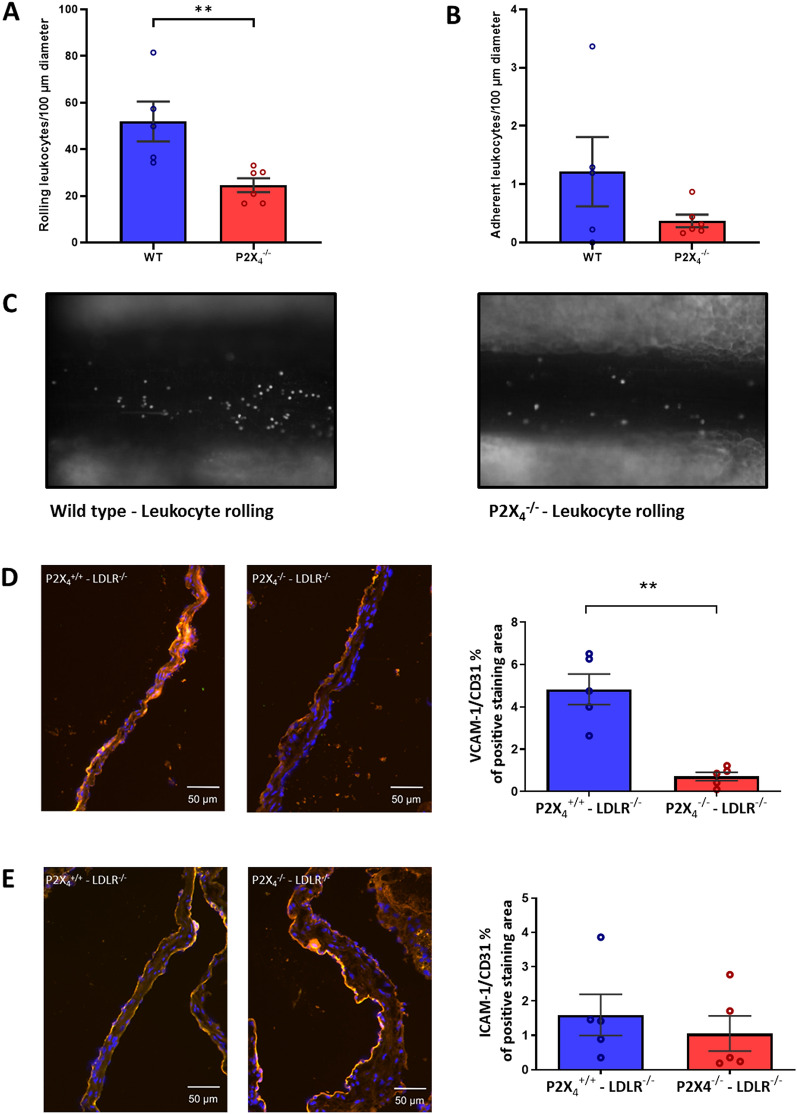
Extracellular adenosine-5'-triphosphate (ATP) acts as an import signaling molecule mediating inflammation via purinergic P2 receptors. ATP binds to the purinergic receptor P2X and promotes inflammation via increased expression of pro-inflammatory cytokines. Because of the central role of inflammation, we assumed a functional contribution of the ATP-P2X-axis in atherosclerosis. Expression of P2X was increased in atherosclerotic aortic arches from low-density lipoprotein receptor-deficient mice being fed a high cholesterol diet as assessed by real-time polymerase chain reaction and immunohistochemistry. To investigate the functional role of P2X in atherosclerosis, P2X-deficient mice were crossed with low-density lipoprotein receptor-deficient mice and fed high cholesterol diet. After 16 weeks, P2X-deficient mice developed smaller atherosclerotic lesions compared to P2X-competent mice. Furthermore, intravital microscopy showed reduced ATP-induced leukocyte rolling at the vessel wall in P2X-deficient mice. Mechanistically, we found a reduced RNA expression of CC chemokine ligand 2 (CCL-2), C-X-C motif chemokine-1 (CXCL-1), C-X-C motif chemokine-2 (CXCL-2), Interleukin-6 (IL-6) and tumor necrosis factor α (TNFα) as well as a decreased nucleotide-binding oligomerization domain-like receptor protein 3 (NLRP3)-inflammasome priming in atherosclerotic plaques from P2X-deficient mice. Moreover, bone marrow derived macrophages isolated from P2X-deficient mice revealed a reduced ATP-mediated release of CCL-2, CC chemokine ligand 5 (CCL-5), Interleukin-1β (IL-1β) and IL-6. Additionally, P2X-deficient mice shared a lower proportion of pro-inflammatory Ly6C monocytes and a higher proportion of anti-inflammatory Ly6C monocytes, and expressend less endothelial VCAM-1. Finally, increased P2X expression in human atherosclerotic lesions from carotid endarterectomy was found, indicating the importance of potential implementations of this study's findings for human atherosclerosis. Collectively, P2X deficiency reduced experimental atherosclerosis, plaque inflammation and inflammasome priming, pointing to P2X as a potential therapeutic target in the fight against atherosclerosis.
细胞外三磷酸腺苷 (ATP) 作为一种重要的信号分子,通过嘌呤能 P2 受体介导炎症。ATP 与嘌呤能受体 P2X 结合,并通过增加促炎细胞因子的表达促进炎症。由于炎症的核心作用,我们假设 ATP-P2X 轴在动脉粥样硬化中具有功能贡献。通过实时聚合酶链反应和免疫组织化学评估,从喂食高胆固醇饮食的低密度脂蛋白受体缺陷小鼠的动脉粥样硬化主动脉弓中观察到 P2X 的表达增加。为了研究 P2X 在动脉粥样硬化中的功能作用,将 P2X 缺陷小鼠与低密度脂蛋白受体缺陷小鼠杂交,并喂食高胆固醇饮食。16 周后,与 P2X 功能正常的小鼠相比,P2X 缺陷小鼠的动脉粥样硬化病变较小。此外,活体显微镜显示 P2X 缺陷小鼠血管壁上的 ATP 诱导的白细胞滚动减少。从机制上讲,我们发现 P2X 缺陷小鼠动脉粥样硬化斑块中 CC 趋化因子配体 2 (CCL-2)、C-X-C 基序趋化因子 1 (CXCL-1)、C-X-C 基序趋化因子 2 (CXCL-2)、白细胞介素 6 (IL-6) 和肿瘤坏死因子 α (TNFα) 的 RNA 表达减少,核苷酸结合寡聚化结构域样受体蛋白 3 (NLRP3) 炎症小体的激活也减少。此外,从 P2X 缺陷小鼠分离的骨髓来源的巨噬细胞显示出 ATP 介导的 CCL-2、CC 趋化因子配体 5 (CCL-5)、白细胞介素 1β (IL-1β) 和白细胞介素 6 的释放减少。此外,P2X 缺陷小鼠具有较低比例的促炎 Ly6C 单核细胞和较高比例的抗炎 Ly6C 单核细胞,并且表达较少的内皮细胞 VCAM-1。最后,在颈动脉内膜切除术的人类动脉粥样硬化病变中发现 P2X 表达增加,这表明该研究结果对人类动脉粥样硬化具有潜在的应用意义。总之,P2X 缺陷减少了实验性动脉粥样硬化、斑块炎症和炎症小体激活,提示 P2X 可能成为对抗动脉粥样硬化的潜在治疗靶点。