Research Division of Clinical Pharmacology, The First Affiliated Hospital of Nanjing Medical University and Jiangsu Province Hospital, 300 Guangzhou Road, Nanjing, 210009, China.
Department of Pharmacy, Jiangsu Shengze Hospital, Nanjing Medical University, Suzhou, China.
Mol Med. 2022 Feb 19;28(1):21. doi: 10.1186/s10020-022-00448-x.
Many clinical studies have shown a correlation between proton pump inhibitors (PPIs) and osteoporosis or fractures. The purpose of this study was to establish a murine model of chronic oral PPI administration to verify whether PPIs caused bone metabolic impairment and investigate the relevant molecular mechanism underlying the effects of PPIs on MC3T3-E1 murine osteoblasts.
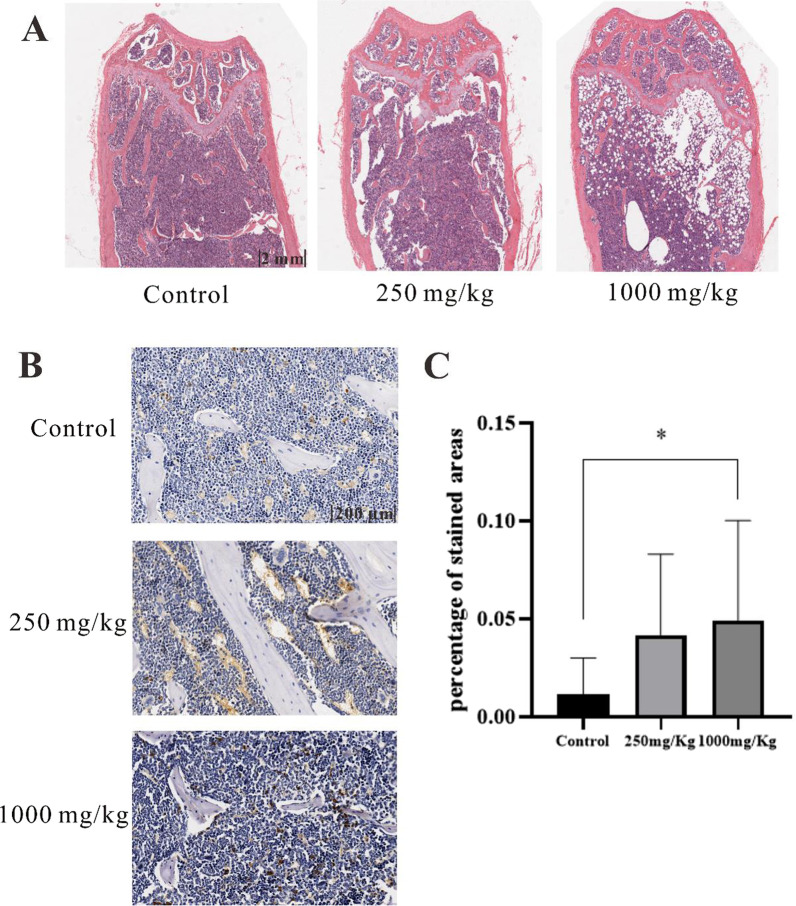
A lansoprazole-induced bone loss model was used to investigate the damaging effects of PPIs. In vivo, immunohistochemistry, Hematoxylin-Eosin (HE) staining, micro-CT analysis, and blood biochemical analyses were used to evaluate the effect of lansoprazole on bone injury in mice. In vitro, the effects of lansoprazole and related signaling pathways in MC3T3-E1 cells were investigated by CCK-8 assays, EdU assays, flow cytometry, laser confocal microscopy, patch clamping, reverse transcription-quantitative polymerase chain reaction and Western blotting.
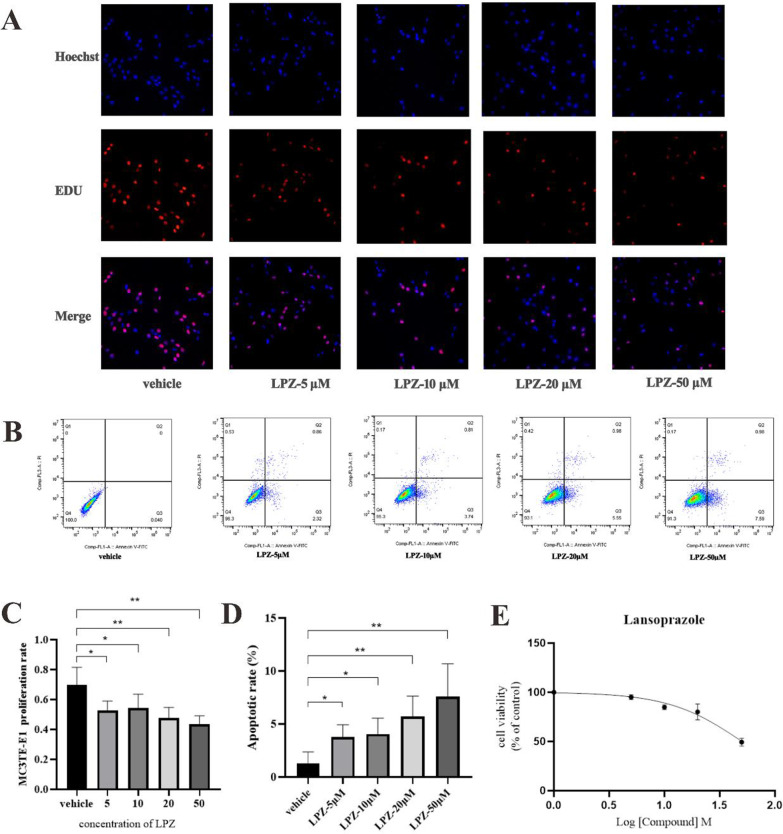
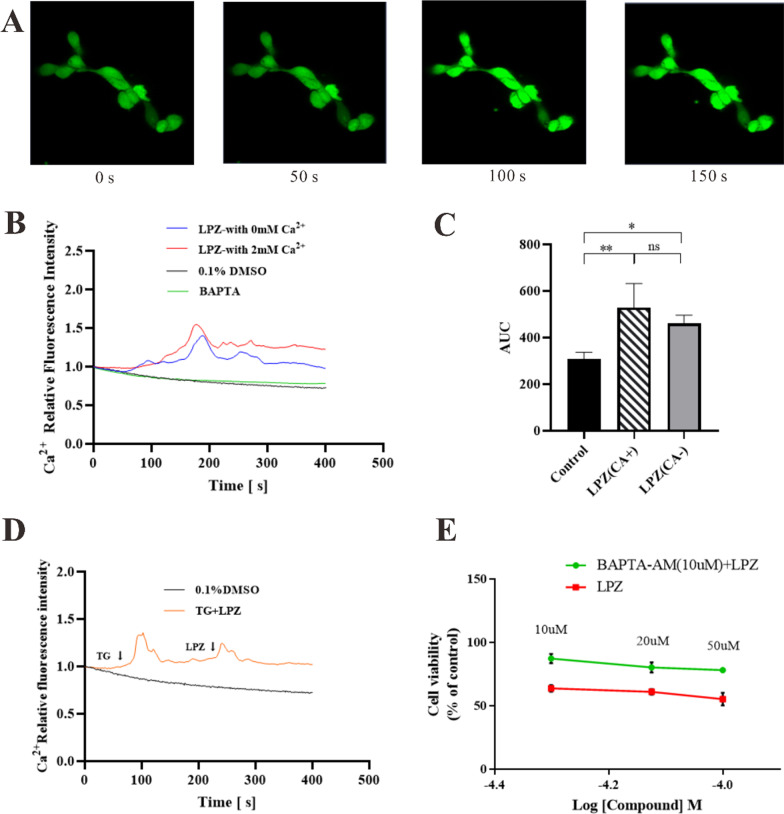
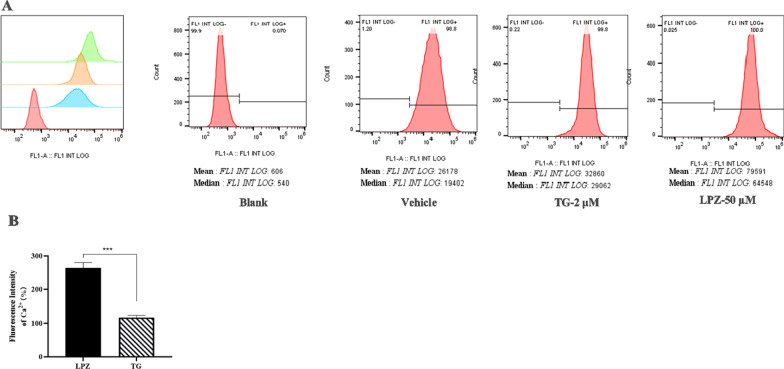
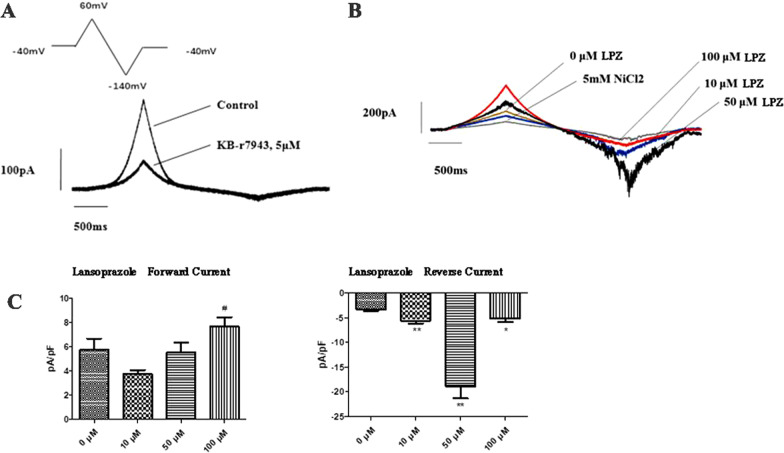
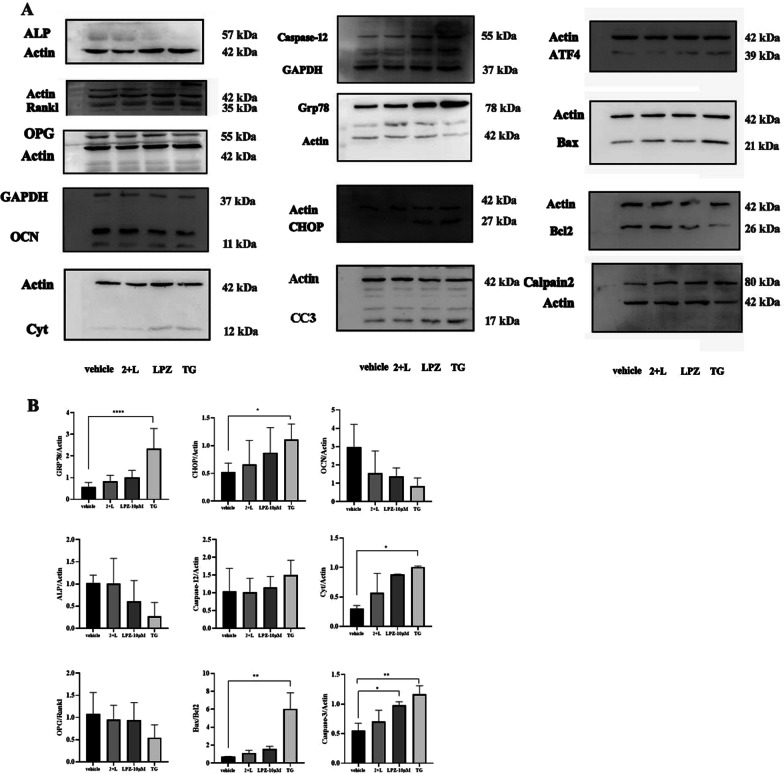
After 6 months of lansoprazole gavage in ICR mice, the micro-CT results showed that compared with that in the vehicle group, the bone mineral density (BMD) in the high-dose group was significantly decreased (P < 0.05), and the bone microarchitecture gradually degraded. Biochemical analysis of bone serum showed that blood calcium and phosphorus were both decreased (P < 0.01). We found that long-term administration of lansoprazole impaired skeletal function in mice. In vitro, we found that lansoprazole (LPZ) could cause calcium overload in MC3T3-E1 cells leading to apoptosis, and 2-APB, an inhibitor of IP3R calcium release channel and SOCE pathway, effectively blocked increase in calcium caused by LPZ, thus protecting cell viability.
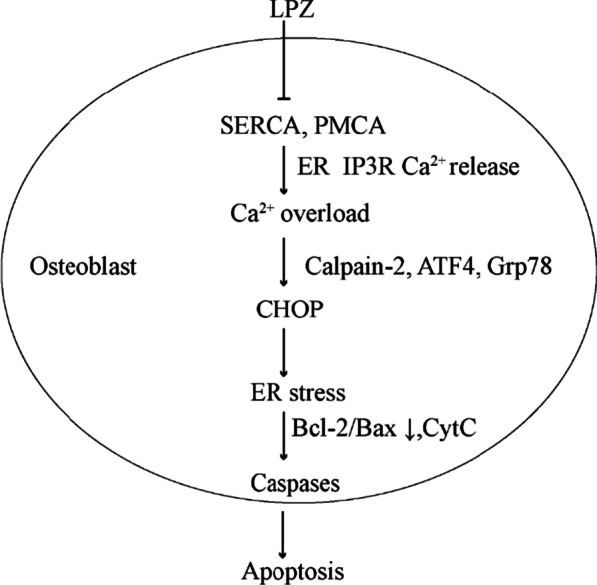
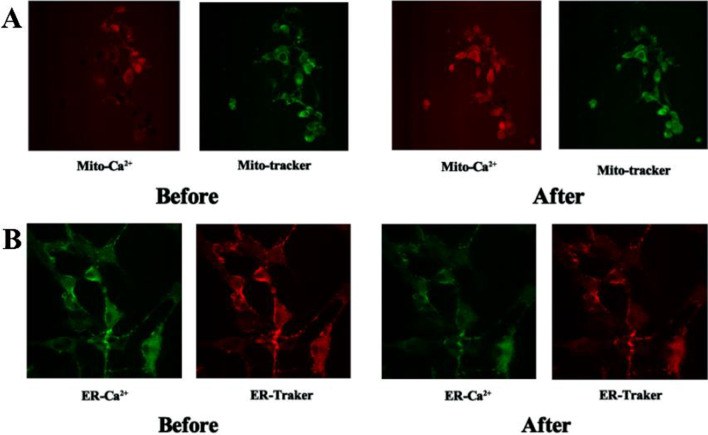
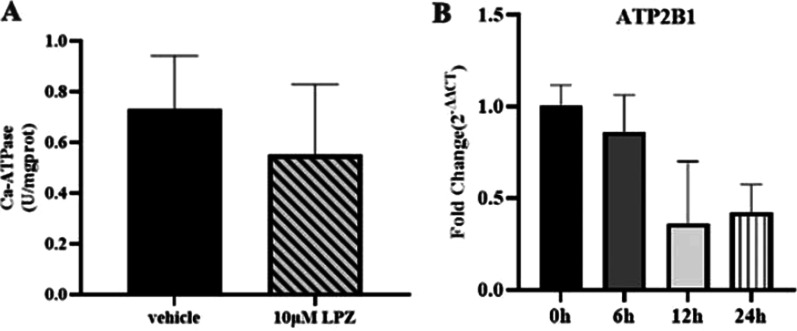
Longterm administration of LPZ induced osteoporotic symptoms in mice, and LPZ triggered calcium increases in osteoblasts in a concentration-dependent manner. Intracellular calcium ([Ca]) persisted at a high concentration, thereby causing endoplasmic reticulum stress (ERS) and inducing osteoblast apoptosis.
许多临床研究表明质子泵抑制剂(PPIs)与骨质疏松症或骨折之间存在相关性。本研究的目的是建立一种慢性口服 PPI 给药的小鼠模型,以验证 PPI 是否引起骨代谢损伤,并研究 PPI 对 MC3T3-E1 小鼠成骨细胞的影响的相关分子机制。
使用兰索拉唑诱导的骨丢失模型来研究 PPI 的破坏作用。在体内,使用免疫组织化学、苏木精-伊红(HE)染色、微 CT 分析和血液生化分析来评估兰索拉唑对小鼠骨损伤的影响。在体外,通过 CCK-8 测定、EdU 测定、流式细胞术、激光共聚焦显微镜、膜片钳、逆转录定量聚合酶链反应和 Western 印迹来研究兰索拉唑和相关信号通路在 MC3T3-E1 细胞中的作用。
在 ICR 小鼠灌胃兰索拉唑 6 个月后,微 CT 结果显示,与对照组相比,高剂量组的骨密度(BMD)显著降低(P<0.05),骨微结构逐渐降解。骨血清生化分析显示血钙和血磷均降低(P<0.01)。我们发现长期给予兰索拉唑可损害小鼠的骨骼功能。在体外,我们发现兰索拉唑(LPZ)可导致 MC3T3-E1 细胞内钙超载,从而引起细胞凋亡,而 IP3R 钙释放通道和 SOCE 通路抑制剂 2-APB 可有效阻断 LPZ 引起的钙增加,从而保护细胞活力。
长期给予 LPZ 可诱导小鼠出现骨质疏松症状,LPZ 以浓度依赖性方式触发成骨细胞内钙增加。细胞内钙 ([Ca]) 持续保持在高浓度,从而导致内质网应激(ERS)并诱导成骨细胞凋亡。