Department of Digestion, Rongchang District People's Hospital of Chongqing, No. 3, Guangchang North Road, Changyuan Street, Chongqing, 402460, China.
The Hospital of Chongqing University of Posts and Telecommunications, Chongqing, 400065, China.
J Exp Clin Cancer Res. 2022 Feb 19;41(1):70. doi: 10.1186/s13046-021-02239-4.
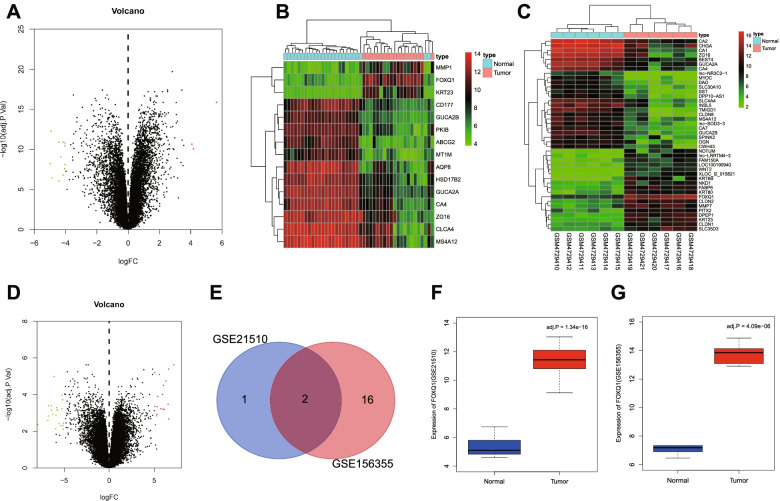
Resistance of colorectal cancer (CRC) cells to radiotherapy considerably contributes to poor clinical outcomes of CRC patients. Microarray profiling in this study revealed the differentially expressed forkhead box Q1 (FOXQ1) in CRC, and thus we aimed to illustrate the role of FOXQ1 in CRC by modulating stemness and radio-resistance of CRC cells.
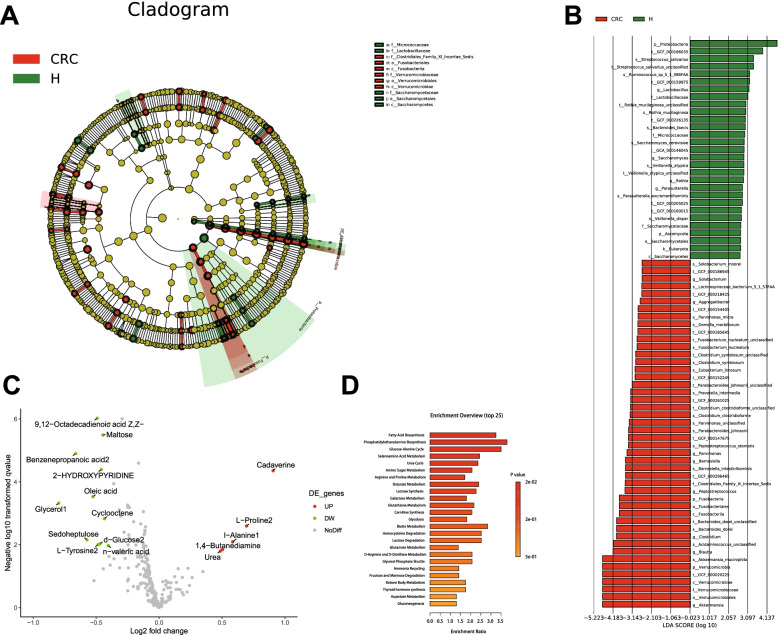
CRC and adjacent normal tissues were collected from CRC patients, and the correlation between FOXQ1 expression and CRC prognosis was analyzed. Subsequently, we determined the expression of FOXQ1, sirtuin 1 (SIRT1) and β-catenin in CRC tissues and cell lines. The binding affinity between FOXQ1 and SIRT1 and that between SIRT1 and β-catenin were validated with luciferase reporter gene, Co-IP and ChIP assays. Following a metagenomics analysis of CRC intestinal microbiota, the effects of the FOXQ1/SIRT1/β-catenin axis on CRC stem cell phenotypes and radio-resistance was evaluated in vitro and in vivo through manipulation of gene expression. Besides, mouse feces were collected to examine changes in intestinal microbiota.
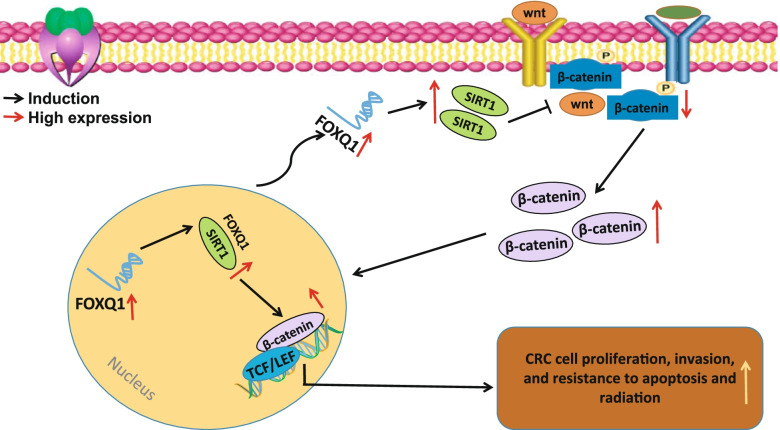
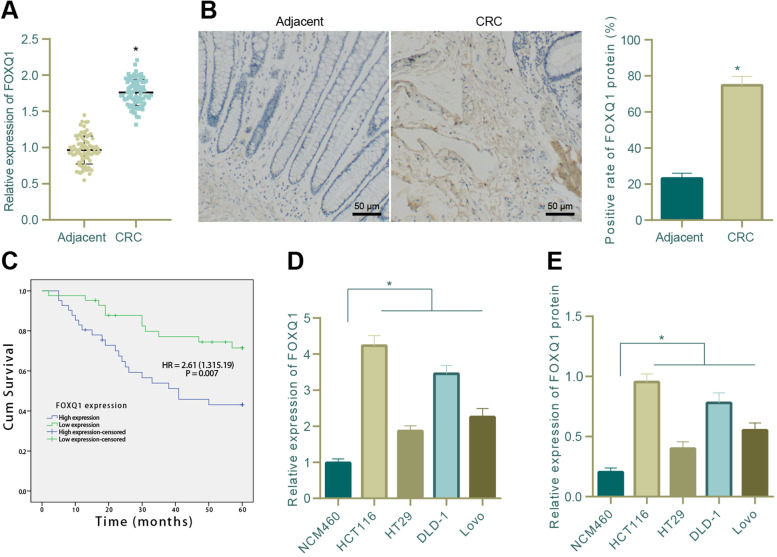
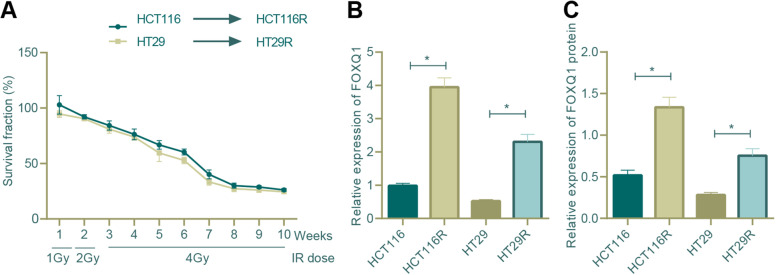
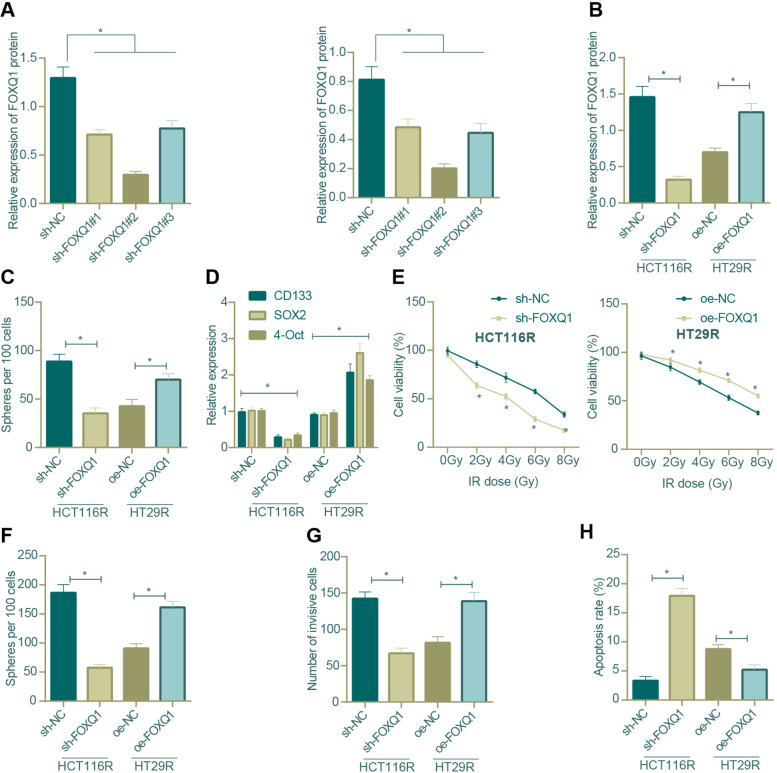
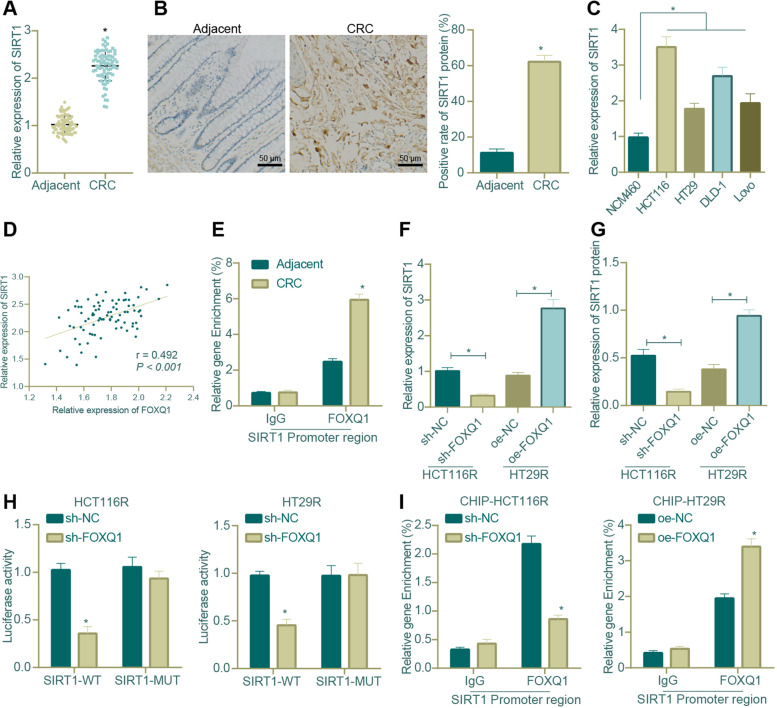
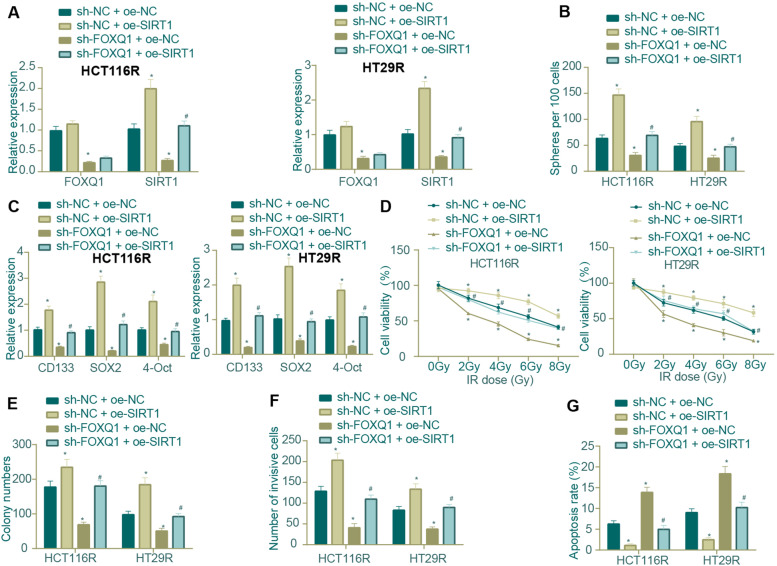
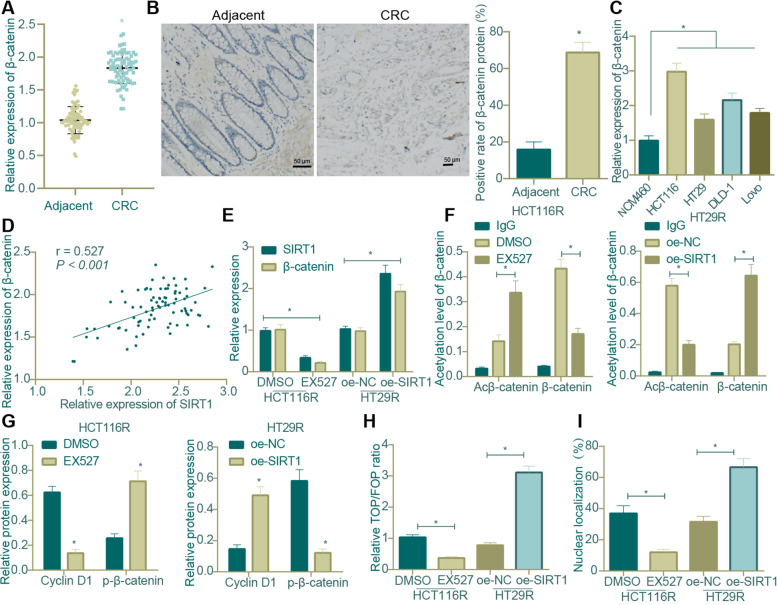
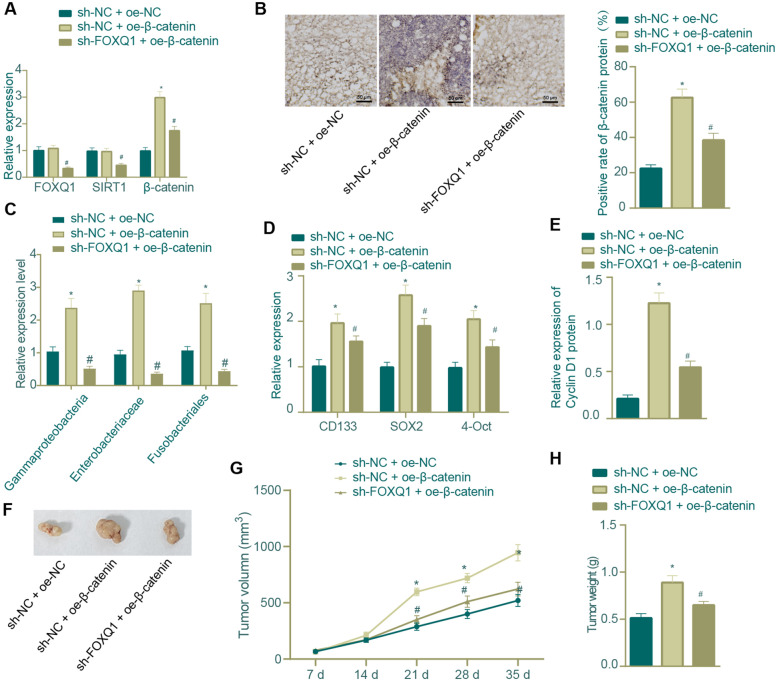
FOXQ1 was highly expressed in CRC tissues and cells and positively correlated with poor prognosis of CRC patients. FOXQ1 overexpression contributed to resistance of CRC cells to radiation. Knockdown of FOXQ1 inhibited the stemness of CRC cells and reversed their radio-resistance. FOXQ1 enhanced the transcriptional expression of SIRT1, and SIRT1 enhanced the expression and nuclear translocation of β-catenin. Knockdown of FOXQ1 repressed SIRT1 expression, thus reducing the stemness and radio-resistance of CRC cells. Moreover, FOXQ1 knockdown suppressed CRC xenograft formation in xenograft-bearing nude mice through inhibiting SIRT1 and β-catenin to reduce the content of pathological bacteria that were up-regulated in CRC.
FOXQ1-mediated SIRT1 upregulation augments expression and nuclear translocation of β-catenin and benefits CRC-related intestinal pathological bacterial, thereby enhancing the stemness and radio-resistance of CRC cells.
结直肠癌(CRC)细胞对放疗的耐药性是导致 CRC 患者临床预后不良的主要原因。本研究的基因芯片分析显示,叉头框蛋白 Q1(FOXQ1)在 CRC 中差异表达,因此我们旨在通过调节 CRC 细胞的干性和放射抵抗来阐明 FOXQ1 在 CRC 中的作用。
收集 CRC 患者的 CRC 组织和相邻正常组织,分析 FOXQ1 表达与 CRC 预后的相关性。随后,我们测定了 CRC 组织和细胞系中 FOXQ1、SIRT1 和 β-catenin 的表达。通过荧光素酶报告基因、Co-IP 和 ChIP 实验验证了 FOXQ1 与 SIRT1 之间以及 SIRT1 与 β-catenin 之间的结合亲和力。通过对 CRC 肠道微生物组进行宏基因组分析,通过操纵基因表达,在体外和体内评估 FOXQ1/SIRT1/β-catenin 轴对 CRC 干细胞表型和放射抵抗的影响。此外,收集小鼠粪便以检查肠道微生物群的变化。
FOXQ1 在 CRC 组织和细胞中高表达,与 CRC 患者的不良预后呈正相关。FOXQ1 过表达促进 CRC 细胞对辐射的耐药性。敲低 FOXQ1 抑制 CRC 细胞的干性并逆转其放射抵抗。FOXQ1 增强 SIRT1 的转录表达,SIRT1 增强 β-catenin 的表达和核转位。敲低 FOXQ1 抑制 SIRT1 的表达,从而降低 CRC 细胞的干性和放射抵抗。此外,通过抑制 SIRT1 和 β-catenin 减少上调的 CRC 相关病理细菌的含量,FOXQ1 敲低抑制了携带裸鼠的 CRC 异种移植瘤的形成。
FOXQ1 介导的 SIRT1 上调增强了 β-catenin 的表达和核转位,并有益于 CRC 相关肠道病理细菌,从而增强了 CRC 细胞的干性和放射抵抗。