CIRAD, UMR INTERTRYP, 31076, Toulouse, France.
INTERTRYP, CIRAD, IRD, University of Montpellier, Montpellier, France.
Parasit Vectors. 2022 Feb 19;15(1):64. doi: 10.1186/s13071-022-05190-1.
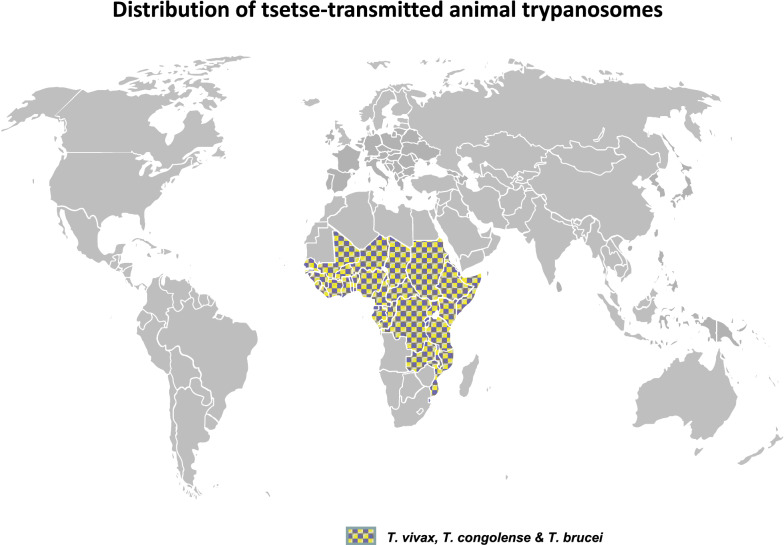
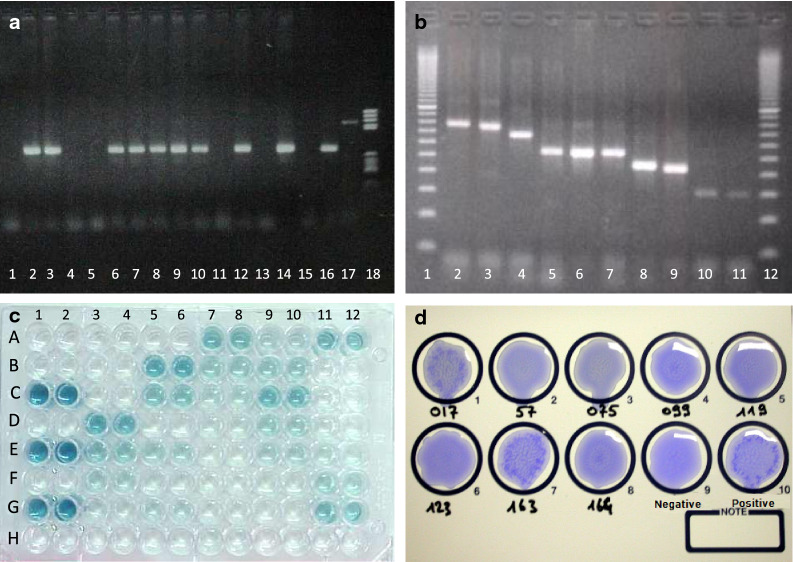
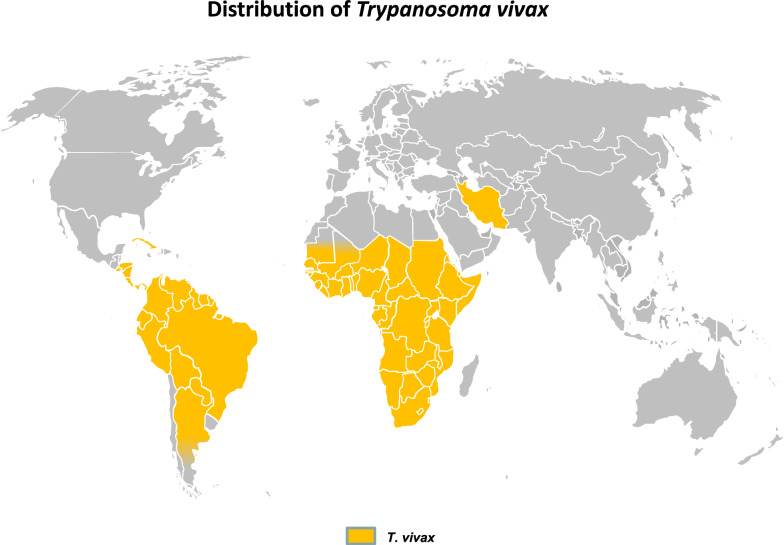
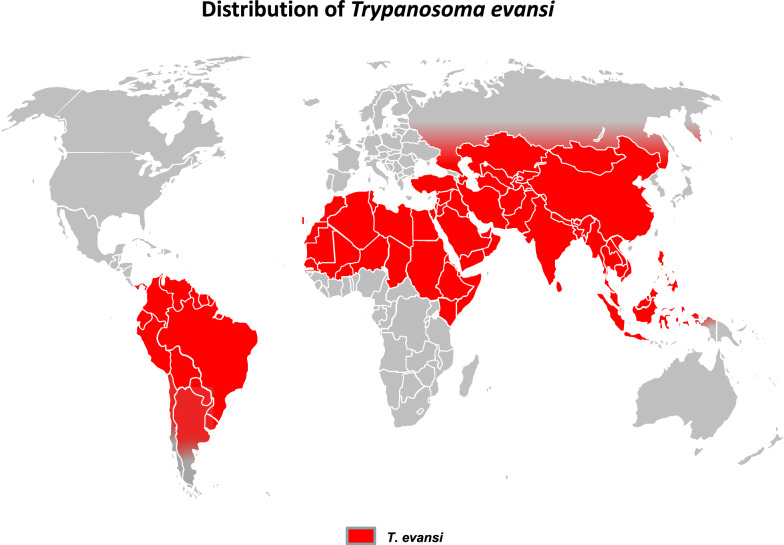
This review focuses on the most reliable and up-to-date methods for diagnosing trypanosomoses, a group of diseases of wild and domestic mammals, caused by trypanosomes, parasitic zooflagellate protozoans mainly transmitted by insects. In Africa, the Americas and Asia, these diseases, which in some cases affect humans, result in significant illness in animals and cause major economic losses in livestock. A number of pathogens are described in this review, including several Salivarian trypanosomes, such as Trypanosoma brucei sspp. (among which are the agents of sleeping sickness, the human African trypanosomiasis [HAT]), Trypanosoma congolense and Trypanosoma vivax (causing "Nagana" or animal African trypanosomosis [AAT]), Trypanosoma evansi ("Surra") and Trypanosoma equiperdum ("Dourine"), and Trypanosoma cruzi, a Stercorarian trypanosome, etiological agent of the American trypanosomiasis (Chagas disease). Diagnostic methods for detecting zoonotic trypanosomes causing Chagas disease and HAT in animals, as well as a diagnostic method for detecting animal trypanosomes in humans (the so-called "atypical human infections by animal trypanosomes" [a-HT]), including T. evansi and Trypanosoma lewisi (a rat parasite), are also reviewed. Our goal is to present an integrated view of the various diagnostic methods and techniques, including those for: (i) parasite detection; (ii) DNA detection; and (iii) antibody detection. The discussion covers various other factors that need to be considered, such as the sensitivity and specificity of the various diagnostic methods, critical cross-reactions that may be expected among Trypanosomatidae, additional complementary information, such as clinical observations and epizootiological context, scale of study and logistic and cost constraints. The suitability of examining multiple specimens and samples using several techniques is discussed, as well as risks to technicians, in the context of specific geographical regions and settings. This overview also addresses the challenge of diagnosing mixed infections with different Trypanosoma species and/or kinetoplastid parasites. Improving and strengthening procedures for diagnosing animal trypanosomoses throughout the world will result in a better control of infections and will significantly impact on "One Health," by advancing and preserving animal, human and environmental health.
本文主要关注诊断锥虫病的最可靠和最新方法,锥虫病是一组由寄生虫原生动物锥虫引起的野生动物和家养哺乳动物疾病。在非洲、美洲和亚洲,这些疾病在某些情况下会影响人类,导致动物患病,并给牲畜养殖造成重大经济损失。本文描述了多种病原体,包括几种唾液锥虫,例如布氏锥虫(包括引起昏睡病的病原体、人类非洲锥虫病[HAT])、刚果锥虫和布氏锥虫(引起“Nagana”或动物非洲锥虫病[AAT])、伊氏锥虫(“苏拉病”)和伊氏锥虫(“马媾疫”),以及克氏锥虫,一种 Stercorarian 锥虫,是美洲锥虫病(恰加斯病)的病原体。本文还回顾了用于检测引起恰加斯病和动物 HAT 的人畜共患锥虫的诊断方法,以及一种用于检测人类中动物锥虫的诊断方法(即所谓的“动物锥虫的非典型人体感染[a-HT]”),包括伊氏锥虫和莱氏锥虫(一种大鼠寄生虫)。我们的目标是综合展示各种诊断方法和技术,包括以下内容:(i)寄生虫检测;(ii)DNA 检测;(iii)抗体检测。讨论涵盖了需要考虑的各种其他因素,例如各种诊断方法的灵敏度和特异性、锥虫科之间可能出现的临界交叉反应、补充信息,例如临床观察和流行病学背景、研究规模以及后勤和成本限制。还讨论了使用多种技术检查多个标本和样本的适用性,以及在特定地理区域和环境中对技术人员的风险。本文综述还解决了诊断不同锥虫物种和/或动基体目寄生虫混合感染的挑战。在全球范围内改进和加强诊断动物锥虫病的程序将有助于更好地控制感染,并通过促进和保护动物、人类和环境健康,对“One Health”产生重大影响。