PINC AI Applied Sciences, Premier Inc, Charlotte, NC, USA.
PINC AI Applied Sciences, Premier Inc, Charlotte, NC, USA.
Value Health. 2022 May;25(5):751-760. doi: 10.1016/j.jval.2021.12.005. Epub 2022 Feb 17.
Severe cases of COVID-19 have overwhelmed hospital systems across the nation. This study aimed to describe the healthcare resource utilization of patients with COVID-19 from hospital visit to 30 days after discharge for inpatients and hospital-based outpatients in the United States.
A retrospective cohort study was conducted using Premier Healthcare Database COVID-19 Special Release, a large geographically diverse all-payer hospital administrative database. Adult patients (age ≥ 18 years) were identified by their first, or "index," visit between April 1, 2020, and February 28, 2021, with a principal or secondary discharge diagnosis of COVID-19.
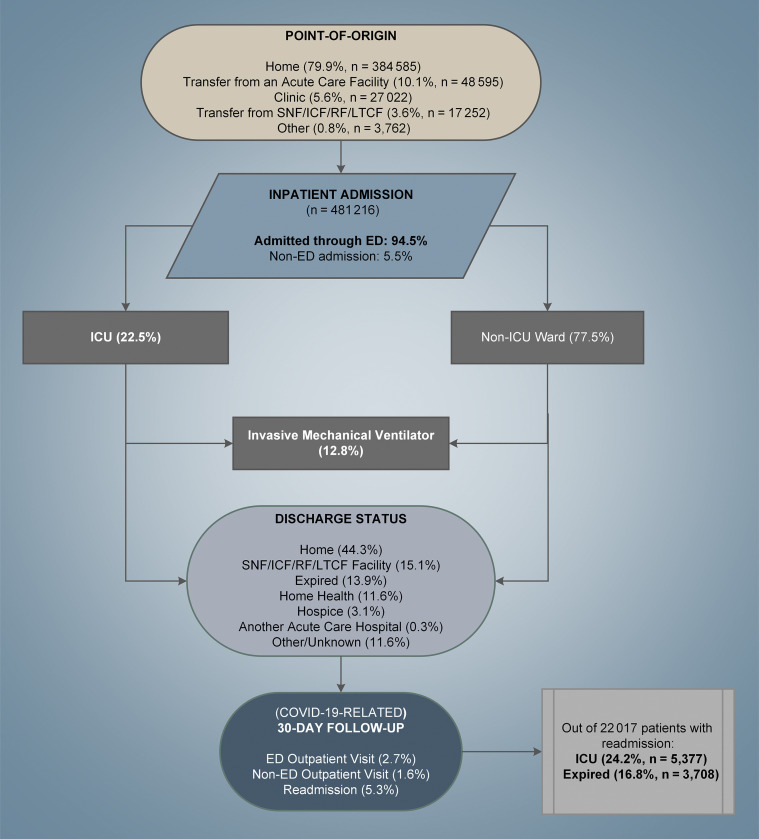
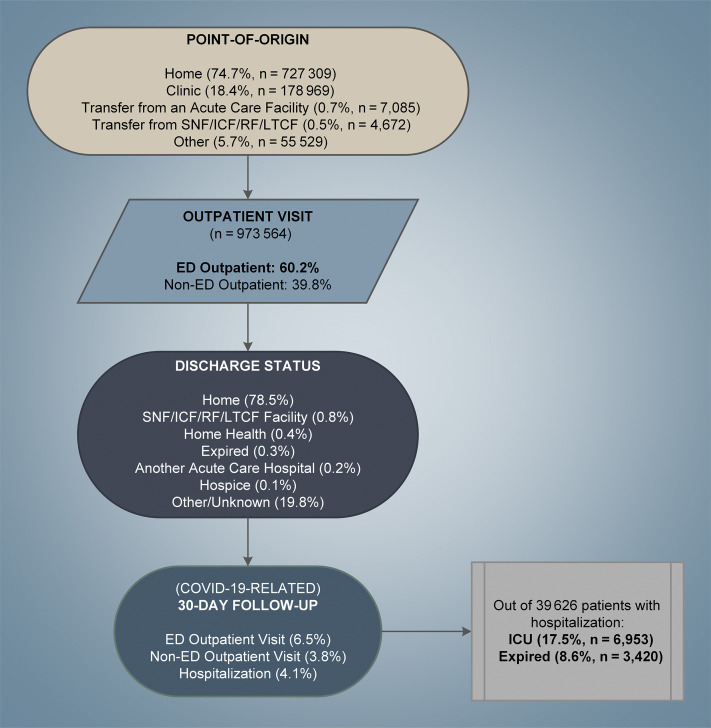
Of 1 454 780 adult patients with COVID-19, 33% (n = 481 216) were inpatients and 67% (n = 973 564) were outpatients. Among inpatients, mean age was 64.4 years and comorbidities were common. Most patients (80%) originated from home, 10% from another acute care facility, and 95% were admitted through the emergency department. Of these patients, 23% (n = 108 120) were admitted to intensive care unit and 14% (n = 66 706) died during index hospitalization; 44% were discharged home, 15% to nursing or rehabilitation facility, and 12% to home health. Among outpatients, mean age was 48.8 years, 44% were male, and 60% were emergency department outpatients (n = 586 537). During index outpatient visit, 79% were sent home but 10% had another outpatient visit and 4% were hospitalized within 30 days.
COVID-19 is associated with high level of healthcare resource utilization and in-hospital mortality. More than one-third of inpatients required post hospital healthcare services. Such information may help healthcare providers better allocate resources for patients with COVID-19 during the pandemic.
新冠疫情已使全美各地的医院系统不堪重负。本研究旨在描述美国住院和基于医院的门诊患者从住院就诊到出院后 30 天的新冠医疗资源利用情况。
本研究使用 Premier Healthcare Database COVID-19 Special Release(一个大型的具有地域多样性的全支付医院行政数据库)进行回顾性队列研究。纳入 2020 年 4 月 1 日至 2021 年 2 月 28 日期间首次(或“索引”)就诊、主诊断或次要诊断为 COVID-19 的成年患者(年龄≥18 岁)。
在 1454780 例成年新冠患者中,33%(n=481216)为住院患者,67%(n=973564)为门诊患者。住院患者的平均年龄为 64.4 岁,合并症常见。大多数患者(80%)来自家中,10%来自另一家急性护理机构,95%通过急诊入院。这些患者中,23%(n=108120)入住重症监护病房,14%(n=66706)在住院期间死亡;44%出院回家,15%转至护理或康复机构,12%转至家庭健康护理。门诊患者的平均年龄为 48.8 岁,44%为男性,60%为急诊门诊患者(n=586537)。在索引门诊就诊时,79%的患者被送回家,但 10%的患者再次就诊,4%的患者在 30 天内住院。
新冠与高水平的医疗资源利用和院内死亡率相关。超过三分之一的住院患者需要院后医疗服务。这些信息可能有助于在大流行期间为新冠患者提供更好的资源配置。