Xiong Jinfeng, Li Guannan, Mei Xinyu, Ding Jiahui, Shen Hui, Zhu Da, Wang Hui
Department of Obstetrics and Gynecology, Tongji Hospital, Tongji Medical College, Huazhong University of Science and Technology, Wuhan, China.
School of Pharmacy, Tongji Medical College, Huazhong University of Science and Technology, Wuhan, China.
Front Pharmacol. 2022 Feb 4;13:826771. doi: 10.3389/fphar.2022.826771. eCollection 2022.
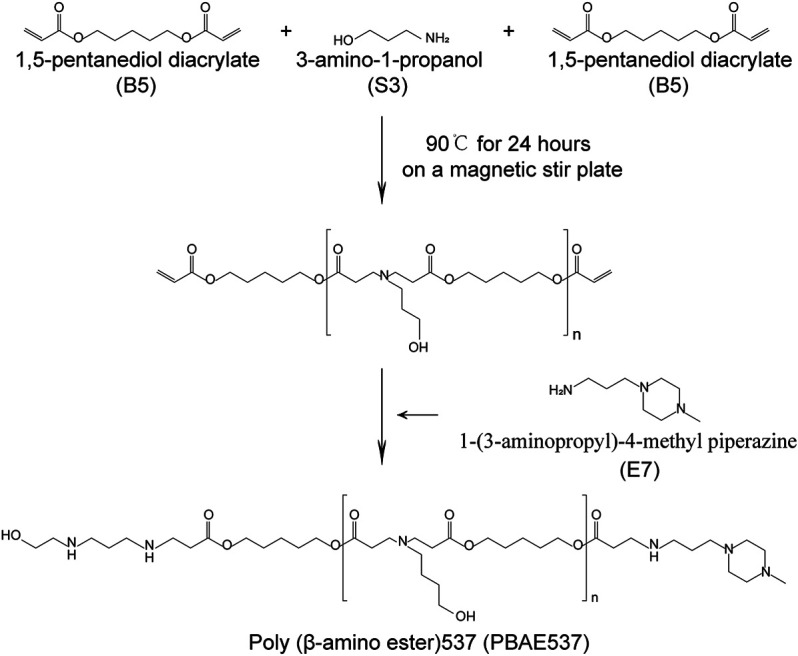
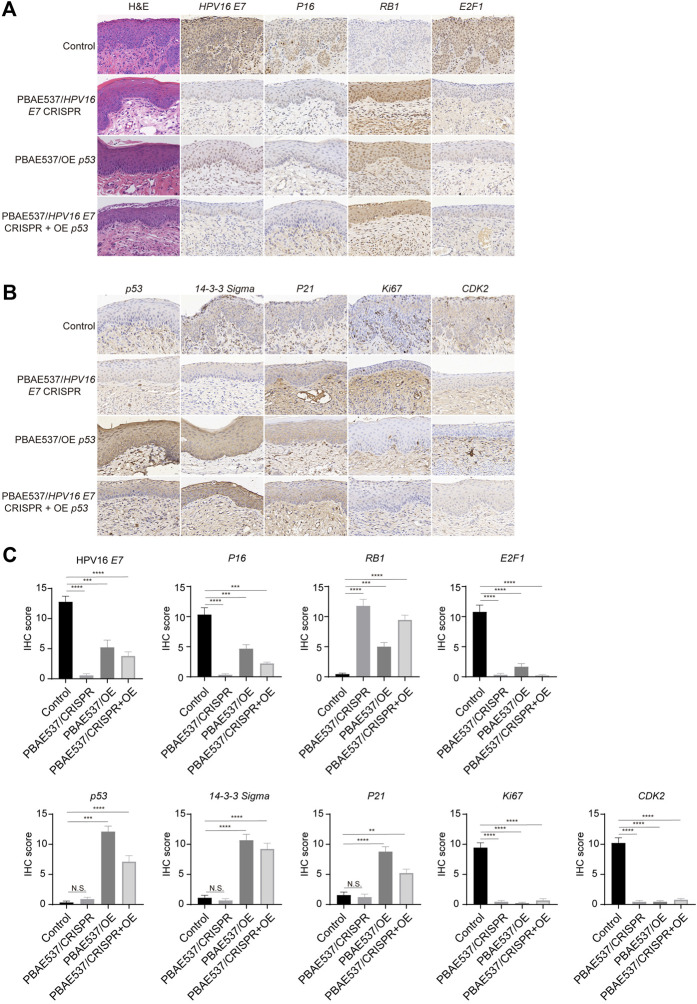
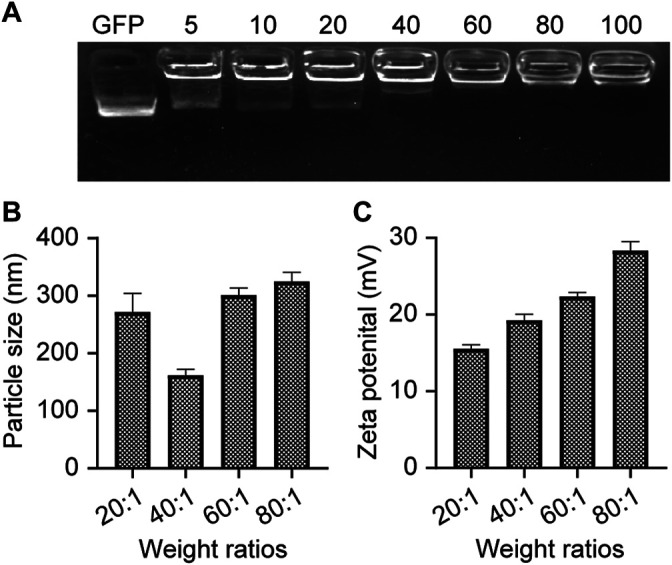
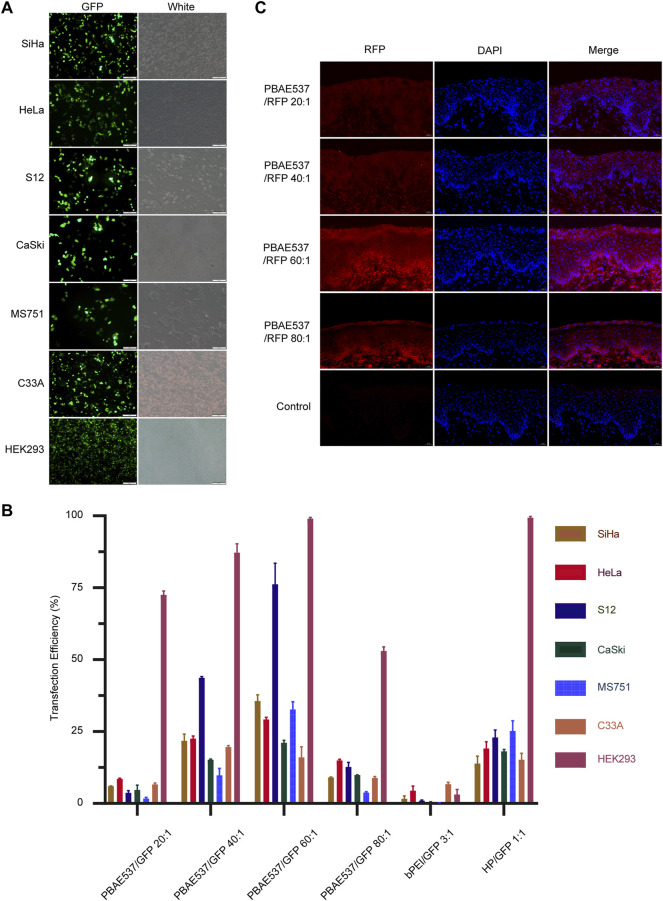
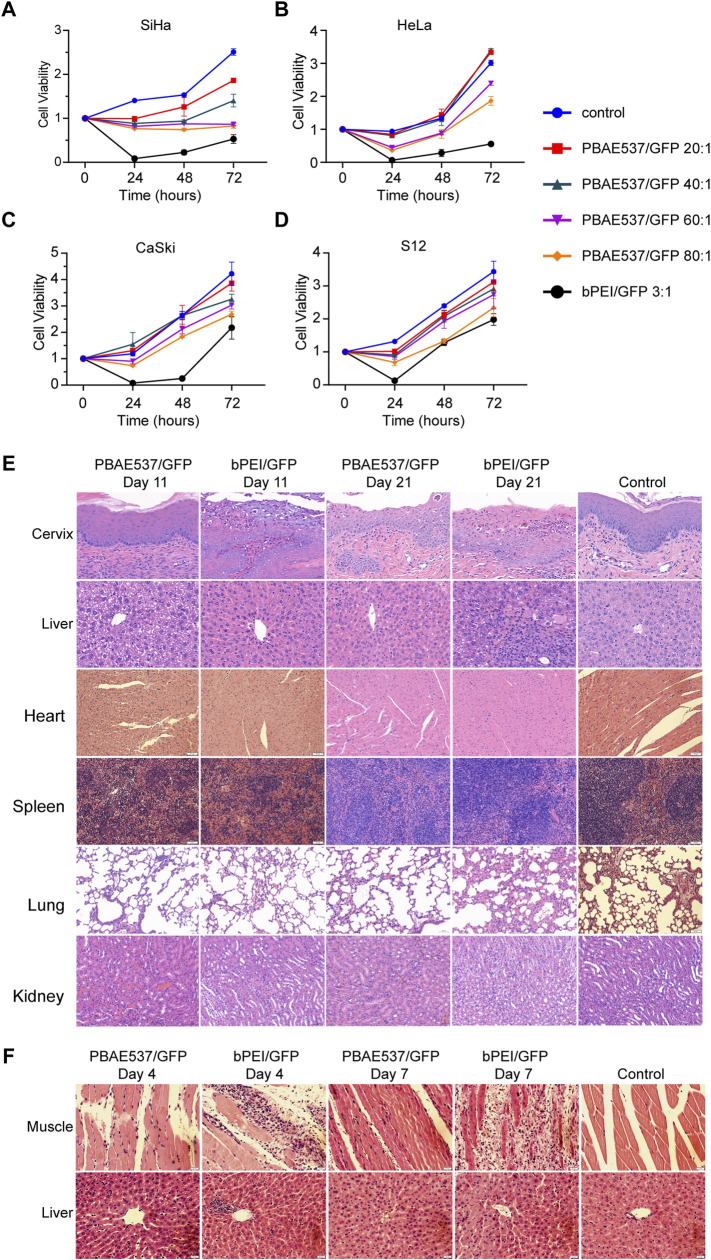
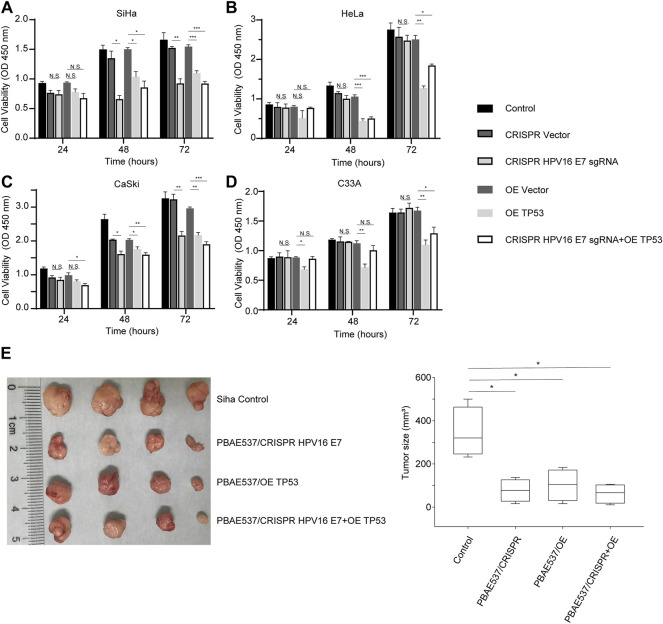
The gene has the highest mutation frequency in tumors, and its inactivation can lead to malignant transformation, such as cell cycle arrest and apoptotic inhibition. Persistent high-risk human papillomavirus (HR-HPV) infection is the leading cause of cervical cancer. was inactivated by HPV oncoprotein , promoting abnormal cell proliferation and carcinogenesis. To study the treatment of cervical intraepithelial neoplasia (CIN) and cervical cancer by restoring expression and inactivating HPV oncoprotein, and to verify the effectiveness of nano drugs based on nucleic acid delivery in cancer treatment, we developed poly (beta-amino ester)537, to form biocompatible and degradable nanoparticles with plasmids (expressing and targeting ). and experiments show that nanoparticles have low toxicity and high transfection efficiency. Nanoparticles inhibited the growth of xenograft tumors and successfully reversed HPV transgenic mice's cervical intraepithelial neoplasia. Our work suggests that the restoration of expression and the inactivation of HPV16 are essential for blocking the development of cervical cancer. This study provides new insights into the precise treatment of HPV-related cervical lesions.
该基因在肿瘤中具有最高的突变频率,其失活可导致恶性转化,如细胞周期停滞和凋亡抑制。持续性高危型人乳头瘤病毒(HR-HPV)感染是宫颈癌的主要病因。 被HPV癌蛋白失活,促进细胞异常增殖和致癌作用。为了研究通过恢复 表达和使HPV癌蛋白失活来治疗宫颈上皮内瘤变(CIN)和宫颈癌,并验证基于核酸递送的纳米药物在癌症治疗中的有效性,我们开发了聚(β-氨基酯)537,以与质粒(表达 和靶向 )形成生物相容性和可降解的纳米颗粒。 和 实验表明纳米颗粒具有低毒性和高转染效率。纳米颗粒抑制异种移植肿瘤的生长,并成功逆转HPV转基因小鼠的宫颈上皮内瘤变。我们的工作表明,恢复 表达和使HPV16 失活对于阻断宫颈癌的发展至关重要。本研究为HPV相关宫颈病变的精准治疗提供了新的见解。