Li Yitong, Chen Zhenmei, Han Jiahao, Ma Xiaochen, Zheng Xin, Chen Jinhong
Department of General Surgery, Huashan Hospital, Fudan University, Shanghai, China.
Cancer Metastasis Institute, Fudan University, Shanghai, China.
Front Oncol. 2022 Feb 2;12:781233. doi: 10.3389/fonc.2022.781233. eCollection 2022.
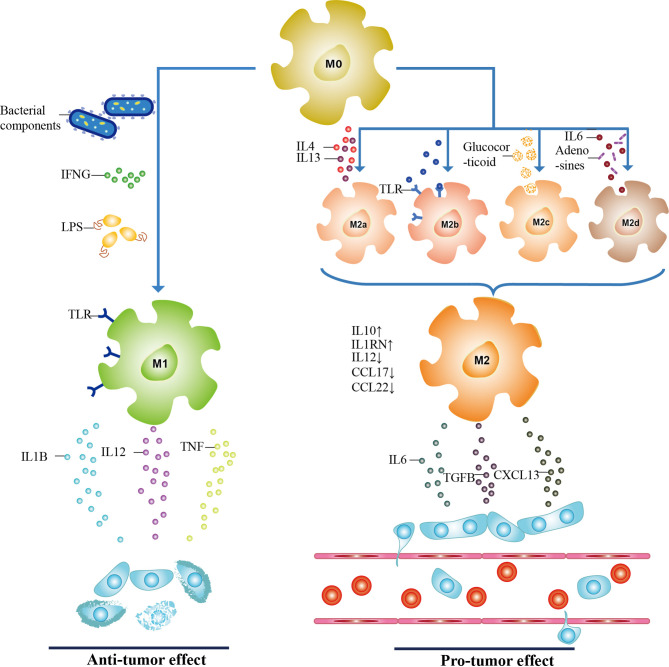
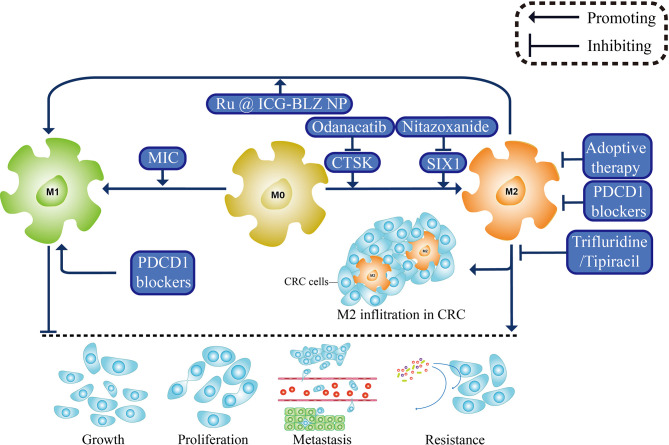
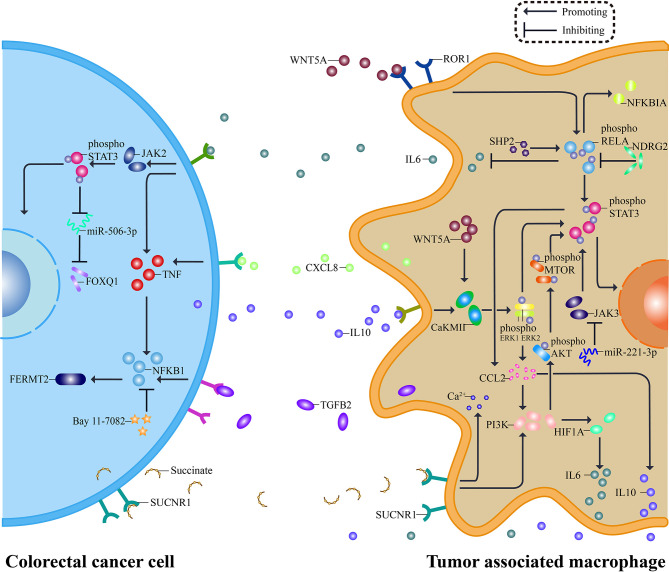
The role of the tumor microenvironment (TME) in the progression of colorectal cancer (CRC) and its acquisition of resistance to treatment become the research hotspots. As an important component of TME, the tumor-associated macrophages (TAMs) regulate multiple critical oncogenic processes, namely, occurrence, proliferation, metastasis, and drug resistance in CRC. In this review, we have discussed the functional and therapeutic significance of TAMs in CRC. M1 macrophages act as the tumor suppressor while M2 macrophages promote CRC. The polarization of TAMs is mainly regulated by the pathways such as NFKB1 pathways, STAT3 pathways, WNT5A pathways, and PI3K pathways in CRC. Furthermore, the M2 polarization of TAMs is not only controllable but also reversible. Finally, we provide insights into the TAMs-targeted therapeutic strategies.
肿瘤微环境(TME)在结直肠癌(CRC)进展及其获得性治疗耐药中的作用成为研究热点。作为TME的重要组成部分,肿瘤相关巨噬细胞(TAM)调节多个关键致癌过程,即CRC的发生、增殖、转移和耐药。在本综述中,我们讨论了TAM在CRC中的功能和治疗意义。M1巨噬细胞起肿瘤抑制作用,而M2巨噬细胞促进CRC。TAM的极化主要由CRC中的NFKB1途径、STAT3途径、WNT5A途径和PI3K途径等调节。此外,TAM的M2极化不仅可控,而且可逆。最后,我们对靶向TAM的治疗策略提供了见解。