Department of Hematology, Aalborg University Hospital, Søndre Skovvej 15, 9000, Aalborg, Denmark.
Department of Clinical Medicine, Aalborg University, Aalborg, Denmark.
Cancer Chemother Pharmacol. 2022 Apr;89(4):431-440. doi: 10.1007/s00280-022-04407-5. Epub 2022 Feb 21.
Platinum-containing therapy is standard treatment for relapsed Diffuse Large B-Cell Lymphoma (DLBCL). However, the efficacy of treatment is limited by drug resistance leading to relapse. Cisplatin resistance has been linked to impairments of the DNA damage response, and several DNA repair proteins have been identified as clients of the molecular chaperone Hsp90. Here, we investigated the combinatory treatment of cisplatin and the Hsp90 inhibitor, 17AAG, in DLBCL cells to evaluate if inhibition of Hsp90 could sensitize DLBCL cells to cisplatin treatment.
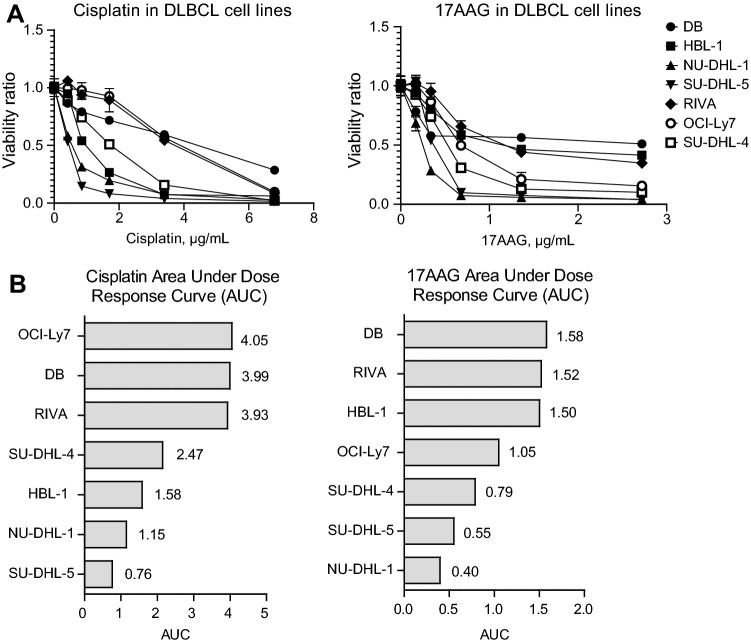
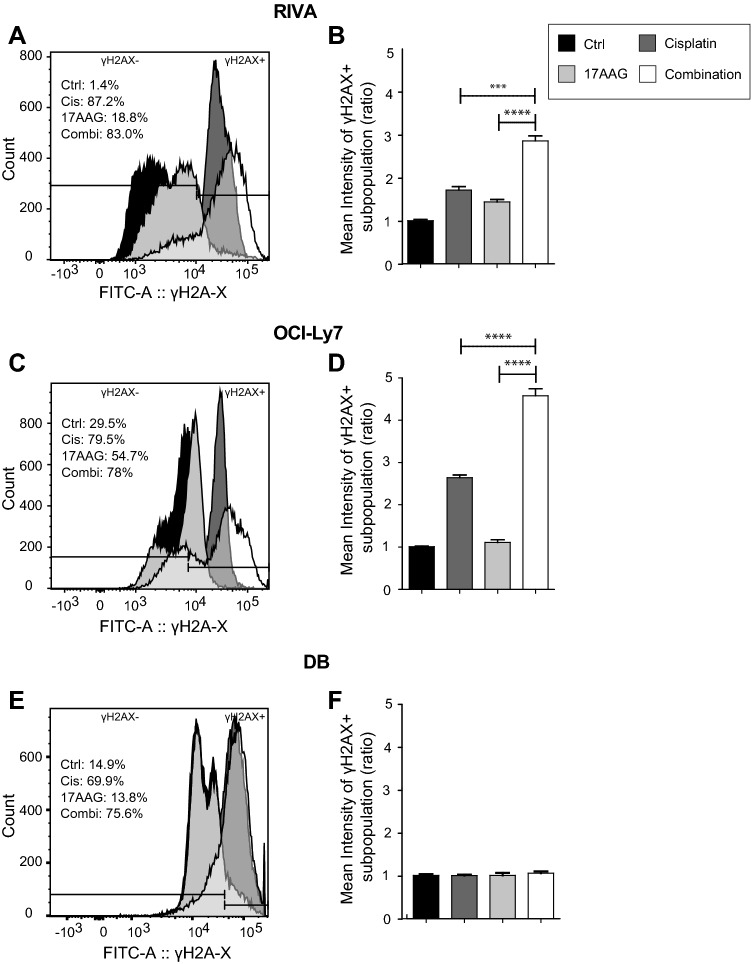
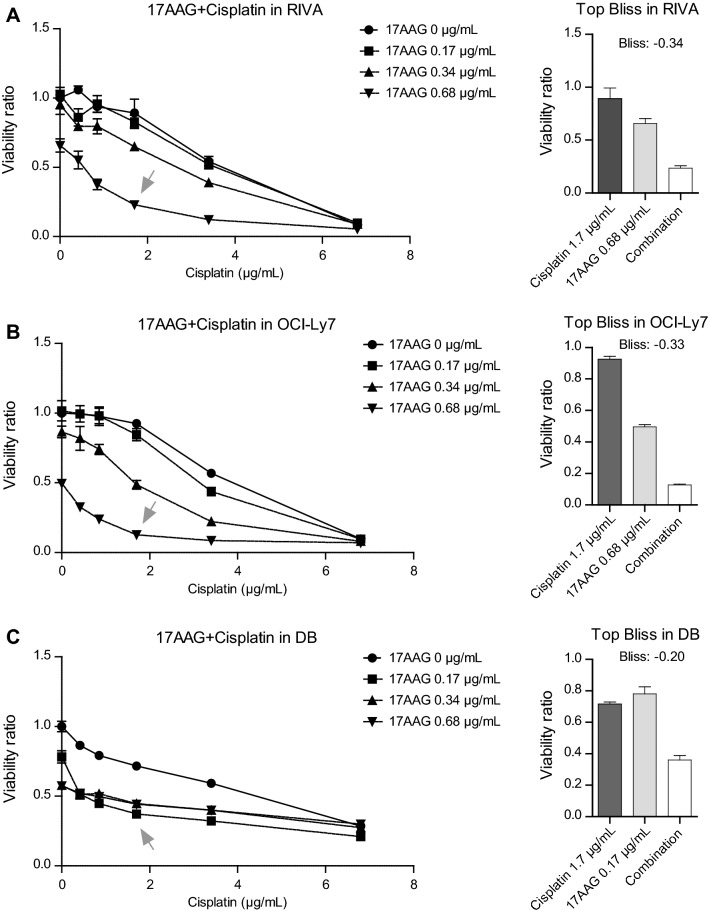
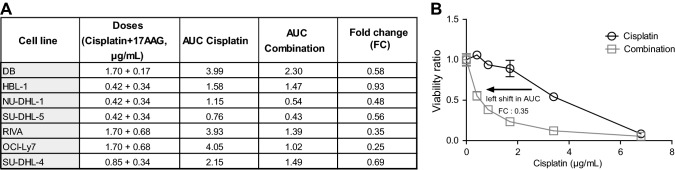
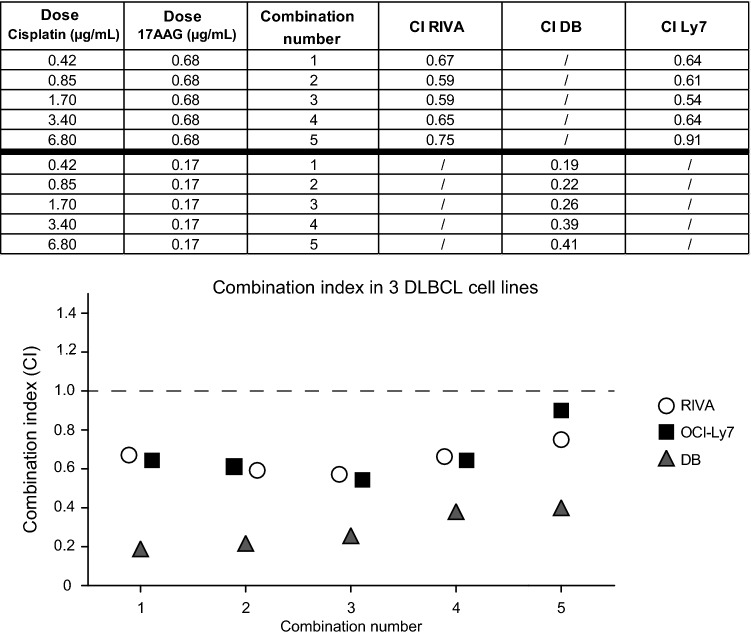
Cell viability was assessed for cisplatin and 17AAG as monotherapies and for 25 different combinations in 7 DLBCL cell lines, where the Bliss Independence Model and the Combination Index were applied to assess their interaction. Induction of apoptosis and DNA damage response were evaluated by measuring Annexin V and γH2AX levels after 48 h of exposure.
17AAG synergized with cisplatin in DLBCL cells as detected in both interaction assessment models, resulting in a lower viability after 48 h for the combination-treated cells compared to both vehicle and single drug-treated cells. The combination also induced a stronger apoptotic response and an increase in DNA damage in 17AAG, cisplatin- and combination-treated cells compared to vehicle-treated cells, with the effect of the combination generally being higher than compared to both single drugs.
This study demonstrates that 17AAG sensitizes DLBCL cells to cisplatin treatment. This effect is correlated with increased apoptotic and DNA damage response, potentially mediated by downregulation of Hsp90 clients in DNA repair pathways. Thus, cisplatin resistance could plausibly be overcome by combining the treatment with an Hsp90 inhibiting drug.
含铂疗法是治疗复发性弥漫性大 B 细胞淋巴瘤(DLBCL)的标准治疗方法。然而,治疗效果受到耐药性的限制,导致复发。顺铂耐药与 DNA 损伤反应受损有关,并且已经鉴定出几种 DNA 修复蛋白是分子伴侣 Hsp90 的客户。在这里,我们研究了顺铂和 Hsp90 抑制剂 17AAG 在 DLBCL 细胞中的联合治疗,以评估抑制 Hsp90 是否可以使 DLBCL 细胞对顺铂治疗敏感。
在 7 种 DLBCL 细胞系中,评估顺铂和 17AAG 作为单药治疗以及 25 种不同组合的细胞活力,应用 Bliss 独立性模型和组合指数评估它们的相互作用。通过测量 48 小时暴露后 Annexin V 和 γH2AX 水平来评估细胞凋亡和 DNA 损伤反应的诱导。
17AAG 与顺铂在 DLBCL 细胞中协同作用,在两种相互作用评估模型中均有检测到,与载体和单药处理细胞相比,组合处理细胞在 48 小时后活力降低。与载体处理细胞相比,组合处理细胞还诱导更强的细胞凋亡反应和 DNA 损伤增加,并且组合的效果通常高于单药处理。
这项研究表明,17AAG 使 DLBCL 细胞对顺铂治疗敏感。这种作用与增加的细胞凋亡和 DNA 损伤反应相关,可能由 DNA 修复途径中 Hsp90 客户的下调介导。因此,通过将治疗与 Hsp90 抑制药物联合使用,可能可以克服顺铂耐药性。