Department of Microbiology and Immunology, Institute of Biomedicine, University of Gothenburg, Box 435, 40530, Gothenburg, Sweden.
Inflammation Research Center (CRI), INSERM-UMR1149, University of Paris, Paris, France.
Inflammation. 2022 Aug;45(4):1631-1650. doi: 10.1007/s10753-022-01647-8. Epub 2022 Feb 21.
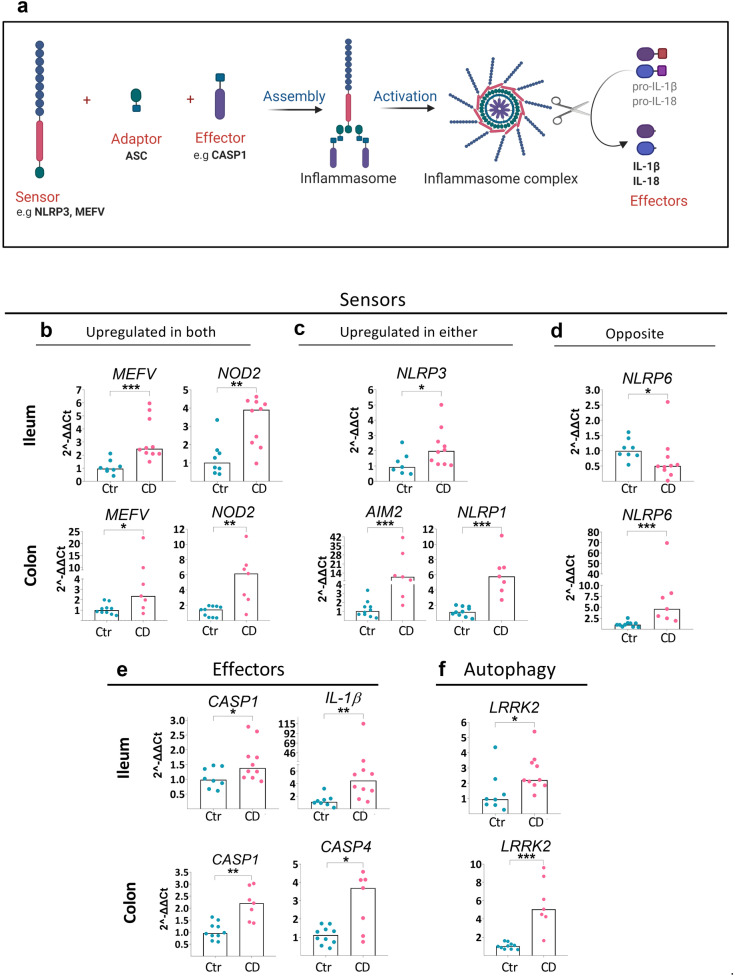
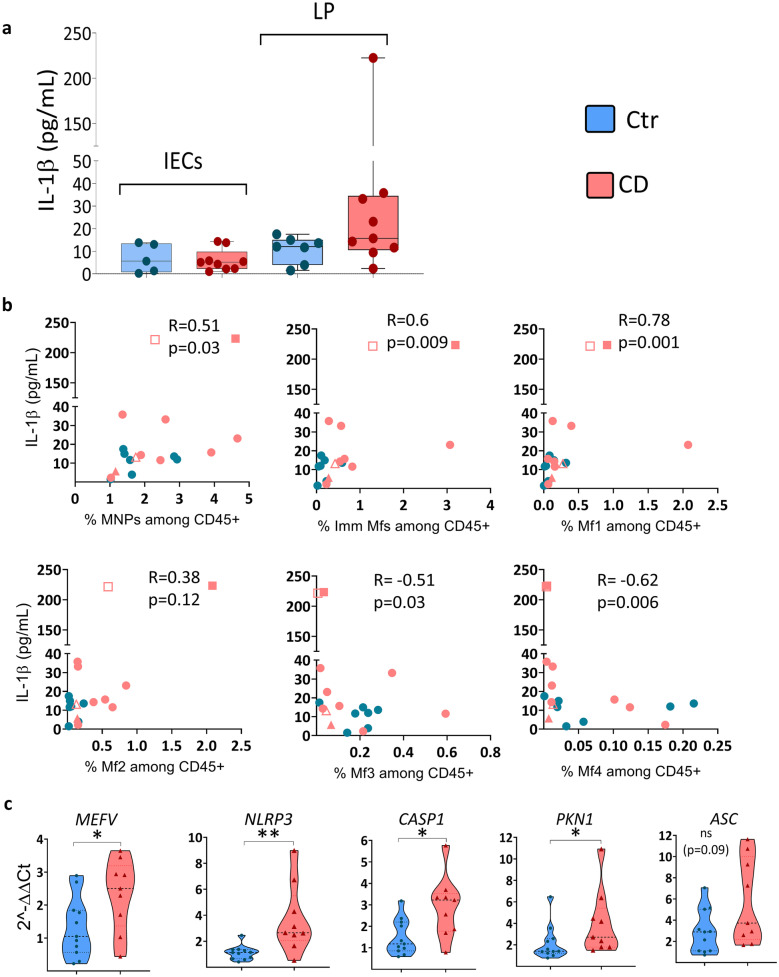
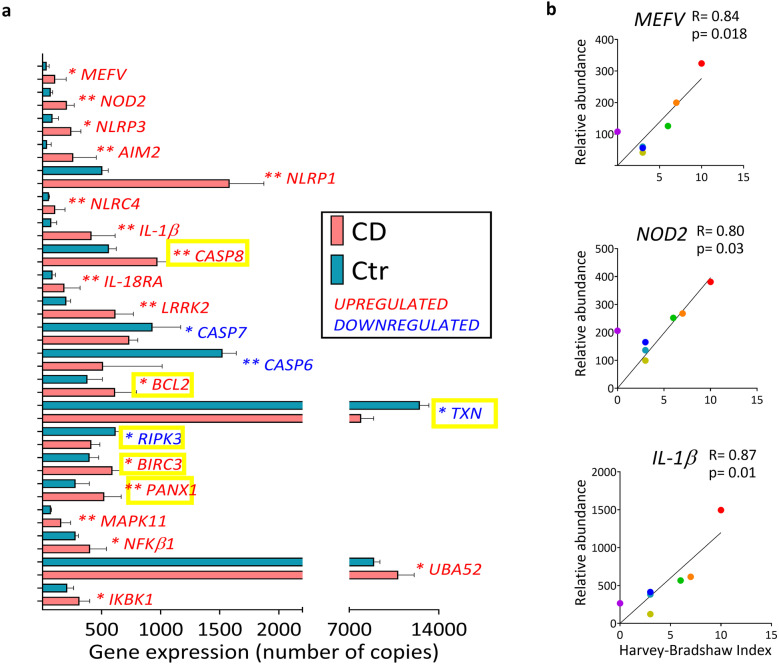
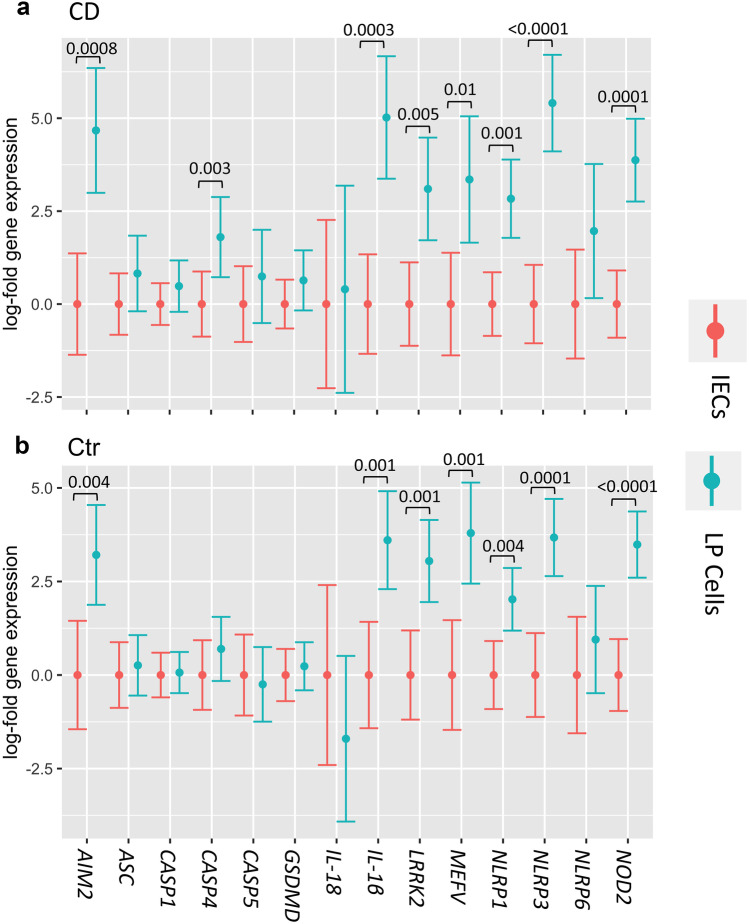
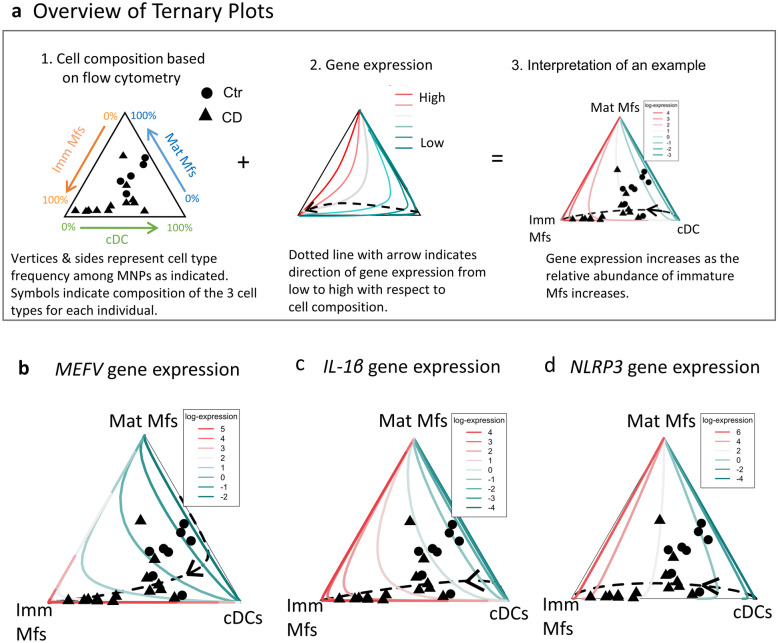
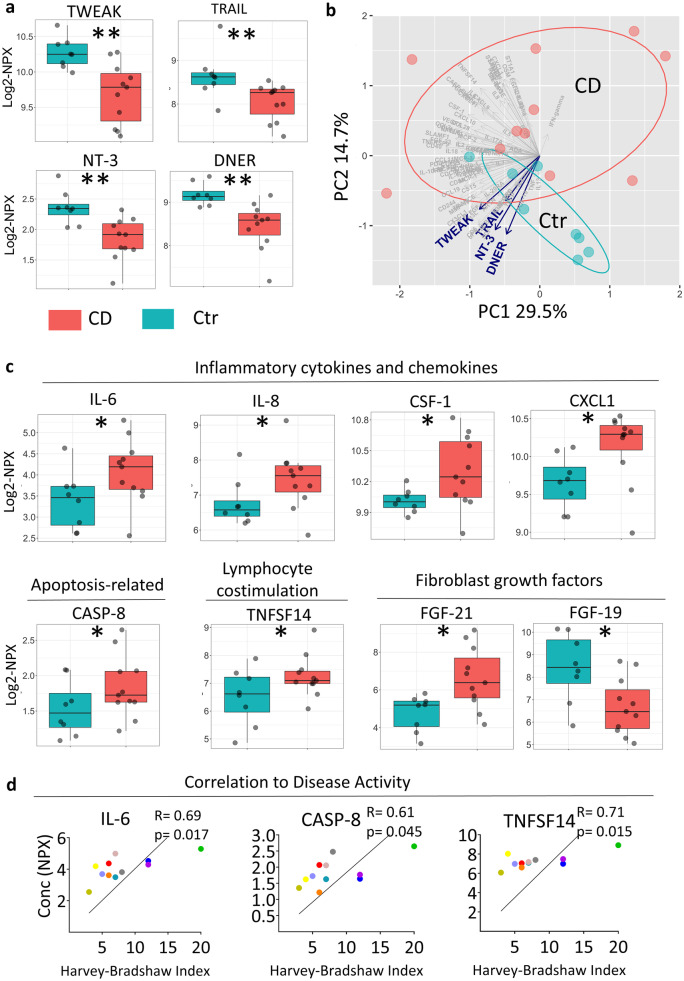
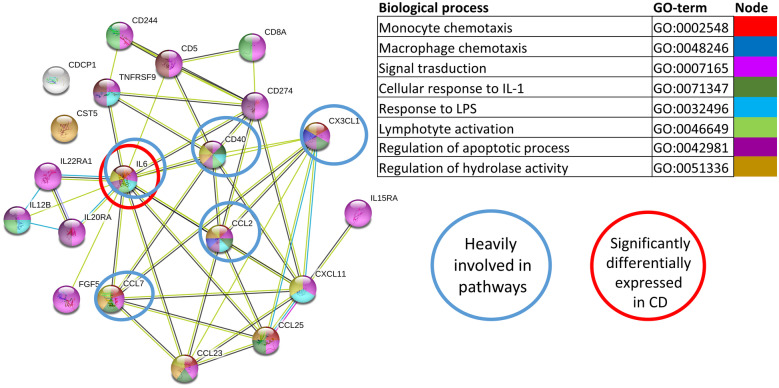
Inflammasomes are intracellular protein complexes whose activation results in proinflammatory cytokines. Inflammasomes are implicated in Crohn´s disease (CD) pathogenesis, yet the contribution of inflammasomes in intestinal epithelial cells (IECs) versus lamina propria (LP) macrophages is poorly understood. Whether inflammasome expression in intestinal tissue reflects the serum inflammatory protein profile of patients is also not known. We aimed to determine the intestinal cell types where inflammasome expression is increased in CD and if they correlate with the serum protein profile. RT-PCR and NanoString nCounter technology were used to characterize inflammasome gene expression in CD patients and controls. The mucosa, LP and IEC cell fractions and FACS-sorted cells were analyzed. Proximity extension assay with a 92-protein panel was used to determine the serum inflammatory protein profile. Compositional analysis was used to correlate ileum inflammasome gene expression with intestinal mononuclear phagocyte populations. We show that NLRP3 and MEFV inflammasome sensors and downstream effector expression including IL-1β are increased in inflamed mucosa of IBD patients and correlate with disease activity. Inflammasome gene expression increased with the abundance of immature intestinal macrophages, and increased IL-1β released by CD LP cells correlated with immature macrophage frequency. Inflammasome gene expression was also increased in circulating monocytes, the precursors of immature intestinal macrophages. Finally, the serum inflammatory profile of CD patients correlates with ileal expression of genes related to NLRP3 and MEFV inflammasomes. Overall, we show that MEFV and NLRP3 inflammasome expression in CD intestine is attributed to the accumulation of immature macrophages and correlates with serum inflammatory proteins.
炎症小体是细胞内的蛋白质复合物,其激活导致促炎细胞因子的产生。炎症小体与克罗恩病(CD)的发病机制有关,但炎症小体在肠上皮细胞(IEC)与固有层(LP)巨噬细胞中的作用知之甚少。炎症小体在肠道组织中的表达是否反映了患者的血清炎症蛋白谱也不清楚。我们旨在确定 CD 患者中炎症小体表达增加的肠道细胞类型,以及它们是否与血清蛋白谱相关。我们使用 RT-PCR 和 NanoString nCounter 技术来描述 CD 患者和对照者的炎症小体基因表达。分析了黏膜、LP 和 IEC 细胞部分以及 FACS 分选细胞。使用包含 92 种蛋白的接近延伸测定法来确定血清炎症蛋白谱。组成分析用于将回肠炎症小体基因表达与肠道单核吞噬细胞群相关联。我们表明,NLRP3 和 MEFV 炎症小体传感器及其下游效应物表达(包括 IL-1β)在 IBD 患者的炎症黏膜中增加,并与疾病活动相关。炎症小体基因表达随着不成熟肠道巨噬细胞的丰度增加而增加,并且 CD LP 细胞释放的增加的 IL-1β与不成熟巨噬细胞频率相关。炎症小体基因表达也在循环单核细胞中增加,单核细胞是不成熟肠道巨噬细胞的前体。最后,CD 患者的血清炎症谱与 NLRP3 和 MEFV 炎症小体相关基因在回肠的表达相关。总体而言,我们表明 CD 肠道中的 MEFV 和 NLRP3 炎症小体表达归因于不成熟巨噬细胞的积累,并与血清炎症蛋白相关。