Department of Microbiology and Immunology, Institute of Biomedicine, Sahlgrenska Academy, University of Gothenburg, 405 30 Gothenburg, Sweden.
Medical Department, Randers Regional Hospital, 8930 Randers, Denmark.
Cells. 2023 Dec 27;13(1):60. doi: 10.3390/cells13010060.
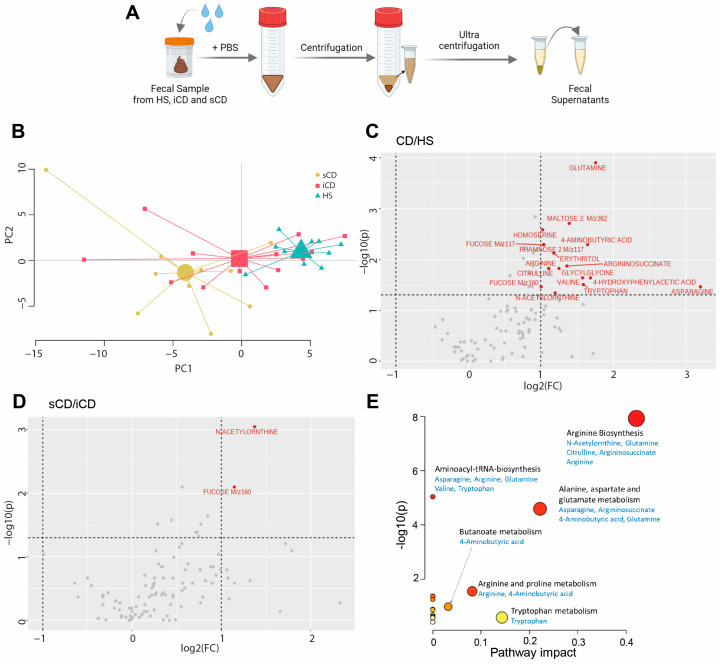
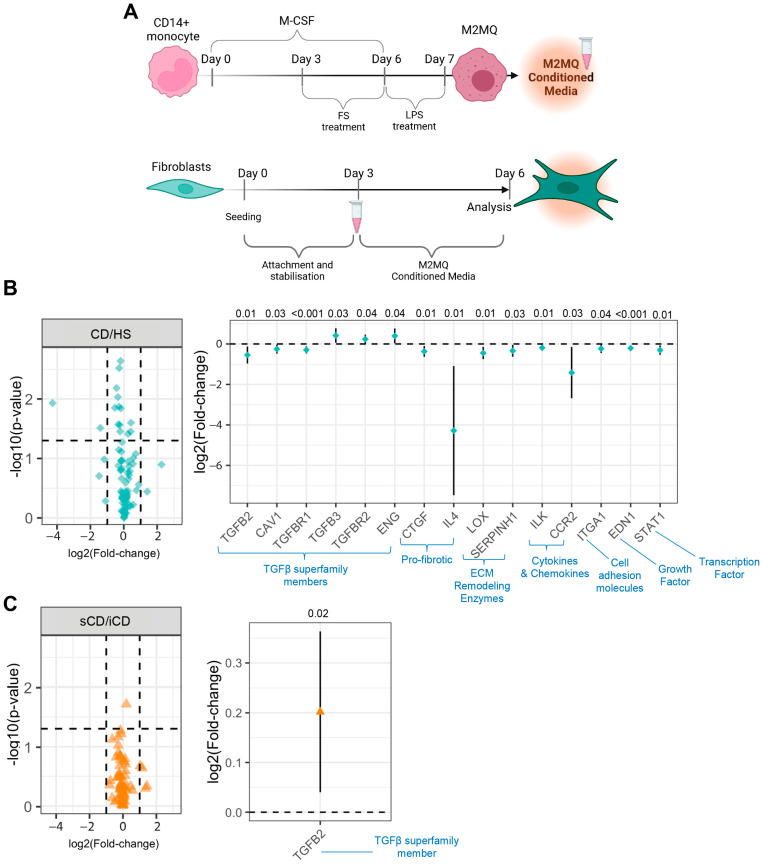
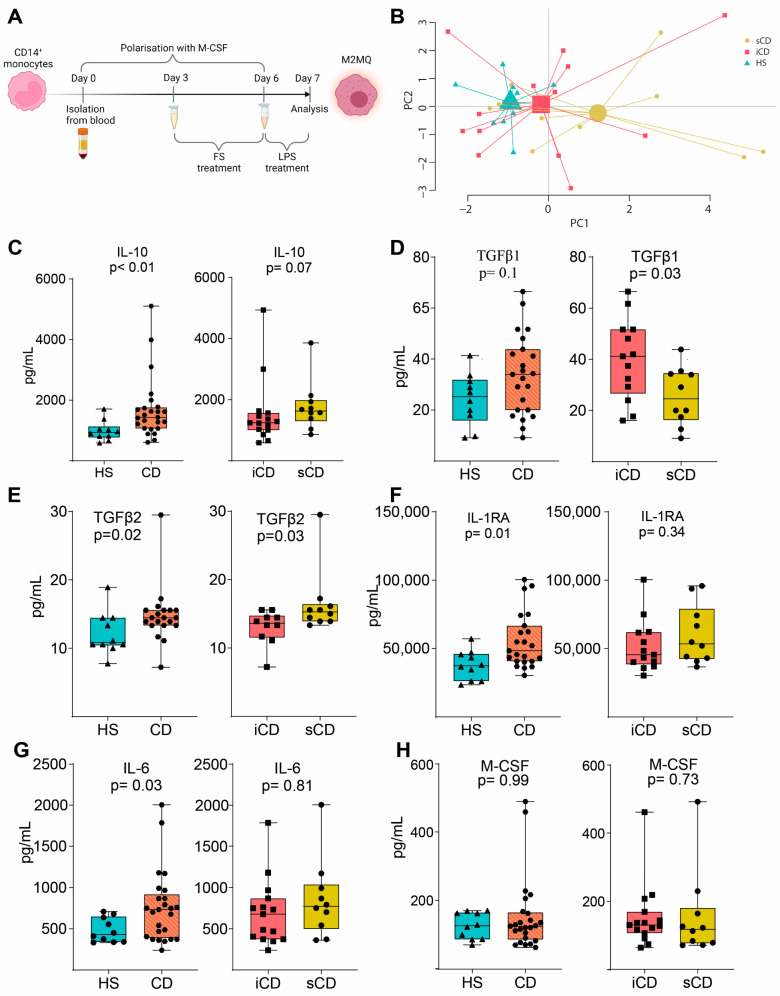
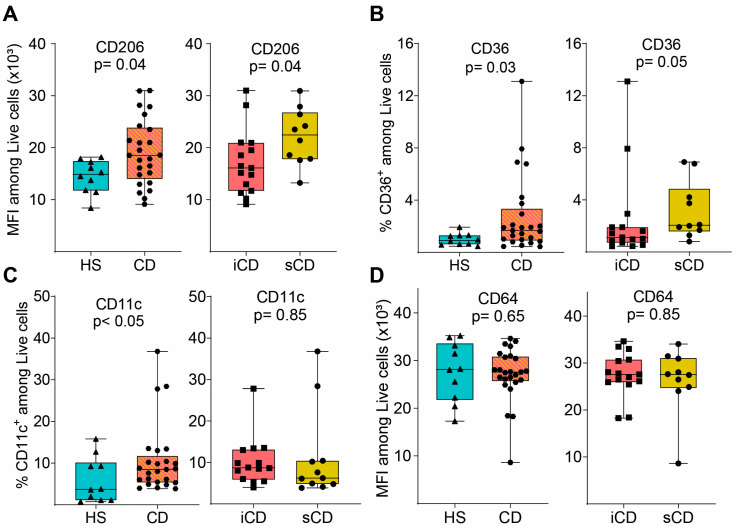
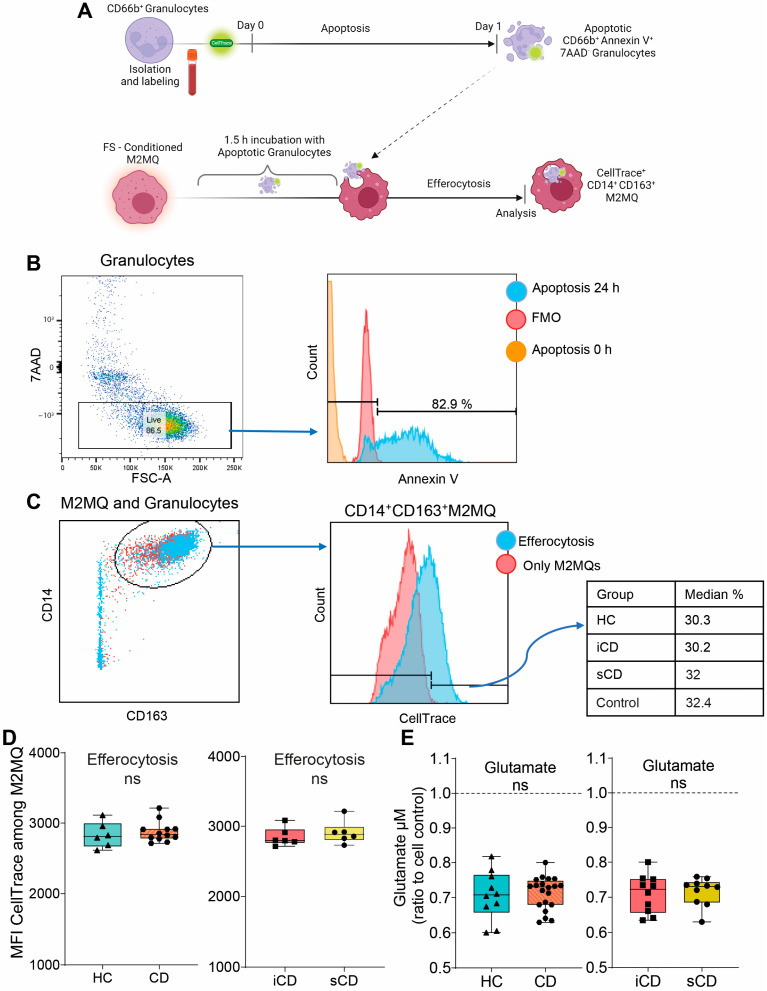
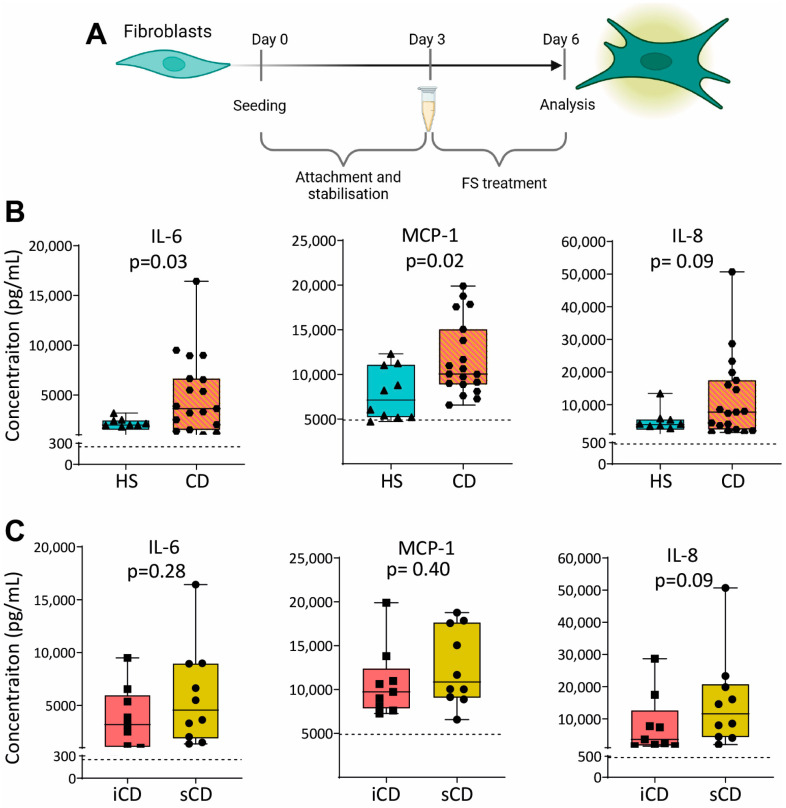
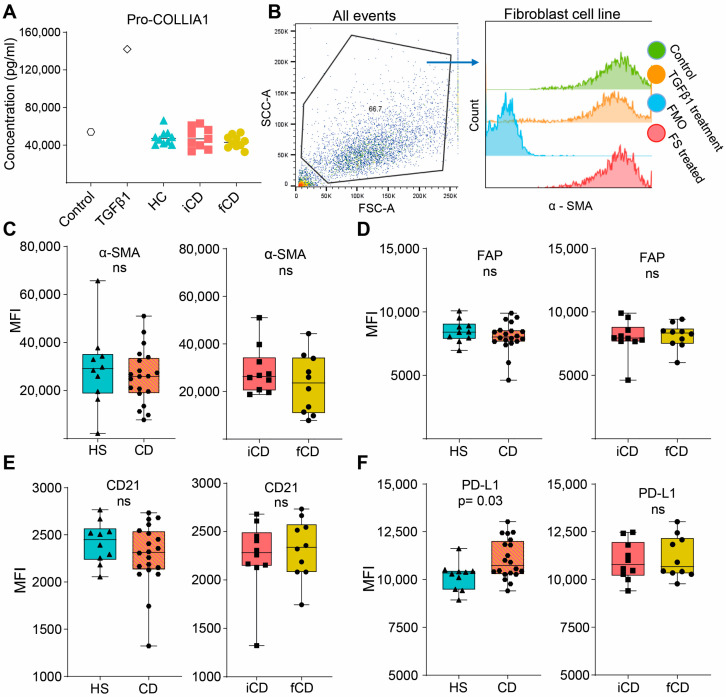
Intestinal macrophages and fibroblasts act as microenvironmental sentinels mediating inflammation and disease progression in Crohn's disease (CD). We aimed to establish the effects of fecal supernatants (FSs) from patients with CD on macrophage and fibroblast phenotype and function. FS were obtained by ultracentrifugation, and the metabolites were analyzed. Monocyte-derived M2 macrophages and fibroblasts were conditioned with FS, and secreted proteins, surface proteins and gene expression were analyzed. M2 macrophage efferocytosis was evaluated. Patients with CD ( = 15) had a skewed fecal metabolite profile compared to healthy subjects (HS, = 10). FS from CD patients (CD-FS) induced an anti-inflammatory response in M2 macrophages with higher expression of IL-10, IL1RA and CD206 as compared to healthy FS (HS-FS) while the efferocytotic capacity was unaltered. CD-FS did not affect extracellular matrix production from fibroblasts, but increased expression of the pro-inflammatory proteins IL-6 and MCP-1. Conditioned media from M2 macrophages treated with CD-FS modulated gene expression in fibroblasts for TGFβ superfamily members and reduced IL-4 expression compared to HS-FS. We show that M2 macrophages and fibroblasts react abnormally to the fecal microenvironment of CD patients, resulting in altered protein expression related to inflammation but not fibrosis. This implies that the gut microbiota and its metabolites have an important role in the generation and/or perpetuation of inflammation in CD.
肠道巨噬细胞和成纤维细胞作为微环境哨兵,介导克罗恩病(CD)中的炎症和疾病进展。我们旨在确定来自 CD 患者的粪便上清液(FS)对巨噬细胞和成纤维细胞表型和功能的影响。通过超速离心获得 FS,并分析代谢产物。用 FS 孵育单核细胞来源的 M2 巨噬细胞和成纤维细胞,分析分泌蛋白、表面蛋白和基因表达。评估 M2 巨噬细胞的胞饮作用。与健康受试者(HS,n=10)相比,CD 患者(n=15)的粪便代谢产物谱存在偏倚。与健康 FS(HS-FS)相比,CD 患者的 FS(CD-FS)诱导 M2 巨噬细胞产生抗炎反应,IL-10、IL1RA 和 CD206 的表达更高,而胞饮能力没有改变。CD-FS 不影响成纤维细胞细胞外基质的产生,但增加了促炎蛋白 IL-6 和 MCP-1 的表达。用 CD-FS 处理的 M2 巨噬细胞的条件培养基调节成纤维细胞中 TGFβ 超家族成员的基因表达,并与 HS-FS 相比降低了 IL-4 的表达。我们表明,M2 巨噬细胞和成纤维细胞对 CD 患者的粪便微环境反应异常,导致与炎症相关但与纤维化无关的蛋白表达改变。这意味着肠道微生物群及其代谢物在 CD 中的炎症发生和/或持续中起重要作用。