Department of Neurology, University of Michigan, Ann Arbor, MI, United States.
Front Immunol. 2022 Feb 7;13:773288. doi: 10.3389/fimmu.2022.773288. eCollection 2022.
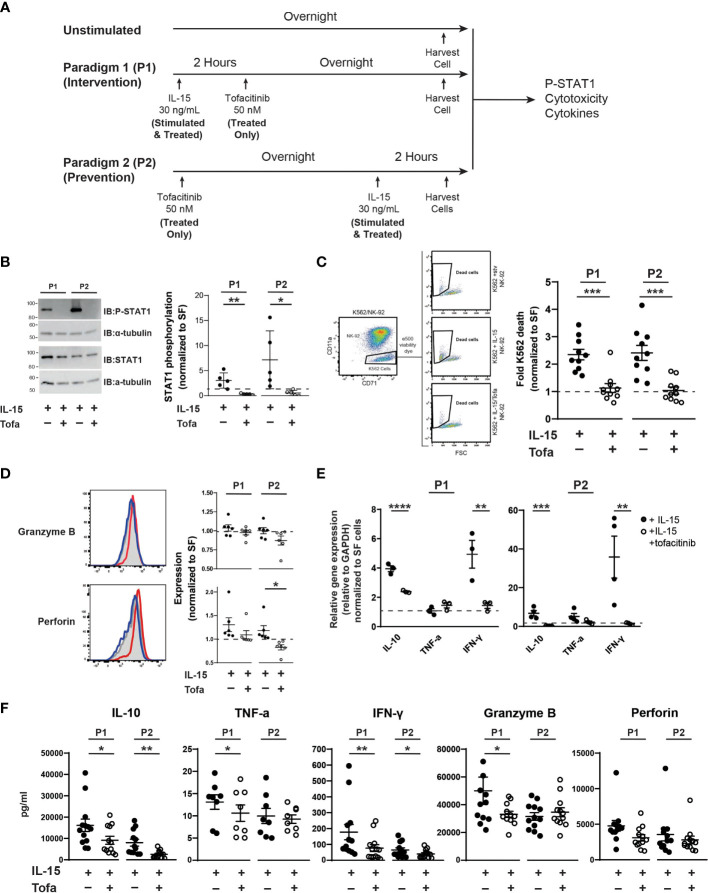
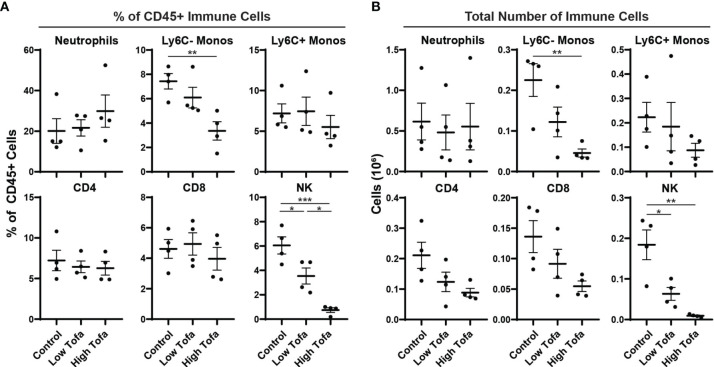
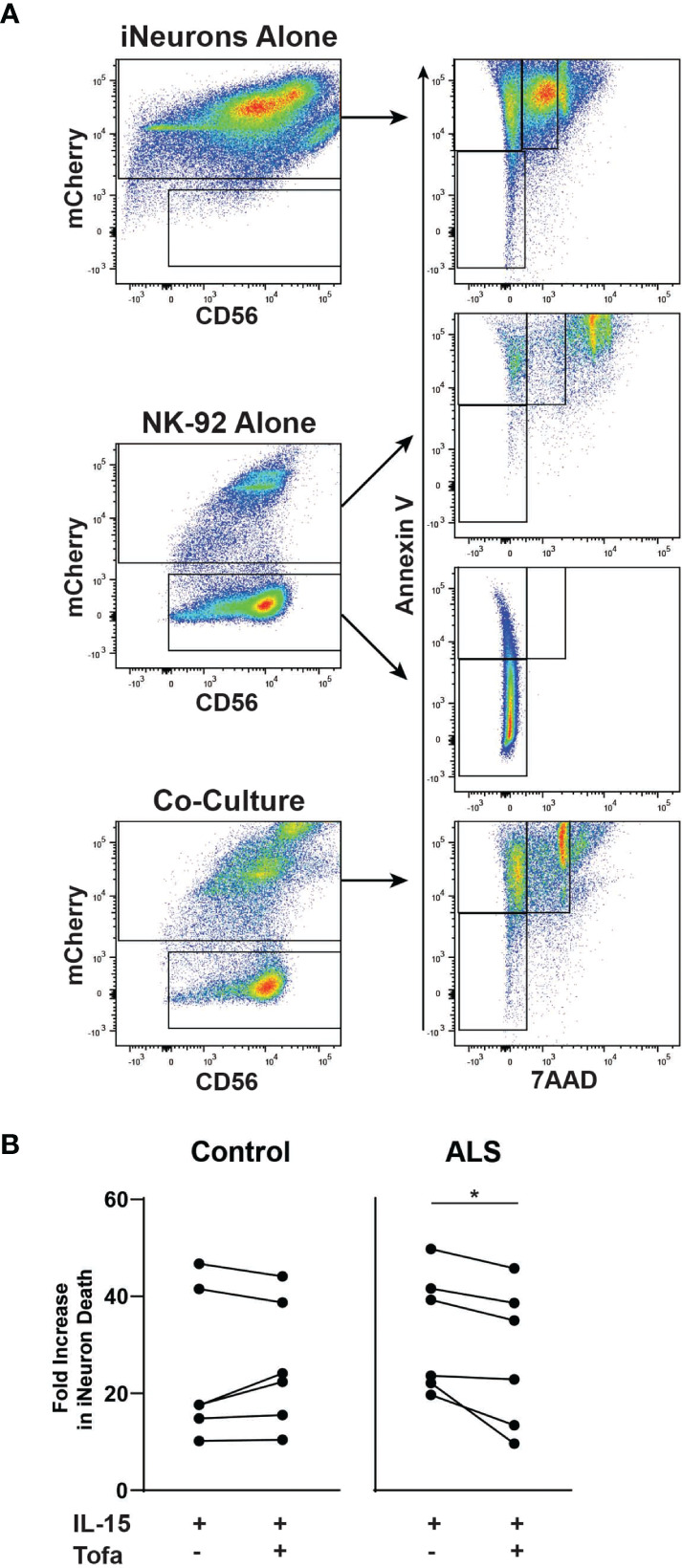
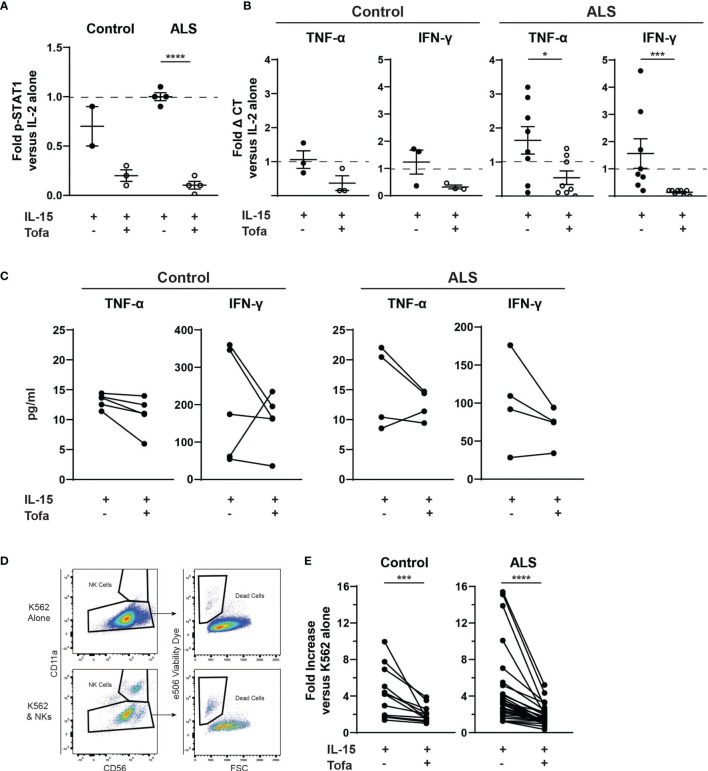
Amyotrophic lateral sclerosis (ALS) is a fatal and incurable neurodegenerative disease with few therapeutic options. However, the immune system, including natural killer (NK) cells, is linked to ALS progression and may constitute a viable therapeutic ALS target. Tofacitinib is an FDA-approved immunomodulating small molecule which suppresses immune cell function by blocking proinflammatory cytokine signaling. This includes the cytokine IL-15 which is the primary cytokine associated with NK cell function and proliferation. However, the impact of tofacitinib on NK activation and cytotoxicity has not been thoroughly investigated, particularly in ALS. We therefore tested the ability of tofacitinib to suppress cytotoxicity and cytokine production in an NK cell line and in primary NK cells derived from control and ALS participants. We also investigated whether tofacitinib protected ALS neurons from NK cell cytotoxicity. Finally, we conducted a comprehensive pharmacokinetic study of tofacitinib in mice and tested the feasibility of administration formulated in chow. Success was assessed through the impact of tofacitinib on peripheral NK cell levels in mice. We found tofacitinib suppressed IL-15-induced activation as measured by STAT1 phosphorylation, cytotoxicity, pro-inflammatory gene expression, and pro-inflammatory cytokine secretion in both an NK cell line and primary NK cells. Furthermore, tofacitinib protected ALS neurons from NK cell-mediated cytotoxicity. In mice, we found tofacitinib bioavailability was 37% in both male and female mice; using these data we formulated mouse containing low and high doses of tofacitinib and found that the drug suppressed peripheral NK cell levels in a dose-dependent manner. These results demonstrate that tofacitinib can suppress NK cell function and may be a viable therapeutic strategy for ALS.
肌萎缩侧索硬化症(ALS)是一种致命且无法治愈的神经退行性疾病,治疗选择有限。然而,免疫系统,包括自然杀伤 (NK) 细胞,与 ALS 的进展有关,可能成为可行的 ALS 治疗靶点。托法替尼是一种获得美国食品和药物管理局 (FDA) 批准的免疫调节小分子药物,通过阻断促炎细胞因子信号来抑制免疫细胞功能。这包括细胞因子 IL-15,它是与 NK 细胞功能和增殖相关的主要细胞因子。然而,托法替尼对 NK 细胞激活和细胞毒性的影响尚未得到充分研究,特别是在 ALS 中。因此,我们测试了托法替尼抑制 NK 细胞系和来自对照和 ALS 参与者的原代 NK 细胞的细胞毒性和细胞因子产生的能力。我们还研究了托法替尼是否能保护 ALS 神经元免受 NK 细胞的细胞毒性。最后,我们在小鼠中进行了托法替尼的全面药代动力学研究,并测试了在饲料中给药的可行性。成功是通过托法替尼对小鼠外周 NK 细胞水平的影响来评估的。我们发现托法替尼抑制了 STAT1 磷酸化、细胞毒性、促炎基因表达和促炎细胞因子分泌,从而抑制了 NK 细胞系和原代 NK 细胞中 IL-15 诱导的激活。此外,托法替尼还能保护 ALS 神经元免受 NK 细胞介导的细胞毒性。在小鼠中,我们发现托法替尼在雄性和雌性小鼠中的生物利用度分别为 37%;利用这些数据,我们配制了含有低剂量和高剂量托法替尼的小鼠饲料,并发现该药物以剂量依赖的方式抑制外周 NK 细胞水平。这些结果表明,托法替尼可以抑制 NK 细胞功能,可能是 ALS 的一种可行的治疗策略。