Hasan Omran, Mubarak Mohamed, Mohamed Jawad Alwedaie S, Baksh Hasan, Alaradi Husain, Alarayedh Ameer, Alaradi Ali, Ahmadi Abdolsalam, Jalal Akbar
Department of Surgery, Salmaniya Medical Complex Ringgold Standard Institution, Manama, Bahrain.
Asian J Urol. 2022 Jan;9(1):57-62. doi: 10.1016/j.ajur.2021.05.006. Epub 2021 May 29.
Testicular torsion is a common urological emergency, mainly in the younger population. Our aim is to evaluate the efficacy and value of testicular echogenicity in predicting testicular viability.
Patients who were older than 13 years of age and were discharged with the diagnosis of testicular torsion were reviewed. Data obtained included demographic data, history, physical examination results, ultrasound findings including size, color Doppler flow, and echotexture, torsion degrees, and surgical procedure. In addition, the histopathological findings of patients who underwent orchiectomy were reviewed.
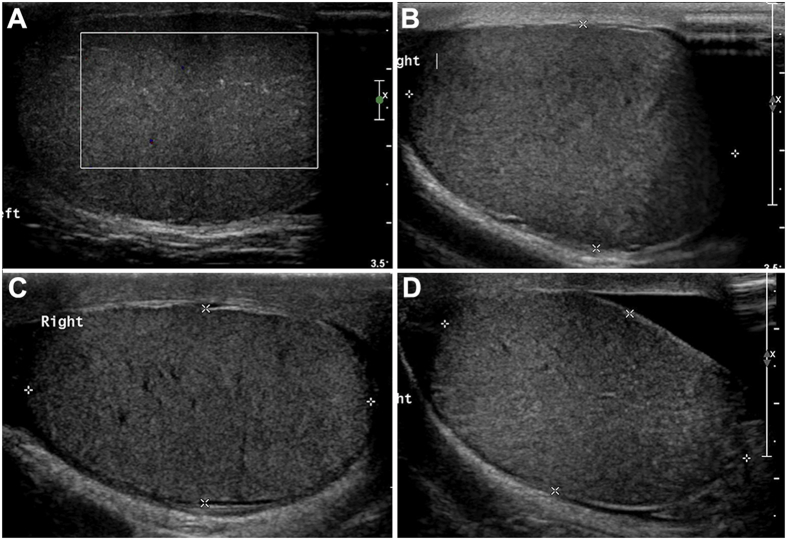
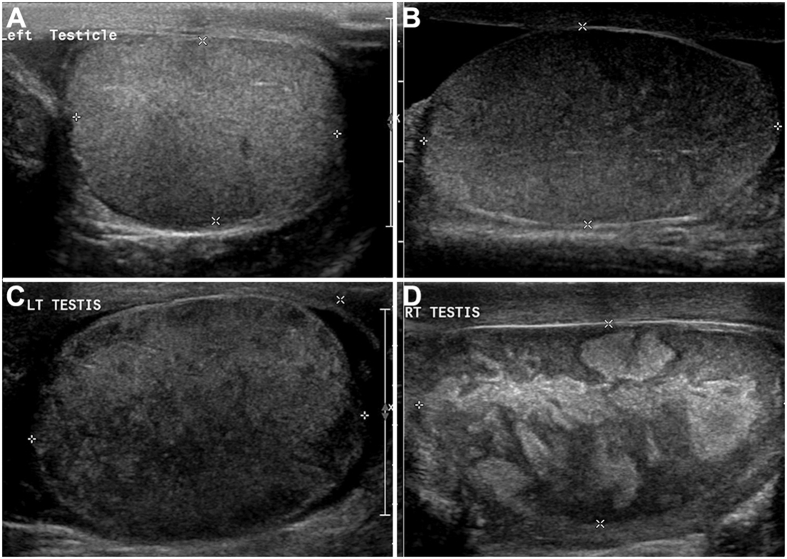
A total of 71 cases were diagnosed with testicular torsion between January 2016 to December 2018. The mean age at presentation was 20.4±7.0 years. The average time from the onset of pain until the presentation was 36.0±55.1 h. Out of the 71 ultrasound scans reviewed, 45.1% showed homogenous echotexture and 54.9% showed heterogeneous echotexture of the affected testis. On scrotal exploration, the mean degree of torsion was 475.7±301.8 degrees; 66.2% of the patients had a viable testis; and bilateral orchidopexy was done. The remaining 33.8% had a non-viable testis. Homogenous echotexture was after an average of 13.5 h of scrotal pain, while heterogeneous echotexture presented after 53.7 h of scrotal pain. There was a statistically significant difference between the time of presentation and echotexture changes on scrotal ultrasonography (<0.01). The relationship between echotexture changes and testicular viability was statistically significant as well (<0.001).
A long time since the onset of pain coupled with heterogeneous changes in testicular parenchyma is a good indicator of non-viability. However, we still advocate for surgical exploration as the gold standard in diagnosis and management.
睾丸扭转是一种常见的泌尿外科急症,主要发生于年轻人群。我们的目的是评估睾丸回声在预测睾丸存活能力方面的有效性和价值。
对年龄大于13岁且出院诊断为睾丸扭转的患者进行回顾性研究。获取的数据包括人口统计学数据、病史、体格检查结果、超声检查结果(包括大小、彩色多普勒血流和回声纹理)、扭转程度及手术方式。此外,还回顾了接受睾丸切除术患者的组织病理学检查结果。
2016年1月至2018年12月期间,共诊断出71例睾丸扭转病例。就诊时的平均年龄为20.4±7.0岁。从疼痛发作到就诊的平均时间为36.0±55.1小时。在回顾的71次超声检查中,45.1%的患侧睾丸显示均匀回声纹理,54.9%显示不均匀回声纹理。阴囊探查时,平均扭转程度为475.7±301.8度;66.2%的患者睾丸存活,并进行了双侧睾丸固定术。其余33.8%的患者睾丸未存活。均匀回声纹理出现在阴囊疼痛平均13.5小时后,而不均匀回声纹理出现在阴囊疼痛53.7小时后。就诊时间与阴囊超声检查回声纹理变化之间存在统计学显著差异(<0.01)。回声纹理变化与睾丸存活能力之间的关系也具有统计学意义(<0.001)。
疼痛发作后时间较长且睾丸实质出现不均匀变化是睾丸无存活能力的良好指标。然而,我们仍主张手术探查作为诊断和治疗的金标准。