Guardado Alexandra Alcántara, Baker Alexander, Weightman Andrew, Hoyland Judith A, Cooper Glen
School of Engineering, University of Manchester, Manchester M13 9PL, UK.
Royal Preston Hospital, Preston PR2 9HT, UK.
Bioengineering (Basel). 2022 Jan 19;9(2):47. doi: 10.3390/bioengineering9020047.
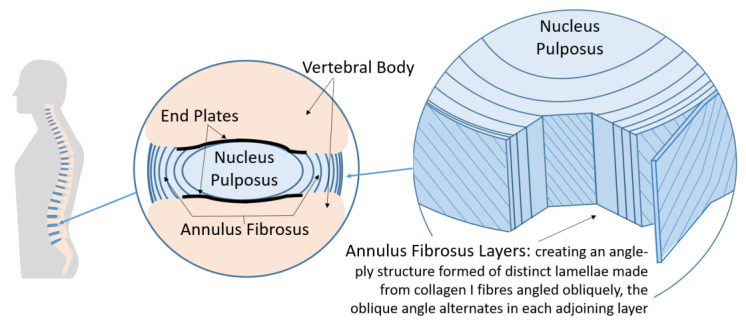
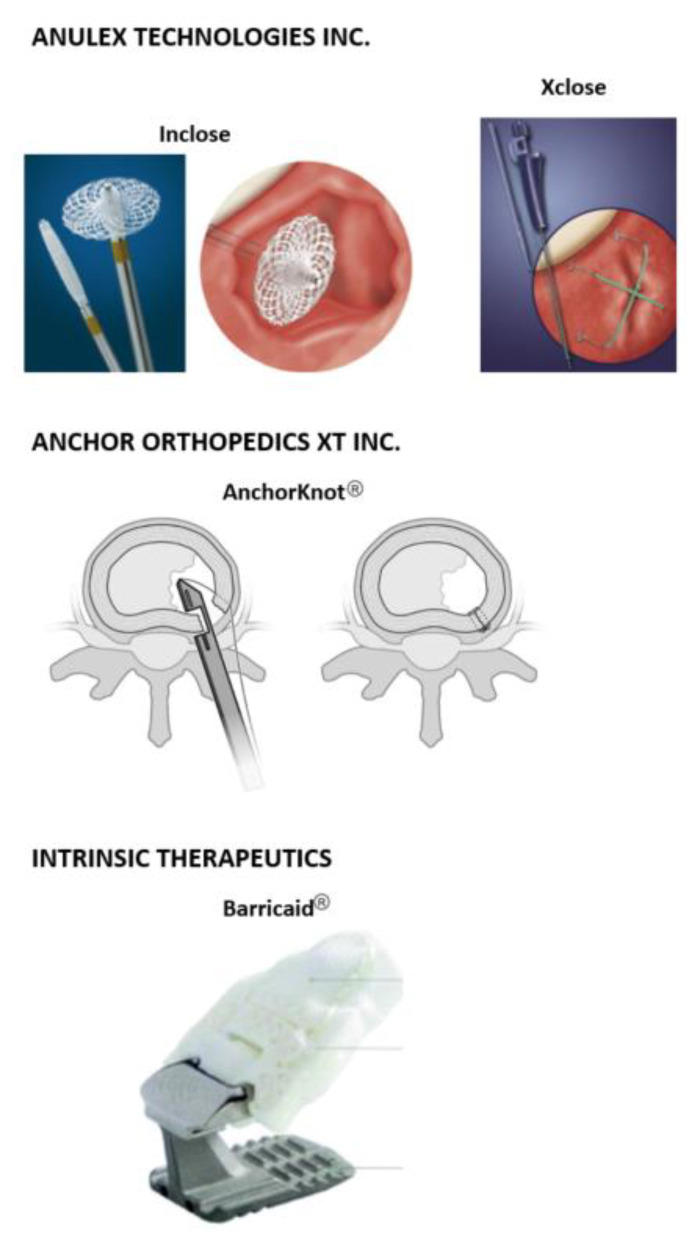
Lumbar disc herniation is one of the most common degenerative spinal conditions resulting in lower back pain and sciatica. Surgical treatment options include microdiscectomy, lumbar fusion, total disc replacement, and other minimally invasive approaches. At present, microdiscectomy procedures are the most used technique; however, the annulus fibrosus is left with a defect that without treatment may contribute to high reherniation rates and changes in the biomechanics of the lumbar spine. This paper aims to review current commercially available products that mechanically close the annulus including the AnchorKnot suture-passing device and the Barricaid annular closure device. Previous studies and reviews have focused mainly on a biomimetic biomaterials approach and have described some mechanical and biological requirements for an active annular repair/regeneration strategy but are still far away from clinical implementation. Therefore, in this paper we aim to create a design specification for a mechanical annular closure strategy by identifying the most important mechanical and biological design parameters, including consideration of material selection, preclinical testing requirements, and requirements for clinical implementation.
腰椎间盘突出症是导致下背部疼痛和坐骨神经痛的最常见的脊柱退行性疾病之一。手术治疗选择包括显微椎间盘切除术、腰椎融合术、全椎间盘置换术以及其他微创方法。目前,显微椎间盘切除术是最常用的技术;然而,纤维环会留下一个缺损,如果不进行治疗,可能会导致高复发率以及腰椎生物力学的改变。本文旨在综述当前市场上可用于机械闭合纤维环的产品,包括AnchorKnot缝线递送装置和Barricaid纤维环闭合装置。先前的研究和综述主要集中在仿生生物材料方法上,并描述了主动纤维环修复/再生策略的一些机械和生物学要求,但仍远未实现临床应用。因此,在本文中,我们旨在通过确定最重要的机械和生物学设计参数,包括材料选择、临床前测试要求和临床应用要求,来制定一种机械纤维环闭合策略的设计规范。