Department of Urology, Shanghai Pudong New Area Gongli Hospital, Shanghai 200135, China.
Department of Urology, Naval Military Medical University Affiliated Gongli Hospital, Shanghai 200135, China.
Curr Oncol. 2022 Jan 28;29(2):578-588. doi: 10.3390/curroncol29020052.
Generally, little is known about prognostic factors in bladder cancer patients under 40 years of age. We therefore performed a retrospective study to identify prognostic factors in these younger bladder cancer patients.
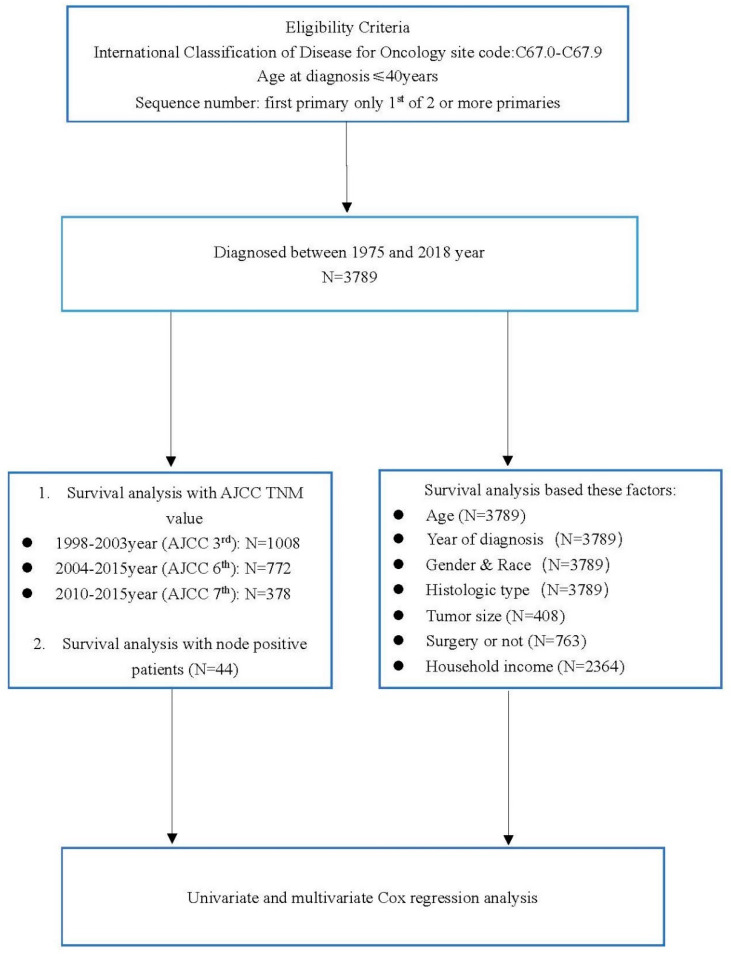
We collected clinicopathological data on bladder cancer patients ≤40 years old diagnosed between 1975 and 2018 from the Surveillance, Epidemiology, and End Results (SEER) database. Survival curves were generated using the Kaplan-Meier method, and the differences between groups were analyzed using the log-rank test. Univariate and multivariate Cox hazards regression analyses were performed to define hazard ratios (HRs) for cancer-specific survival (CSS).
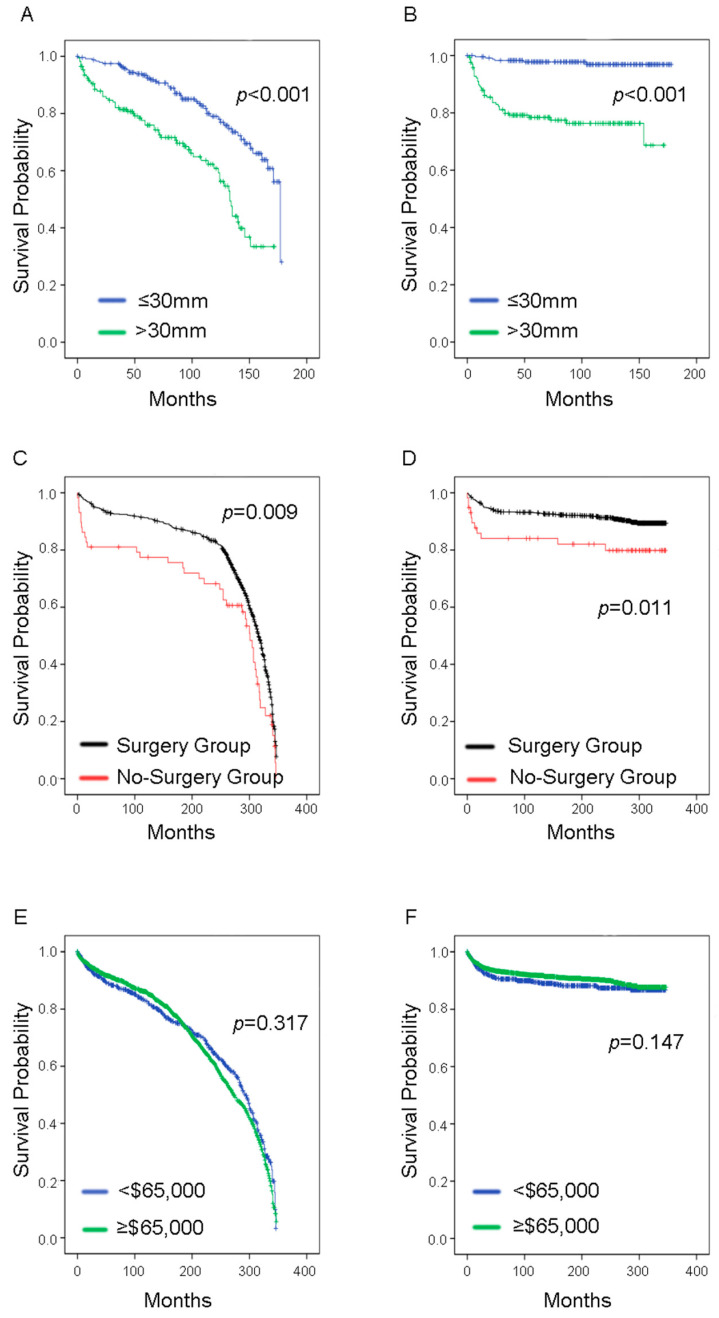
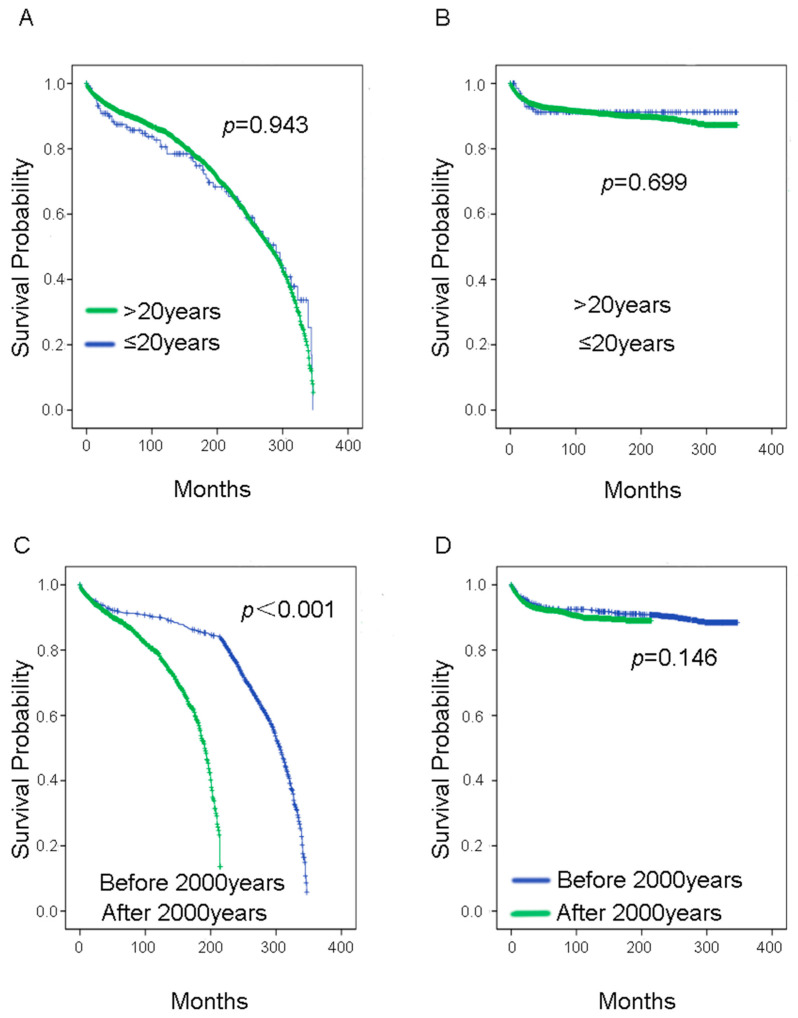
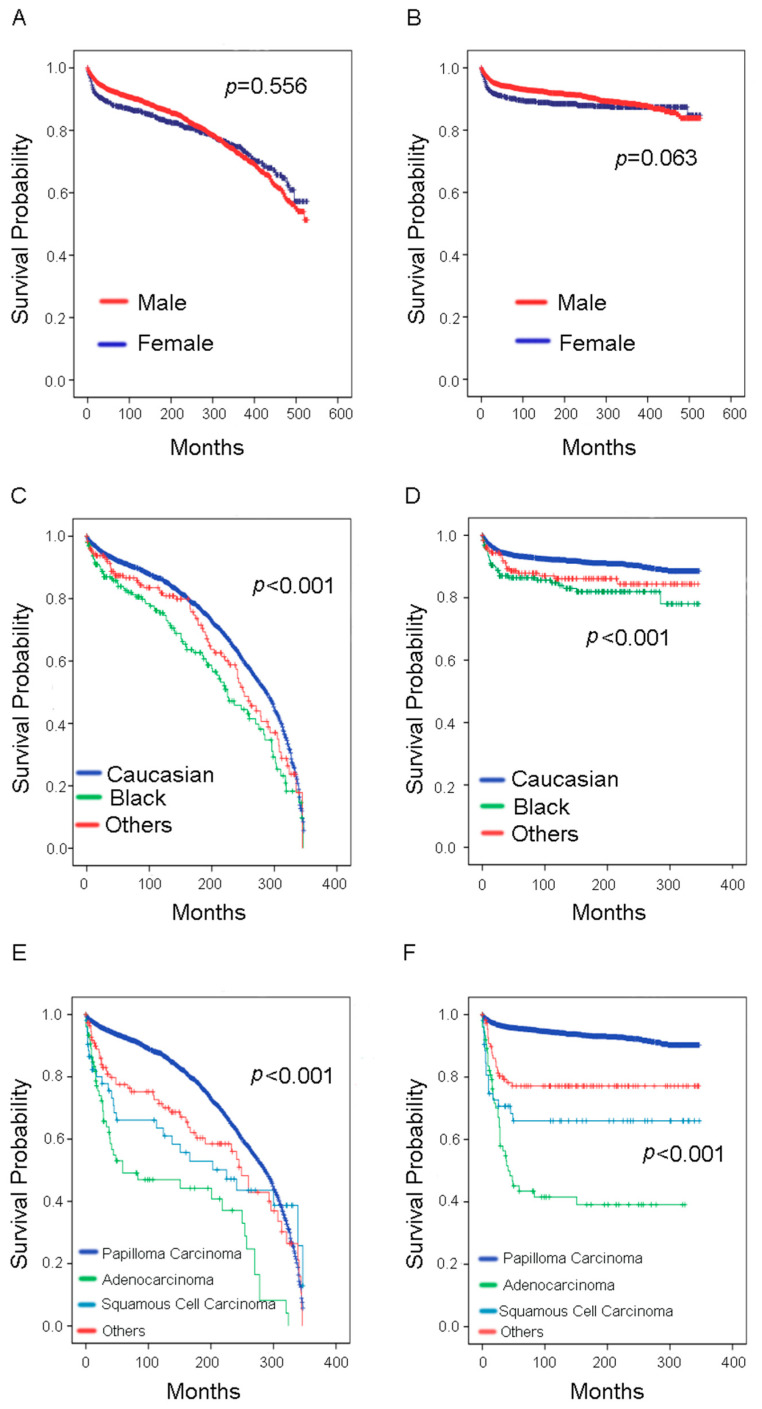
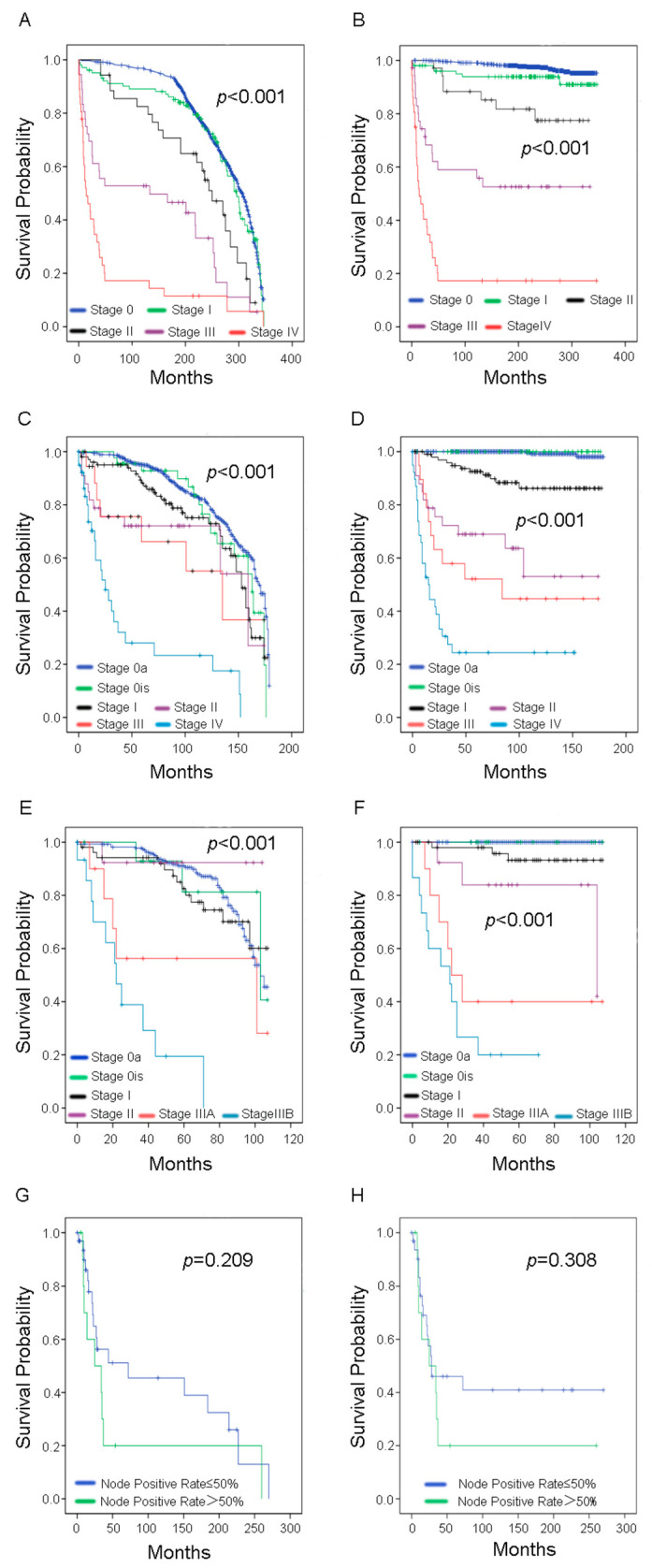
There were statistical differences in race, histological type, cancer stage, tumor size, and surgery treatment groups between overall survival and CSS. Only tumor size and cancer stage were significant independent prognostic risk factors in younger bladder cancer patients for the prediction of CSS.
Tumors greater than 30 mm in size and a more advanced stage of bladder cancer were indicative of a poor prognosis in bladder cancer patients ≤40 years old, and long-term follow-up is suggested.
一般来说,人们对 40 岁以下膀胱癌患者的预后因素知之甚少。因此,我们进行了一项回顾性研究,以确定这些年轻膀胱癌患者的预后因素。
我们从监测、流行病学和最终结果 (SEER) 数据库中收集了 1975 年至 2018 年间诊断的≤40 岁膀胱癌患者的临床病理数据。使用 Kaplan-Meier 方法生成生存曲线,并使用对数秩检验分析组间差异。进行单因素和多因素 Cox 风险回归分析,以定义癌症特异性生存 (CSS) 的风险比 (HR)。
总生存和 CSS 之间在种族、组织学类型、癌症分期、肿瘤大小和手术治疗组方面存在统计学差异。只有肿瘤大小和癌症分期是年轻膀胱癌患者 CSS 预测的显著独立预后危险因素。
肿瘤大于 30mm 且膀胱癌分期较高的患者预后较差,建议进行长期随访。