
利用经乳酸菌发酵的芥菜提取物来减轻玉米穗中伏马菌素 B 和 B 的产生。
Use of Mustard Extracts Fermented by Lactic Acid Bacteria to Mitigate the Production of Fumonisin B and B by in Corn Ears.
机构信息
Laboratory of Food Chemistry and Toxicology, Faculty of Pharmacy, University of Valencia, Ave. Vicent Andrés Estellés s/n, 46100 Burjassot, Spain.
出版信息
Toxins (Basel). 2022 Jan 21;14(2):80. doi: 10.3390/toxins14020080.
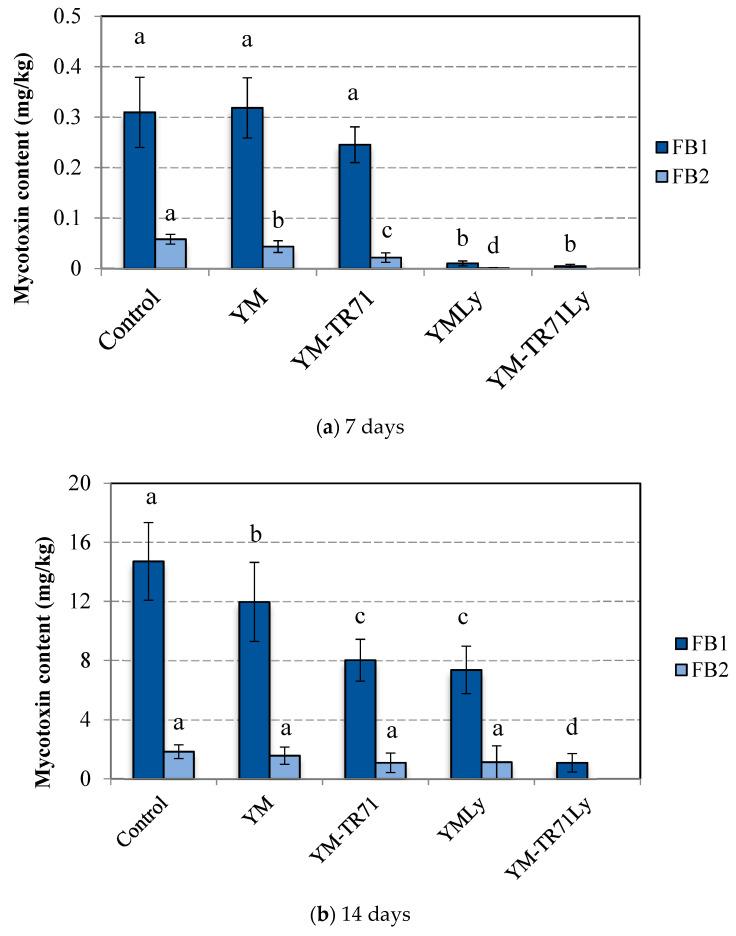
Corn () is a worldwide crop subjected to infection by toxigenic fungi such as during the pre-harvest stage. contamination can lead to the synthesis of highly toxic mycotoxins, such as Fumonisin B (FB) and Fumonisin B (FB), which compromises human and animal health. The work aimed to study the antifungal properties of fermented yellow and oriental mustard extracts using nine lactic acid bacteria (LAB) in vitro. Moreover, a chemical characterization of the main phenolic compounds and organic acids were carried out in the extracts. The results highlighted that the yellow mustard, fermented by strains, avoided the growth of spp. in vitro, showing Minimum Inhibitory Concentration (MIC) and Minimum Fungicidal Concentration (MFC) values, ranging from 7.8 to 15.6 g/L and 15.6 to 31.3 g/L, respectively. Then, the lyophilized yellow mustard fermented extract by TR71 was applied through spray-on corn ears contaminated with to study the antimycotoxigenic activity. After 14 days of incubation, the control contained 14.71 mg/kg of FB, while the treatment reduced the content to 1.09 mg/kg (92.6% reduction). Moreover, no FB was observed in the treated samples. The chemical characterization showed that lactic acid, 3-phenyllactic acid, and benzoic acid were the antifungal metabolites quantified in higher concentrations in the yellow mustard fermented extract with TR71. The results obtained confirmed the potential application of fermented mustard extracts as a solution to reduce the incidence of mycotoxins in corn ears.
玉米()是一种全球性作物,在收获前阶段容易受到产毒真菌如()的感染。污染可能导致合成高度有毒的真菌毒素,如伏马菌素 B(FB)和伏马菌素 B(FB),这会损害人类和动物的健康。本工作旨在研究使用九株乳酸菌(LAB)体外发酵的黄芥菜和东方芥末提取物的抗真菌特性。此外,对提取物中的主要酚类化合物和有机酸进行了化学特性分析。结果表明,由 菌株发酵的黄芥菜在体外避免了 种的生长,表现出最小抑菌浓度(MIC)和最小杀菌浓度(MFC)值,范围分别为 7.8 至 15.6 g/L 和 15.6 至 31.3 g/L。然后,将由 TR71 发酵的冻干黄芥菜提取物通过喷雾应用于被 污染的玉米穗,以研究其抗真菌毒素活性。经过 14 天的孵化,对照样品中含有 14.71 mg/kg 的 FB,而处理组将其含量降低至 1.09 mg/kg(降低 92.6%)。此外,在处理样品中未观察到 FB。化学特性分析表明,乳酸、3-苯乳酸和苯甲酸是在含有 TR71 的黄芥菜发酵提取物中定量浓度较高的抗真菌代谢产物。所得结果证实了发酵芥末提取物作为减少玉米穗中真菌毒素发生率的解决方案的潜在应用。

 Zotero 插件