Jamnik Polona, Mahnič Nik, Mrak Aleksandra, Pogačnik Lea, Jeršek Barbara, Niccolai Alberto, Masten Rutar Jasmina, Ogrinc Nives, Dušak Larisa, Ferjančič Blaž, Korošec Mojca, Cerar Ana, Lazar Borut, Lovše Urša, Pungert Tjaša, Fabjan Primož, Poklar Ulrih Nataša
Department of Food Science and Technology, Biotechnical Faculty, University of Ljubljana, Jamnikarjeva 101, 1000 Ljubljana, Slovenia.
Department of Agriculture, Food, Environment and Forestry (DAGRI), University of Florence, Piazzale delle Cascine 18, 50144 Florence, Italy.
Antioxidants (Basel). 2022 Jan 23;11(2):216. doi: 10.3390/antiox11020216.
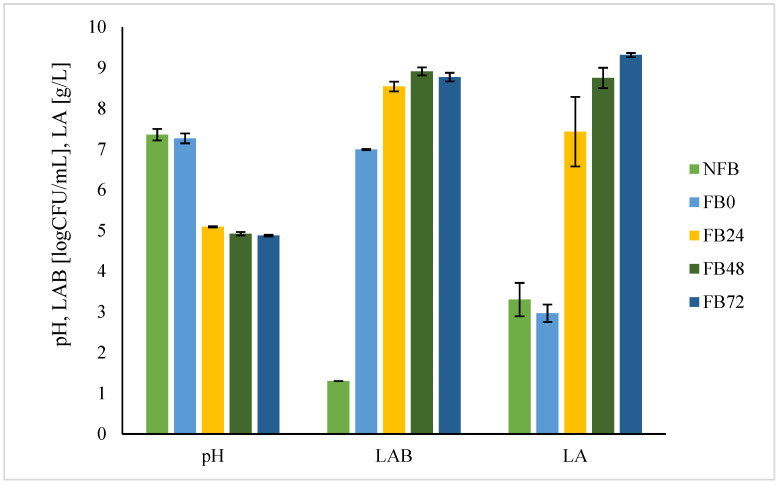
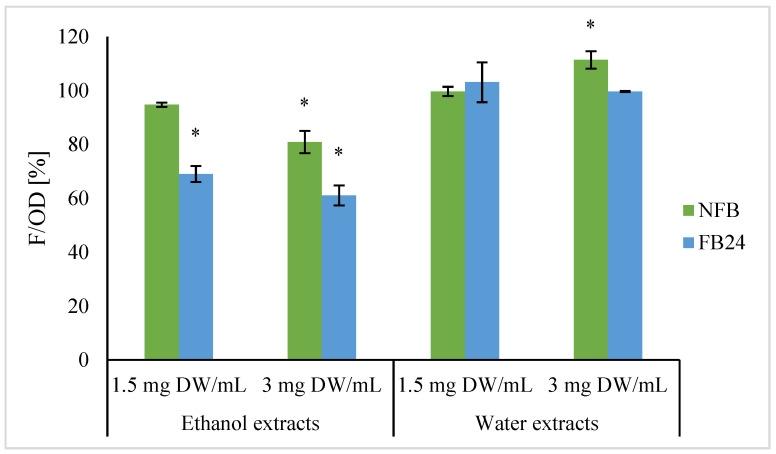
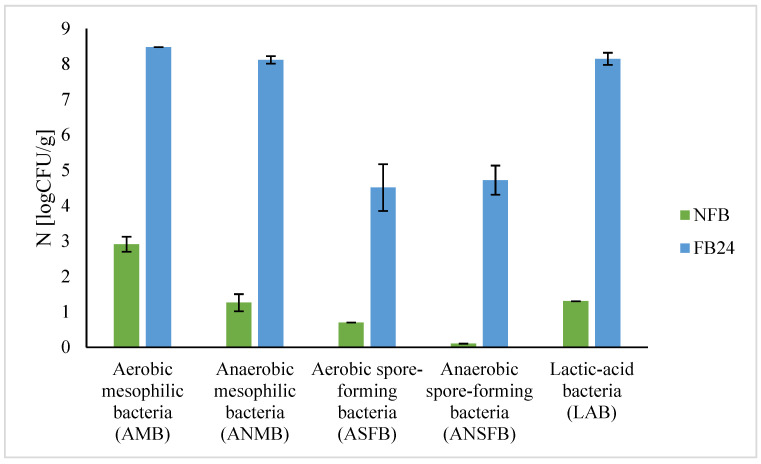
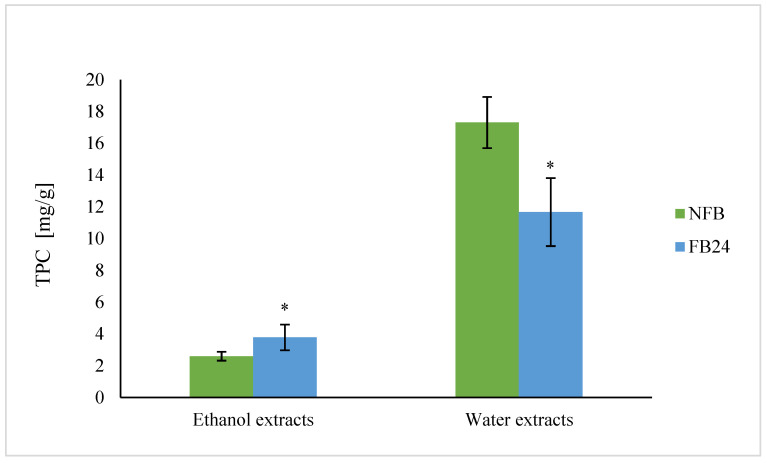
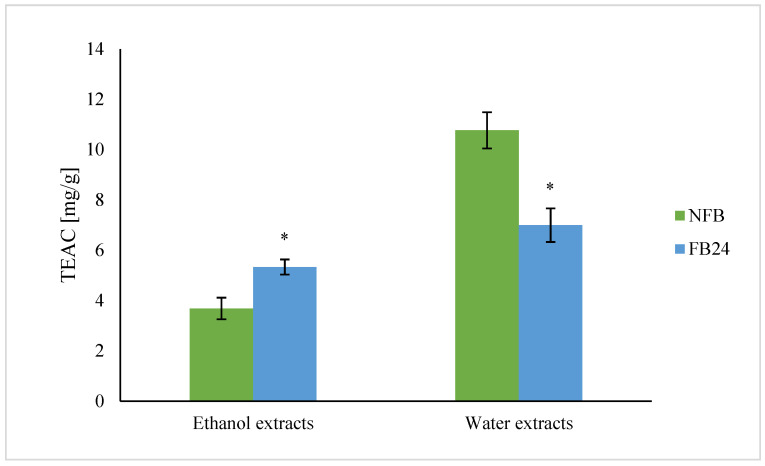
Lactic acid fermentation (LAF) is known to improve nutritional properties and functionality and to extend the shelf life of foods. We studied the LAF of as the sole substrate using as the starter culture. Fermented (FB) and non-fermented broth (NFB) were analysed by means of pH, lactic acid bacteria (LAB) count, lactic acid concentration, microbiological safety, and nutritional composition. Additionally, water and ethanol extracts were prepared on which total phenolic content, DPPH radical scavenging activity, and cellular antioxidant activity were determined. The maximum increase in LAB count and lactic acid concentration and drop in pH was observed in the first 24 h of fermentation. Total phenolic content and DPPH radical scavinging activity of ethanol extracts increased after fermentation compared with NFB. Ethanol extracts of FB have been shown as a potential source of antioxidants, which efficiently lowered oxidation level in the cells of yeast , as well as the oxidative damage of lipids. Additionally, the level of non-protein nitrogen increased, indicating higher protein bioavailability, and fat content decreased in comparison with NFB. No presence of pathogenic bacteria and low pH indicate enhancement of FB microbiological stability. Therefore, inclusion of fermented into food products could lead to added-value foods based on microalgae.
已知乳酸发酵(LAF)可改善食品的营养特性和功能,并延长其保质期。我们使用[具体名称未给出]作为发酵剂,研究了以[具体底物未给出]作为唯一底物的乳酸发酵。通过pH值、乳酸菌(LAB)计数、乳酸浓度、微生物安全性和营养成分对发酵肉汤(FB)和未发酵肉汤(NFB)进行了分析。此外,还制备了水提取物和乙醇提取物,并测定了其总酚含量、DPPH自由基清除活性和细胞抗氧化活性。在发酵的前24小时内,观察到LAB计数和乳酸浓度的最大增加以及pH值的下降。与NFB相比,发酵后乙醇提取物的总酚含量和DPPH自由基清除活性增加。FB的乙醇提取物已被证明是一种潜在的抗氧化剂来源,它能有效降低酵母[具体名称未给出]细胞中的氧化水平以及脂质的氧化损伤。此外,与NFB相比,非蛋白氮水平增加,表明蛋白质生物利用率更高,脂肪含量降低。未检测到病原菌且pH值较低,表明FB的微生物稳定性增强。因此,将发酵后的[具体名称未给出]添加到食品中可以生产出基于微藻的增值食品。