Institute of Biological Information Processing (IBI-7), Forschungszentrum Jülich, 52425 Jülich, Germany.
Institut für Physikalische Biologie, Heinrich-Heine-Universität Düsseldorf, 40225 Düsseldorf, Germany.
Biomolecules. 2022 Jan 18;12(2):157. doi: 10.3390/biom12020157.
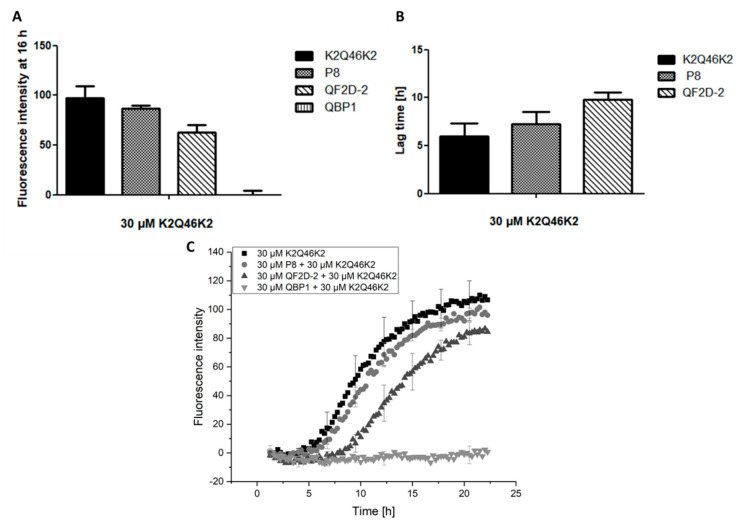
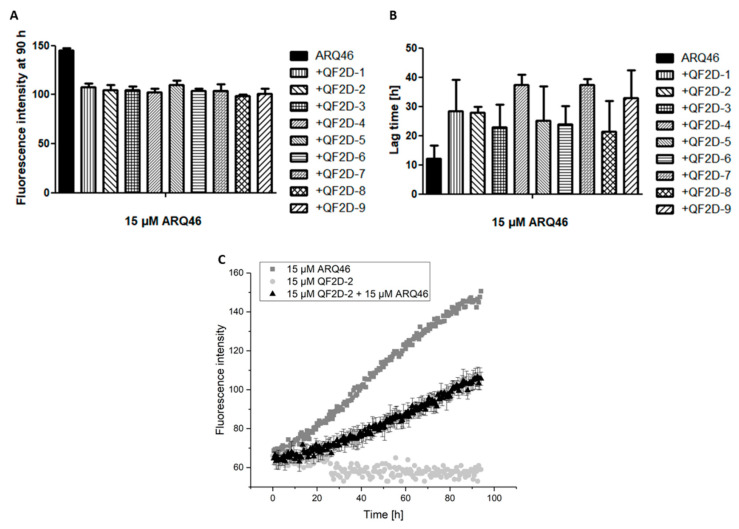
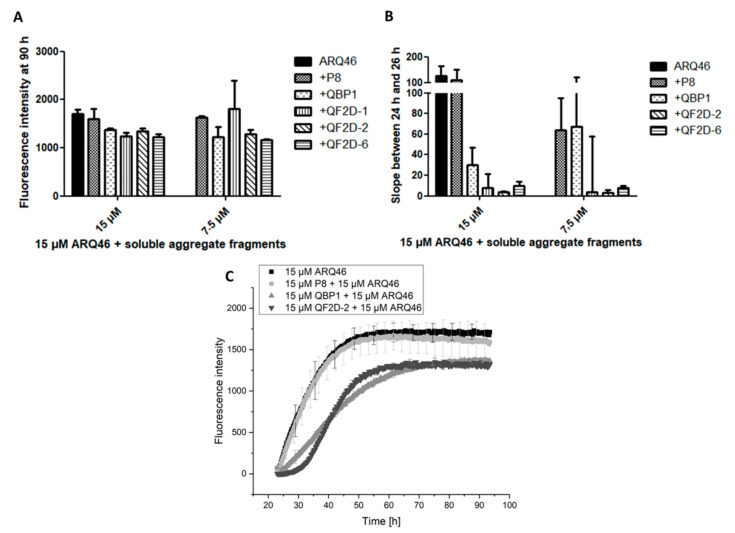
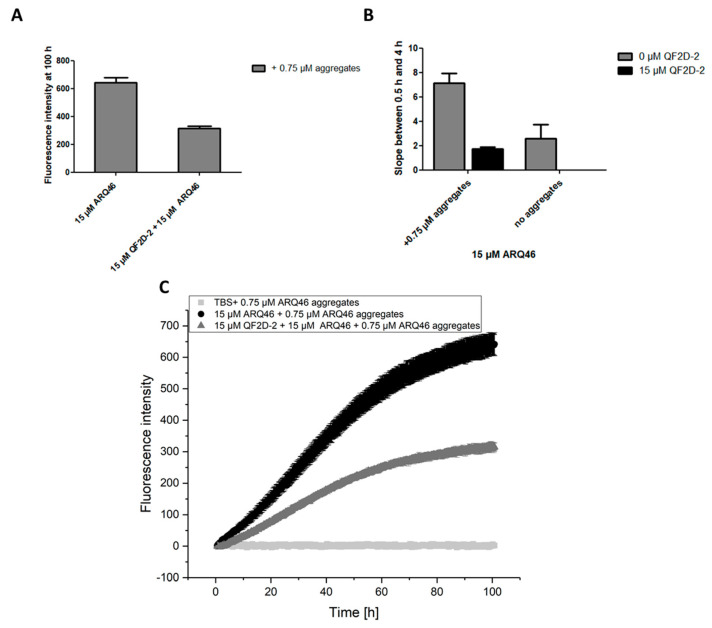
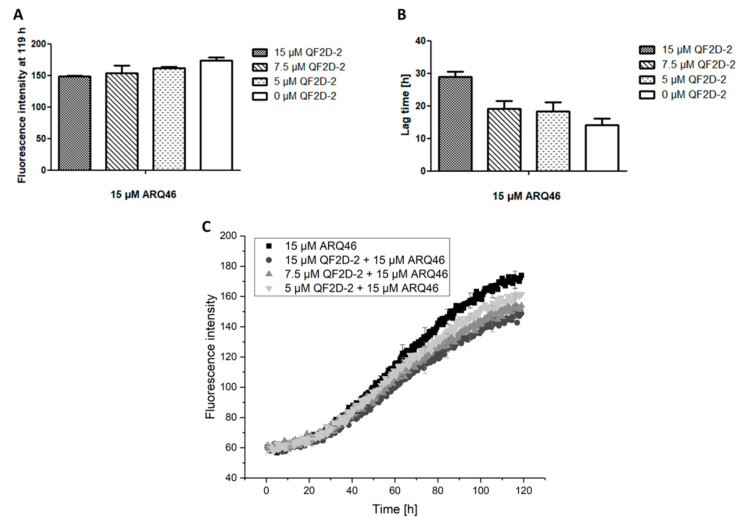
Nine heritable diseases are known that are caused by unphysiologically elongated polyglutamine tracts in human proteins leading to misfolding, aggregation and neurodegeneration. Current therapeutic strategies include efforts to inhibit the expression of the respective gene coding for the polyglutamine-containing proteins. There are, however, concerns that this may interfere with the physiological function of the respective protein. We aim to stabilize the protein's native conformation by D-enantiomeric peptide ligands to prevent misfolding and aggregation, shift the equilibrium between aggregates and monomers towards monomers and dissolve already existing aggregates into non-toxic and functional monomers. Here, we performed a mirror image phage display selection on the polyglutamine containing a fragment of the androgen receptor. An elongated polyglutamine tract in the androgen receptor causes spinal and bulbar muscular atrophy (SBMA). The selected D-enantiomeric peptides were tested for their ability to inhibit polyglutamine-induced androgen receptor aggregation. We identified D-enantiomeric peptide QF2D-2 (sqsqwstpqGkwshwprrr) as the most promising candidate. It binds to an androgen receptor fragment with 46 consecutive glutamine residues and decelerates its aggregation, even in seeded experiments. Therefore, QF2D-2 may be a promising drug candidate for SBMA treatment or even for all nine heritable polyglutamine diseases, since its aggregation-inhibiting property was shown also for a more general polyglutamine target.
已知有九种遗传性疾病是由人类蛋白质中生理上延长的多聚谷氨酰胺链引起的,这些多聚谷氨酰胺链导致错误折叠、聚集和神经退行性变。目前的治疗策略包括努力抑制编码含有多聚谷氨酰胺的蛋白质的基因的表达。然而,人们担心这可能会干扰相应蛋白质的生理功能。我们旨在通过 D-对映体肽配体稳定蛋白质的天然构象,以防止错误折叠和聚集,使聚集体和单体之间的平衡向单体转移,并将已存在的聚集体溶解为无毒和有功能的单体。在这里,我们在含有雄激素受体片段的多聚谷氨酰胺上进行了镜像噬菌体展示选择。雄激素受体中的长多聚谷氨酰胺链导致脊髓和延髓肌肉萎缩症(SBMA)。选择的 D-对映体肽被测试其抑制多聚谷氨酰胺诱导的雄激素受体聚集的能力。我们确定 D-对映体肽 QF2D-2(sqsqwstpqGkwshwprrr)是最有前途的候选物。它与含有 46 个连续谷氨酰胺残基的雄激素受体片段结合,并延缓其聚集,即使在接种实验中也是如此。因此,QF2D-2 可能是治疗 SBMA 的有前途的药物候选物,甚至可能是所有九种遗传性多聚谷氨酰胺疾病的候选物,因为其聚集抑制特性也显示在更一般的多聚谷氨酰胺靶标上。