Department of Biochemistry and Biomedical Sciences McMaster University, Hamilton, ON L8N 3Z5, Canada.
Genes (Basel). 2022 Feb 1;13(2):288. doi: 10.3390/genes13020288.
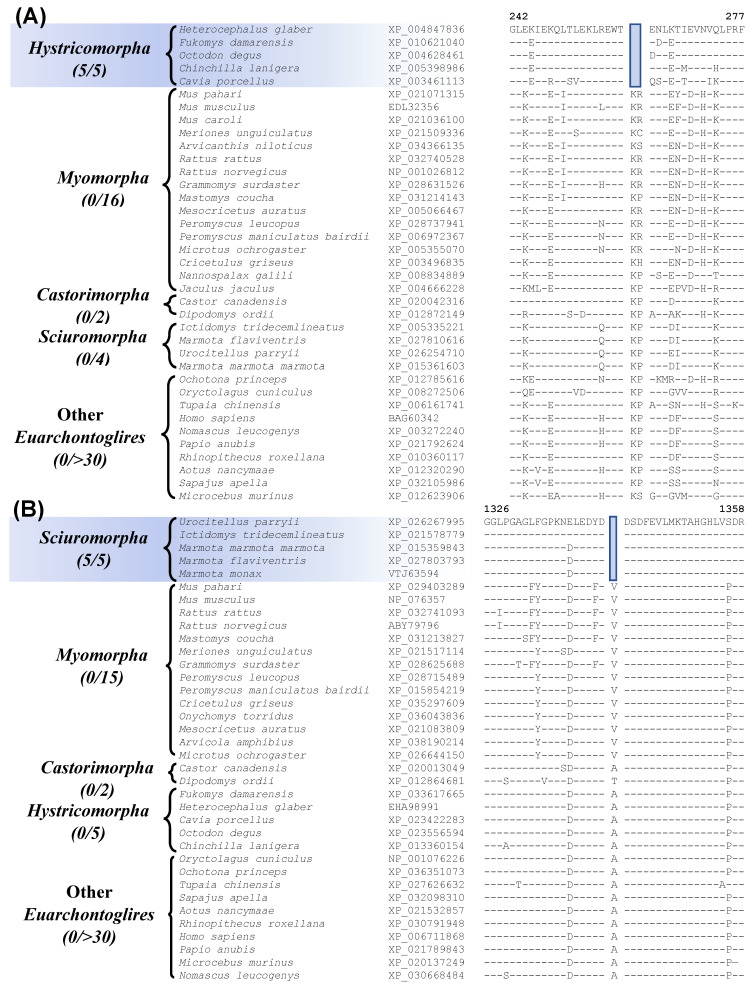
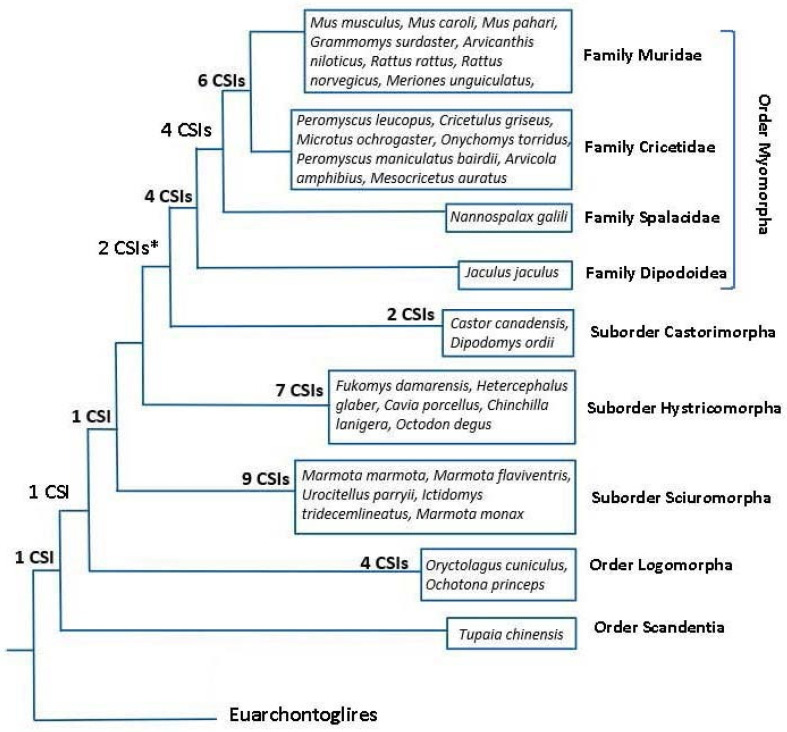
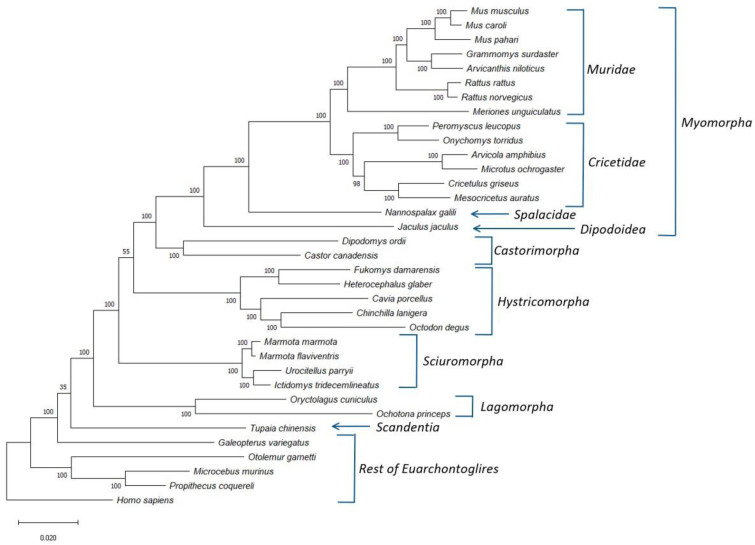
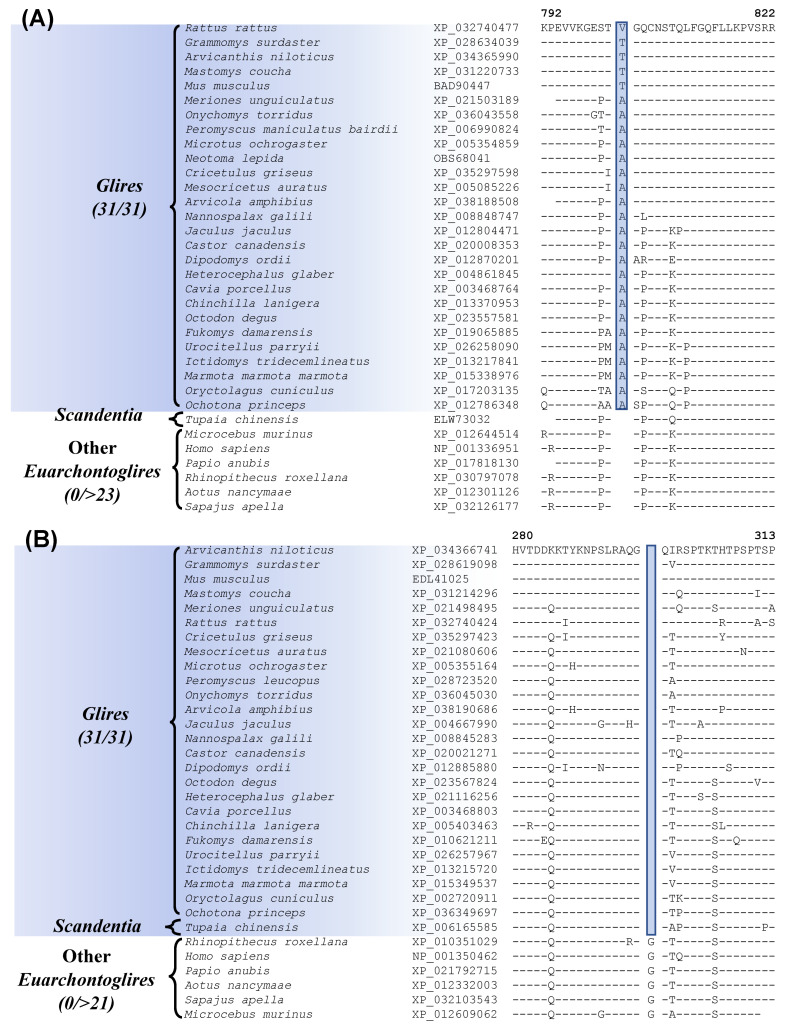
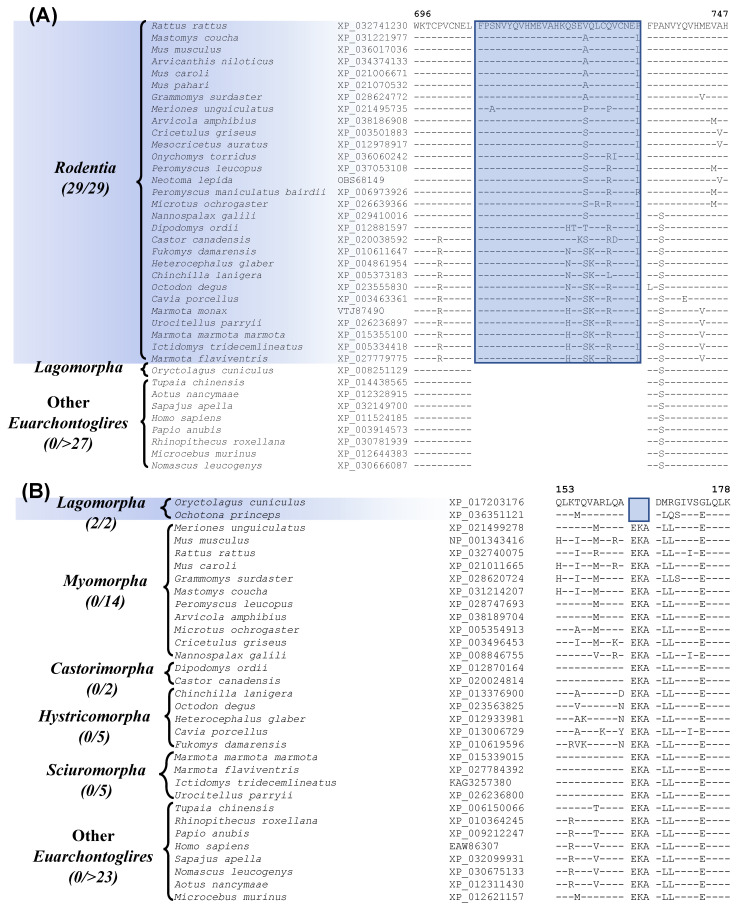
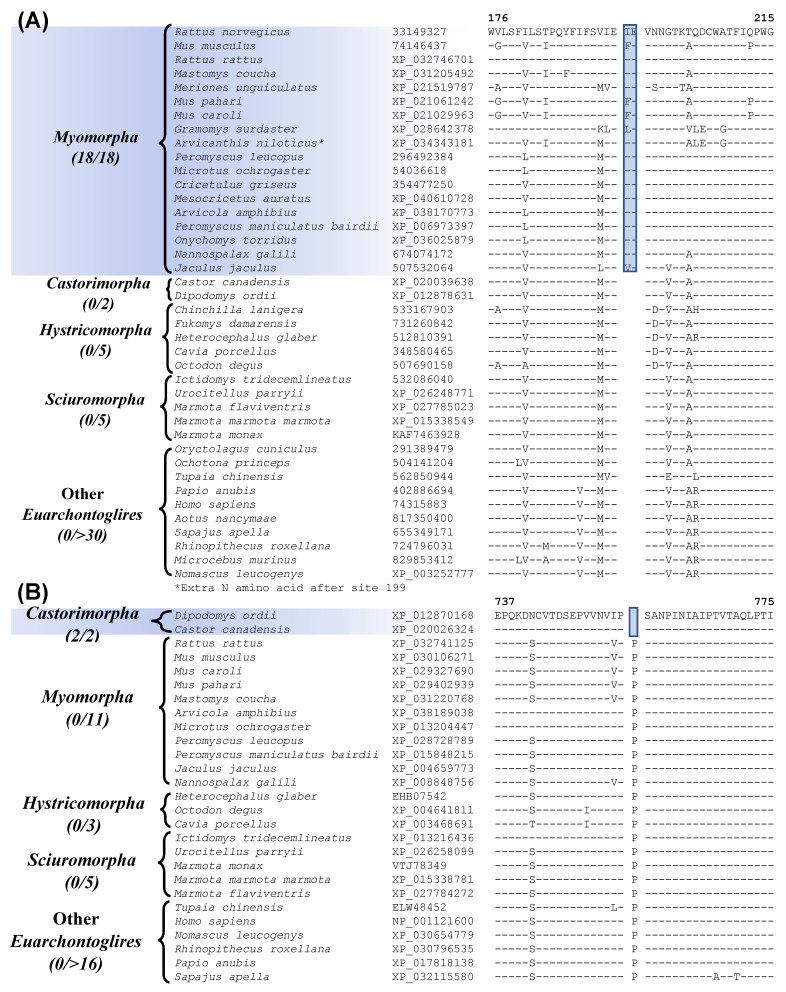
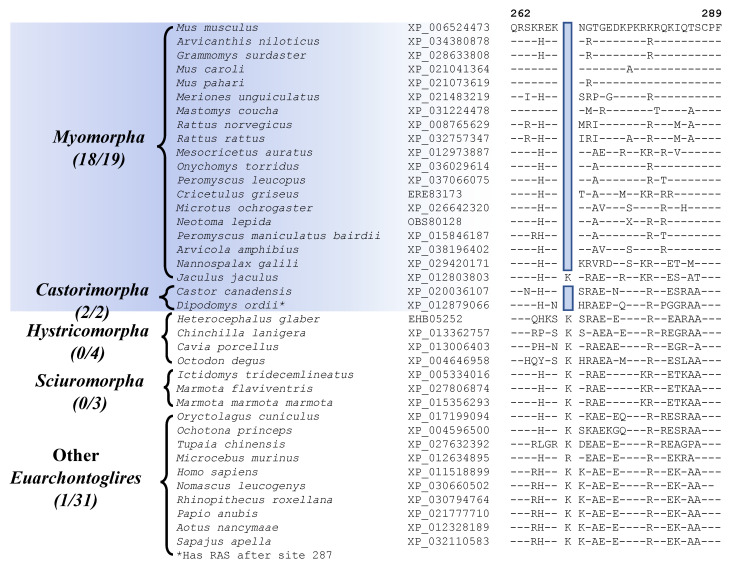
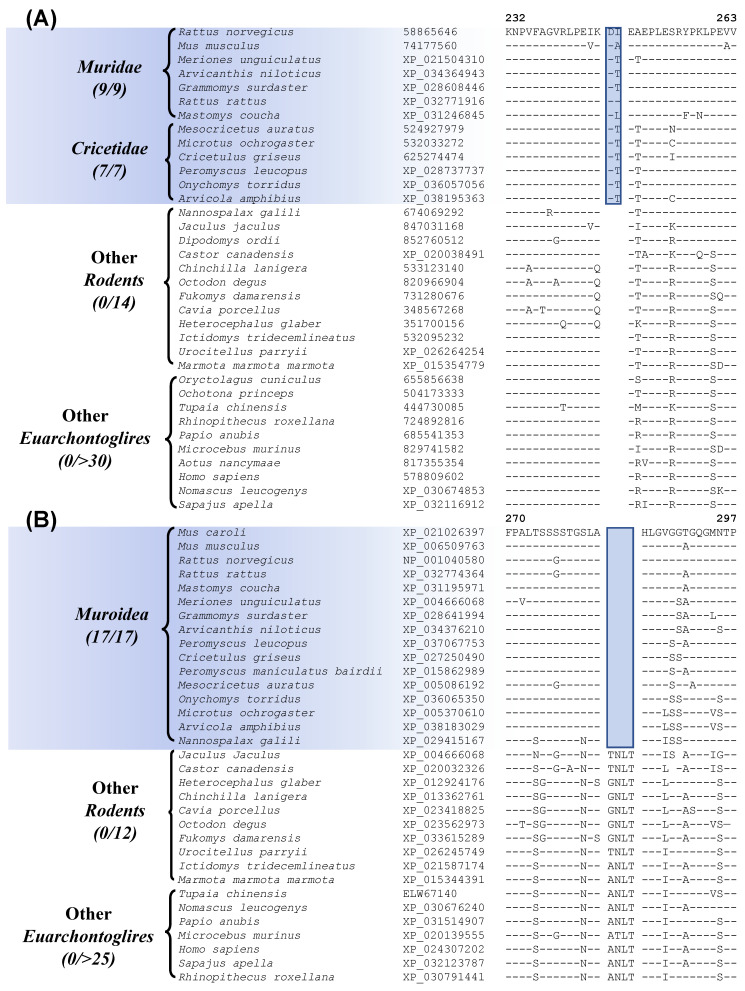
The grandorder Glires, consisting of the orders Rodentia and Lagomorpha, encompasses a significant portion of the extant mammalian species including Rat, Mouse, Squirrel, Guinea pig and Beaver. Glires species play an important role in the ecosystem and provide valuable animal models for genetic studies and animal testing. Thus, it is important to reliably determine their evolutionary relationships and identify molecular characteristics that are specific for different species groups within the Glires. In this work, we have constructed a phylogenetic tree for >30 genome sequenced Glires species based on concatenated sequences of 25 conserved proteins. In this tree, members of different orders, suborders, and families within Glires formed strongly supported clades, and their interrelationships were also generally reliably resolved. In parallel, we conducted comparative analyses on more than 1500 protein sequences from Glires species to identify highly conserved molecular markers. These markers were comprised of conserved signature indels (CSIs) in proteins, which are specific for different Rodentia/Glires clades. Of the 41 novel CSIs identified in this work, some are specific for the entire Glires, Rodentia, or Lagomorpha clades, whereas many others reliably demarcate different family/suborder level clades of Rodentia (viz. Myomorpha, Castorimorpha, Sciuromorpha, Hystricomorpha, and Muroidea). Additionally, some of the CSIs also provide information regarding the interrelationships among Rodentia subgroups. Our analysis has also identified one CSI that is commonly shared by the Glires and Scandentia species (tree shrew), however, its evolutionary significance is unclear. Several of the identifed rodents-specific CSIs are present in conserved disease-related proteins. Thus, they provide novel molecular markers for genetic and biochemical studies on the functions of these proteins.
巨核类动物包括啮齿目和兔形目,涵盖了大量现存哺乳动物物种,包括老鼠、小鼠、松鼠、豚鼠和海狸。巨核类动物在生态系统中起着重要作用,并为遗传研究和动物试验提供了有价值的动物模型。因此,可靠地确定它们的进化关系并确定特定于巨核类动物不同物种群的分子特征非常重要。在这项工作中,我们根据 25 种保守蛋白的串联序列构建了 30 多种基因组测序的巨核类动物的系统发育树。在这个树中,不同目、亚目和科的成员形成了强烈支持的分支,它们的相互关系也得到了可靠的解决。同时,我们对来自巨核类动物的 1500 多个蛋白质序列进行了比较分析,以确定高度保守的分子标记。这些标记由蛋白质中特定于不同啮齿目/巨核类动物分支的保守特征插入缺失(CSIs)组成。在这项工作中鉴定的 41 个新 CSI 中,有些是整个巨核类动物、啮齿目或兔形目分支的特异性,而许多其他 CSI 则可靠地标定了啮齿目不同的科/亚目水平分支(即鼠形亚目、河狸形亚目、松鼠形亚目、豪猪形亚目和鼠形目)。此外,一些 CSI 还提供了关于啮齿目亚组之间相互关系的信息。我们的分析还鉴定了一个 CSI,该 CSI 通常在巨核类动物和树鼩科物种(树鼩)中共享,但它的进化意义尚不清楚。一些鉴定出的啮齿目特异性 CSI 存在于保守的与疾病相关的蛋白质中。因此,它们为这些蛋白质功能的遗传和生化研究提供了新的分子标记。