Nam Dong-Geon, Kim Mina, Choe Jeong-Sook, Choi Ae-Jin
Division of Functional Food & Nutrition, Department of Agrofood Resources, National Institute of Agricultural Science, Rural Development Administration, Wanju-gun 55365, Korea.
Foods. 2022 Feb 10;11(4):508. doi: 10.3390/foods11040508.
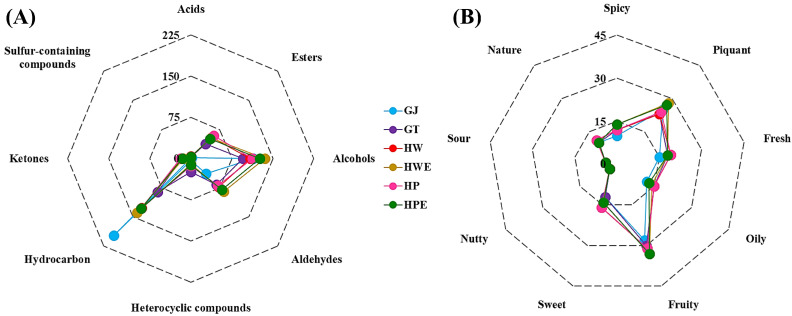
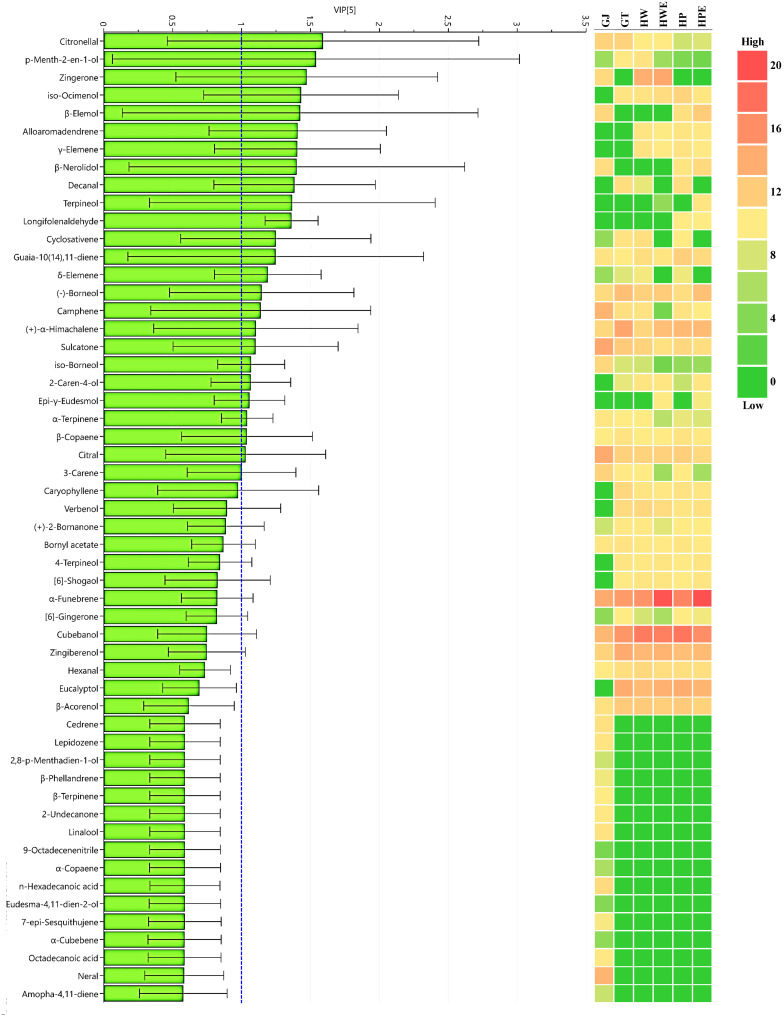
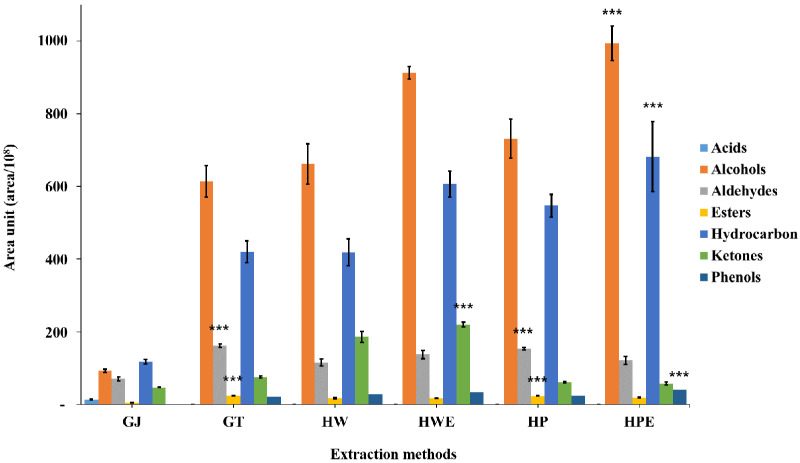
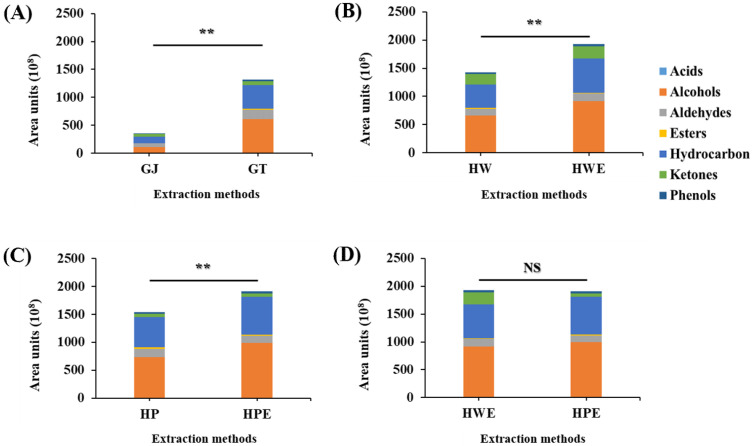
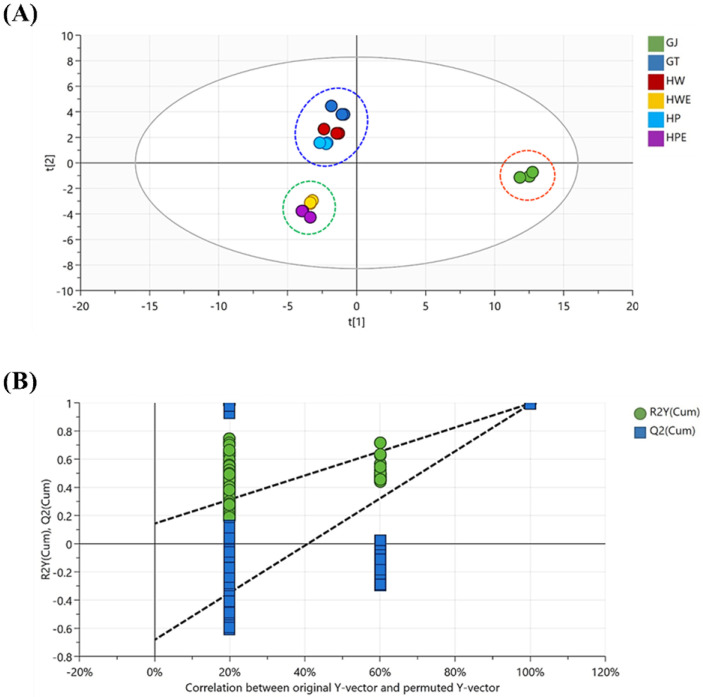
Ginger, a plant widely consumed worldwide, is used as a spice or to enhance the flavor of foods. In this study, the taste characteristics (gingerol, shogaol, and amino acid) of extracts treated with various solubilizing methods were objectively compared. In addition, an E-nose confirmed the flavor pattern combined with principal component analysis (PCA) between each extract gas chromatogram-tandem mass spectrometry was performed to compare and analyze volatile compounds between extraction methods. As a result, high-pressure enzyme-assisted extraction (HPE) and hydrothermal enzyme-assisted extraction (HWE) treatment effectively improved the extraction yield of ginger and the contents of gingerol and shogaol and removed the bitter taste. In addition, radar charts of both E-nose and PCA provided the distribution of flavor substances in HPE and HWE products of ginger. After enzyme-assisted treatment, a strong fruity and piquant flavor was noted. In conclusion, it is suggested that ginger extract of enzyme-assisted treatment has increased flavor compounds and can be an excellent food material.
姜是一种在全球广泛食用的植物,用作香料或用于增强食物的风味。在本研究中,对采用各种增溶方法处理的提取物的味道特征(姜辣素、姜烯酚和氨基酸)进行了客观比较。此外,电子鼻结合主成分分析(PCA)确认了风味模式,对各提取物进行了气相色谱 - 串联质谱分析,以比较和分析不同提取方法之间的挥发性化合物。结果表明,高压酶辅助提取(HPE)和水热酶辅助提取(HWE)处理有效地提高了姜的提取率以及姜辣素和姜烯酚的含量,并去除了苦味。此外,电子鼻和PCA的雷达图显示了姜的HPE和HWE产品中风味物质的分布。酶辅助处理后,呈现出浓郁的果香和辛辣味。总之,酶辅助处理的姜提取物风味化合物增加,可成为优质的食品原料。