• 文献检索
  • 文档翻译
  • 深度研究
  • 学术资讯
  • Suppr Zotero 插件Zotero 插件
  • 邀请有礼
  • 套餐&价格
  • 历史记录
应用&插件
Suppr Zotero 插件Zotero 插件浏览器插件Mac 客户端Windows 客户端微信小程序
定价
高级版会员购买积分包购买API积分包
服务
文献检索文档翻译深度研究API 文档MCP 服务
关于我们
关于 Suppr公司介绍联系我们用户协议隐私条款
关注我们

Suppr 超能文献

核心技术专利:CN118964589B侵权必究
粤ICP备2023148730 号-1Suppr @ 2026

文献检索

告别复杂PubMed语法,用中文像聊天一样搜索,搜遍4000万医学文献。AI智能推荐,让科研检索更轻松。

立即免费搜索

文件翻译

保留排版,准确专业,支持PDF/Word/PPT等文件格式,支持 12+语言互译。

免费翻译文档

深度研究

AI帮你快速写综述,25分钟生成高质量综述,智能提取关键信息,辅助科研写作。

立即免费体验

分级医疗体系下基层医疗卫生机构的服务能力

The Service Capability of Primary Health Institutions under the Hierarchical Medical System.

作者信息

Liu Shuo, Lin Jintao, He Yiwen, Xu Junfang

机构信息

School of Public Health, Zhejiang University School of Medicine, Hangzhou 310058, China.

出版信息

Healthcare (Basel). 2022 Feb 10;10(2):335. doi: 10.3390/healthcare10020335.

DOI:10.3390/healthcare10020335
PMID:35206949
原文链接:https://pmc.ncbi.nlm.nih.gov/articles/PMC8872352/
Abstract

BACKGROUND

Primary health institutions (PHIs) are the foundation of the whole health system and the basic link to achieve the goal of all people enjoying primary health care. However, the service capability of primary health institutions is not under the hierarchical medical system.

METHOD

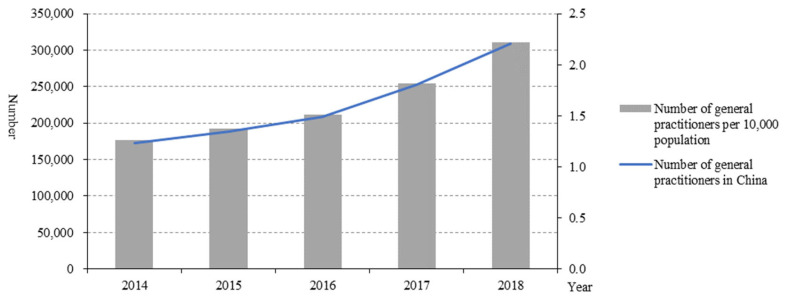
Data were collected from the between 2014 and 2020. PHIs included community health centres, community health stations, and township hospitals in our study. The service capability of primary health institutions was analysed from the perspective of structure, process, and results. Structure capability was evaluated using the number of beds, number of personnel, number of health technicians, and proportion of the number of personnel in PHIs accounting for the total number of health personnel. Process capability was evaluated using the number of general practitioners. The number of outpatients and inpatients, medical income, the proportion of drug income, and the average number of patients and beds served by physicians in PHIs per day were employed to evaluate the resulting capability.

RESULTS

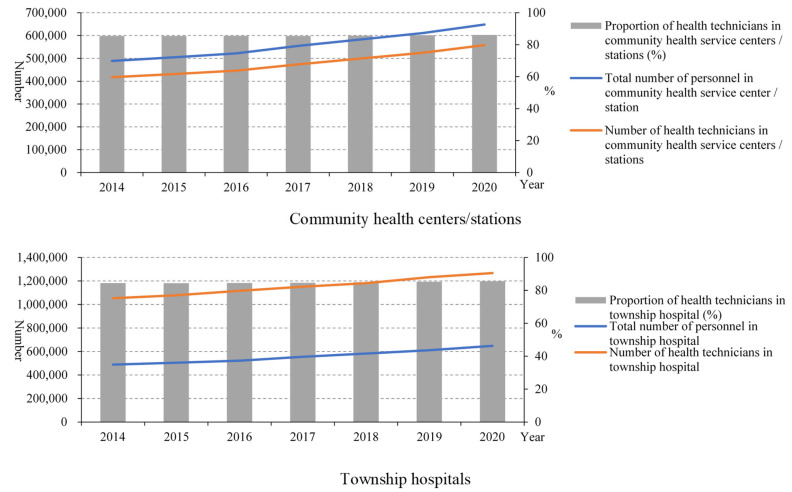
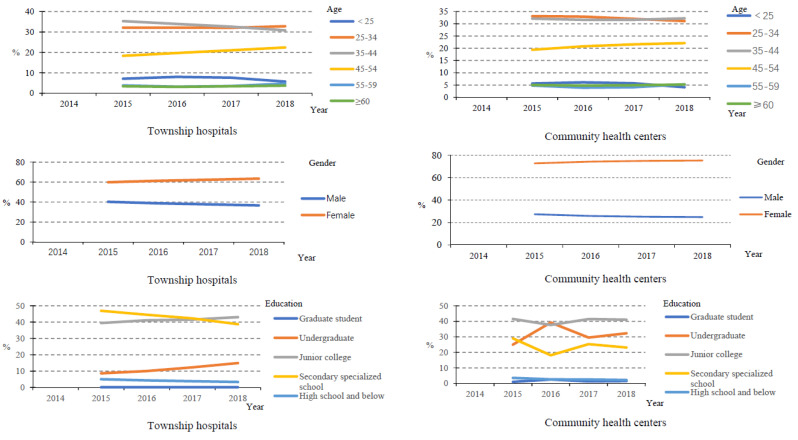
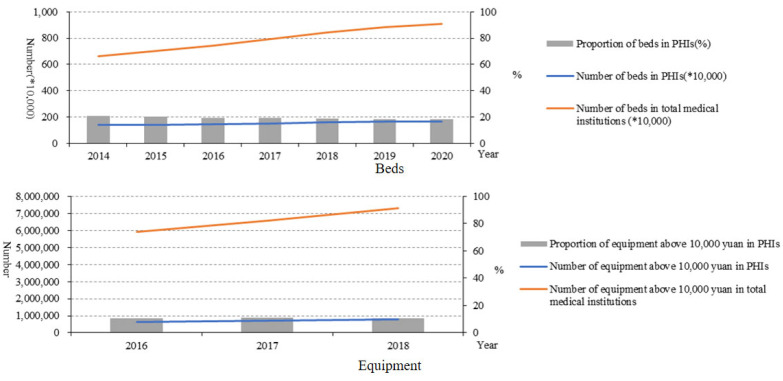
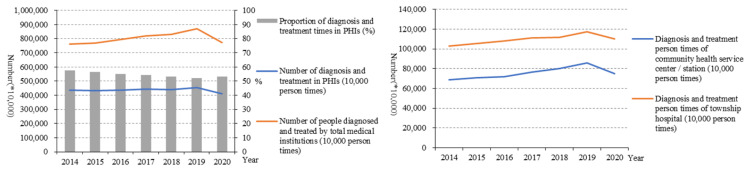
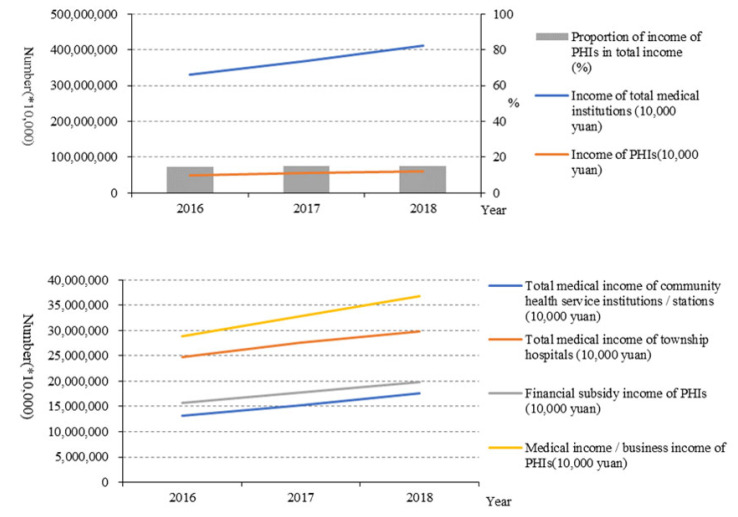
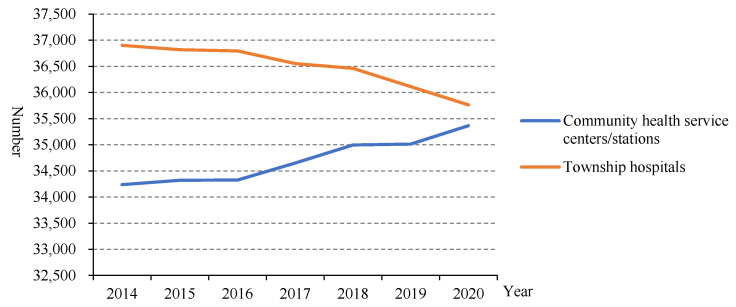
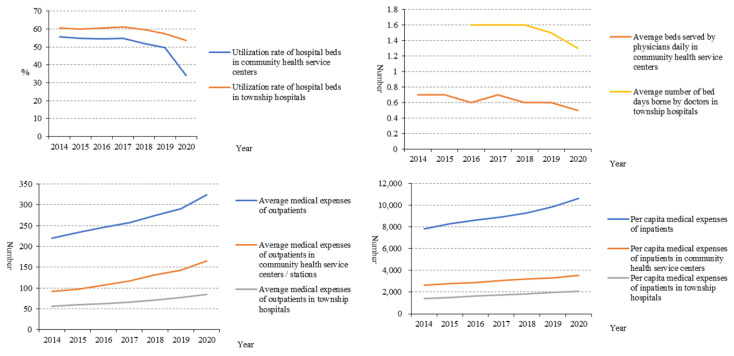
From 2014 to 2020, the number of community health service centres/stations increased, while the number of township health centres decreased. In the aspect of structure capability, the total number of personnel and health technicians in community health centres/stations and township hospitals both increased during 2014 and 2020. However, the increasing rate in PHIs was a little bit less than that of general medical institutions. The proportion of male health technicians in community health centres and township hospitals both decreased, while the proportion of female technicians in both increased. From 2014 to 2020, the number of beds in PHIs also increased from 138.12 × 10 to 164.94 × 10. However, the proportion of beds in PHIs accounting for the total number of beds in medical institutions decreased. For the resulting capability, from 2014 to 2019, the proportion of diagnosis and treatment times in PHIs decreased from 57.41% to 51.96%, although it increased in 2020. The proportion of inpatients in PHIs decreased from 20.03% to 16.11%. From 2014 to 2020, the utilisation rate of hospital beds in PHIs decreased (from 55.6% to 34% for community health centres and 60.5% to 53.6% for township hospitals). The average daily bed days of doctors in township hospitals was higher than that of doctors in community health service centres. However, the average medical cost of outpatients and the per capita medical cost of inpatients in community health service centres were higher than in township hospitals.

CONCLUSION

In recent years, although the service capability showed an increasing trend in PHIs, the growth rate was lower than the general health institutions. The utilisation rates of PHIs, including beds and physicians, were decreased. Among PHIs, the utilisation in township hospitals was higher than in community health centres with a relatively low price. Under the hierarchical medical system and normalisation period of the COVID-19 epidemic, it is important to improve the service capability to achieve its goal of increasing PHI utilisation and decreasing secondary and tertiary hospital utilisation.
https://cdn.ncbi.nlm.nih.gov/pmc/blobs/fbe0/8872352/b4ed6d8c326b/healthcare-10-00335-g008.jpg
https://cdn.ncbi.nlm.nih.gov/pmc/blobs/fbe0/8872352/04f10fb10e21/healthcare-10-00335-g001.jpg
https://cdn.ncbi.nlm.nih.gov/pmc/blobs/fbe0/8872352/172fc0a25197/healthcare-10-00335-g002.jpg
https://cdn.ncbi.nlm.nih.gov/pmc/blobs/fbe0/8872352/8d8fe0fa1c77/healthcare-10-00335-g003.jpg
https://cdn.ncbi.nlm.nih.gov/pmc/blobs/fbe0/8872352/421e76dcd38c/healthcare-10-00335-g004.jpg
https://cdn.ncbi.nlm.nih.gov/pmc/blobs/fbe0/8872352/47048c6342bb/healthcare-10-00335-g005.jpg
https://cdn.ncbi.nlm.nih.gov/pmc/blobs/fbe0/8872352/6d5c4c541657/healthcare-10-00335-g006.jpg
https://cdn.ncbi.nlm.nih.gov/pmc/blobs/fbe0/8872352/a22cccc30c71/healthcare-10-00335-g007.jpg
https://cdn.ncbi.nlm.nih.gov/pmc/blobs/fbe0/8872352/b4ed6d8c326b/healthcare-10-00335-g008.jpg
https://cdn.ncbi.nlm.nih.gov/pmc/blobs/fbe0/8872352/04f10fb10e21/healthcare-10-00335-g001.jpg
https://cdn.ncbi.nlm.nih.gov/pmc/blobs/fbe0/8872352/172fc0a25197/healthcare-10-00335-g002.jpg
https://cdn.ncbi.nlm.nih.gov/pmc/blobs/fbe0/8872352/8d8fe0fa1c77/healthcare-10-00335-g003.jpg
https://cdn.ncbi.nlm.nih.gov/pmc/blobs/fbe0/8872352/421e76dcd38c/healthcare-10-00335-g004.jpg
https://cdn.ncbi.nlm.nih.gov/pmc/blobs/fbe0/8872352/47048c6342bb/healthcare-10-00335-g005.jpg
https://cdn.ncbi.nlm.nih.gov/pmc/blobs/fbe0/8872352/6d5c4c541657/healthcare-10-00335-g006.jpg
https://cdn.ncbi.nlm.nih.gov/pmc/blobs/fbe0/8872352/a22cccc30c71/healthcare-10-00335-g007.jpg
https://cdn.ncbi.nlm.nih.gov/pmc/blobs/fbe0/8872352/b4ed6d8c326b/healthcare-10-00335-g008.jpg
摘要

背景

基层医疗卫生机构是整个医疗卫生体系的基础,是实现人人享有基本医疗卫生服务目标的基本环节。然而,基层医疗卫生机构的服务能力不在分级医疗体系之内。

方法

收集2014年至2020年期间的数据。本研究中的基层医疗卫生机构包括社区卫生服务中心、社区卫生服务站和乡镇卫生院。从结构、过程和结果三个维度分析基层医疗卫生机构的服务能力。结构能力通过床位数量、人员数量、卫生技术人员数量以及基层医疗卫生机构人员数量占卫生人员总数的比例来评估。过程能力通过全科医生数量来评估。基层医疗卫生机构的门诊人次、住院人次、医疗收入、药品收入占比以及医生每日服务的患者和床位数平均值用于评估结果能力。

结果

2014年至2020年,社区卫生服务中心/站数量增加,而乡镇卫生院数量减少。在结构能力方面,2014年至2020年期间,社区卫生服务中心/站和乡镇卫生院的人员总数和卫生技术人员数量均有所增加。然而,基层医疗卫生机构的增长率略低于综合医疗机构。社区卫生服务中心和乡镇卫生院男性卫生技术人员的比例均下降,而女性卫生技术人员的比例均上升。2014年至2020年,基层医疗卫生机构的床位数也从138.12×10增加到164.94×10。然而,基层医疗卫生机构床位数占医疗机构总床位数的比例下降。在结果能力方面,2014年至2019年,基层医疗卫生机构的诊疗人次占比从57.41%降至51.96%,尽管2020年有所上升。基层医疗卫生机构的住院患者占比从20.03%降至16.11%。2014年至2020年,基层医疗卫生机构的病床使用率下降(社区卫生服务中心从55.6%降至34%,乡镇卫生院从60.5%降至53.6%)。乡镇卫生院医生的日均床日数高于社区卫生服务中心医生。然而,社区卫生服务中心门诊患者的平均医疗费用和住院患者的人均医疗费用高于乡镇卫生院。

结论

近年来,虽然基层医疗卫生机构的服务能力呈上升趋势,但增长率低于综合医疗机构。基层医疗卫生机构包括床位和医生的使用率均下降。在基层医疗卫生机构中,乡镇卫生院的使用率高于社区卫生服务中心,且价格相对较低。在分级医疗体系和新冠肺炎疫情常态化时期,提高服务能力对于实现提高基层医疗卫生机构利用率和降低二级及三级医院利用率的目标至关重要。

相似文献

1
The Service Capability of Primary Health Institutions under the Hierarchical Medical System.分级医疗体系下基层医疗卫生机构的服务能力
Healthcare (Basel). 2022 Feb 10;10(2):335. doi: 10.3390/healthcare10020335.
2
[Retrospective analysis of diagnosis and treatment of tuberculosis in designated medical institutions in China from 2017 to 2022].[2017年至2022年中国指定医疗机构结核病诊疗情况的回顾性分析]
Zhonghua Jie He He Hu Xi Za Zhi. 2024 May 12;47(5):437-443. doi: 10.3760/cma.j.cn112147-20240108-00013.
3
Impact of universal medical insurance system on the accessibility of medical service supply and affordability of patients in China.全民医疗保险制度对中国医疗服务供给可及性和患者负担能力的影响。
PLoS One. 2018 Mar 7;13(3):e0193273. doi: 10.1371/journal.pone.0193273. eCollection 2018.
4
Comparison of inpatient distribution amongst different medical alliances in a county: a longitudinal study on a healthcare reform in rural China.不同医疗联盟在一个县的住院分布比较:中国农村医疗卫生改革的纵向研究。
Int J Equity Health. 2020 Aug 20;19(1):142. doi: 10.1186/s12939-020-01260-x.
5
Analysis of government investment in primary healthcare institutions to promote equity during the three-year health reform program in China.分析中国三年医改期间政府对基层医疗机构的投资在促进公平性方面的作用。
BMC Health Serv Res. 2013 Mar 25;13:114. doi: 10.1186/1472-6963-13-114.
6
Efficiency and equity of bed utilization in China's health institutions: based on the rank-sum ratio method.中国医疗机构床位利用的效率与公平性:基于秩和比法。
Int J Equity Health. 2023 Sep 2;22(1):177. doi: 10.1186/s12939-023-01986-4.
7
Mobility of primary health care workers in China.中国基层医疗工作者的流动状况。
Hum Resour Health. 2009 Mar 17;7:24. doi: 10.1186/1478-4491-7-24.
8
Rural-to-Urban Migrants' Experiences with Primary Care under Different Types of Medical Institutions in Guangzhou, China.中国广州不同类型医疗机构下农村进城务工人员的基层医疗服务体验
PLoS One. 2015 Oct 16;10(10):e0140922. doi: 10.1371/journal.pone.0140922. eCollection 2015.
9
Medical doctors profile in Ethiopia: production, attrition and retention. In memory of 100-years Ethiopian modern medicine & the new Ethiopian millennium.埃塞俄比亚医生概况:培养、流失与留存。纪念埃塞俄比亚现代医学百年及新千年。
Ethiop Med J. 2008 Jan;46 Suppl 1:1-77.
10
Primary Health Institutions and Service Quality in China: Implications for Health Policy.中国的基层医疗机构与服务质量:对卫生政策的启示。
Int J Environ Res Public Health. 2022 Sep 23;19(19):12063. doi: 10.3390/ijerph191912063.

引用本文的文献

1
Developing an Evaluation Index System for Service Capability of Internet Hospitals in China: Mixed Methods Study.构建中国互联网医院服务能力评估指标体系:混合方法研究
J Med Internet Res. 2025 Jul 25;27:e72931. doi: 10.2196/72931.
2
Impact of China's primary healthcare reforms on utilisation, payments and self-reported health: a quasi-experimental analysis of a middle-aged and older cohort 2011-2018.中国基层医疗改革对医疗服务利用、支付及自我报告健康状况的影响:对2011 - 2018年中老年队列的准实验分析
BMJ Public Health. 2025 Mar 23;3(1):e001595. doi: 10.1136/bmjph-2024-001595. eCollection 2025 Jan.
3
Older adult's acceptance and uptake of referral after screening for cognitive impairment: a cross-sectional study in China.

本文引用的文献

1
Factors Contributing to Patients' Preferences for Primary Health Care Institutions in China: A Qualitative Study.影响中国患者对基层医疗卫生机构偏好的因素:一项定性研究
Front Public Health. 2020 Aug 18;8:414. doi: 10.3389/fpubh.2020.00414. eCollection 2020.
2
The quality of primary care in community health centers: comparison among urban, suburban and rural users in Shanghai, China.社区卫生服务中心的初级保健质量:中国上海城市、郊区和农村使用者之间的比较。
BMC Fam Pract. 2020 Aug 27;21(1):178. doi: 10.1186/s12875-020-01250-6.
3
Flexible surge capacity - public health, public education, and disaster management.
老年人认知功能障碍筛查后对转诊的接受和采纳情况:一项中国的横断面研究
BMC Geriatr. 2025 Mar 15;25(1):178. doi: 10.1186/s12877-025-05824-w.
4
Prediction of outpatient rehabilitation patient preferences and optimization of graded diagnosis and treatment based on XGBoost machine learning algorithm.基于XGBoost机器学习算法的门诊康复患者偏好预测及分级诊疗优化
Front Artif Intell. 2025 Jan 15;7:1473837. doi: 10.3389/frai.2024.1473837. eCollection 2024.
5
The challenge of home and community older adult care in China: a survey of the capability of primary care physicians in providing geriatric healthcare services.中国居家与社区老年人护理面临的挑战:基层医疗医生提供老年医疗服务能力的调查
Front Public Health. 2024 Dec 23;12:1464718. doi: 10.3389/fpubh.2024.1464718. eCollection 2024.
6
The association of social networks with the job performance of primary health care professionals: the mediating effect of knowledge sharing.社交网络与基层医疗保健专业人员工作绩效的关联:知识共享的中介作用。
Front Med (Lausanne). 2024 Oct 3;11:1324939. doi: 10.3389/fmed.2024.1324939. eCollection 2024.
7
Spatial effects of township health centers' health resource allocation efficiency in China.中国乡镇卫生院卫生资源配置效率的空间效应。
Front Public Health. 2024 Aug 16;12:1420867. doi: 10.3389/fpubh.2024.1420867. eCollection 2024.
8
Assessing public health service capability of primary healthcare personnel: a large-scale survey in Henan Province, China.评估基层医疗卫生人员的公共卫生服务能力:中国河南省的一项大规模调查。
BMC Health Serv Res. 2024 May 14;24(1):627. doi: 10.1186/s12913-024-11070-4.
9
Inspecting the "health poverty trap" mechanism: self-reinforcing effect and endogenous force.审视“健康贫困陷阱”机制:自我强化效应与内生动力。
BMC Public Health. 2024 Mar 28;24(1):917. doi: 10.1186/s12889-024-18464-3.
10
Equity and efficiency of health resource allocation in township health centers in Sichuan Province, China.中国四川省乡镇卫生院卫生资源配置的公平与效率。
PLoS One. 2024 Mar 5;19(3):e0299988. doi: 10.1371/journal.pone.0299988. eCollection 2024.
灵活的应急能力——公共卫生、公共教育和灾害管理。
Health Promot Perspect. 2020 Jul 12;10(3):175-179. doi: 10.34172/hpp.2020.30. eCollection 2020.
4
Differences in regional distribution and inequality in health-resource allocation at hospital and primary health centre levels: a longitudinal study in Shanghai, China.医院和基层医疗卫生机构卫生资源配置的区域分布差异和不平等:中国上海市的纵向研究。
BMJ Open. 2020 Jul 19;10(7):e035635. doi: 10.1136/bmjopen-2019-035635.
5
The Mixed Effect of China's New Health Care Reform on Health Insurance Coverage and the Efficiency of Health Service Utilisation: A Longitudinal Approach.中国新医改对医疗保险覆盖范围和卫生服务利用效率的混合影响:纵向研究。
Int J Environ Res Public Health. 2020 Mar 9;17(5):1782. doi: 10.3390/ijerph17051782.
6
Gatekeeping and the utilization of community health services in Shenzhen, China: A cross-sectional study.中国深圳社区卫生服务的守门作用与利用情况:一项横断面研究。
Medicine (Baltimore). 2017 Sep;96(38):e7719. doi: 10.1097/MD.0000000000007719.
7
China's health care system reform: Progress and prospects.中国医疗体系改革:进展与前景。
Int J Health Plann Manage. 2017 Jul;32(3):240-253. doi: 10.1002/hpm.2424. Epub 2017 Jun 14.
8
Community health centers and primary care access and quality for chronically-ill patients - a case-comparison study of urban Guangdong Province, China.社区卫生中心与慢性病患者的初级医疗服务可及性及质量——中国广东省城市地区的病例对照研究
Int J Equity Health. 2015 Nov 30;14:90. doi: 10.1186/s12939-015-0222-7.
9
The development of urban community health centres for strengthening primary care in China: a systematic literature review.中国发展城市社区卫生服务中心以加强基层医疗保健:系统文献回顾。
Br Med Bull. 2015;116:139-53. doi: 10.1093/bmb/ldv043. Epub 2015 Nov 17.
10
Transformation of the education of health professionals in China: progress and challenges.中国卫生专业人才培养模式的转变:进展与挑战。
Lancet. 2014 Aug 30;384(9945):819-27. doi: 10.1016/S0140-6736(14)61307-6.