Tikhonov Denis B, Zhorov Boris S
I.M. Sechenov Institute of Evolutionary Physiology and Biochemistry, Russian Academy of Sciences, 194223 St. Petersburg, Russia.
Membranes (Basel). 2022 Feb 16;12(2):229. doi: 10.3390/membranes12020229.
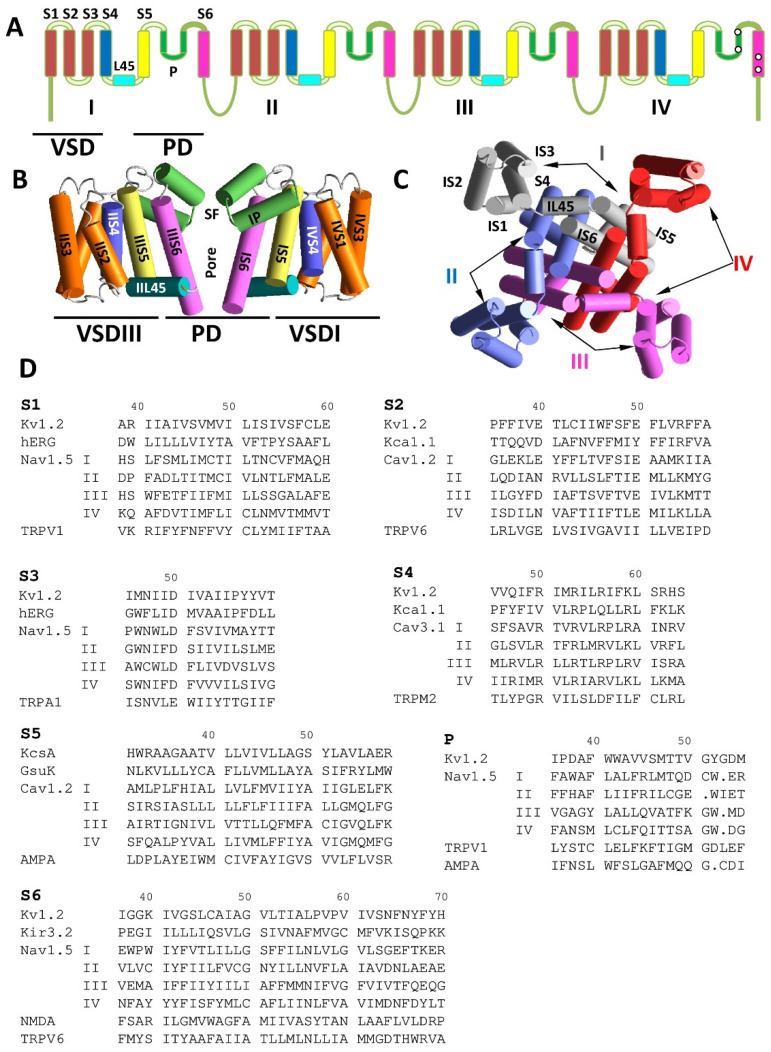
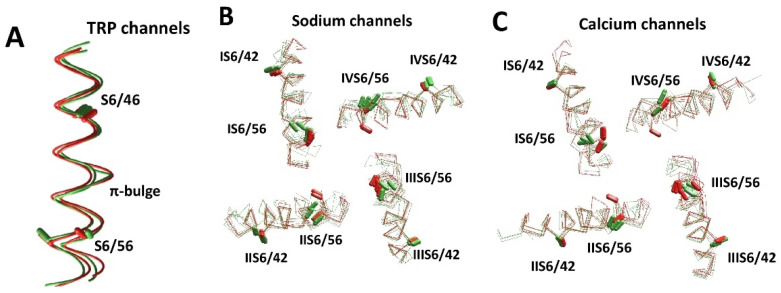
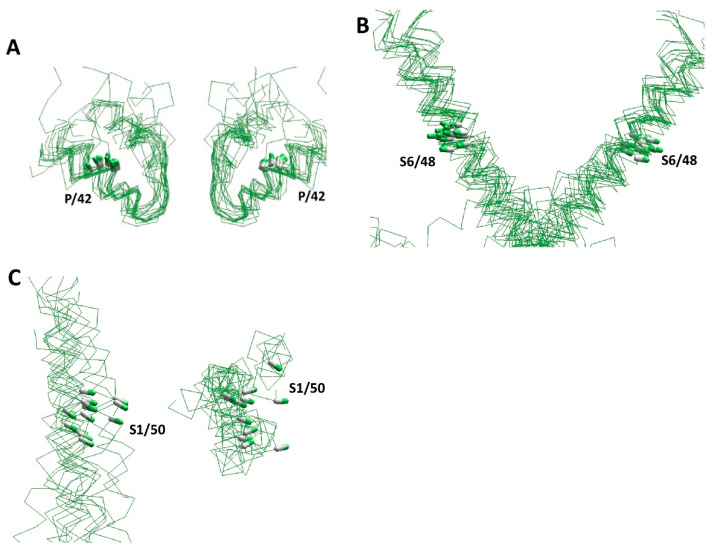
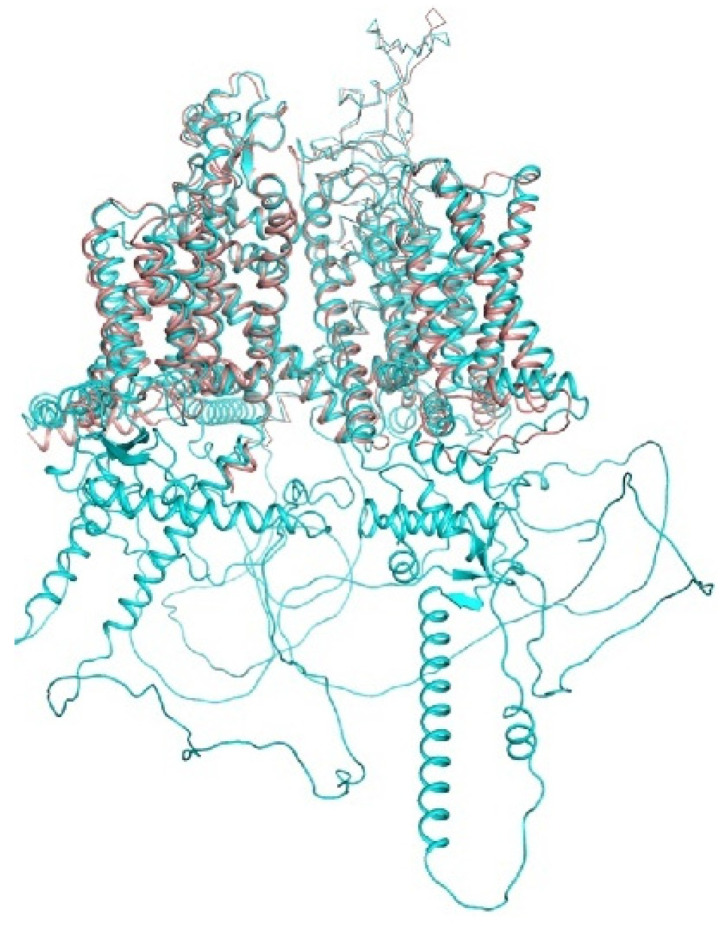
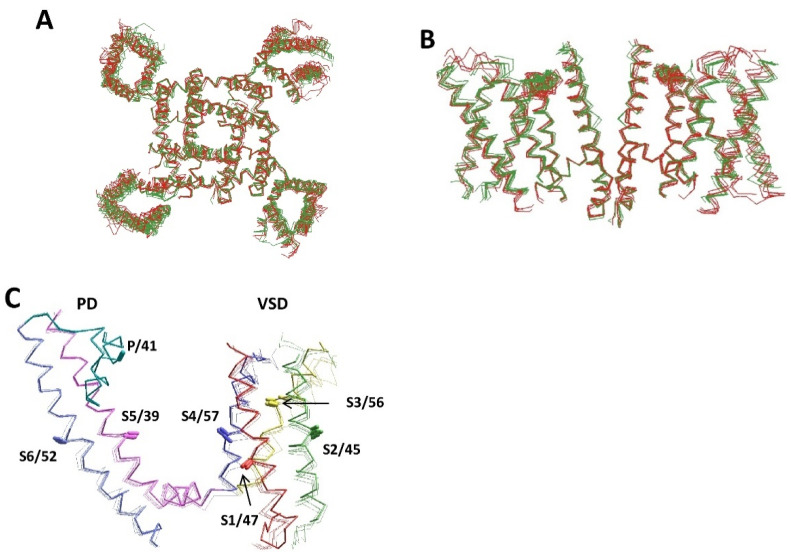
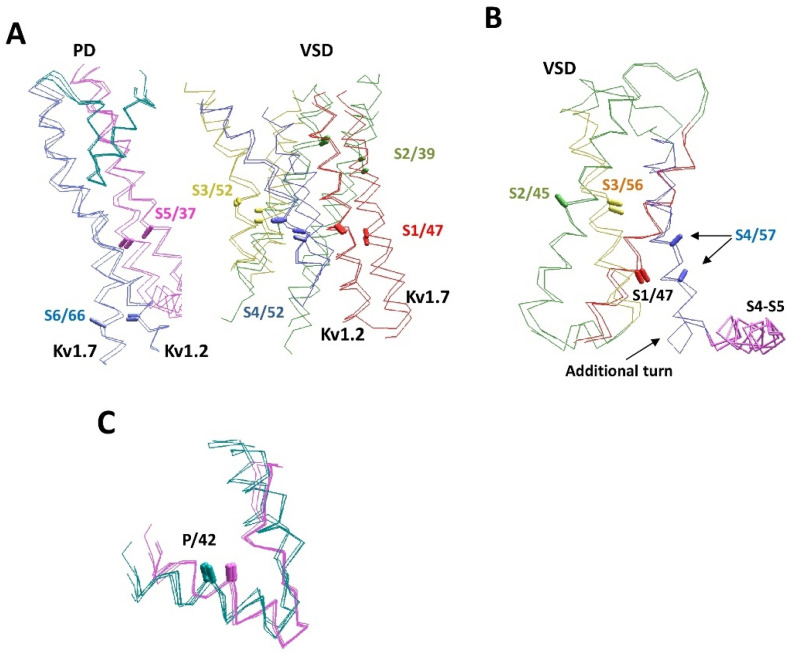
The superfamily of P-loop channels includes potassium, sodium, and calcium channels, as well as TRP channels and ionotropic glutamate receptors. A rapidly increasing number of crystal and cryo-EM structures have revealed conserved and variable elements of the channel structures. Intriguing differences are seen in transmembrane helices of channels, which may include π-helical bulges. The bulges reorient residues in the helices and thus strongly affect their intersegment contacts and patterns of ligand-sensing residues. Comparison of the experimental structures suggests that some π-bulges are dynamic: they may appear and disappear upon channel gating and ligand binding. The AlphaFold2 models represent a recent breakthrough in the computational prediction of protein structures. We compared some crystal and cryo-EM structures of P-loop channels with respective AlphaFold2 models. Folding of the regions, which are resolved experimentally, is generally similar to that predicted in the AlphaFold2 models. The models also reproduce some subtle but significant differences between various P-loop channels. However, patterns of π-bulges do not necessarily coincide in the experimental and AlphaFold2 structures. Given the importance of dynamic π-bulges, further studies involving experimental and theoretical approaches are necessary to understand the cause of the discrepancy.
P 环通道超家族包括钾通道、钠通道、钙通道,以及瞬时受体电位(TRP)通道和离子型谷氨酸受体。越来越多的晶体结构和冷冻电镜结构揭示了通道结构中的保守和可变元件。在通道的跨膜螺旋中可以看到有趣的差异,其中可能包括 π 螺旋凸起。这些凸起使螺旋中的残基重新定向,从而强烈影响它们的片段间接触以及配体感应残基的模式。对实验结构的比较表明,一些 π 凸起是动态的:它们可能在通道门控和配体结合时出现和消失。AlphaFold2 模型代表了蛋白质结构计算预测方面的一项最新突破。我们将一些 P 环通道的晶体结构和冷冻电镜结构与相应的 AlphaFold2 模型进行了比较。实验解析区域的折叠情况通常与 AlphaFold2 模型中预测的情况相似。这些模型还重现了各种 P 环通道之间一些细微但显著的差异。然而,在实验结构和 AlphaFold2 结构中,π 凸起的模式不一定一致。鉴于动态 π 凸起的重要性,有必要采用实验和理论方法进行进一步研究,以了解差异产生的原因。