Alcaraz Antonio, Gacci Mauro, Ficarra Vincenzo, Medina-Polo José, Salonia Andrea, Fernández-Gómez Jesús M, Ciudin Alexandru, Castro-Díaz David, Rodríguez-Antolín Alfredo, Carballido-Rodríguez Joaquín, Cózar-Olmo José M, Búcar-Terrades Santiago, Pérez-León Noemí, Brenes-Bermúdez Francisco J, Molero-García José M, Ledesma Antonio Fernández-Pro, Herdman Michael, Manasanch José, Angulo Javier C, Group On Behalf Of The Qualiprost Study
Urology Department, Hospital Clínic, Universitat de Barcelona, IDIBAPS, 08036 Barcelona, Spain.
Unit of Minimally Invasive and Robotic Urologic Surgery and Kidney Transplantation, Careggi University Hospital (AOUC), University of Florence, 50134 Florence, Italy.
J Clin Med. 2022 Feb 12;11(4):967. doi: 10.3390/jcm11040967.
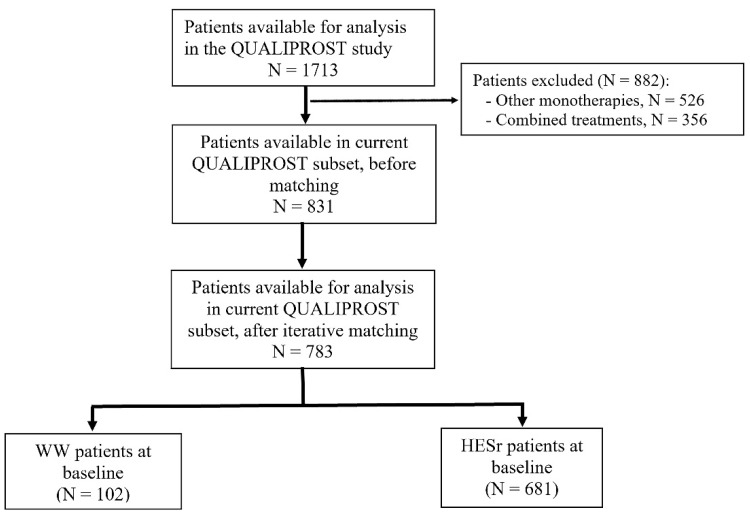
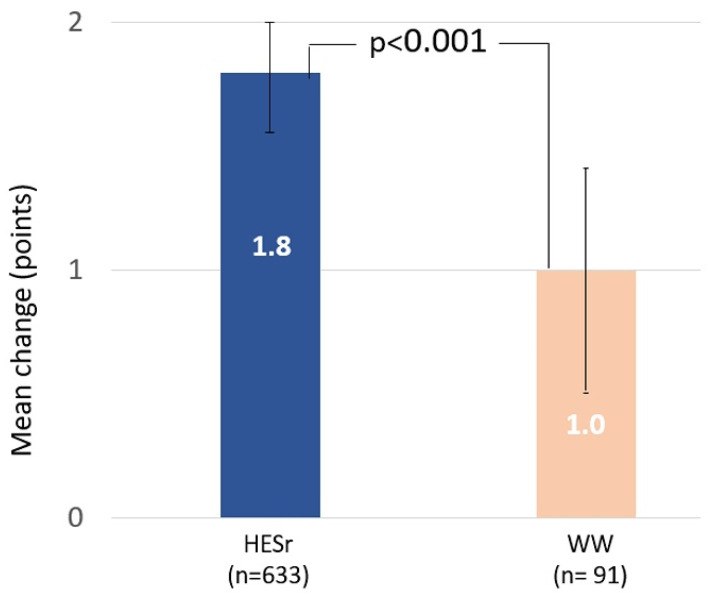
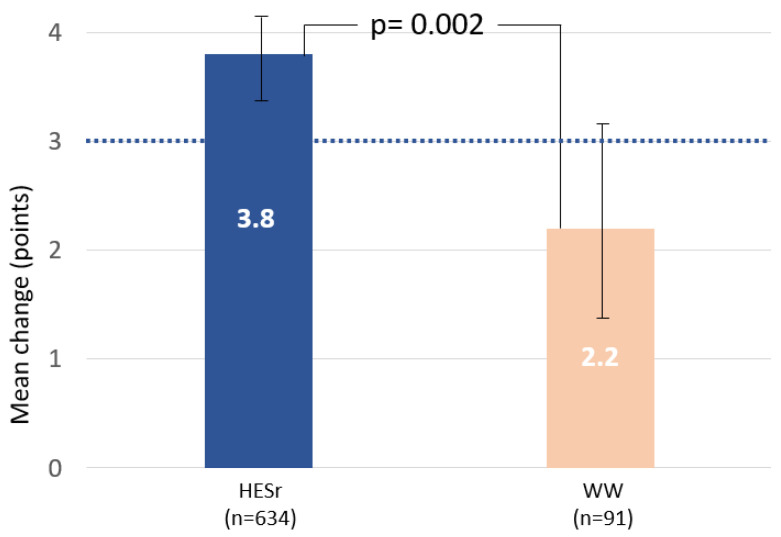
We investigated changes in symptoms and quality of life (QoL) in men with moderate-to-severe lower urinary tract symptoms associated with benign prostatic hyperplasia (LUTS/BPH) receiving the hexanic extract of (HESr) and compared results with a matched group on watchful waiting (WW). Data was from a real-world, open-label, prospective, multicenter study. This sub-group analysis included patients with moderate-to-severe symptoms receiving either the HESr 320 mg/daily for six months (HESr) or who remained untreated for LUTS/BPH (WW). Changes in urinary symptoms and QoL were measured by IPSS and BII questionnaires. Two statistical approaches (iterative matching and propensity score pairing) were used to maximize between-group comparability at baseline. Tolerability was assessed in the HESr group. After iterative matching, data for analysis was available for 783 patients (102 WW, 681 HESr). IPSS scores improved by a mean (SD) of 3.8 (4.4) points in the HESr group and by 2.2 (4.5) points in the WW group ( = 0.002). Changes in BII score were 1.8 (2.4) points and 1.0 (2.2) points, respectively ( < 0.001). Three patients (0.9%) treated with the HESr reported mild adverse effects. Moderate-severe LUTS/BPH patients treated for six months with the HESr showed greater improvements in symptoms and QoL than matched patients on WW, with a very low rate of adverse effects.
我们调查了接受锯叶棕果实提取物正己烷提取物(HESr)的中度至重度良性前列腺增生相关下尿路症状(LUTS/BPH)男性患者的症状及生活质量(QoL)变化,并将结果与匹配的观察组(WW)进行比较。数据来自一项真实世界、开放标签、前瞻性、多中心研究。该亚组分析纳入了中度至重度症状患者,他们要么接受每日320毫克HESr治疗六个月(HESr组),要么对LUTS/BPH未进行治疗(WW组)。通过国际前列腺症状评分(IPSS)和膀胱出口梗阻指数(BII)问卷来衡量尿路症状和QoL的变化。使用两种统计方法(迭代匹配和倾向得分配对)来最大化基线时组间的可比性。对HESr组的耐受性进行了评估。经过迭代匹配后,有783例患者的数据可用于分析(102例WW组,681例HESr组)。HESr组IPSS评分平均(标准差)改善3.8(4.4)分,WW组改善2.2(4.5)分(P = 0.002)。BII评分变化分别为1.8(2.4)分和1.0(2.2)分(P < 0.001)。三名接受HESr治疗的患者(0.9%)报告有轻度不良反应。接受HESr治疗六个月 的中度至重度LUTS/BPH患者在症状和QoL方面的改善比匹配的WW组患者更大,且不良反应发生率非常低。