Rola Piotr, Doroszko Adrian, Trocha Małgorzata, Giniewicz Katarzyna, Kujawa Krzysztof, Skarupski Marek, Gawryś Jakub, Matys Tomasz, Szahidewicz-Krupska Ewa, Gajecki Damian, Adamik Barbara, Kaliszewski Krzysztof, Kilis-Pstrusinska Katarzyna, Letachowicz Krzysztof, Matera-Witkiewicz Agnieszka, Pomorski Michał, Protasiewicz Marcin, Majchrzak Konrad, Sokołowski Janusz, Jankowska Ewa Anita, Madziarska Katarzyna
Department of Cardiology, Provincial Specialized Hospital, Iwaszkiewicza 5 Str., 59-220 Legnica, Poland.
Clinical Department of Internal Medicine, Hypertension and Clinical Oncology, Wroclaw Medical University, Borowska 213, 50-556 Wroclaw, Poland.
J Clin Med. 2022 Feb 14;11(4):992. doi: 10.3390/jcm11040992.
Senility has been identified among the strongest risk predictors for unfavorable COVID-19-outcome. However, even in the elderly population, the clinical course of infection in individual patients remains unpredictable. Hence, there is an urgent need for developing a simple tool predicting adverse COVID-19-outcomes. We assumed that the C2HEST-score could predict unfavorable clinical outcomes in the elderly subjects with COVID-19-subjects.
We retrospectively analyzed 1047 medical records of patients at age > 65 years, hospitalized at the medical university center due to COVID-19. Subsequently, patients were divided into three categories depending on their C2HEST-score result.
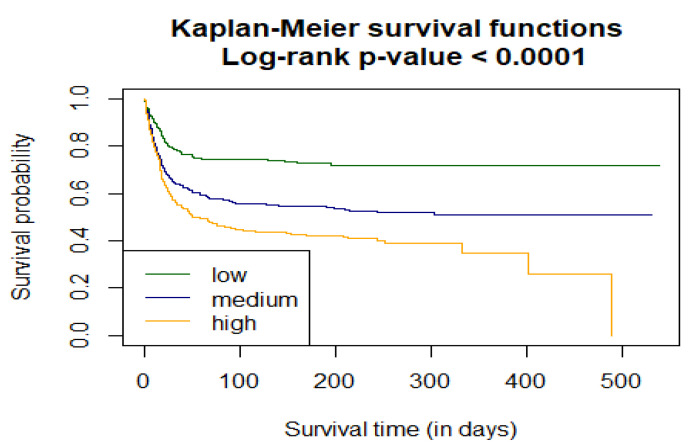
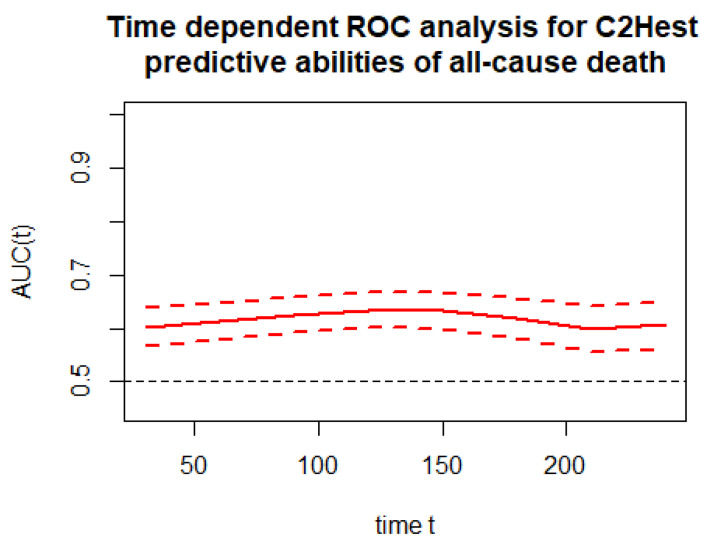
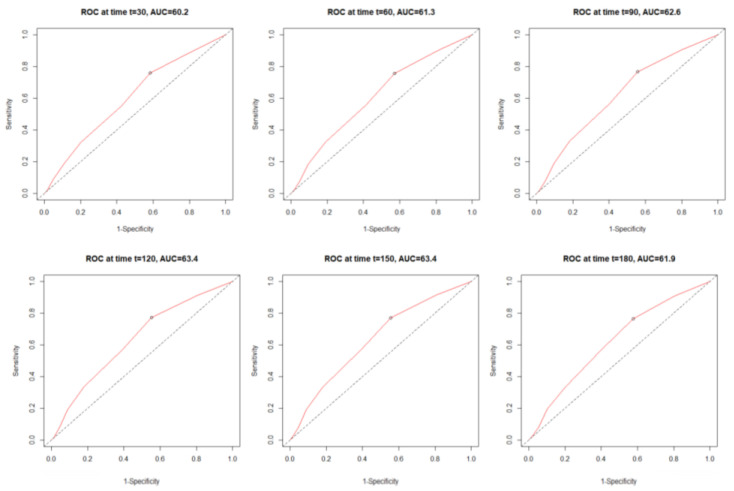
We noticed significant differences in the and 3- and 6- mortality-which was the highest in --C2HEST-stratum reaching 35.7%, 54.4%, and 65.9%, respectively. The -stratum mortalities reached 24.1% 43.4%, and 57.6% and for -stratum 14.4%, 25.8%, and 39.2% respectively. In the C2HEST-score model, a change from the to the category increased the probability of death intensity approximately two-times. Subsequently, transfer from the to the -stratum raised all-cause-death-intensity 2.7-times. Analysis of the secondary outcomes revealed that the C2HEST-score has predictive value for acute kidney injury, acute heart failure, and cardiogenic shock.
C2HEST-score analysis on admission to the hospital may predict the mortality, acute kidney injury, and acute heart failure in elderly subjects with COVID-19.
衰老已被确定为新冠病毒病不良预后的最强风险预测因素之一。然而,即使在老年人群中,个体患者的感染临床过程仍然不可预测。因此,迫切需要开发一种简单的工具来预测新冠病毒病的不良预后。我们假设C2HEST评分可以预测新冠病毒病老年患者的不良临床结局。
我们回顾性分析了1047例65岁以上因新冠病毒病在医科大学中心住院患者的病历。随后,根据患者的C2HEST评分结果将其分为三类。
我们注意到在3个月和6个月死亡率方面存在显著差异——在C2HEST评分最高的组中死亡率最高,分别达到35.7%、54.4%和65.9%。中等评分组的死亡率分别达到24.1%、43.4%和57.6%,低评分组分别为14.4%、25.8%和39.2%。在C2HEST评分模型中,从低评分组变为中等评分组会使死亡强度概率增加约两倍。随后,从中等评分组转为高评分组会使全因死亡强度增加2.7倍。对次要结局的分析表明,C2HEST评分对急性肾损伤、急性心力衰竭和心源性休克具有预测价值。
入院时进行C2HEST评分分析可预测新冠病毒病老年患者的死亡率、急性肾损伤和急性心力衰竭。