Department of Health Systems and Policy, Institute of Public Health, University of Gondar, Gondar, Ethiopia.
Department of Reproductive Health, Institute of Public Health, University of Gondar, Gondar, Ethiopia.
BMC Health Serv Res. 2022 Feb 24;22(1):249. doi: 10.1186/s12913-022-07651-w.
Health system responsiveness is defined as the outcome of designing health facility relationships so that they are familiar and responsive to patients' universally legitimate expectations. Even though different strategies have been implemented to measure responsiveness, only limited evidence exists in Sub-Saharan Africa. In Ethiopia, information about health system responsiveness among outpatients is limited. Assessing responsiveness could help facilities in improving service delivery based on patient expectations.
The study aimed to assess health system responsiveness and associated factors among outpatients in primary health care facilities, Asagirt District, Ethiopia, 2021.
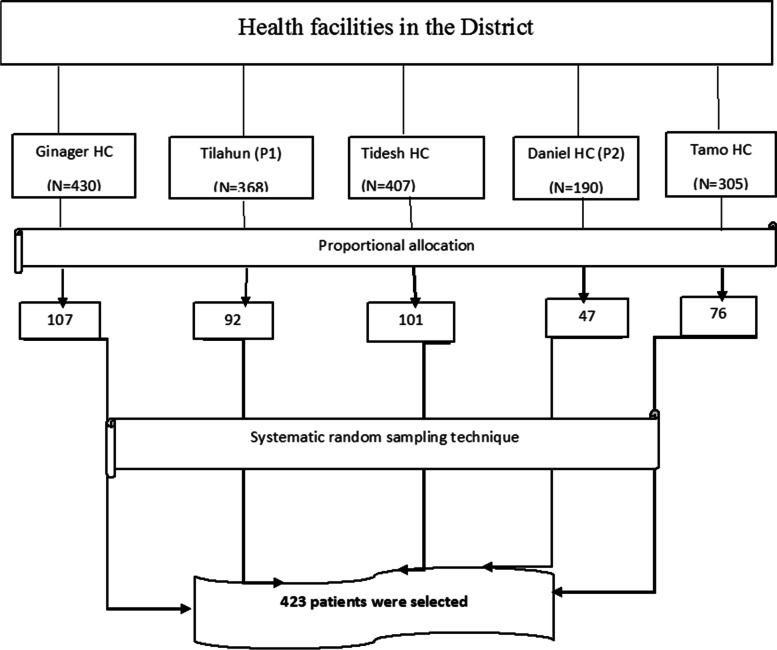
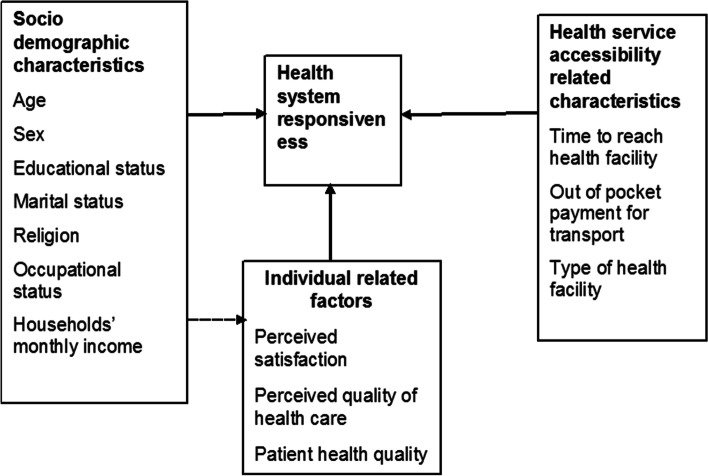
Facility-based cross-sectional quantitative study was implemented between March 30 and April 30/2021. A systematic random sampling technique was employed to select 423 participants, and interviewer-administered data were collected using structured and pretested questionnaires. Both bivariable and multivariable logistic regressions were employed to identify factors associated with health system responsiveness. Adjusted Odds Ratio with their corresponding 95% CI was used to declare factors associated with health system responsiveness. A p-value less than 0.05 was used to declare significant statistical variables.
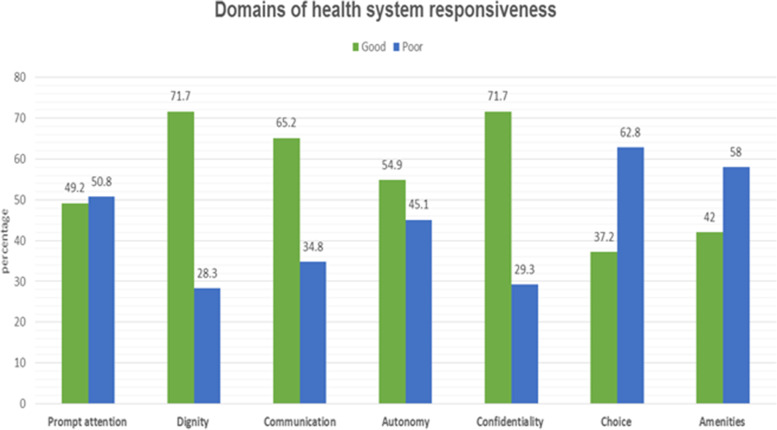
The overall health system responsiveness performance was 66.2% (95% CI: 61.4-70.7). Confidentiality and dignity were the highest responsive domains. Health system responsiveness was higher among satisfied patients (AOR: 9.9, 95% CI: 5.11-19.46), utilized private clinics (AOR: 8.8, 95% CI: 4.32-18.25), and no transport payment (AOR: 1.7, 95% CI: 1.03-2.92) in the study setting.
Overall, health system responsiveness performance was higher than a case-specific study in Ethiopia. To improve the health systems responsiveness and potentially fulfil patients' legitimate expectations, we need to facilitate informed treatment choice, provide reasonable care within a reasonable time frame, and give patients the option of consulting a specialist. Aside from that, enhancing patient satisfaction, using input from service users, Collaboration, and exchanging experiences between public and private facilities will be important interventions to improve HSR performance.
卫生系统响应能力被定义为设计卫生机构关系的结果,以便它们熟悉并响应患者普遍合理的期望。尽管已经实施了不同的策略来衡量响应能力,但在撒哈拉以南非洲,只有有限的证据存在。在埃塞俄比亚,关于门诊患者卫生系统响应能力的信息有限。评估响应能力可以帮助医疗机构根据患者的期望改善服务提供。
本研究旨在评估埃塞俄比亚阿萨格特地区初级保健设施中门诊患者的卫生系统响应能力及其相关因素,2021 年。
2021 年 3 月 30 日至 4 月 30 日期间,在机构内进行了横断面定量研究。采用系统随机抽样技术选择了 423 名参与者,并使用结构化和预测试问卷进行了访谈者管理的数据收集。采用单变量和多变量逻辑回归来确定与卫生系统响应能力相关的因素。使用调整后的优势比及其相应的 95%置信区间来表示与卫生系统响应能力相关的因素。p 值小于 0.05 用于表示具有显著统计学意义的变量。
总体卫生系统响应能力表现为 66.2%(95%CI:61.4-70.7)。保密性和尊严是响应能力最高的领域。在研究环境中,满意的患者(AOR:9.9,95%CI:5.11-19.46)、使用私人诊所(AOR:8.8,95%CI:4.32-18.25)和不支付交通费用(AOR:1.7,95%CI:1.03-2.92)的患者,其卫生系统响应能力较高。
总体而言,卫生系统响应能力表现高于埃塞俄比亚的特定病例研究。为了提高卫生系统的响应能力,并有可能满足患者的合法期望,我们需要促进知情治疗选择,在合理的时间内提供合理的护理,并为患者提供咨询专家的选择。除此之外,提高患者满意度、利用服务使用者的意见、合作以及公共和私人设施之间的经验交流,将是提高 HSR 绩效的重要干预措施。